 Save It
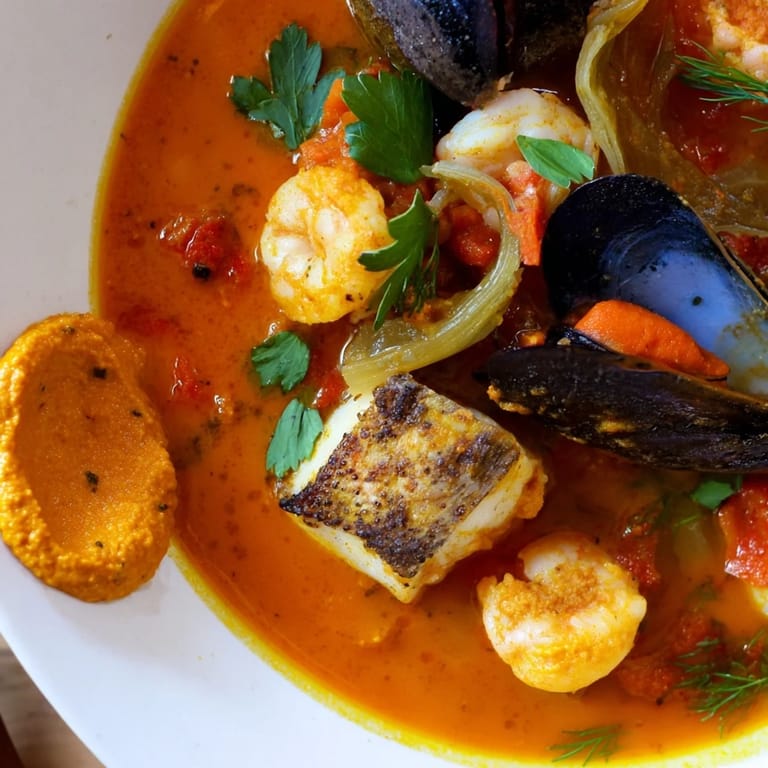
 The first time I ladled bouillabaisse into a bowl, I understood why this Provençal stew has captivated cooks for centuries. It wasn't just the aroma of saffron and fennel filling my kitchen, but the way each spoonful delivered a story—the sea's brininess, the warmth of garlic, the subtle sweetness of orange zest all dancing together. I'd spent the afternoon at the market hunting for the freshest fish, and standing there with my haul, I realized this wasn't a dish to rush. It demanded respect, attention, and the kind of cooking that feels like meditation.
I made this for my neighbor one October evening after she'd had a rough week. Watching her close her eyes on that first spoonful, seeing the stress melt from her face—that's when I realized food like this does something beyond nourishing. It reminds us we're alive, that we belong to something larger than our worries. She asked for the recipe immediately, and I knew then that bouillabaisse had to stay in my regular rotation.
Ingredients
- Firm white fish fillets (monkfish or sea bass), 400g: These fish hold their shape beautifully during cooking and won't turn to mush, which is essential since they go in first.
- Oily fish fillets (red mullet), 300g: The richness here balances the broth and adds depth that you can actually taste—don't skip this or you'll miss the soul of the dish.
- Mussels, 300g: Buy them fresh and alive; they should close when you tap them, and always discard any that don't open after cooking.
- Shrimp, 200g: Peeled and deveined saves time, though I sometimes buy them whole for extra flavor in the broth.
- Sea scallops, 6 large (optional): These are a luxury touch that transforms the dish into something restaurant-worthy if you find beautiful ones.
- Olive oil, 2 tbsp: Good quality matters here since it's building the foundation—use something you'd actually taste on bread.
- Onion, 1 large, finely sliced: The sweetness that develops becomes the backbone of your broth.
- Leek (white part), 1 large: There's something gentle about leeks that soften the sharpness of raw garlic and onion.
- Fennel bulbs, 2: Sliced thin, they bring that subtle licorice note that whispers rather than shouts.
- Garlic cloves, 3, minced: This isn't a lot, but saffron and fennel do the heavy lifting alongside it.
- Ripe tomatoes, 4, peeled and seeded: Peeling and seeding matters more than you'd think—the skins can be bitter and the seeds watery.
- Carrot, 1 large, sliced: The slight sweetness becomes part of the broth's complexity.
- Orange zest, 1: Citrus here is delicate, herbaceous, and totally transforms the final taste.
- Bay leaf, 1: One is perfect; two would overshadow everything else.
- Fresh thyme, 2 sprigs: Fresh thyme tastes completely different from dried—brighter, greener, more alive.
- Fresh parsley, 1 sprig (plus extra for garnish): The cooking parsley disappears into the broth, while the garnish adds freshness at the end.
- Saffron threads, 1/2 tsp: This is precious and expensive, but it's non-negotiable—it's what makes bouillabaisse sing.
- Fennel seeds, 1 tsp: Toasting them in the pan first brings out their warmth, but if you're in a hurry, they're fine stirred in raw.
- Black peppercorns, 1/2 tsp: Whole peppercorns give you little bursts of heat throughout the broth.
- Dry white wine, 200 ml: Something you'd drink—not expensive, but honest and clean-tasting.
- Fish stock or water, 1.5 liters: Fish stock is ideal, but water works if that's what you have; the vegetables and aromatics will do the flavor-building work.
- Egg yolk, 1 (for rouille): This must be at room temperature or the rouille will break.
- Garlic clove, 1, minced (for rouille): Raw garlic here, so choose a mild clove if you can.
- Red chili, 1 small, seeded and chopped: The seeds carry the heat, so remove them if you prefer gentleness.
- Saffron threads, 1/2 tsp, soaked in warm water: The soaking water adds color and flavor directly to the rouille.
- Dijon mustard, 1 tsp: This acts as an emulsifier and adds a subtle tang.
- Olive oil, 100 ml (for rouille): Add it slowly, almost drop by drop at first, or the whole thing will split.
- Baguette, 1 small, sliced and toasted: Toasting first prevents it from falling apart in the broth.
Tired of Takeout? 🥡
Get 10 meals you can make faster than delivery arrives. Seriously.
One email. No spam. Unsubscribe anytime.
Instructions
- Build Your Flavor Foundation:
- Heat the olive oil in your largest, heaviest pot over medium heat—the weight matters because it distributes heat evenly and prevents scorching. Add the onion, leek, fennel, carrot, and garlic, then let them soften for 8-10 minutes, stirring occasionally, until they're tender and translucent but still pale. You want sweet aromatics, not caramelized ones.
- Introduce the Aromatic Herbs and Spices:
- Stir in the tomatoes, orange zest, bay leaf, thyme, parsley, saffron threads, fennel seeds, and peppercorns, along with a generous pinch of salt and pepper. Let this cook for 5 minutes so the saffron can begin releasing its color and the fennel seeds warm up in the oil.
- Deglaze and Develop the Broth:
- Pour in the white wine and let it simmer for 2 minutes, then add your fish stock or water. Bring everything to a gentle boil, then lower the heat and let it simmer uncovered for 25 minutes—this is when all those vegetables and aromatics surrender their flavors to the liquid.
- Strain for Clarity and Purity:
- Pour the broth through a fine sieve set over a clean pot, pressing gently on the solids with the back of a ladle to extract every last bit of flavor. Discard the solids and return the broth to the pot; it should taste deep, aromatic, and unmistakably of the sea.
- Add the Seafood with Purpose:
- Bring the broth back to a gentle simmer, add the firm white fish first, and cook for 5 minutes. Then add the oily fish, mussels, shrimp, and scallops (if using) all at once, and simmer for another 5-6 minutes until the mussels have opened and the other fish is just cooked through. Discard any mussels that stubbornly stay closed.
- Whisk Together the Rouille:
- In a separate bowl, combine the egg yolk, minced garlic, chopped red chili, saffron threads with their soaking water, and mustard. Whisk until smooth and pale, then begin adding the olive oil drop by drop while whisking constantly—this slow emulsification is what prevents the rouille from breaking and turning greasy.
- Bring It All Together:
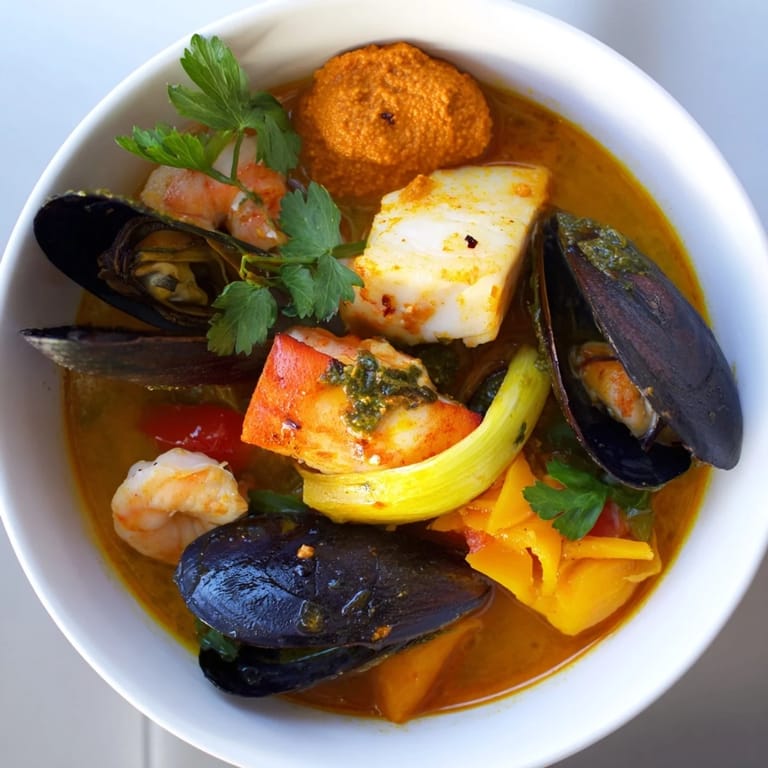
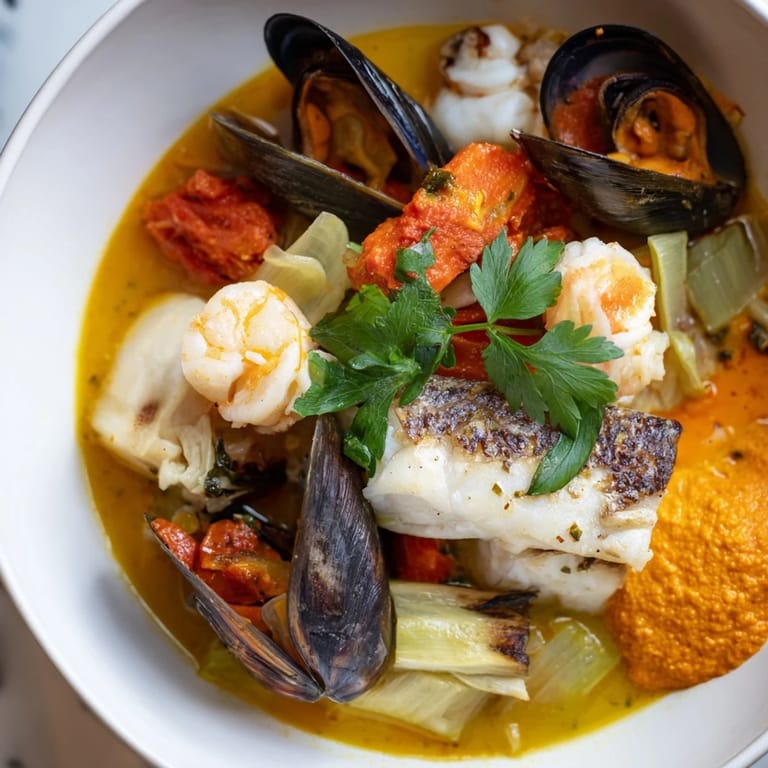
- Ladle the bouillabaisse into warm, shallow bowls, garnish with fresh parsley, and serve alongside toasted baguette slices brushed with olive oil and a generous spoonful of rouille on the side. Let each person do their own assembly—there's something ritual about it.
 Save It
 There's a moment near the end of making bouillabaisse when your entire kitchen smells like the Mediterranean, and you realize you've just created something old and timeless. It's humble enough to be accessible, sophisticated enough to impress, and honest enough to feel like home.
The Rouille, Your Secret Weapon
The rouille—that creamy, garlicky, saffron-stained sauce—is what transforms bouillabaisse from good soup into an experience. I spent years thinking rouille was complicated until a French friend showed me it's just a mayonnaise with attitude. The key is patience: add the oil slowly, almost like you're coaxing a shy child to speak, and the egg yolk will emulsify everything into silken gold. If you rush it, the whole thing breaks, and you'll be left with an oily mess. But if you respect the process, you get magic. Some cooks make it in a food processor, but I've found the whisking meditative, and there's something about doing it by hand that makes the rouille taste better.
Choosing Your Fish and Seafood
The soul of bouillabaisse lives in the seafood. Traditional recipes insist on using whatever the local catch provides—at least three or four different types of fish if you can manage it. What matters most is freshness: your fish should smell like clean ocean, not fishy, and should be purchased the day you plan to cook. Some people visit the fishmonger with a list and trust them to suggest what looks best that morning. The firm white fish holds its shape, the oily fish adds richness, and the shellfish brings sweetness and texture. I've made it with scallops and without, with just shrimp, with lobster—each version tells a different story about what was available and what I felt like celebrating that day.
Wine Pairing and Serving Suggestions
Bouillabaisse deserves a chilled Provençal rosé, something dry and mineral-forward that echoes the sea while staying light enough not to overwhelm the delicate fish. A crisp white wine works beautifully too—something like a Sauvignon Blanc or a Vermentino brings out the citrus notes and keeps your palate fresh between spoonfuls. The bread and rouille aren't just accompaniments; they're partners in the dance, letting you build each spoonful exactly as you like it.
- Serve in shallow bowls warmed in the oven so the soup stays hot longer.
- Have extra toasted bread nearby because people always want more than you expect.
- A simple green salad with a sharp vinaigrette finishes the meal without overshadowing what came before.
 Save It
 Making bouillabaisse is an act of generosity, both toward yourself and toward anyone lucky enough to sit down to a bowl. It's the kind of cooking that reminds us why we gather around tables.
Recipe FAQs
- → What types of fish are best for this stew?
Use a mixture of firm white fish like monkfish or sea bass, alongside oily fish such as red mullet, to balance texture and flavor.
- → How is the rouille sauce prepared?
The rouille is made by whisking egg yolk, garlic, chili, saffron, and mustard, then slowly adding olive oil until it thickens into a creamy sauce.
- → Can I make this dish gluten-free?
Yes, simply serve with gluten-free bread instead of traditional baguette to keep it gluten-free.
- → How do I know when the shellfish are cooked?
Shellfish like mussels are done when their shells open; discard any that remain closed after cooking.
- → What wine pairs well with this stew?
A chilled Provençal rosé or crisp white wine complements the aromatic seafood flavors beautifully.