 Save It
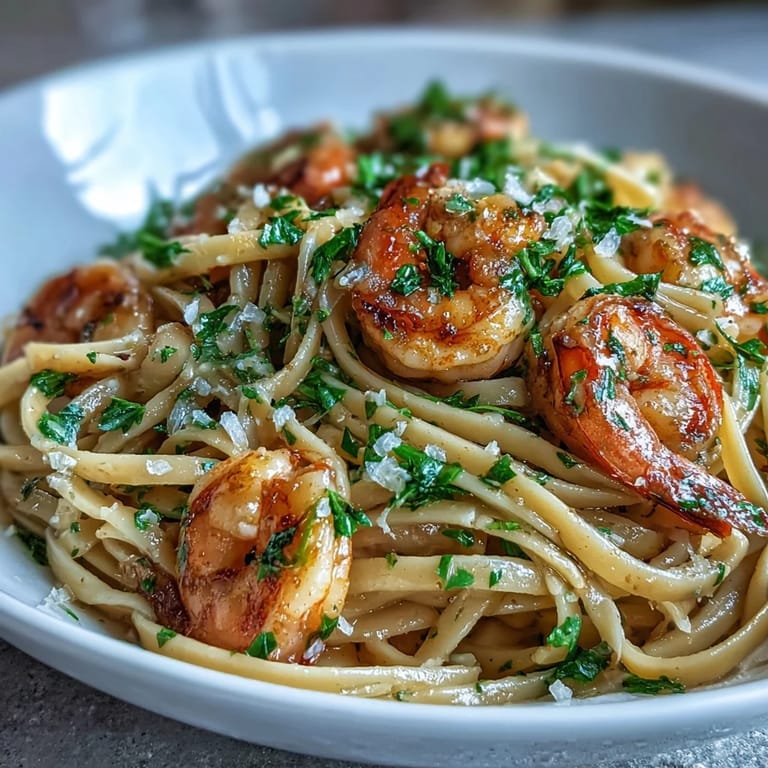
 My neighbor stopped by on a Thursday evening with fresh lemons from her tree, and I suddenly had to figure out what to do with six bright yellow orbs sitting on my counter. That's when lemon garlic shrimp pasta became my answer—a dish so quick it felt almost like cheating, yet so elegant it worked perfectly for the dinner party I'd been stressing about all week. The beauty of this recipe is that it comes together in the time it takes to boil water and cook pasta, which meant I could actually enjoy my guests instead of disappearing into the kitchen.
I made this for four people on a Tuesday night when the weather finally turned warm enough to open all the windows, and the smell of garlic hitting hot oil mixed with fresh lemon just filled the whole apartment. One guest asked for the recipe before finishing her plate, which doesn't happen often. It became the dish I'd make whenever I wanted people to think I was more organized in the kitchen than I actually am.
Ingredients
- Whole wheat spaghetti or linguine (12 oz): This holds the light sauce beautifully without feeling heavy, and the nuttier flavor actually complements the bright lemon.
- Large shrimp, peeled and deveined (1 lb): Size matters here—large shrimp stay tender when you cook them fast, and they look more impressive on the plate.
- Olive oil (4 tbsp total): Use good olive oil that tastes like something, not the industrial kind that tastes like nothing.
- Fresh garlic, thinly sliced (4 cloves): Slicing instead of mincing keeps the garlic pieces visible and lets them toast slightly without burning, which changes everything about the flavor.
- Crushed red pepper flakes (1/2 tsp, optional): A small amount adds warmth without heat if that's your preference, but don't skip it entirely if you like a little edge.
- Lemon zest and juice (1 lemon zested, 2 lemons juiced): The zest goes in early to bloom in the heat, while the juice balances everything at the end—zesting first means you won't be scrambling to find the grater.
- Dry white wine (1/4 cup): This lifts the whole sauce and adds complexity that broth can match but never quite replaces.
- Fresh parsley (1/3 cup chopped): Add this at the very end so it stays bright green and doesn't turn into sad wilted bits.
- Parmesan cheese (1/4 cup grated, optional): It's not essential, but a little salty, umami richness at the end ties everything together.
Tired of Takeout? 🥡
Get 10 meals you can make faster than delivery arrives. Seriously.
One email. No spam. Unsubscribe anytime.
Instructions
- Boil your pasta water with intention:
- Get a large pot of well-salted water going first—it should taste like the sea. This is your only chance to season the pasta itself, so don't skimp.
- Cook the pasta to al dente:
- Follow the package timing but start checking a minute early, because you want it to have just a tiny bit of resistance when you bite it. Reserve 1/2 cup of starchy pasta water before draining—this becomes your sauce magic.
- Prepare your shrimp while pasta cooks:
- Pat them completely dry with paper towels because moisture is the enemy of a good sear. Season with salt and pepper right before they hit the pan.
- Sear the shrimp quickly:
- Heat 1 tbsp olive oil in a large skillet over medium-high heat until it shimmers, then lay the shrimp in a single layer. Cook 1 to 2 minutes per side—the moment they turn pink and opaque, they're done. Transfer to a plate immediately so they don't keep cooking.
- Build your sauce with garlic:
- Lower the heat to medium, add 3 tbsp fresh olive oil and your sliced garlic, stirring gently for 1 to 2 minutes until the kitchen smells incredible but the garlic hasn't turned brown. If it browns, start over with a new batch because burnt garlic tastes bitter and ruins everything.
- Add brightness and depth:
- Stir in the red pepper flakes, lemon zest, and white wine, letting it bubble gently for 1 to 2 minutes so some of the alcohol cooks off but the wine's flavor stays. You should see the sauce reduce slightly and smell the wine becoming part of the aromatics.
- Bring it all together:
- Add your lemon juice, then add the drained pasta and toss constantly to coat every strand with sauce. If it looks too dry, add reserved pasta water one tablespoon at a time—the starch in that water creates the silky coating that makes this taste finished.
- Finish and serve:
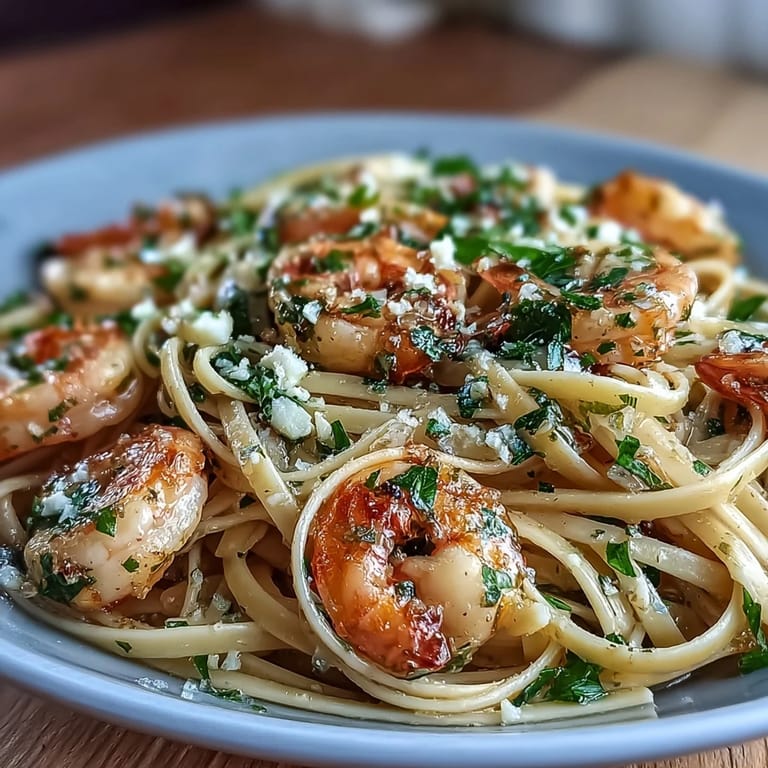
- Return the shrimp to the skillet, scatter in the fresh parsley, and toss very gently so nothing breaks. Taste for seasoning, add Parmesan if you're using it, and serve immediately on warm plates.
 Save It
 There's something about feeding people food that tastes bright and alive that makes them sit a little longer at the table, even when you're all eating at 8 p.m. on a weeknight. This dish does that—it feels festive without being fussy, which might be the best thing any recipe can do.
Why This Works as Spring Cooking
Spring is about shaking off heavier winter meals and reaching for things that taste fresh but don't leave you feeling too full. This pasta hits that sweet spot because the sauce is just olive oil, garlic, and lemon—no cream, no butter, no heaviness—but the combination tastes so rich and complete that no one misses what's not there. The lemon zest adds this floral brightness that you only notice because it's there, and the shrimp brings enough protein that the meal actually satisfies without feeling indulgent.
Timing and Flexibility
The whole thing comes together in thirty minutes, which is deceptive because it actually feels effortless if you read through the steps once before starting. You can prep the garlic and zest the lemon while the water heats, and suddenly you're not scrambling at the end. If you need to slow things down slightly, the cooked shrimp can sit on a plate for a few minutes while you finish the sauce, and the pasta can stay in the colander without getting cold if you cover it loosely.
How to Make It Your Own
The beauty of a simple sauce like this is that it's a foundation, not a cage. I've added handfuls of baby spinach in the last minute and watched it wilt into something gorgeous, or tossed in some arugula for peppery contrast. Some nights I'll add a pinch of saffron if I'm feeling fancy, or a small can of white beans for more substance. The core recipe stays the same, which means you always know what you're making, but it never feels boring.
- Gluten-free pasta works beautifully if that matters to your guests—just make sure it's cooked to package directions because timing varies.
- If someone can't eat shellfish, swap the shrimp for white fish fillets cut into chunks, or even cooked chicken breast if you need something heartier.
- A dairy-free version is as simple as leaving off the Parmesan and trusting the lemon and garlic to carry the flavor, which they absolutely do.
 Save It
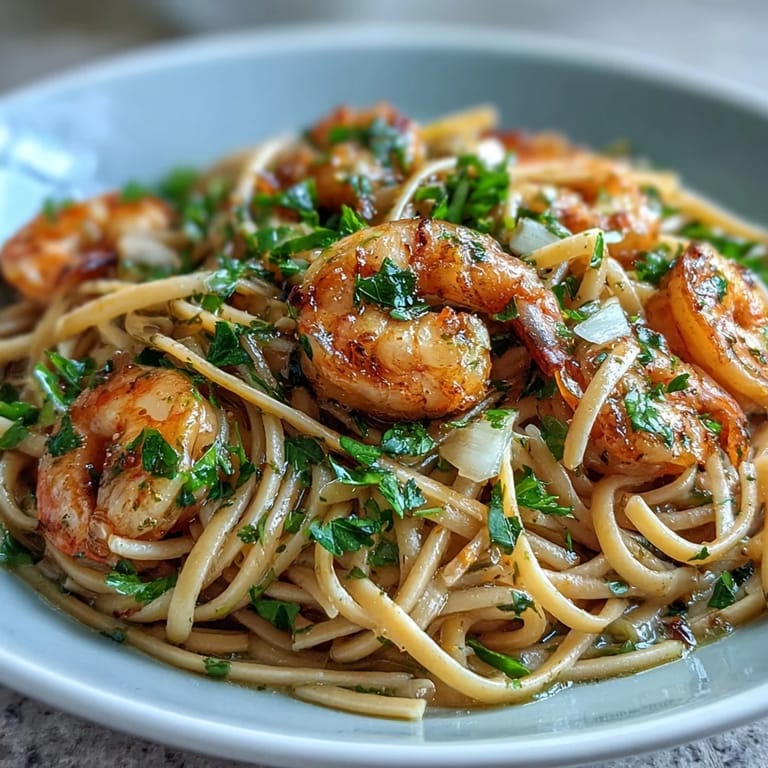
 This is the kind of recipe that becomes a regular in your rotation because it works every single time and people always ask for it. Keep fresh lemons and good olive oil on hand, and you're never more than a trip to the fish counter away from feeling like you've got dinner completely under control.
Recipe FAQs
- → What type of pasta works best?
Whole wheat spaghetti or linguine are preferred for a hearty texture, but gluten-free pasta can be substituted as needed.
- → Can the wine be replaced?
Yes, dry white wine can be swapped with low-sodium chicken broth for a milder flavor.
- → How should shrimp be cooked?
Cook shrimp briefly in olive oil over medium-high heat until just pink to ensure tenderness.
- → Is it possible to add vegetables?
Yes, adding baby spinach or arugula when combining the pasta adds freshness and color.
- → What herbs enhance the dish?
Fresh parsley complements the lemon and garlic, adding a bright, herbaceous note.