 Save It
 There's something about the sound of a wooden spoon scraping against the bottom of a baking dish that just feels like home. My mom used to make mac and cheese on rainy Sundays, and I'd watch her layer that creamy sauce over the pasta with such care, as if she was tucking us into something warm. Years later, I realized what made hers special wasn't just the cheese—it was that crispy bacon topping that caught the light when it came out of the oven, golden and impossibly fragrant. This recipe is that exact memory in a dish, elevated just enough to feel like you're doing something special, but simple enough that it never loses that soul-deep comfort.
I made this for a dinner party once when a friend was going through a rough patch, and I remember her taking that first bite, pausing, and then asking for seconds before she'd even finished her first serving. There's power in a dish that doesn't need to announce itself—it just quietly does what it's supposed to do, which is make you feel cared for. That's what this mac and cheese does.
Ingredients
- Elbow macaroni (400 g): Don't skip cooking it to just al dente—overcooked pasta will turn mushy in the oven, and undercooked will fight back between your teeth.
- Unsalted butter (2 tbsp): This is for your roux, and unsalted means you control the salt level entirely.
- All-purpose flour (2 tbsp): This thickens the sauce without making it gluey, as long as you cook it for exactly one minute after adding it to the butter.
- Whole milk (500 ml) and heavy cream (120 ml): The cream is non-negotiable—it gives the sauce that silky, restaurant-quality texture that milk alone simply cannot achieve.
- Sharp cheddar cheese (200 g): Sharp, not mild—the flavor difference is everything here, and it stands up to the baking heat without turning bitter.
- Gruyère cheese (100 g): This is your secret weapon for depth; it adds a slightly nutty, complex note that makes people wonder what you did differently.
- Parmesan cheese (50 g): A smaller amount, but it brings salt and umami that bridges the other cheeses together.
- Mustard powder (1 tsp): You won't taste mustard, but you'll taste a sharpness that makes the cheese sing—trust this.
- Garlic powder and cayenne pepper: Garlic powder adds warmth, and cayenne adds a whisper of heat that makes the dish feel more grown-up without being spicy.
- Streaky bacon (4 slices): Cook it until it's properly crisp so it shatters when you crumble it, not chewy.
- Panko breadcrumbs (60 g): Panko stays crunchier than regular breadcrumbs, and that crunch is what makes the topping matter.
- Fresh parsley: Optional, but a small handful adds color and a fresh note that cuts through all that richness.
Tired of Takeout? 🥡
Get 10 meals you can make faster than delivery arrives. Seriously.
One email. No spam. Unsubscribe anytime.
Instructions
- Preheat and prepare:
- Set your oven to 190°C (375°F) and grease a 2-liter baking dish—this matters because a dry edge is better than a stuck edge.
- Cook the pasta properly:
- Boil salted water, add the macaroni, and cook it just until it resists slightly when you bite it—that's al dente. Drain it and set it aside; it will continue cooking in the oven.
- Build your roux:
- Melt the butter over medium heat, sprinkle in the flour, and stir constantly for one minute—this cooks out the raw flour taste without browning. You'll smell a subtle, almost nutty aroma when it's ready.
- Create the sauce:
- Slowly pour in the milk and cream while whisking continuously to avoid lumps; the mixture will look thin at first, but keep stirring and it will thicken into a silky sauce within 3–4 minutes. Watch for tiny bubbles at the edges—that's your signal it's reached the right temperature.
- Melt in the cheese:
- Remove from heat and add all three cheeses at once, stirring until completely smooth—the residual heat does the melting without making the sauce grainy. Now season with mustard powder, garlic powder, cayenne, salt, and pepper, tasting as you go.
- Combine and transfer:
- Toss the cooked pasta with the cheese sauce until every piece is coated, then pour it into your prepared baking dish.
- Prepare the bacon topping:
- Cook the bacon in a skillet over medium heat until it's crispy and shatters when you break it—this takes about 8–10 minutes. Drain on paper towels and crumble into pieces.
- Make the topping mixture:
- In a bowl, combine panko breadcrumbs, melted butter, crumbled bacon, and fresh parsley if using, tossing gently so every breadcrumb gets a kiss of butter.
- Top and bake:
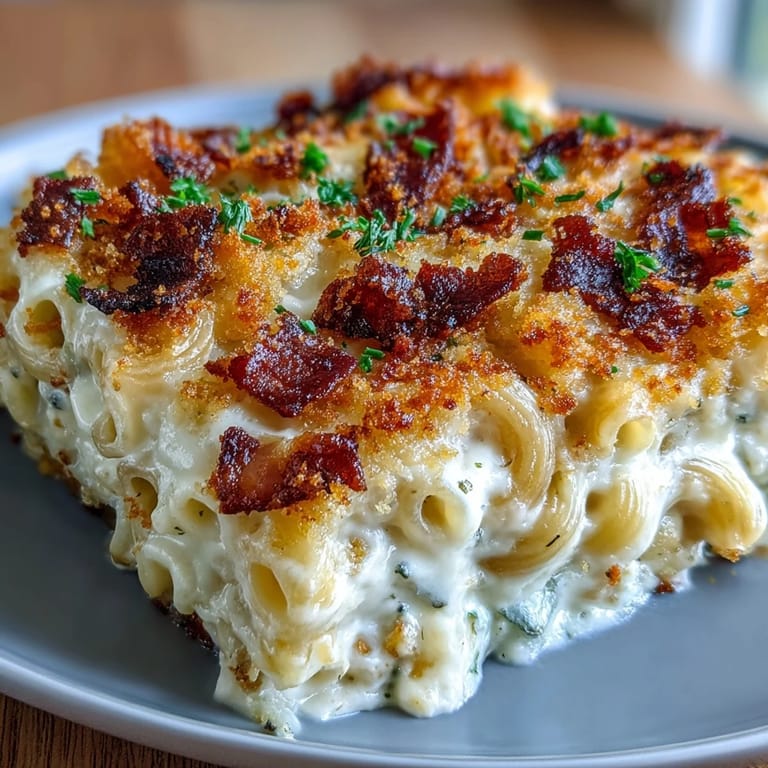
- Sprinkle the bacon crumb topping evenly over the mac and cheese—don't compress it, just let it sit on top. Bake for 25–30 minutes, or until the top is golden brown and the sauce is bubbling at the edges.
- Rest before serving:
- Let it cool for 5–10 minutes so the sauce sets slightly and becomes creamier as it cools, rather than pouring off the side of your spoon.
 Save It
 I once brought this to a potluck where someone had also made mac and cheese, and for a moment I was nervous—until people started going back for thirds of mine and leaving hers barely touched. It wasn't arrogance; it was the moment I realized that technique and care actually matter in cooking, even with something as humble as pasta and cheese.
The Magic of the Cheese Blend
Using three different cheeses isn't showing off—it's the smart way to build flavor that no single cheese can deliver. Sharp cheddar brings the sharpness, Gruyère adds complexity and a subtle sweetness, and Parmesan ties everything together with salt and umami. When they melt together, they create something greater than their individual parts, which is honestly a metaphor for how good food works.
Why the Bacon Topping Changes Everything
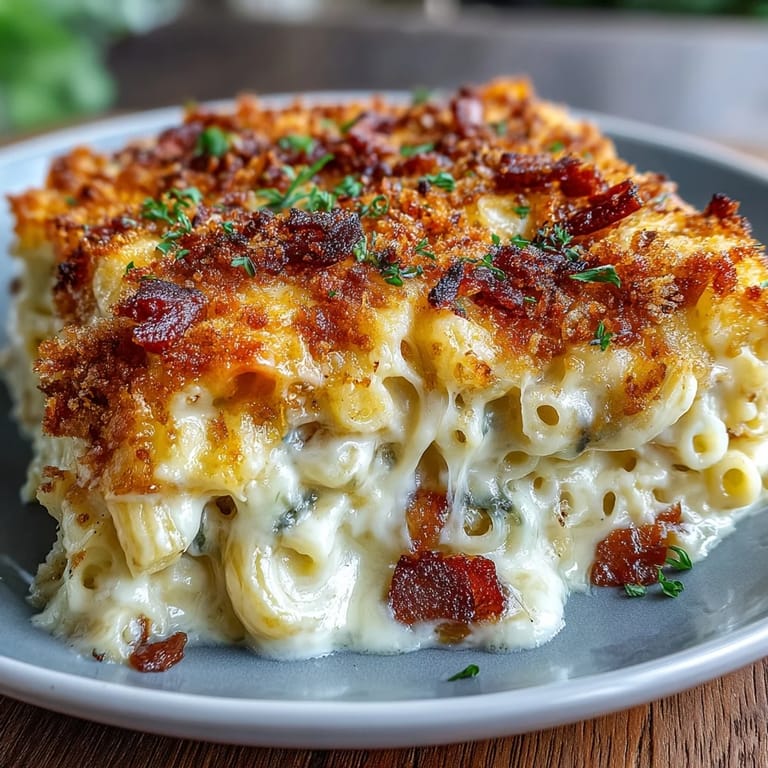
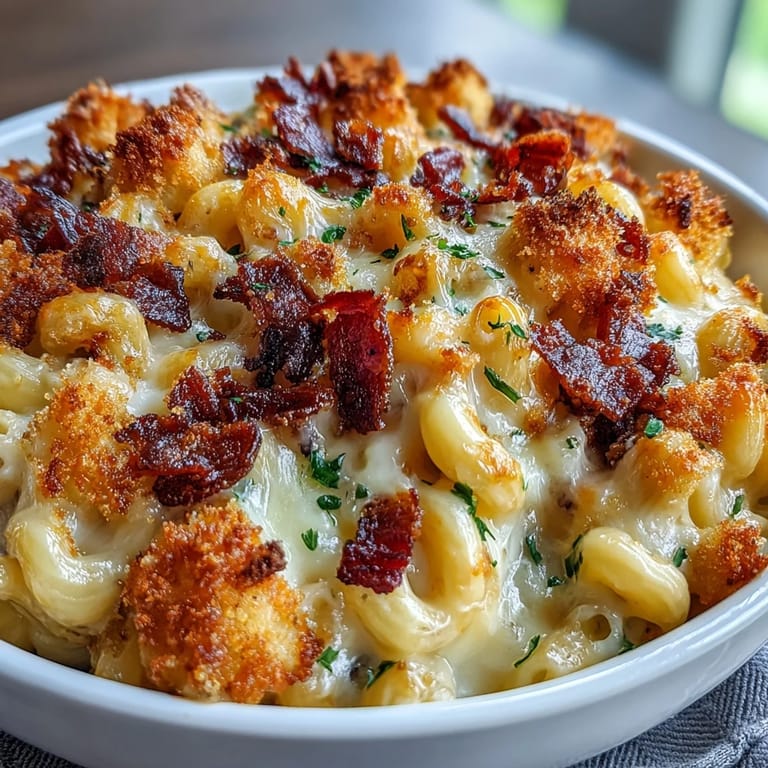
A baked mac and cheese is already rich and comforting, but the moment that bacon-studded, buttered breadcrumb topping hits the oven, something shifts. The bacon renders slightly, the breadcrumbs turn golden and crispy, and suddenly you have textural contrast that makes every bite more interesting. It's the difference between a dish that satisfies and one that people actively crave.
Customization and Make-Ahead Tips
This recipe is forgiving enough to adapt to what you have on hand and flexible enough to prepare ahead. You can assemble the entire dish up to 24 hours before baking—just add the topping right before it goes into the oven so it stays crispy. For vegetarians, skip the bacon and add smoked paprika or sun-dried tomatoes to the topping for that savory depth, or swap the Gruyère for Swiss cheese if that's what's in your fridge.
- For extra smoke and spice, stir a pinch of smoked paprika directly into the cheese sauce.
- Make this in individual ramekins instead of one large dish for dinner parties—they bake faster and look impressive.
- Leftover mac and cheese becomes crispy-edged and even better the next day when reheated in a 160°C oven for 15 minutes.
 Save It
 This mac and cheese isn't just dinner; it's a reminder that the best food doesn't need to be complicated or trendy to be genuinely good. Make it, feed it to people you love, and watch what happens.
Recipe FAQs
- → What cheeses are used in the cheese sauce?
The sauce blends sharp cheddar, Gruyère, and Parmesan cheeses for a rich, layered flavor.
- → How is the crispy topping prepared?
Cooked bacon is crumbled and mixed with panko breadcrumbs and melted butter, then sprinkled atop for a crunchy finish.
- → Can this dish be made vegetarian?
Yes, omit the bacon and add smoked paprika or sun-dried tomatoes to the topping for smoky flavor.
- → What is the cooking time for this dish?
After preparing the cheese sauce and pasta, bake the casserole for 25 to 30 minutes until golden and bubbling.
- → Are there any suggested seasoning variations?
A pinch of smoked paprika can be added to the cheese sauce to deepen the flavor profile.