 Save It
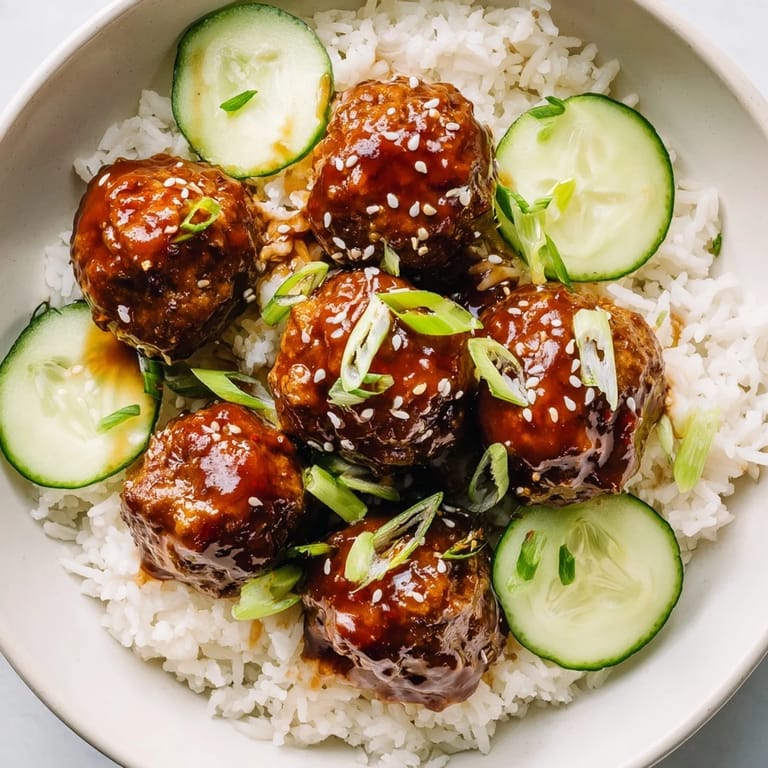
 There's something about the sizzle of meatballs hitting a hot pan that makes you feel like you're cooking something special, even when it's deceptively simple. I discovered this teriyaki meatball situation on a weeknight when I had ground beef, leftover rice, and an inexplicable craving for something that tasted like a restaurant meal without the wait. What started as throwing things together became my go-to when friends drop by hungry, or when I need dinner on the table before the evening gets away from me.
I'll never forget my neighbor peeking over the fence while I was testing this the second time, drawn by the aroma of ginger and caramelizing sauce. She came inside for "just a taste" and ended up sitting at my kitchen counter for an hour, asking me to write down the proportions because apparently her teenage son had declared it better than takeout. That's when I knew this wasn't just dinner—it was the kind of food that makes people feel cared for.
Ingredients
- Ground beef or chicken: The foundation that holds everything together; I've had equal success with both, though beef gives a richer glaze coating.
- Egg: This binds everything without making the meatballs dense or tough, so don't skip it even if you're tempted.
- Panko breadcrumbs: They keep the texture light and tender, a trick I learned after ruining a batch with regular breadcrumbs.
- Garlic and ginger: The backbone of flavor; fresh is non-negotiable here, and mincing them fine ensures they distribute evenly.
- Spring onions: A brightness that runs through the meatballs themselves, not just a garnish tacked on at the end.
- Soy sauce and sesame oil: These two are the reason everything tastes cohesive and intentional.
- Soy sauce, mirin, and rice vinegar: The holy trinity of the glaze; they balance sweet, salty, and tangy in a way that feels almost magical.
- Brown sugar and honey: Double sweetness sounds excessive until you taste how they caramelize into something deeper than either alone.
- Cornstarch slurry: The secret to a glaze that clings to the meatballs instead of sliding off into the bowl.
- Jasmine or sushi rice: The bed everything sits on; it needs to be fluffy enough to soak up extra glaze drips.
- Cucumber: The cool, crisp counterpoint that keeps the whole bowl from feeling too rich.
- Sesame seeds: Toasted, they add a subtle nuttiness and a little visual appeal.
Tired of Takeout? 🥡
Get 10 meals you can make faster than delivery arrives. Seriously.
One email. No spam. Unsubscribe anytime.
Instructions
- Start the rice:
- Get your rice cooker or pot going first so it's ready when everything else is done. Warm rice makes the whole experience feel more intentional.
- Prep and heat:
- While rice cooks, preheat your oven to 200°C and line a baking sheet with parchment paper. This is the moment to gather all your meatball ingredients so you're not hunting around mid-mix.
- Build the meatball mixture:
- Combine your ground meat with egg, breadcrumbs, garlic, ginger, spring onions, soy sauce, sesame oil, salt, and pepper in one bowl. Mix with your hands until everything is just married together—overworking it makes them tough, something I discovered through trial and error.
- Shape with intention:
- Roll into 20-24 balls about the size of walnuts and arrange them on your prepared sheet. They don't need to touch, and spacing matters for even cooking.
- Bake until golden:
- Pop them in the oven for 15-18 minutes until they're cooked through and the outside is lightly golden. You'll know they're ready when the kitchen smells like savory caramelized meat.
- Build the glaze:
- While meatballs bake, combine soy sauce, mirin, water, brown sugar, honey, and rice vinegar in a saucepan over medium heat. Stir occasionally until the sugar dissolves completely and everything comes together in a glossy, amber-colored liquid.
- Thicken and finish:
- Stir in your cornstarch slurry and let it simmer for 1-2 minutes until the sauce thickens and coats the back of a spoon. It should look like liquid silk at this point.
- Coat the meatballs:
- Transfer your hot meatballs to the glaze and toss gently until each one is completely coated. Don't be shy; use a rubber spatula to get every bit of that glaze.
- Assemble the bowls:
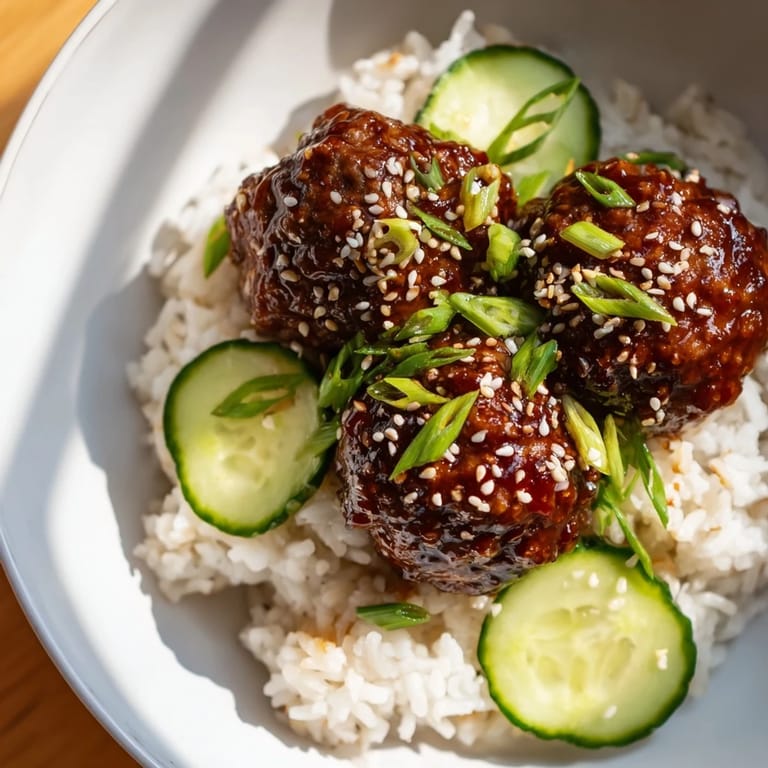
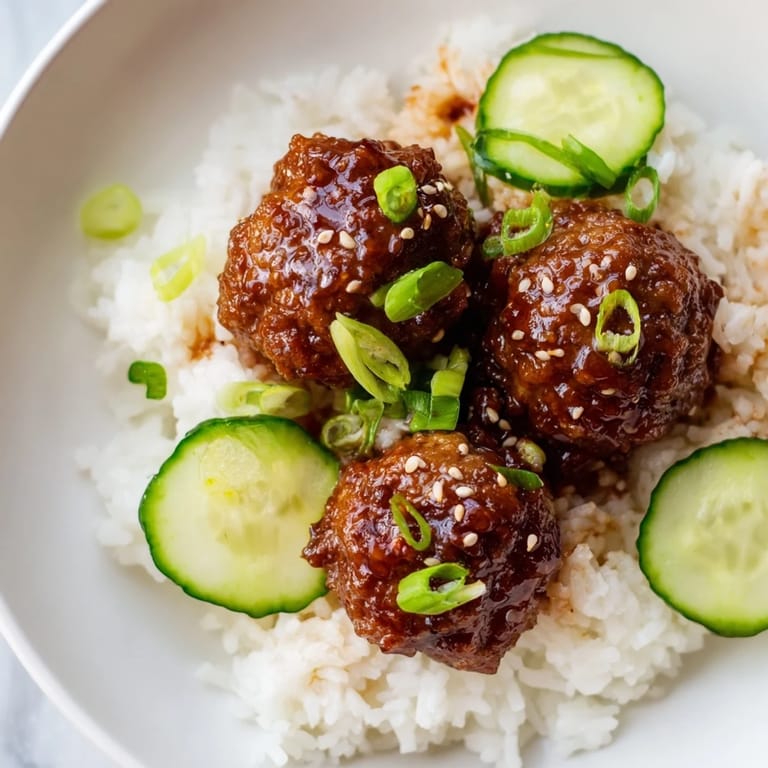
- Divide warm rice among four bowls, then top each with meatballs and some of that glossy sauce. Add cucumber slices, sesame seeds, and extra spring onions, then serve immediately while everything is still warm.
 Save It
 There's a particular kind of satisfaction in watching someone take their first bite and close their eyes for just a second, like they're taking a mental note of the flavor. That's what happens with these bowls, and it's why I keep making them.
Why This Works as a Weeknight Dinner
The beauty of this recipe is that it doesn't feel like weeknight cooking in the rushed, throw-it-together sense. Baking the meatballs means you're not hovering over a pan, turning them constantly; you set them in the oven and have fifteen minutes to breathe, get the sauce started, or slice your cucumber. The whole thing relies on timing working in your favor rather than against it, which is honestly the kind of cooking strategy I need at 6 p.m. on a Tuesday.
Building Layers of Flavor
Each component here has a reason for existing. The ginger and garlic in the meatballs aren't just seasoning; they're building blocks that make the teriyaki glaze feel like a natural extension rather than something tacked on. The cucumber at the end isn't decoration—it's there to cut through the richness and remind your palate that balance matters. Even the sesame seeds aren't random; toasted seeds add a subtle complexity that elevates the whole bowl without announcing themselves.
Making It Your Own
Once you've made this a couple of times and know how it tastes, you start seeing variations everywhere. Steamed broccoli or edamame fit seamlessly, adding nutrition without disrupting the flavor profile. Pickled ginger on the side changes the rhythm of each bite, or swap in ground turkey or pork if beef feels too heavy. The backbone stays the same, but the freedom to adjust is part of what makes it feel like your recipe instead of just a recipe you followed.
- Try adding a pinch of five-spice powder to the meatball mixture for a subtle warmth.
- Serve with a squeeze of fresh lime if you want brightness at the very end.
- Double the glaze recipe if you find yourself wanting more sauce than seems reasonable—trust that instinct.
 Save It
 This recipe works because it tastes like you put real thought into dinner without requiring you to actually stress. Make it once and it becomes part of your rotation; make it three times and it feels like home.
Recipe FAQs
- → What types of meat can I use for the meatballs?
Ground beef, chicken, turkey, or pork work well, each offering a slightly different texture and flavor while maintaining juiciness.
- → How can I make the meatballs gluten-free?
Use gluten-free breadcrumbs or substitute panko with crushed gluten-free crackers, and replace soy sauce with tamari for a gluten-free teriyaki sauce.
- → What is the best way to cook the meatballs?
Baking the meatballs on a lined sheet at 200°C (400°F) ensures even cooking and a golden crust without added oil.
- → How do I thicken the teriyaki sauce properly?
Mix cornstarch with water to make a slurry, then stir it into the simmering sauce and cook for 1-2 minutes until glossy and thickened.
- → Can I add vegetables to the bowls?
Yes, steamed broccoli, edamame, or pickled ginger make excellent additions to enhance flavor and nutrition.
- → How should I serve the dish for best results?
Serve the warm meatballs coated in teriyaki sauce over steamed jasmine rice, topped with thin cucumber slices, toasted sesame seeds, and fresh spring onions for added crunch.