 Save It
 The first time I made paella, I was standing in a friend's kitchen in Barcelona, watching her mother work with the ease of someone who'd made this dish a thousand times. She moved through each step without hesitation, and the kitchen filled with this golden, almost floral aroma from the saffron hitting the warm stock. I realized then that paella wasn't just about throwing ingredients together—it was about understanding the rhythm of the pan, knowing when to stir and when to let it be. That's when I fell in love with it.
I made this for a dinner party during a rainy autumn evening, and what I remember most isn't the compliments, but the way everyone went quiet when they smelled it. My partner kept sneaking spoonfuls while I was plating, and even my friend who usually skips seafood asked for seconds. That's when I understood—paella does something special to a room, something that brings people together in a way that feels both generous and intimate.
Ingredients
- Shrimp (12 large): Get them peeled and deveined to save yourself time, and always smell them before cooking—they should smell like the ocean, nothing fishy or off.
- Mussels and clams (12 each): These need a good scrub under cold water, and pull off any straggly bits on the mussels—they're tougher than they look.
- Short-grain paella rice (1 1/2 cups): Bomba or Arborio are your friends here; don't substitute with long-grain or everything falls apart both literally and figuratively.
- Onion (1 medium, finely chopped): This is your flavor foundation, so don't rush it—those first two minutes matter.
- Bell peppers (1 red, 1 green, sliced): They add brightness and sweetness; I like mine slightly al dente so they don't disappear into the rice.
- Garlic (2 cloves, minced): Fresh garlic changes everything, and mincing it fine means it distributes throughout the oil evenly.
- Tomato (1 medium, grated or finely chopped): A ripe tomato gives you natural sweetness and helps bind the flavors together.
- Saffron threads (1/4 teaspoon): This is your golden ticket—saffron is expensive but a little goes a long way, and it's the soul of paella.
- Fish or seafood stock (4 cups): Quality matters here; if you can find good homemade stock, use it, but decent store-bought works too.
- Smoked paprika (1 teaspoon): Adds a subtle smokiness that makes people ask what your secret ingredient is.
- Salt, pepper, olive oil: Use decent olive oil—it's not just for cooking, it carries flavor throughout.
- Fresh parsley and lemon wedges: The parsley brings freshness right at the end, and lemon wedges let everyone adjust the brightness to their taste.
Tired of Takeout? 🥡
Get 10 meals you can make faster than delivery arrives. Seriously.
One email. No spam. Unsubscribe anytime.
Instructions
- Warm your stock and awaken the saffron:
- Pour your fish stock into a saucepan and drop in those precious saffron threads, then turn the heat to low. As it warms, the threads will bloom and release their color and flavor—you'll actually see the liquid turn golden. This takes about 5 minutes, and it's worth every second of patience.
- Build your flavor base:
- Heat olive oil in your paella pan over medium heat, then add the onion and let it soften for a couple of minutes until it becomes translucent and sweet. Add the garlic and breathe in—that's the smell of something delicious being born.
- Coax out the sweetness:
- Toss in your bell peppers and stir occasionally for 3 to 4 minutes until they lose their raw edge but still have some character. Then add the tomato and let it cook down until the liquid mostly evaporates, which is when you know the base is ready.
- Toast the rice and season:
- Add your rice to the pan and stir it around for a minute or two, coating every grain in the oil and vegetables—this step matters more than you'd think. Sprinkle in the smoked paprika, salt, and pepper, stirring once more so everything knows it's part of the same dish.
- Pour in the golden stock:
- This is the critical moment—pour in that warm saffron-infused stock and distribute the rice so it's mostly submerged and level. Once the liquid hits the pan, resist the urge to stir; the rice needs to cook in peace for the next 20 to 25 minutes.
- Crown it with seafood:
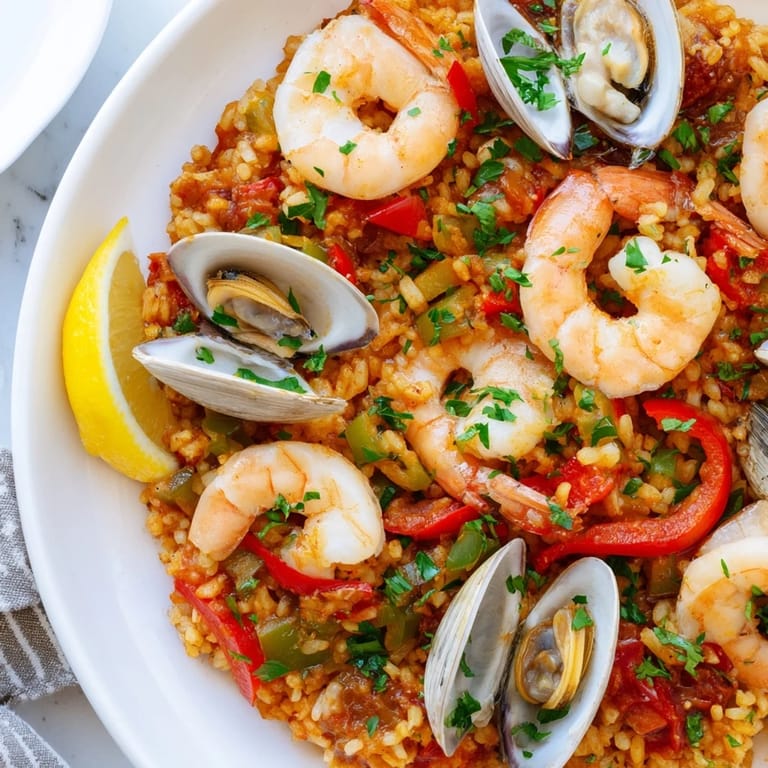
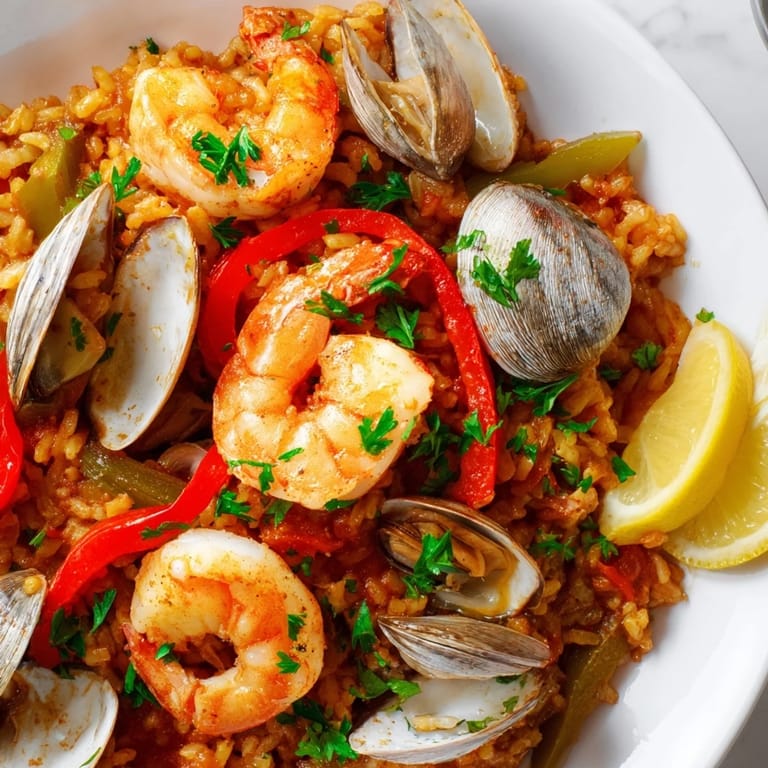
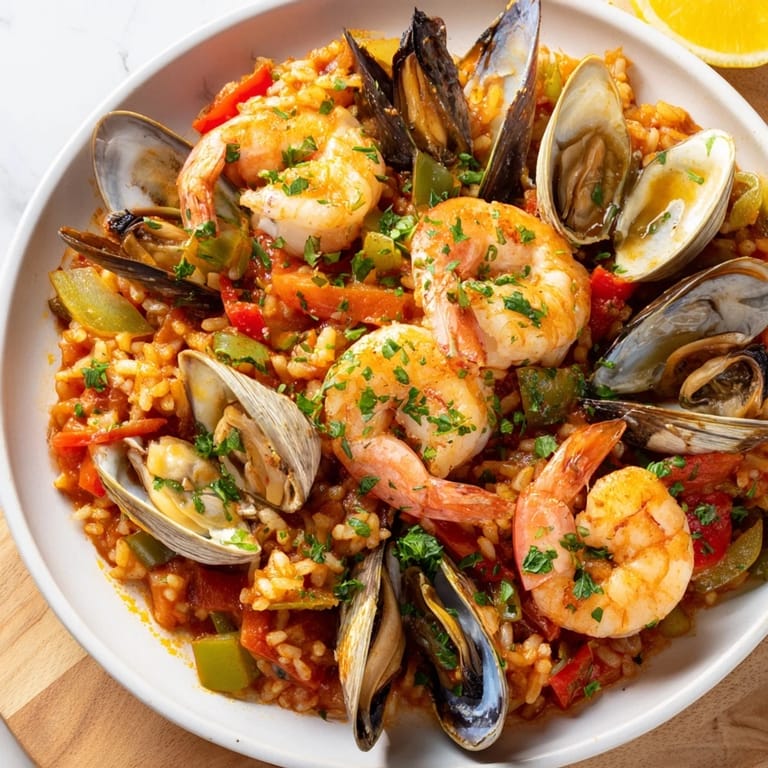
- After about 10 to 15 minutes, when the rice is starting to soften, arrange your shrimp, mussels, and clams on top like jewels. Cover loosely with foil or a lid and let the heat finish the job, which should take another 10 to 12 minutes until the seafood opens and the rice is tender.
- Rest and finish:
- Pull it off the heat, keep it covered, and walk away for 5 minutes—this resting time lets everything settle and the flavors marry. Scatter parsley over the top, squeeze some lemon onto your plate, and serve it right from the pan like you meant to be generous all along.
 Save It
 I'll never forget the moment someone told me they could taste the care in every bite, and I realized that paella is as much about presence as it is about technique. You can't rush it, can't multitask your way through it—you have to show up for the pan, and somehow, that attention translates into something people can actually taste.
The Art of Not Stirring
This is probably the hardest part of making paella, and I say that knowing how tricky seafood can be to cook. Your instinct will be to stir, to check on things, to make sure nothing's sticking. But the magic happens when you resist that impulse. The rice on the bottom of the pan gets a chance to caramelize into this golden, crispy layer called socarrat, and the grains stay distinct instead of turning into mush. Trust the pan, trust the timing, and let the heat do its work.
Timing and Temperature Matter
Medium-low heat isn't a suggestion—it's the difference between perfectly cooked seafood and rubber bands served on a plate. Too hot and everything cooks too fast, leaving the rice underdone. Too low and you'll be standing there for 45 minutes wondering if something's wrong. Medium-low gives you that sweet spot where the rice absorbs the stock gradually, the seafood opens at just the right moment, and you're not stressed the entire time. The whole process should take about 20 to 25 minutes of actual cooking, and if it's taking much longer, turn the heat up just slightly.
Make It Your Own
The beauty of paella is that it's not as rigid as it seems. Once you understand the fundamentals, you can play around. Some cooks add a handful of frozen peas for color and sweetness, which I actually love in spring. You can swap some of the seafood for calamari or white fish if mussels aren't your thing or if you want to stretch the recipe further. I've even added a splash of white wine to the stock for extra depth, which honestly changed the game.
- Frozen peas go in with the stock if you want to add them.
- Calamari or firm white fish can replace any of the seafood you're uncertain about.
- A Spanish white wine like Albariño pairs perfectly with the dish and complements every single element.
 Save It
 Paella is one of those dishes that rewards you for slowing down and paying attention, and somehow it makes everyone at the table feel celebrated. Make it for the people you love, and they'll remember it long after they've finished eating.
Recipe FAQs
- → What type of rice is best for this dish?
Short-grain rice like Bomba or Arborio absorbs flavors well and maintains texture for a perfect finish.
- → How can I ensure the seafood cooks evenly?
Arrange shrimp, mussels, and clams evenly over the rice and cover while cooking to allow gentle steaming.
- → Can I substitute the seafood with other proteins?
Yes, calamari or firm white fish can be used as alternatives to add variety.
- → What is the role of saffron in this dish?
Saffron imparts a unique aroma and delicate golden color that defines the dish's character.
- → How is the dish seasoned for depth of flavor?
Smoked paprika, garlic, and a touch of salt and pepper enhance the savory profile alongside the seafood broth.