 Save It
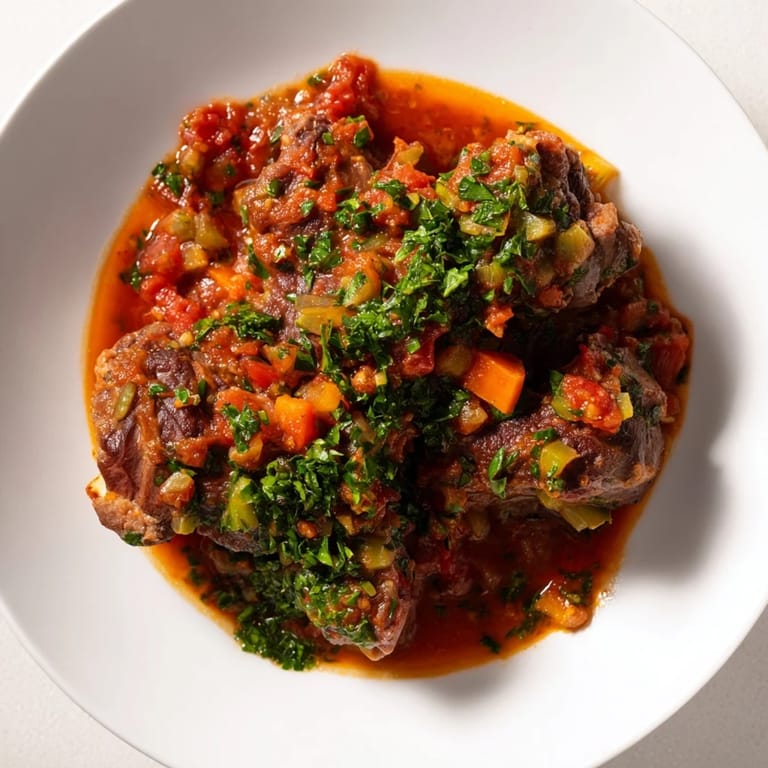
 The first time I truly understood osso buco was when my nonna placed a spoon in my hand and showed me how to scoop the marrow from the bone—that soft, golden treasure that makes the dish worth every minute of waiting. She'd been making it the same way for decades, never rushing the braise, never cutting corners on the vegetables. What started as curiosity about an elegant Italian dinner became an obsession with mastering this one perfect dish.
I remember serving this to friends who thought veal shanks sounded intimidating until they took that first bite and went quiet—the kind of quiet that means something just shifted in the room. The braised meat, the deep sauce, that bright gremolata cutting through it all—it's the kind of dish that tells a story without saying a word.
Ingredients
- Veal shanks (4 pieces, about 350g each, cross-cut, bone-in): The star of the show—ask your butcher to cut them across the bone so the marrow stays intact and feeds the sauce as it braises.
- Salt and freshly ground black pepper: Don't skip the generous seasoning; it's your foundation.
- All-purpose flour (1/3 cup, 40g): A light dredge builds flavor and helps thicken the sauce—use gluten-free flour if you need to.
- Olive oil and unsalted butter (2 tbsp each): Together they create a golden crust on the meat that makes the braising liquid taste richer.
- Onion, carrots, and celery (1 large onion, 2 carrots, 2 celery stalks): This holy trinity gets soft and sweet, building the base layer of flavor.
- Garlic (4 cloves, minced): Fresh garlic keeps the sauce bright, not dusty or bitter.
- Dry white wine (1 cup, 240ml): The acidity cuts through the richness and adds complexity—use something you'd drink.
- Diced tomatoes (1 can, 400g with juice): Canned tomatoes are sweeter and more reliable than fresh for long braises.
- Beef or veal stock (1 1/2 cups, 360ml): Homemade is best, but good store-bought works; it flavors everything.
- Tomato paste (2 tbsp): Concentrate the umami—a little goes a long way.
- Bay leaves and dried thyme (2 bay leaves, 1 tsp thyme): These quiet herbs tie everything together without overpowering the meat.
- Lemon zest: Save half for gremolata; it's the final brightness that makes people lean back and sigh.
- Fresh flat-leaf parsley and garlic for gremolata (2 tbsp parsley, 1 clove garlic): This pungent mixture is your secret weapon—it cuts through richness and wakes up your palate.
Tired of Takeout? 🥡
Get 10 meals you can make faster than delivery arrives. Seriously.
One email. No spam. Unsubscribe anytime.
Instructions
- Prepare and Season the Meat:
- Pat your veal shanks completely dry—moisture is the enemy of browning. Season generously with salt and pepper, then dredge lightly in flour, shaking off the excess so you get a delicate coating, not a thick crust.
- Build That Golden Crust:
- Heat your oil and butter in a large Dutch oven over medium-high heat until it shimmers. Brown each shank for 3 to 4 minutes per side, listening for that gentle sizzle—you want color, not char. Transfer them to a plate and take a breath; you're halfway to something beautiful.
- Soften the Vegetables:
- In the same pot, add your chopped onion, carrots, celery, and garlic. Stir often and let them soften for about 6 minutes, until the kitchen smells like possibility. This is where your foundation gets laid.
- Wake Up the Aromatics:
- Stir in the tomato paste and cook for just 1 minute, letting it deepen slightly. Then pour in the white wine, scraping up all those browned bits stuck to the bottom—that's pure flavor, and you don't want to waste a drop.
- Build Your Braising Liquid:
- Add the tomatoes with their juice, stock, bay leaves, thyme, and half your lemon zest. Stir everything together so it's balanced and fragrant, then return those veal shanks to the pot in a single layer, nestling them into the sauce.
- Braise Low and Slow:
- Bring everything to a gentle simmer, cover, and slide the pot into a preheated 160°C (325°F) oven for 2 hours. Don't peek too much—the steady, gentle heat is doing the work. The meat will become so tender it barely clings to the bone.
- Make Your Gremolata:
- While the braise works, finely chop your parsley and mince that one garlic clove, then mix with the reserved lemon zest. This bright, punchy mixture is what transforms the dish from rich to extraordinary.
- Finish with Care:
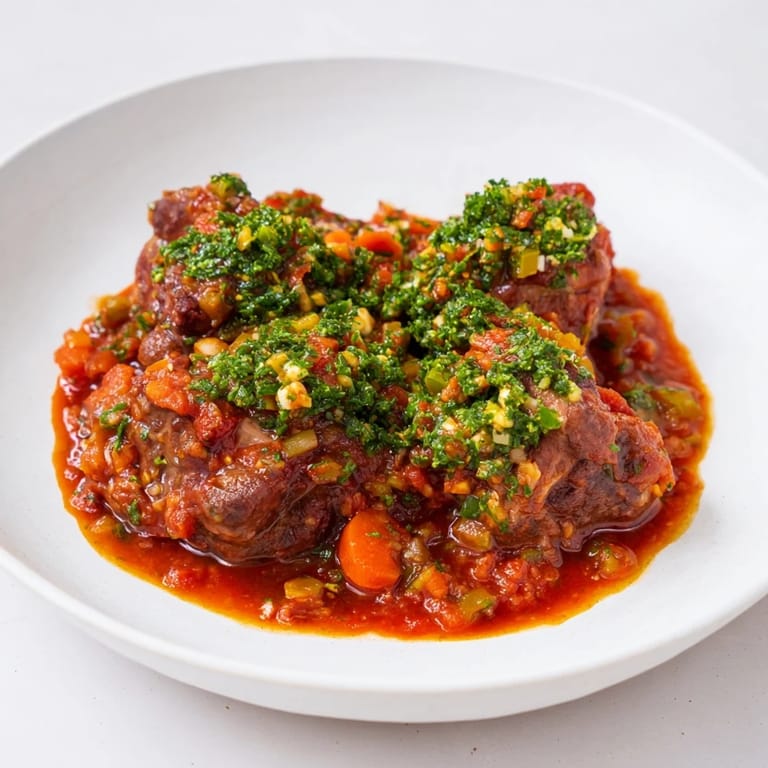
- Remove the shanks to a serving platter. If the sauce has too much fat on top, skim it gently. If it looks thin, simmer it uncovered for a few minutes to concentrate. Spoon the sauce over each shank and crown it with a pinch of gremolata right before serving.
 Save It
 There's a moment toward the end of the braise when you can't help yourself and you crack the oven door open—the smell alone tells you everything is going right. That's when you know this dish isn't just dinner; it's a small act of kindness to yourself and anyone lucky enough to sit at your table.
What Makes Osso Buco Special
Osso buco means bone with a hole—that marrow center is the whole point. As the meat braises, it surrenders its collagen to the liquid, thickening the sauce naturally and making it silky. The bone holds the meat together while also feeding the dish, and by the time you serve it, you've created something that tastes like it took far more effort than it actually did. That's the real magic.
Pairing and Serving Suggestions
This dish calls for something creamy and mild to balance its richness—saffron risotto (Risotto alla Milanese) is the traditional choice and worth mastering, but creamy mashed potatoes or polenta work beautifully too. The starch soaks up the sauce, and suddenly you're not cooking Italian food, you're living it for an evening. A simple green salad afterward, something bitter and crisp, helps your palate reset between bites.
Flexibility and Variations
If veal isn't available or feels too fancy, beef shanks are a worthy substitute—they'll need an extra 30 minutes to an hour in the oven, but they develop the same tender, silky texture and take on the sauce just as beautifully. For a gluten-free version, swap the all-purpose flour for rice flour or cornstarch, which browns just as well. Even small changes don't diminish this dish; they just make it yours.
- Beef shanks need about 2 hours 45 minutes to 3 hours total, so plan accordingly.
- You can prepare the entire braise a day ahead and refrigerate it—the flavors deepen overnight, and you just reheat gently before serving.
- If your sauce seems too thin at the end, mix a small spoon of cornstarch with cold water and stir it in while simmering—it thickens without making anything cloudy.
 Save It
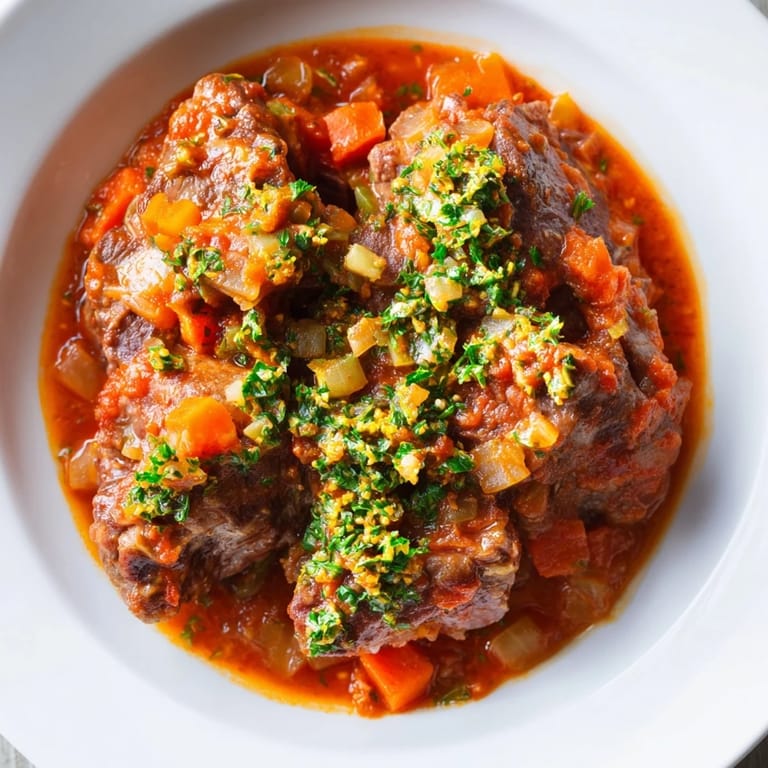
 This is the kind of dish that reminds you why you cook—not for speed, but for the chance to create something that feeds people in a way that matters. Serve it with intention and watch what happens.
Recipe FAQs
- → What cut of meat is best for Osso Buco?
Veal shanks, cut crosswise with the bone in, provide the ideal texture and richness when braised slowly to tenderness.
- → How long should Osso Buco be braised?
Braising for about 2 hours ensures the veal becomes tender and absorbs the flavors of the tomato and vegetable sauce.
- → What is gremolata and its role in the dish?
Gremolata is a mix of lemon zest, garlic, and parsley that adds a fresh, zesty contrast to the rich braised meat.
- → Can I prepare a gluten-free version?
Yes, using gluten-free flour for dredging maintains texture without gluten concerns.
- → What sides complement Osso Buco well?
Saffron risotto, polenta, or creamy mashed potatoes pair beautifully to balance the rich meat and sauce.