 Save It
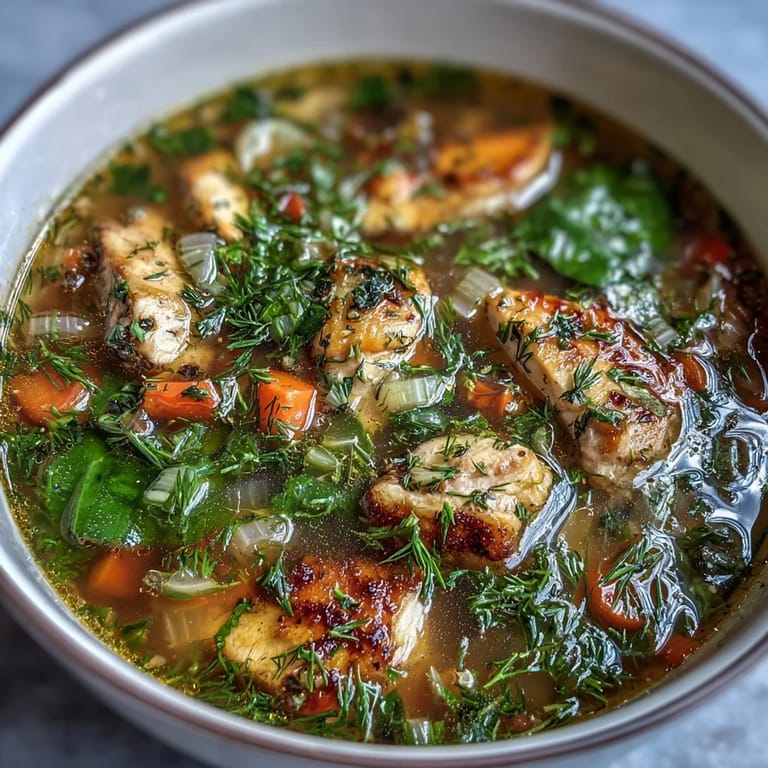
 My partner came home looking absolutely drained last week, and I knew exactly what would help: a bowl of something bright and clean that wouldn't sit heavy in the stomach. This soup emerged from that simple impulse, a one-pot remedy that tastes like care itself. The lemon cuts through everything with such clarity, and watching the spinach wilt into submission never gets old. What started as pantry intuition became something we've made three times since.
I made this for a friend recovering from a cold, and she actually asked for seconds—the first real food she'd wanted in days. There's something about the gentle warmth combined with that sharp lemon finish that just feels healing without being fussy about it. She now keeps it in her rotation for those mornings when everything feels chaotic.
Ingredients
- Boneless, skinless chicken breasts (2, about 350 g), cut into bite-sized pieces: Keeps the soup moving fast since small pieces cook through in minutes, and there's no wrestling with bones.
- Medium carrots (2), peeled and sliced: They bring natural sweetness that balances the acidity beautifully without needing added sugar.
- Celery stalks (2), sliced: This is your quiet flavor builder, adding depth that people can't quite name but absolutely notice.
- Medium zucchini (1), diced: Adds body without heaviness, and it softens into the broth seamlessly.
- Small onion (1), finely chopped: The foundation—cook it long enough and it becomes almost sweet.
- Garlic cloves (3), minced: Don't skip this step; the smell alone tells you this soup cares about flavor.
- Baby spinach (150 g): Gets stirred in at the very end so it stays vibrant and tender, not gray and mushy.
- Small potato (1), peeled and diced, optional: Add this if you want the soup to feel more like a full meal rather than a starter.
- Low-sodium chicken broth (1.5 liters): Quality matters here since it's your main flavor vehicle; taste a spoonful before committing.
- Water (250 ml): Dilutes the broth just enough to let the herbs sing without overwhelming saltiness.
- Lemon juice (1 lemon, plus wedges for serving): This is the secret weapon; it wakes up everything and makes the soup feel bright rather than bland.
- Bay leaf (1): Infuses quietly in the background, then gets removed before serving.
- Dried thyme (1 tsp or 1 Tbsp fresh): Use fresh if you have it; the difference is subtle but real.
- Dried oregano (1/2 tsp): Adds an earthy note that keeps the soup interesting.
- Fresh parsley (1/4 cup), chopped: Stir most in at the end for color and freshness that survives cooking.
- Fresh dill (2 Tbsp), chopped: The underrated herb that makes people ask what you did differently.
- Salt and freshly ground black pepper, to taste: Taste as you go; your broth might already carry salt, so go easy at first.
- Olive oil (1 Tbsp): Just enough to avoid sticking without making the soup greasy.
Tired of Takeout? 🥡
Get 10 meals you can make faster than delivery arrives. Seriously.
One email. No spam. Unsubscribe anytime.
Instructions
- Get your pot warm and sauté the base:
- Pour the olive oil into a large soup pot over medium heat, then add the onion, carrots, and celery together. Watch them soften for about five minutes, stirring every now and then, until they lose their raw edge but haven't started browning.
- Bloom the garlic:
- Stir in the minced garlic and let it cook for just one minute until you can smell that sharp, toasty aroma filling your kitchen. This is important: don't let it scorch, or it'll taste bitter for the whole soup.
- Brown the chicken lightly:
- Add the bite-sized chicken pieces and stir them around for three to four minutes until they're mostly opaque on the outside. They don't need to cook through yet, just get a little color and release their initial flavors into the pot.
- Build the broth base:
- Pour in the chicken broth and water, then add the diced potato if you're using it, along with the zucchini, bay leaf, thyme, and oregano. Season with a pinch of salt and pepper, knowing you'll adjust this at the end once all the flavors develop.
- Simmer gently until everything's tender:
- Bring everything to a gentle boil, then lower the heat, cover the pot, and let it bubble quietly for about twenty minutes. The vegetables should be soft but not falling apart, and the chicken should be cooked through with no pink inside.
- Add the delicate greens and fresh herbs:
- Stir in the spinach, parsley, and dill, letting them soften for three to four minutes until the spinach looks wilted and the herbs have infused their bright flavors throughout. The whole pot will smell absolutely alive at this point.
- Finish with lemon and final seasoning:
- Squeeze in the lemon juice and taste the soup; this is when you adjust salt and pepper to suit your preference. The lemon should make everything taste crisper and more intentional, not sour.
- Serve with care:
- Remove the bay leaf, ladle the soup into bowls, and offer extra fresh herbs and lemon wedges on the side. Let people customize their own experience.
 Save It
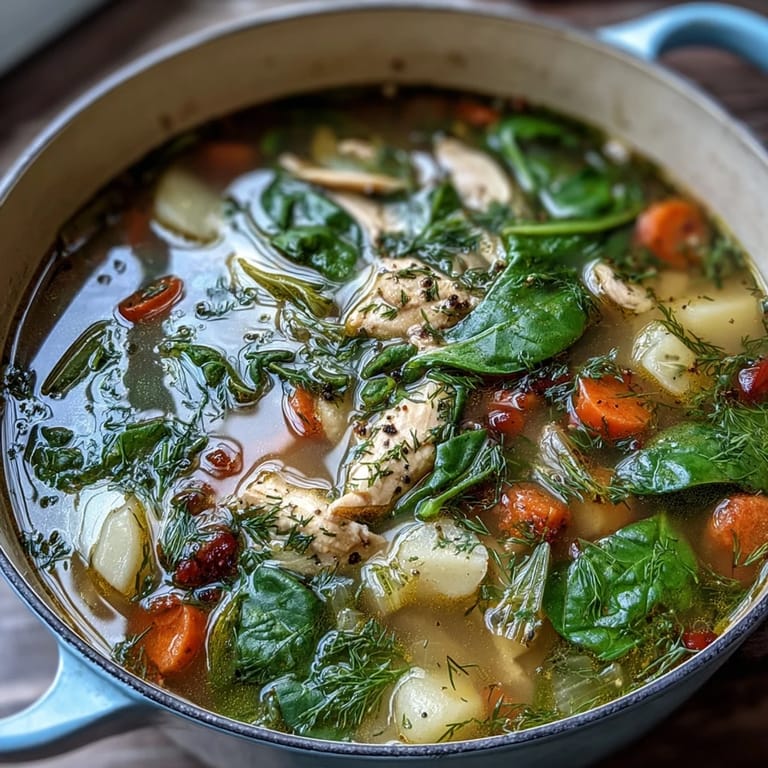
 There's a moment in every batch where I pause and just breathe in the steam rising from the pot, and it feels like the kitchen is doing something kind. This soup has that effect on people around you—they walk in mid-cooking and immediately want to stay.
The Art of Timing
The hardest part isn't the cooking—it's the waiting. Twenty minutes might sound short, but when you're eager to eat something healthy, it feels eternal. I've learned that this is actually the soup's gift: it gives you time to breathe, to set a table properly, to pour water for yourself. The simmer is active patience.
Flavor Building Secrets
Every layer matters here: the onion sweetness, the herb complexity, the chicken protein, the vegetable textures. But the lemon is what transforms it from good to something that sticks with you. Without it, the soup is nourishing but forgettable; with it, people ask for the recipe. The herbs matter too—fresh dill especially has this anise-like quality that plays beautifully against the lemon's tartness.
Making It Your Own
This soup is forgiving enough to welcome your own additions without falling apart. I've added white beans for protein, thrown in cauliflower when carrots felt boring, even stirred in a splash of coconut milk on adventurous days. The structure stays solid while the personality shifts. Here are some directions to explore:
- For vegetarian versions, omit the chicken and add canned chickpeas or white beans for protein and substance.
- A pinch of chili flakes brings gentle heat without overwhelming the bright, clean flavors you've built.
- Crusty whole-grain bread on the side turns this from a light appetizer into a complete, satisfying meal.
 Save It
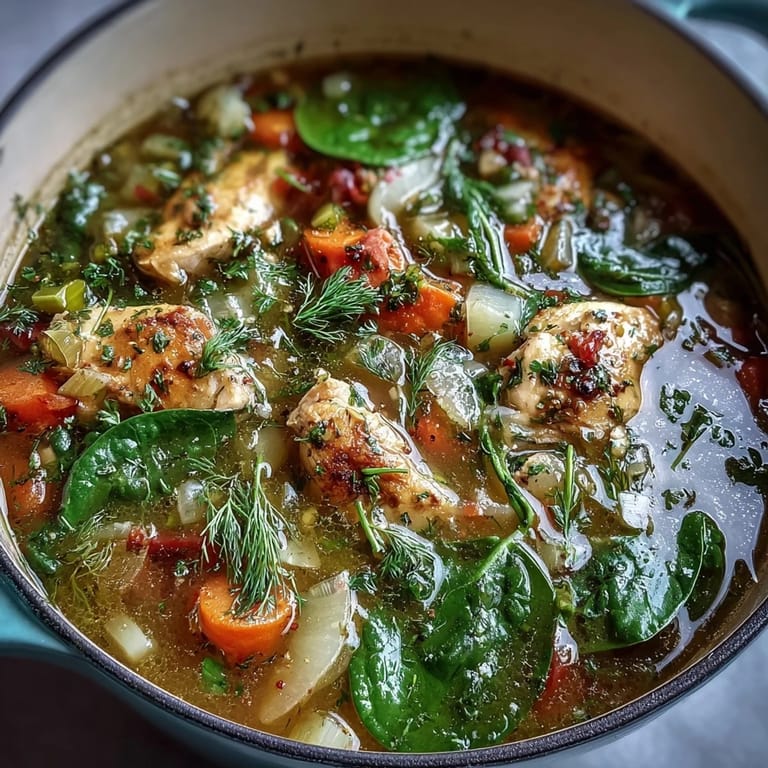
 There's real comfort in a soup that tastes like someone understands what you need, even if that someone is just future you being kind to present you. Make this often.
Recipe FAQs
- → What vegetables work best in this soup?
Carrots, celery, zucchini, onion, garlic, spinach, and potato provide a balanced texture and fresh flavors.
- → Can I make this soup vegetarian?
Yes, omit the chicken and substitute with chickpeas or white beans for added protein and heartiness.
- → How do the herbs enhance the flavor?
Thyme, oregano, parsley, dill, and bay leaf add fresh, earthy, and aromatic notes that brighten the soup.
- → What’s the best way to store leftovers?
Keep leftovers in an airtight container in the refrigerator for up to 3 days; flavors intensify overnight.
- → Can I adjust the lemon amount?
Absolutely. Add lemon juice to taste for a gentle brightness or a more pronounced citrus note.