 Save It
 My grandmother kept a special jar on her kitchen shelf every November, dusty and ceremonial, waiting for the dried cod that would arrive wrapped in brown paper. The first time I watched her transform those hard, pale sticks into something tender and alive, I understood that lutefisk wasn't just food—it was a conversation across generations, a ritual that demanded patience and faith. She'd let me poke at the soaking fish each day, watching it slowly surrender to water, and I learned that the best dishes sometimes require us to simply wait. Now, when the season turns cold, I make it the way she taught me, and the whole kitchen fills with that distinctive briny sweetness that means home.
I served this to my partner on a snowy Christmas Eve without warning, nervous that he'd focus on the unfamiliar texture or the strong aroma. Instead, he went quiet, took another bite, and asked if this was what his Swedish neighbor had been hinting about all those years. That one meal somehow connected him to a whole culinary world he'd never explored, and now it's become our quiet tradition—just the two of us, lutefisk, and the kind of silence that means contentment.
Ingredients
- Dried cod (lutefisk), 1 kg: This is the heart of the dish—look for it at Scandinavian markets or online specialty retailers, usually sold in vacuum-sealed packages around the holidays. The transformation during soaking is almost magical to witness.
- Cold water for soaking: The most important ingredient that nobody thinks about; tap water works perfectly, and changing it daily prevents the fish from developing any off flavors.
- Coarse salt, 1 tbsp: This draws out excess moisture before baking and seasons the fish gently from within.
- Unsalted butter, 2 tbsp: The foundation of the sauce; it needs to be unsalted so you control the seasoning completely.
- All-purpose flour, 2 tbsp: Creates the roux that thickens the sauce into silky perfection; whisk it carefully to avoid lumps that can ruin the texture.
- Whole milk, 300 ml: Room temperature milk whisks in smoothly and creates a creamy sauce without curdling.
- Dijon mustard, 2 tbsp: Brings sharpness and sophistication; don't skip this for the whole-grain version alone.
- Whole-grain mustard, 1 tbsp: The texture and slightly less acidic flavor balance the Dijon beautifully.
- Sugar, 1 tsp: Just a whisper to round out the mustard's tanginess and create harmony on the palate.
- Salt and white pepper, to taste: White pepper keeps the sauce pale and refined-looking; add it in pinches at the end.
- Boiled potatoes, 4 small: These absorb the sauce and provide a gentle starch that anchors the meal.
- Crispbread or flatbread, 4 slices: Essential for scooping up every last bit of sauce; it's not optional if you want the full experience.
- Fresh parsley, chopped (optional): A final brightness that lifts the dish if you want it, though I often leave it off to honor the simplicity.
Tired of Takeout? 🥡
Get 10 meals you can make faster than delivery arrives. Seriously.
One email. No spam. Unsubscribe anytime.
Instructions
- Begin the soaking ritual:
- Rinse the dried cod under cold water until the pieces feel less dusty and the water runs clearer. Place everything in a large container, submerge completely in cold water, and store in your refrigerator for 5–6 days, changing the water each morning—this daily change is non-negotiable, as it removes the strong flavors and leaves only the sweet, mild fish underneath.
- Salt and prepare for baking:
- After soaking, drain the fish thoroughly and sprinkle it with coarse salt, letting it sit undisturbed for 30 minutes so the salt can draw out surface moisture. Rinse away all the salt under cold running water, pat the pieces completely dry with paper towels, and preheat your oven to 200°C (390°F).
- Bake until tender:
- Arrange the fish in a baking dish, cover it loosely with foil to prevent drying, and slide it into the oven for 25–30 minutes, checking partway through by gently pressing with a fork—the flesh should separate into flakes and be completely opaque, never translucent.
- Make the mustard sauce:
- Melt butter in a saucepan over medium heat, watching it foam gently before whisking in flour for exactly one minute, stirring constantly but never letting it brown or darken. Reduce heat to medium-low and add milk in a slow stream while whisking rhythmically, creating a smooth, lump-free base that gradually thickens over 3–4 minutes of gentle simmering.
- Season with mustard and care:
- Turn off the heat, stir in both mustards and the sugar, then taste before adding salt and white pepper—it should taste boldly mustardy with a subtle sweetness and no harsh edges. Keep the sauce warm until serving, stirring occasionally.
- Plate and serve with intention:
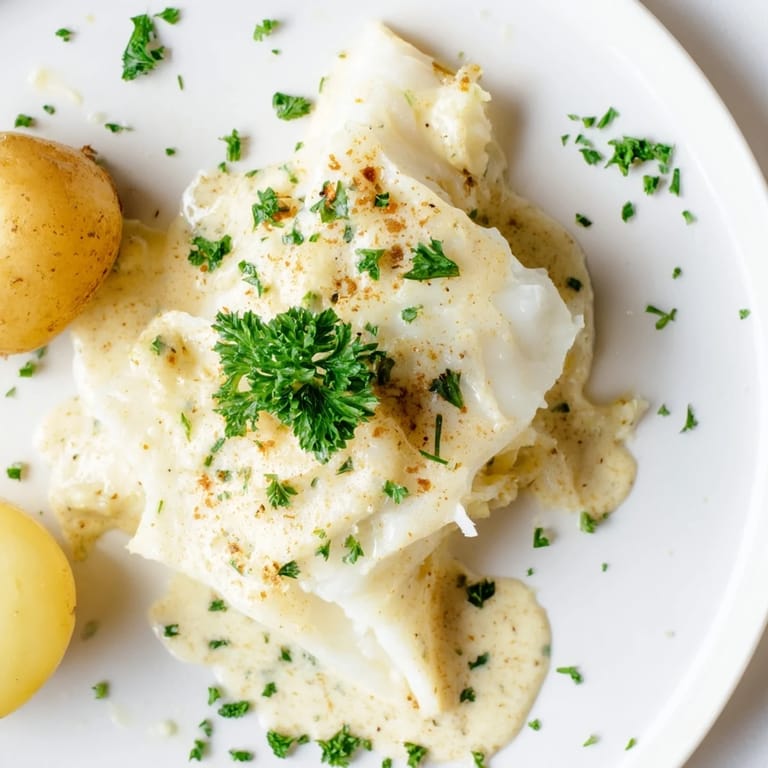
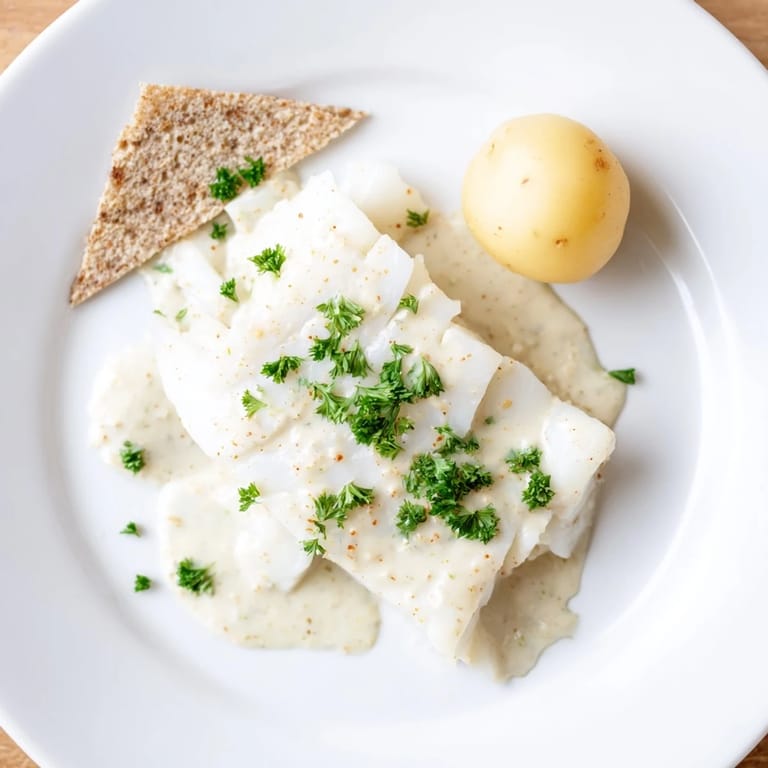
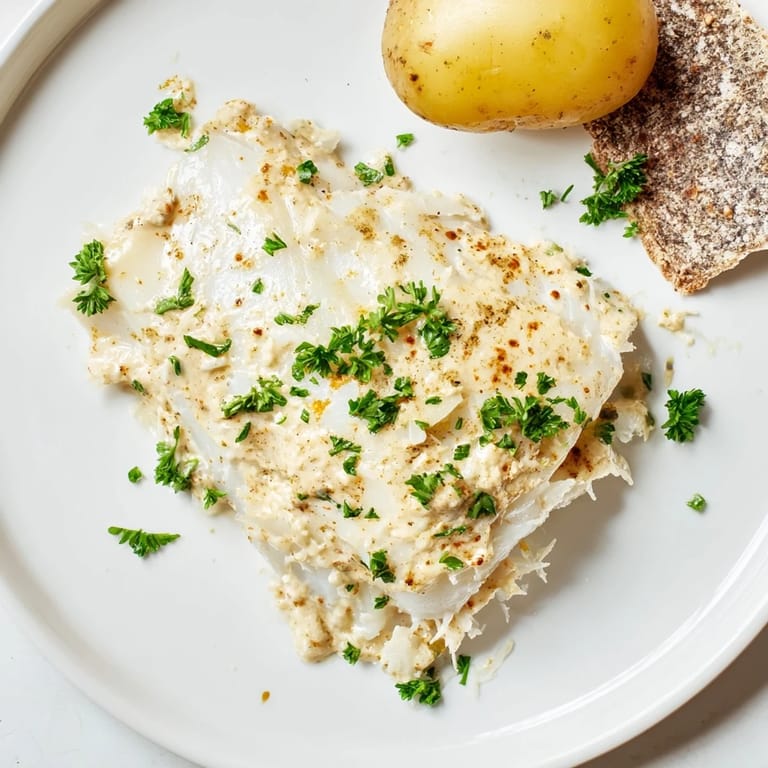
- Place a portion of flaky lutefisk in the center of each plate, surround it with a boiled potato and crispbread, then spoon the warm mustard sauce generously over everything. A light scatter of fresh parsley brings color and a hint of freshness, though the dish is equally perfect without it.
 Save It
 One year, my grandmother let me be the one to change the soaking water every single day, and I felt like a scientist conducting an important experiment. By day five, when I lifted a piece of fish and watched it bend like butter instead of snapping like a stick, I finally understood that patience wasn't something she was teaching me—it was something the recipe itself was teaching us both, together.
The History Behind the Dish
Lutefisk dates back centuries to when Scandinavian fishermen needed to preserve their catch through long winters without refrigeration, and the combination of drying and lye-curing created something that could last months in the pantry. What started as pure necessity became tradition, then ritual, and now it carries the weight of cultural memory in every fiber of the rehydrated fish. Serving it today connects you to countless kitchens across Norway, Sweden, and beyond, all doing exactly what you're doing at this moment.
Why the Soaking Takes So Long
The reason lutefisk requires 5–6 days of soaking isn't bureaucratic—it's chemical. The dried fish has been treated with lye in its traditional preparation, and soaking gradually removes that lye while allowing the fish to reabsorb moisture and soften completely. You're not waiting for nothing; you're reversing time, essentially turning a shelf-stable log back into the tender fish it once was. Rush this step and the texture will be unpleasantly firm; honor it and you'll have something almost creamy in its delicacy.
Building the Perfect Mustard Sauce
The mustard sauce is where lutefisk truly shines, transforming mild fish into something with character and depth. The combination of Dijon and whole-grain mustard creates layers—sharpness from the Dijon, texture and subtle sweetness from the whole-grain—while a tiny pinch of sugar and the creamy milk base keeps everything balanced instead of harsh. This sauce is forgiving and flexible; if it tastes too tangy, add a touch more milk and butter; if it feels bland, a whisper more mustard corrects it instantly.
- Make the roux slowly and patiently—rushing it creates lumps that no amount of whisking can fix.
- Warm the milk slightly before adding it to the roux so the temperature shock doesn't cause curdling.
- Taste and adjust the seasoning only after the sauce has fully cooled to room temperature, as heat masks flavors.
 Save It
 There's something profound about bringing this dish to the table, knowing what it represents and how far it traveled to get there. It asks you to slow down, to sit with people you care about, and to taste something that connects to centuries of kitchens before yours.
Recipe FAQs
- → What is lutefisk and how is it prepared?
Lutefisk is dried whitefish, usually cod, that’s soaked in cold water for several days to rehydrate. After soaking, it’s rinsed, salted, and then gently baked until flaky.
- → How is the mustard sauce made?
The sauce combines melted butter, flour, and milk cooked until creamy, then flavored with Dijon and whole-grain mustards, sugar, salt, and white pepper for balance.
- → What sides are traditionally served with this dish?
Boiled potatoes and crispbread or flatbread commonly accompany the baked fish, adding texture and balance to the plate.
- → Can gluten-free flour be used?
Yes, substituting all-purpose flour with a gluten-free alternative is recommended for those needing gluten-free options.
- → How long does soaking the fish take?
The dried fish should soak in plenty of cold water for 5 to 6 days, with daily water changes, to achieve the right texture.
- → What cooking temperature and time are used?
The fish is baked covered at 200°C (390°F) for 25 to 30 minutes until opaque and flaky.