 Save It
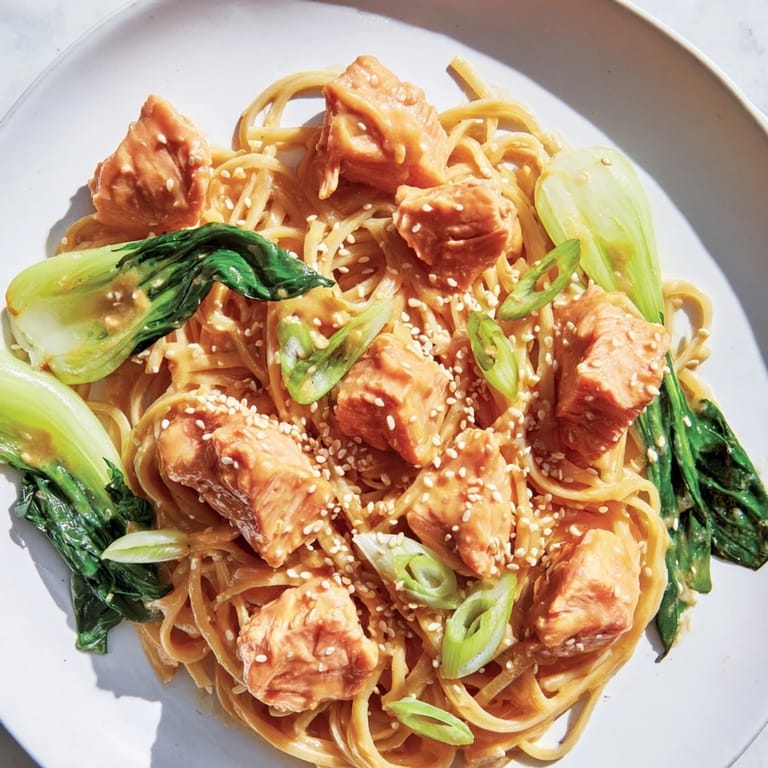
 I discovered miso butter sauce entirely by accident one Tuesday night when I had salmon, pasta, and a half-empty jar of miso staring at me from the fridge. Instead of my usual lemon-butter approach, I whisked the miso into the butter and cream out of sheer curiosity, and the result was so unexpectedly rich and umami-forward that I've made it dozens of times since. There's something about the way the fermented miso plays against the sweet mirin and silky cream that makes the dish feel both comforting and elegant at once.
I remember cooking this for my neighbor one Saturday when she brought over wine and said she needed comfort food that didn't feel heavy. As the salmon started to curl at the edges and the kitchen filled with this toasty, fermented aroma, she stood at the counter just breathing it in—before we'd even plated anything, I could tell she understood why I kept coming back to this recipe.
Ingredients
- Salmon fillets: Cut into bite-sized pieces so they cook evenly and get coated in sauce rather than sitting on top of it—this changes everything about how the dish feels when you eat it.
- Linguine or spaghetti: Thin strands catch the sauce better than thicker pasta, and the al dente texture keeps everything from turning into mush when you toss it all together.
- Baby bok choy: The leaves wilt almost instantly while the stems stay slightly crunchy, adding texture and a mild sweetness that balances the umami.
- Garlic and scallions: Garlic builds the flavor foundation, and raw scallions at the end add a bright pop that cuts through all that richness.
- Unsalted butter: The miso and soy sauce bring plenty of salt, so unsalted butter gives you control and prevents the sauce from becoming too aggressive.
- White miso paste: Lighter and less funk-forward than red miso, it dissolves smoothly into the cream without overpowering the salmon.
- Soy sauce, mirin, and sesame oil: Together they create that Japanese-Italian bridge, adding depth without making the dish taste explicitly ethnic—it just tastes good.
- Heavy cream: This isn't a light dish, but the cream is what makes the sauce silky enough to coat every strand of pasta evenly.
Tired of Takeout? 🥡
Get 10 meals you can make faster than delivery arrives. Seriously.
One email. No spam. Unsubscribe anytime.
Instructions
- Start the pasta:
- Boil salted water and cook your pasta until just al dente—it'll finish cooking slightly when you toss it in the hot sauce, so don't go soft here. Reserve that pasta water before you drain; you'll need it to adjust the sauce consistency later.
- Build the flavor base:
- Heat butter and sesame oil together, then let garlic toast in that fragrant oil for just a minute until the smell hits you. This is your moment to get the temperature right; too hot and the garlic burns, too cool and it steams.
- Cook the salmon gently:
- The pieces will cook faster than you expect, so watch for the edges to turn opaque and the center to stay barely translucent. Two to three minutes per side is usually enough; the residual heat will keep cooking it after you remove it from the pan.
- Create the miso sauce:
- Whisk the miso paste into the warm butter slowly so it dissolves completely instead of clumping. The soy sauce and mirin join in, and suddenly your skillet smells like a Japanese restaurant in the best way possible.
- Add the cream and vegetables:
- Pour the cream in slowly while stirring, watching the sauce transform from glossy to silky. Toss in the bok choy and let it wilt for just a couple minutes—overcooking it turns it mushy and bitter.
- Bring it all together:
- Return the salmon to the pan, then add the drained pasta. Toss gently and slowly add pasta water until the sauce coats everything without pooling on the bottom. This is where the dish either sings or clumps, depending on how much liquid you use.
- Finish and serve:
- Plate immediately while everything is still hot, scatter the scallions and sesame seeds over the top, and squeeze a little lemon over if you like the brightness.
 Save It
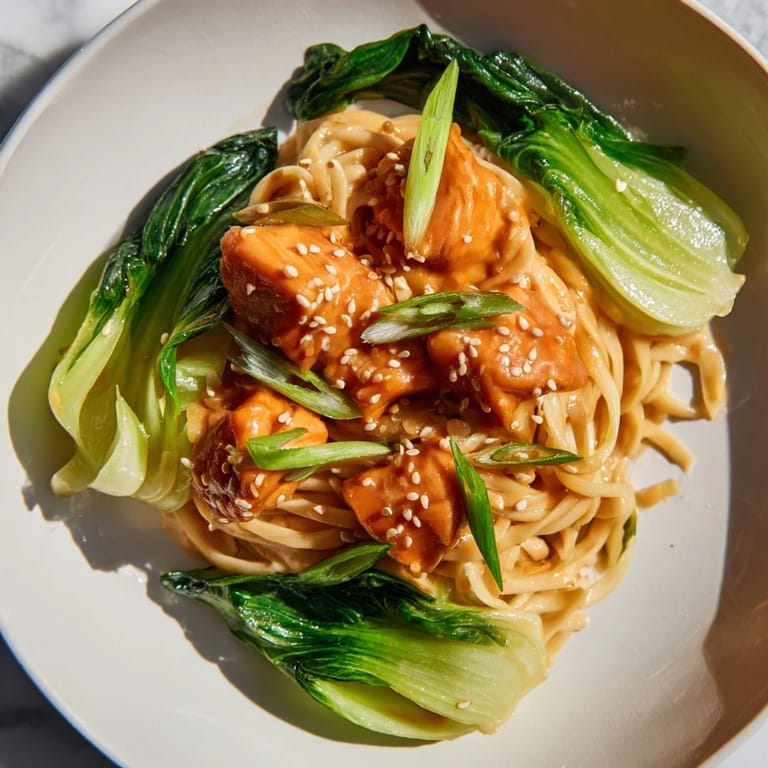
 There's a moment right when you toss the hot pasta into that miso cream sauce and the whole thing comes together, coated and glossy and fragrant, where you realize you've made something that tastes like it took way more effort than it actually did. That's the moment I reach for the wine and feel like I can finally breathe.
Why Miso Matters Here
Miso paste is fermented, which means it brings an underlying depth that regular butter and cream simply cannot touch. When you blend it with soy sauce and a little mirin, you're building layers—salty, slightly sweet, slightly funky—that make the salmon taste richer without needing cream to do all the heavy lifting. The salmon itself becomes a vehicle for the sauce rather than the star, and that's actually when the dish becomes most interesting.
The Bok Choy Texture Trick
Bok choy cooks in stages if you let it—the tender leaves wilt almost immediately in the hot sauce, while the thicker stems stay firm longer. If you chop it into uneven pieces, you get both textures in one bite, which keeps the pasta from feeling monotonous. Some people prefer spinach here for softness, but the slight resistance of bok choy is what keeps me coming back.
Variations and Additions
This sauce is more forgiving than it seems, and the framework holds up well to small changes depending on what you have on hand or what you're craving. Butter, miso, cream, and a little umami are the non-negotiables; everything else can shift. Some nights I add a pinch of chili flakes for warmth, other times I slip in a handful of spinach alongside the bok choy, and it never falls apart.
- A splash of fresh lemon juice at the very end brightens everything without making it taste acidic.
- If you don't have heavy cream, whole milk works but you'll need to use less pasta water to keep the sauce from breaking.
- Mushrooms sautéed with the garlic add earthiness and extra umami if you want the dish to feel more substantial.
 Save It
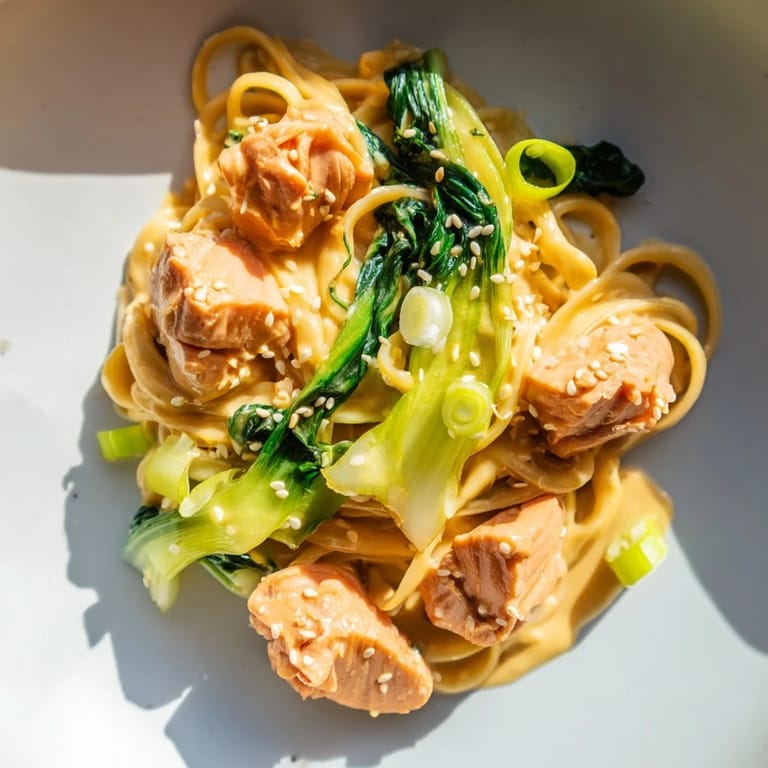
 This is the kind of dish that tastes like you know what you're doing in the kitchen, even on nights when you're throwing dinner together by memory and improvisation. Make it once, and you'll understand why it's become my answer to every "what's for dinner" question.
Recipe FAQs
- → What type of pasta works best?
Linguine or spaghetti complement the creamy sauce well, holding the flavorful coating without overpowering the dish.
- → Can I substitute the bok choy?
Yes, spinach or other leafy greens can be used if bok choy is unavailable, offering a similar fresh texture.
- → How do I prevent overcooking the salmon?
Cook salmon pieces briefly on medium heat until just opaque, about 2–3 minutes per side, to keep them tender and moist.
- → What does the miso butter sauce add?
The miso butter sauce provides a rich umami flavor profile, balancing savory and creamy elements enhancing the seafood and pasta.
- → Can I prepare this dish gluten-free?
Use gluten-free pasta and tamari instead of regular soy sauce to maintain similar flavors without gluten.
- → How to adjust the sauce consistency?
Reserve some pasta cooking water and add it gradually to the sauce to achieve a silky, smooth texture when tossing everything together.