 Save It
 My grandmother's kitchen in Vilnius smelled like earth and smoke the first time she taught me to make cepelinai. She'd grate potatoes with mechanical precision while telling me about winters when these dumplings meant survival, stretching meat through lean months. The sound of the grater against the raw potato was almost rhythmic, hypnotic. Years later, I found myself grating potatoes in my own kitchen on a cold November evening, and suddenly I understood what she meant about patience and tradition being kneaded into every dumpling.
I served cepelinai to a table of skeptical friends who'd never heard of Lithuanian food, and watched their faces change with that first forkful. One friend went silent, which said everything. Now whenever someone asks what my favorite thing to cook is, I think of that moment, and of how comfort food doesn't need a fancy name to be memorable.
Ingredients
- Starchy potatoes (1.5 kg raw, plus 2 medium boiled): The raw potatoes give the dough its structure while the boiled ones add moisture and binding power; russets work best because they're less watery than other varieties.
- Salt (1 tsp for dough, 1 tsp for filling): Don't skimp here because these dumplings need seasoning throughout, not just on the surface.
- Potato starch (1 tbsp optional): This becomes your secret weapon on humid days when potatoes release extra moisture; save the starch that settles at the bottom of the potato water if you skip buying it separately.
- Ground pork and beef (250g and 150g): The combination gives better flavor than either meat alone, though you can adjust the ratio based on preference.
- Onion and garlic (1 small onion, 1 clove): These flavor the filling and should be minced fine so they distribute evenly.
- Bacon or smoked pork belly (150g diced): This becomes the foundation of the sauce and should be good quality because it's where much of the flavor comes from.
- Sour cream (300ml): Use full-fat sour cream because it clings to the dumplings better and tastes richer.
- Fresh dill (1 tbsp chopped, optional): Dill is traditional but the sauce works beautifully without it if you don't have any on hand.
Tired of Takeout? 🥡
Get 10 meals you can make faster than delivery arrives. Seriously.
One email. No spam. Unsubscribe anytime.
Instructions
- Prepare the potato base:
- Grate your raw potatoes on the fine side and immediately wrap them in cheesecloth or a clean kitchen towel, squeezing hard and long until your hands ache slightly—this removes the water that would otherwise make your dough soggy. Let the reserved liquid sit for a few minutes, then carefully pour off the water to reveal a layer of potato starch at the bottom; this white sediment is liquid gold for binding.
- Mix the dough:
- Combine the squeezed grated potatoes with the mashed boiled potatoes, salt, and that saved potato starch, mixing until everything holds together like soft clay. If it still feels too wet and sticky, add a bit more potato starch a teaspoon at a time.
- Season the filling:
- Combine ground pork, ground beef, finely chopped onion, minced garlic, salt, and black pepper in a bowl, mixing with your hands until the meat is evenly seasoned throughout. The mixture should hold together without being dense.
- Shape the dumplings:
- Wet your hands to prevent sticking, then take a portion of dough about the size of a large egg and flatten it into a thin patty in your palm. Place a heaping tablespoon of meat filling in the center and gently pull the dough edges up and around it, sealing completely so no filling peeks through. Roll gently between your palms to form an oval shape, almost like a small rugby ball.
- Cook until they float:
- Bring a large pot of salted water to a gentle simmer (too vigorous and the dumplings burst), carefully slide them in batch by batch with a slotted spoon, and let them cook for 25 to 30 minutes until they float and feel firm to the touch. Don't overcrowd the pot or they'll stick together.
- Make the sauce:
- While the dumplings cook, fry diced bacon in a skillet over medium heat until the edges crisp and the fat renders into liquid gold, then add finely chopped onion and sauté until it softens and turns light golden. Pour in the sour cream slowly while stirring, add dill if you have it, and warm everything together gently without letting it boil (boiling makes sour cream separate).
- Finish and serve:
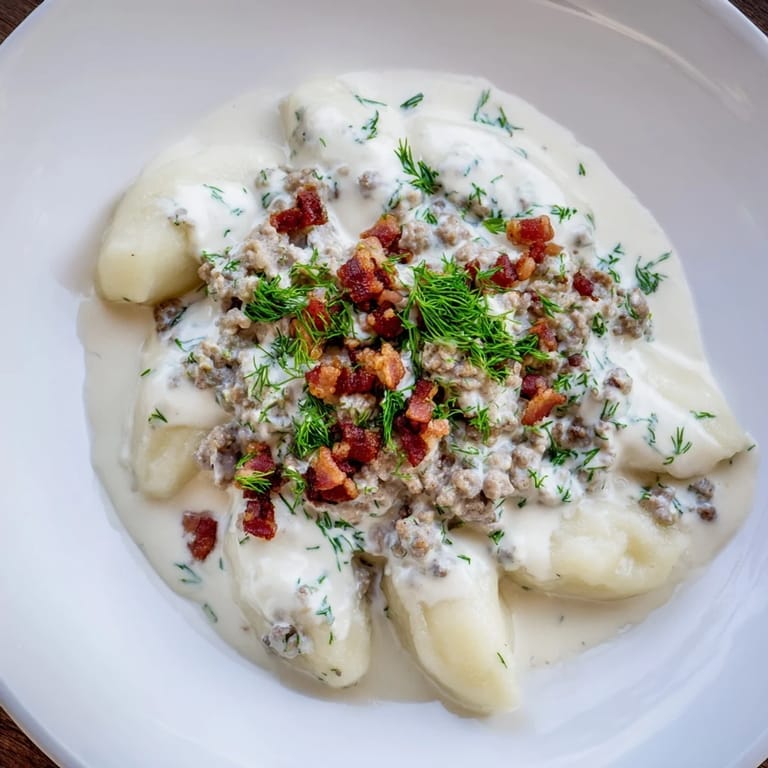
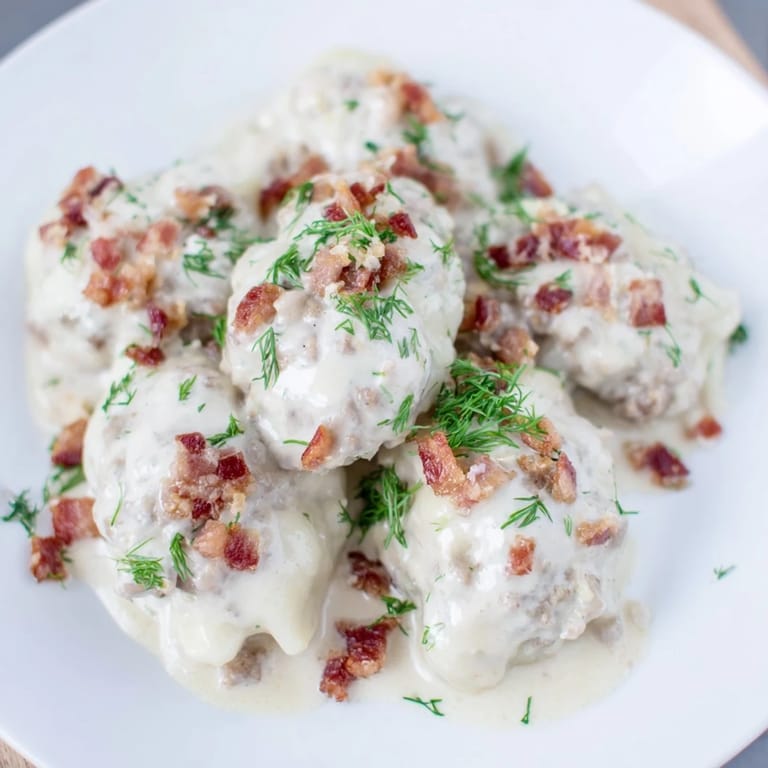
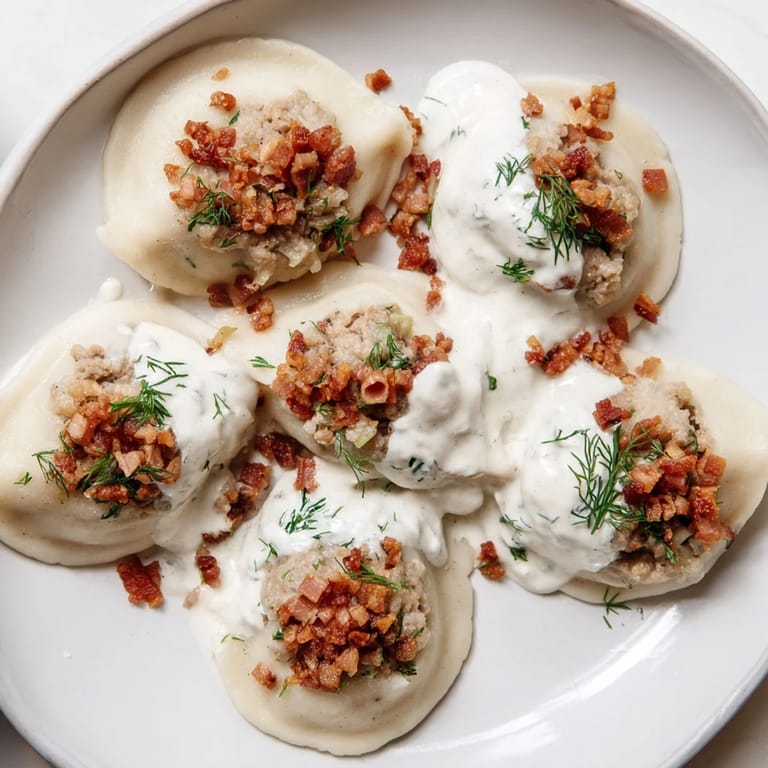
- Transfer the finished dumplings to a warm serving dish and generously pour the bacon and sour cream sauce over the top, letting it pool around each one. Serve immediately while everything is still hot.
 Save It
 There was a moment during one Saturday when my neighbor smelled these cooking and came over asking what was happening in my kitchen, and within an hour we were teaching her the shaping technique over cups of coffee. These dumplings have this quiet way of bringing people together, of making them want to linger at the table.
Why Potato Starch Matters More Than You'd Think
The first time I made cepelinai without proper potato starch extraction, they absorbed water like sponges and fell apart during cooking. I learned that humid days require extra squeezing, and that letting the liquid sit lets the starch settle so you can pour off the water without losing that binding agent. Now I always save the white sediment from my squeezed potato liquid, and on dry days when the dough seems too moist, those few teaspoons make the difference between success and a pot full of disappointed dumplings.
The Meat Filling Balance
Using pork alone makes the dumplings taste a bit one-dimensional, while beef alone gives them an earthiness that doesn't quite sing. The combination of both creates a savory depth that makes people go back for seconds, though I've learned to grind the onion very fine so it disappears into the meat rather than leaving little chunks. If you don't have fresh garlic, skip it rather than using powder; the filling already has so much flavor that garlic powder can taste harsh.
Making Them Your Own
These dumplings are forgiving enough to adapt to what you have on hand, and I've made versions with all pork when beef was expensive, with mushrooms and caramelized onions for vegetarian guests, and even once with leftover roast chicken when I was feeling creative. The potato dough is what matters; the filling can bend to your pantry.
- For a lighter sauce, use Greek yogurt mixed with a little sour cream and it still tastes beautiful.
- Make the dumplings ahead and freeze them on a baking sheet, then boil from frozen adding about five extra minutes to the cooking time.
- If your dumplings start to float before 25 minutes, they're still cooking; let them go the full time so the potato fully sets.
 Save It
 Cepelinai taught me that traditions exist because they work, not because they're complicated. These dumplings carry the weight of winter kitchens and stretching ingredients across generations, but they're also just dinner, made better when someone you care about is sitting at your table waiting for them.
Recipe FAQs
- → What type of potatoes are best for Cepelinai?
Starchy potatoes are preferred as they create a cohesive dough ideal for shaping dumplings. Combining grated raw and mashed boiled potatoes balances texture and binding.
- → How do you prevent the dumplings from falling apart during cooking?
Thoroughly squeeze out excess liquid from grated potatoes and use potato starch to improve binding. Gently simmer dumplings rather than boiling vigorously.
- → Can the filling be customized?
Yes, while the traditional blend uses pork and beef with onions and garlic, you can substitute or add ingredients like mushrooms or different spices to suit preferences.
- → What is the purpose of the potato starch collected from the liquid?
The potato starch settles at the bottom when the grated potato liquid stands. Adding this starch to the dough improves its firmness and helps maintain shape.
- → How is the sauce prepared for Cepelinai?
The sauce combines crisp fried bacon and sautéed onions, mixed into smooth sour cream and fresh dill, warming gently to enrich the dumplings without boiling.