 Save It
 There's something about the aroma of bacon and red wine mingling in a Dutch oven that pulls you back to why you started cooking in the first place. I discovered Coq au Vin not through a fancy restaurant but on a rainy Tuesday when my neighbor mentioned she'd learned it from her grandmother in Lyon, and something about the way she described the chicken falling off the bone made me determined to try it that very week. The first time I made it, I underestimated how patient the dish demands—but that long, gentle braise is exactly where the magic happens. Now, whenever I have people over and the house fills with that deep wine-and-thyme fragrance, I know they're about to taste something that feels both comforting and unmistakably special.
I made this for my book club once, nervous about the two-hour cook time and whether my Dutch oven was truly heavy enough, but something about braising chicken in Burgundy while people gathered in my kitchen made everyone pause mid-conversation when that lid came off. One guest asked if I'd been trained in France, and I laughed—the only training was reading a recipe and trusting the process—but that moment reminded me that food this good feels like an accomplishment even when it's mostly just time and wine doing the work.
Ingredients
- Chicken (1.5 kg, cut into 8 pieces): Use bone-in, skin-on pieces for the most flavor; the skin renders fat while the bones build body into the sauce.
- Smoked bacon or pancetta (150 g, diced): This isn't decoration—the crispy rendered fat and smoky depth are what make the dish sing.
- Pearl onions (200 g, peeled): Yes, peeling them is tedious, but they stay whole and glossy, becoming jewels in the finished dish; you can blanch them first to loosen the skins.
- Cremini or button mushrooms (250 g, quartered): Sauté them separately to keep them from turning rubbery and gray in the braise.
- Carrots (2 medium, sliced): They soften into the sauce and add natural sweetness to balance the wine's acidity.
- Garlic (2 cloves, minced): Just enough to whisper through the dish without shouting.
- Dry red wine (750 ml, Burgundy or Pinot Noir): This is where your budget matters—avoid anything you wouldn't sip, but a $12 bottle works perfectly.
- Chicken stock (250 ml): Homemade is lovely, but good quality store-bought won't betray you.
- Tomato paste (2 tbsp): A small amount adds depth and helps the sauce grip the chicken.
- All-purpose flour (2 tbsp): This light coating thickens the sauce without making it heavy or pasty.
- Olive oil (2 tbsp): Use a neutral variety for cooking, not your precious finishing oil.
- Unsalted butter (2 tbsp): For the mushrooms and to add richness to the final sauce.
- Bay leaves (2) and fresh thyme (4 sprigs): These quiet aromatics are essential; dried thyme won't give you the same subtle complexity.
- Salt and freshly ground black pepper: Taste as you go; the wine and stock are often salted, so hold back initially.
Tired of Takeout? 🥡
Get 10 meals you can make faster than delivery arrives. Seriously.
One email. No spam. Unsubscribe anytime.
Instructions
- Prepare and season the chicken:
- Pat each piece dry with paper towels—moisture prevents browning—then season generously with salt and pepper on both sides. This small step is the difference between golden, crisp skin and pale, steamed chicken.
- Render the bacon:
- Heat 1 tbsp olive oil in your Dutch oven over medium heat, add the diced bacon, and let it cook until the edges turn crispy and the fat is rendered, about 5 minutes. Remove it with a slotted spoon and set aside; you're building a foundation of flavor.
- Brown the chicken in batches:
- In the bacon fat (don't clean the pot), work in batches so the pieces aren't crowded, browning each side until golden, about 3 to 4 minutes per side. Patience here creates fond—those browned bits stuck to the bottom—that will flavor your sauce. Set the browned chicken aside on a plate.
- Sauté the aromatic vegetables:
- Add the sliced carrots, pearl onions, and minced garlic to the pot and cook, stirring occasionally, until the vegetables begin to soften and the edges turn lightly golden, about 5 minutes. You want them to caramelize slightly, not steam.
- Build the sauce base:
- Stir in the tomato paste and flour, coating the vegetables, and cook for 1 minute to remove the raw flour taste. This creates a subtle thickener and adds umami depth.
- Return everything to the pot:
- Add the browned chicken, cooked bacon, red wine, chicken stock, bay leaves, and fresh thyme back to the pot. Use a wooden spoon to scrape up all those caramelized bits from the bottom of the pot—that's concentrated flavor you don't want to waste.
- Braise low and slow:
- Bring the liquid to a simmer, then cover and reduce the heat to low. Let it cook gently for about 1.5 hours, or until the chicken is tender enough to shred with a fork if you wanted to. The low heat is crucial; a rolling boil will toughen the meat and make the sauce cloudy.
- Prepare the mushrooms:
- While the chicken braises, heat 1 tbsp butter and 1 tbsp olive oil in a separate skillet over medium-high heat. When foaming, add the quartered mushrooms and let them sit undisturbed for a minute or two before stirring—this helps them brown instead of release water. Cook until deep golden, about 5 minutes, then set aside.
- Finish the sauce and add the mushrooms:
- Remove the lid from the Dutch oven for the last 15 minutes of cooking to let some liquid evaporate and the sauce concentrate slightly. Stir in the sautéed mushrooms and taste for seasoning, adjusting with salt and pepper to your preference. The sauce should coat the back of a spoon and taste balanced between the wine's acidity and the dish's richness.
- Serve:
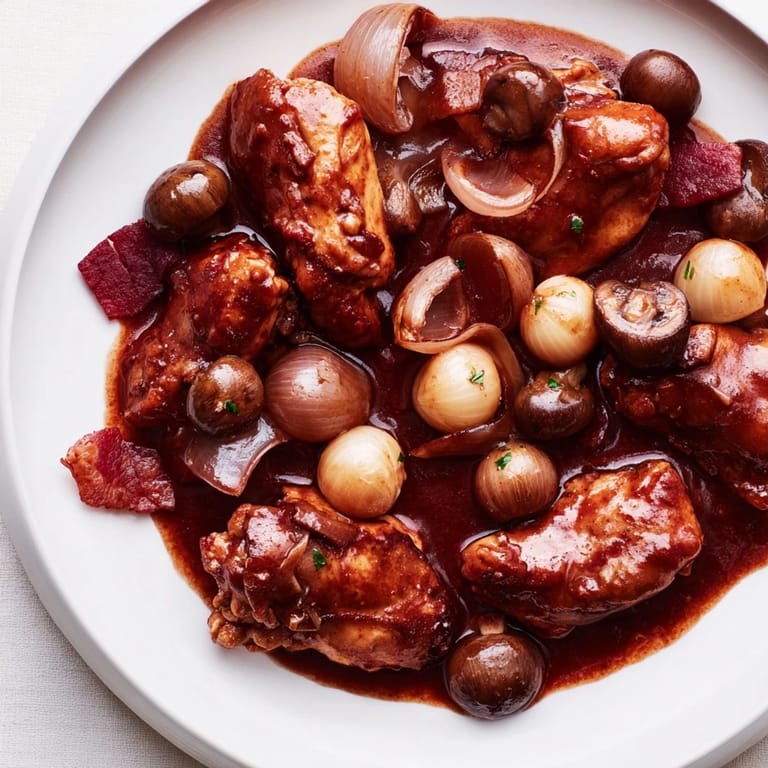
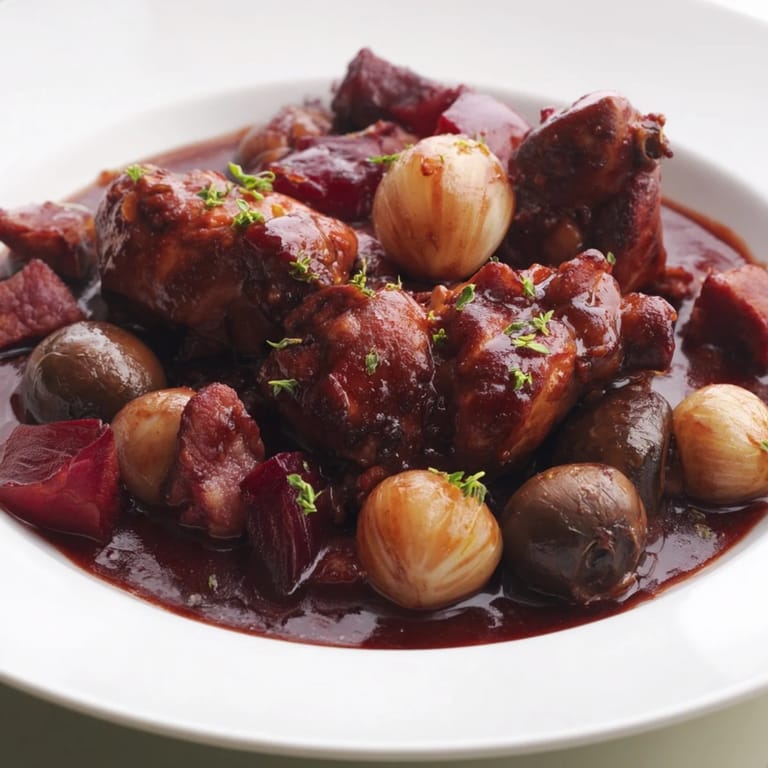
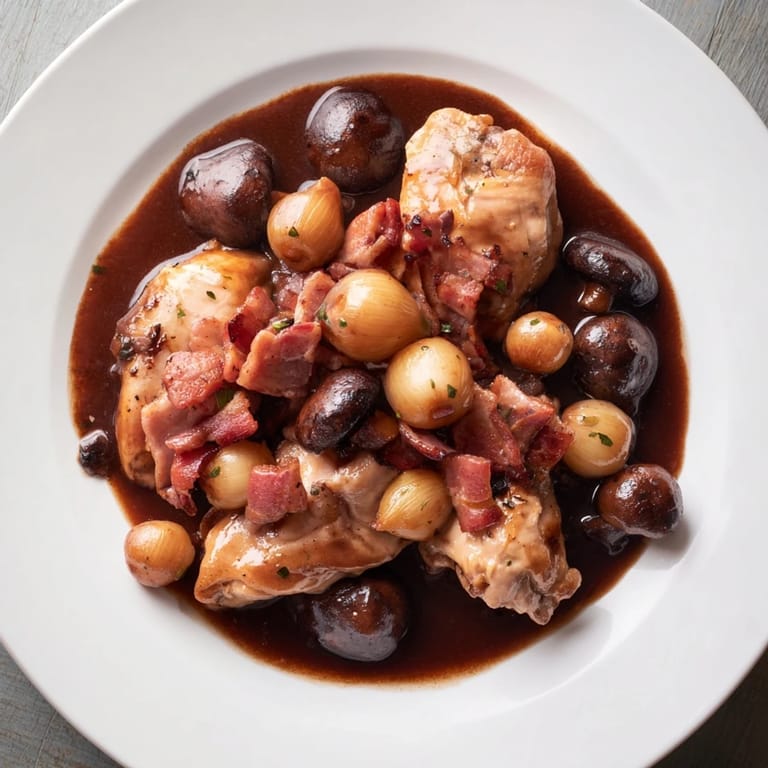
- Fish out and discard the bay leaves and thyme sprigs, then serve the Coq au Vin hot in shallow bowls, with crusty bread, mashed potatoes, or buttered noodles to soak up every drop of sauce.
 Save It
 My mother called while I was making this once and insisted on staying on the phone to hear my descriptions, asking about the color of the sauce and whether the chicken was falling apart yet—and somehow, with her listening, the dish became a conversation across distance rather than just a recipe. That's when I realized Coq au Vin isn't just dinner; it's an excuse to slow down and pay attention to what's happening in your pot.
Why This Dish Still Matters
Coq au Vin represents something almost obsolete now: cooking that doesn't apologize for taking time. In a world of quick weeknight dinners, this dish asks you to show up and honor the process, to trust that slow heat and good ingredients will deliver something worth the wait. There's no real technique here, no special skills—just respect for the chicken, the wine, and the person you're cooking for. Once you've made it once, you'll understand why French home cooks have relied on it for centuries.
The Wine Question
People worry endlessly about which wine to use, as if they're choosing between Burgundy and confusion, but the truth is simpler: use a wine you'd actually drink, one that tastes good to you. A decent Pinot Noir or a simple Côtes du Rhône will do everything you need, and the heat will burn off any rough edges. I once made this with a wine someone gifted me that was frankly mediocre to drink, and it disappeared beautifully into the braise, teaching me that Coq au Vin is forgiving even when the wine isn't perfect.
Variations and Unexpected Additions
The beauty of this dish is that it adapts to what you have and what you crave. Some nights I add a small splash of brandy when I sauté the mushrooms, which adds a subtle heat and richness; other times I use chicken thighs instead of mixed pieces because they stay juicier and there's less waste. A handful of fresh parsley stirred in at the end brightens everything, and if you're feeling brave, a teaspoon of Dijon mustard whispered into the sauce adds an unexpected sophistication without announcing itself.
- Thighs take slightly longer to cook but are nearly impossible to dry out, making them the safer choice if you're nervous.
- A small drizzle of aged balsamic vinegar at the very end can deepen the sauce if it tastes too wine-forward.
- Crusty bread or creamy mashed potatoes are the only acceptable companions to this dish—they catch the sauce and make you happy.
 Save It
 This is the kind of food that transforms a regular evening into something memorable, not because it's complicated, but because it's made with intention and time. Pour yourself a glass of whatever wine you're using, put on music if it helps, and let the kitchen fill with that unmistakable aroma of Coq au Vin—this is what cooking at home is really about.
Recipe FAQs
- → What type of wine is best for braising?
Dry red wines such as Burgundy or Pinot Noir work best, adding depth and acidity to balance the richness.
- → Can I use chicken thighs instead of the whole chicken?
Yes, chicken thighs offer excellent flavor and tenderness suitable for this slow braising method.
- → How do I prevent the sauce from being too thin?
Cooking uncovered during the last 15 minutes helps reduce the liquid, concentrating the sauce's flavors.
- → What is the purpose of sautéing the mushrooms separately?
Sautéing mushrooms in butter and oil until browned intensifies their flavor before adding them to the stew.
- → Are there good side dishes to serve with this?
Classic accompaniments include crusty French bread, buttered noodles, or creamy mashed potatoes to soak up the sauce.