 Save It
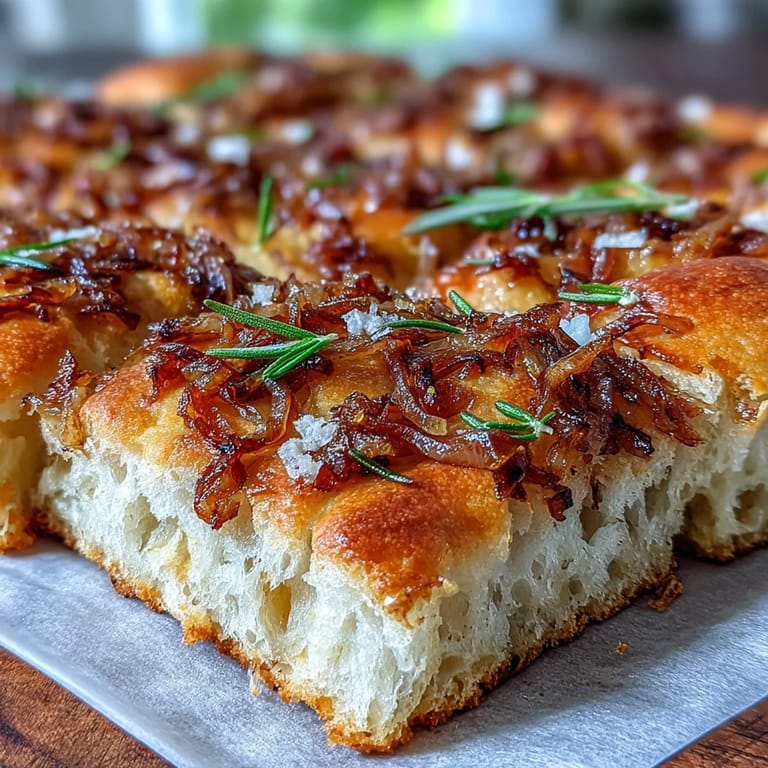
 There's a particular moment that happens every time I pull focaccia from the oven—that split second when the aroma hits and suddenly everyone in the house appears in the kitchen like magic. This sourdough onion version came about on a lazy Sunday afternoon when I had caramelized onions sitting in a container, a bubbly sourdough starter begging to be used, and absolutely no plan. What emerged was something that tasted like it had been perfected over years, even though it was pure kitchen improvisation.
I made this for my sister's potluck last spring, and she arrived early, caught the smell through the door, and basically moved in for twenty minutes while we ate warm slices straight off the cooling rack. She texted me weeks later asking for the recipe because apparently her coworkers wouldn't stop asking where she'd bought it. That's when I knew this focaccia had crossed from nice-to-have into must-make territory.
Ingredients
- Active sourdough starter (100 g, 100% hydration): This is your leavening agent and flavor foundation—use it when it's peaked and bubbly, right after feeding, so the yeast and bacteria are most active and ready to work.
- Bread flour (400 g): The higher protein content builds a stronger gluten network, giving you that characteristic chew and structure that holds the dimples so beautifully.
- Lukewarm water (300 ml): Temperature matters more than you'd expect; too cold and fermentation stalls, too hot and you kill the living cultures in your starter.
- Fine sea salt (10 g for dough): Added after the autolyse, it strengthens gluten and seasons the crumb evenly without rushing fermentation.
- Extra-virgin olive oil (20 ml for dough, plus more for pan and topping): This enriches the dough, creates tenderness, and prevents drying during the long ferment—it's not optional.
- Yellow onions (2 medium, thinly sliced): Thin slices caramelize evenly and distribute sweetly throughout; thicker cuts won't achieve that jammy, golden perfection.
- Flaky sea salt (1 tsp) and fresh rosemary (optional): These finish the focaccia with textural pop and aromatic brightness that elevates each bite.
Tired of Takeout? 🥡
Get 10 meals you can make faster than delivery arrives. Seriously.
One email. No spam. Unsubscribe anytime.
Instructions
- Mix and Rest:
- Combine your sourdough starter, bread flour, and lukewarm water in a large bowl until everything is shaggy and loosely combined. Cover and let it sit undisturbed for 30 minutes—this autolyse allows the flour to fully hydrate and makes the next steps easier.
- Incorporate Salt and Oil:
- Sprinkle the salt and olive oil over your rested dough and use your hands or a dough scraper to mix until fully incorporated. The dough will feel slippery and alive.
- Build Strength with Stretch and Folds:
- Over the next 2 hours, perform 3 to 4 sets of stretch and folds every 30 minutes—grab one side of the dough, stretch it up and fold it over itself, then rotate the bowl and repeat. This builds gluten without aggressive kneading and is incredibly satisfying to feel the dough transform.
- First Rise:
- Cover the bowl and let the dough rise at room temperature for 6 to 8 hours until it's roughly doubled in size. You're looking for visible bubbles under the surface and a slightly domed top.
- Transfer to Pan:
- Generously oil a 9x13-inch baking pan, then gently tip the dough in, being careful not to deflate all those precious air pockets. Stretch and press it gently with oiled fingertips to fit the pan corners.
- Cold Overnight Rise:
- Cover the pan loosely and refrigerate for 8 to 12 hours. This long, cold fermentation deepens flavor and makes the final rise predictable and forgiving.
- Caramelize the Onions:
- While the dough rests, heat 1 tablespoon olive oil in a skillet over medium-low heat and add your thinly sliced onions. Stir occasionally for 20 to 25 minutes, letting them turn golden, soft, and deeply sweet—patience here is everything, and resist the urge to rush with higher heat. Let them cool completely before using.
- Bring to Room Temperature:
- Remove the dough from the refrigerator about 1 hour before baking so it can warm up gently and finish its rise.
- Dimple and Top:
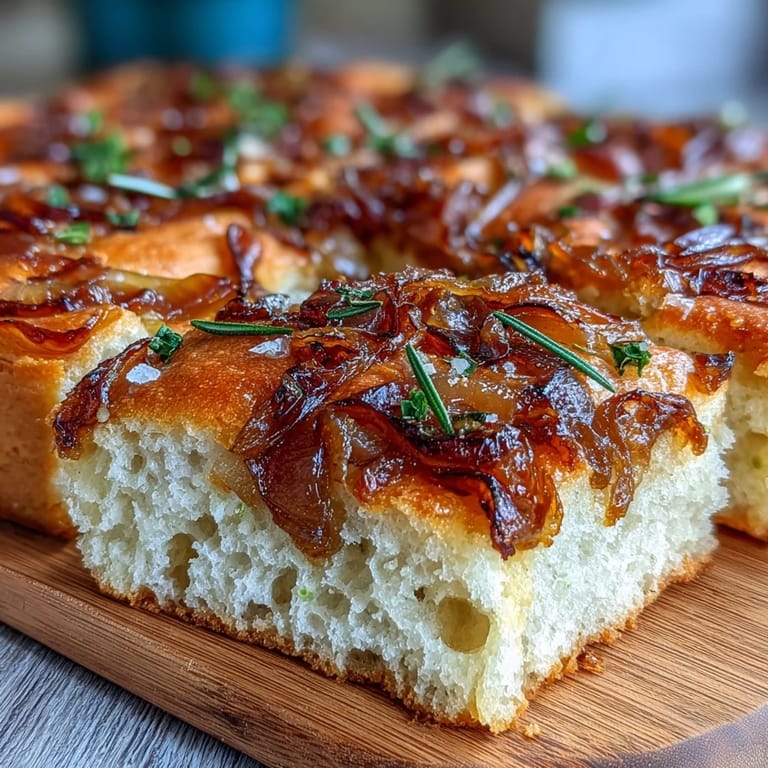
- Preheat your oven to 220°C (425°F). Using your fingertips, create signature dimples all over the dough surface, then drizzle with a little more olive oil and scatter the cooled caramelized onions evenly across. Finish with flaky sea salt, fresh rosemary if using, and a crack of black pepper.
- Bake Until Golden:
- Bake for 25 to 30 minutes until the top is golden brown and the edges are crisp and pulling away from the pan. The bottom should sound hollow when tapped.
- Cool and Serve:
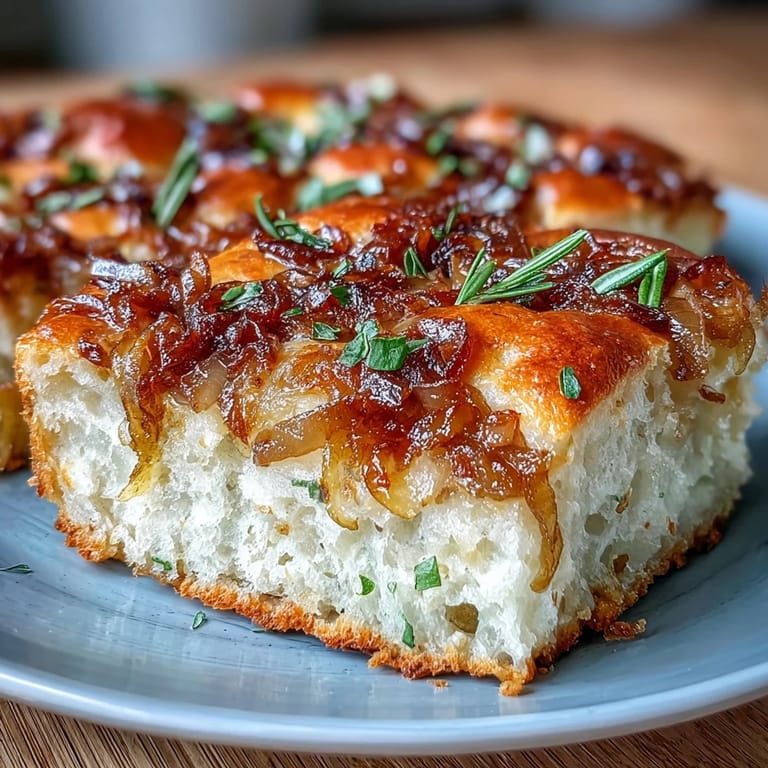
- Let it cool for a few minutes before slicing—this allows the crumb to set slightly so it doesn't compress under the knife.
 Save It
 Years later, my neighbor asked why I always seemed to be making focaccia when she'd stop by, and I realized it's because every time I do, someone ends up staying longer, the conversation gets better, and the bread becomes an excuse to slow down. That's when I understood this recipe was less about technique and more about creating tiny moments where food genuinely matters.
Understanding Sourdough Fermentation
The magic of sourdough isn't in mysterious complexity—it's simply wild yeast and lactic acid bacteria doing what they've done for thousands of years. When you give them time, especially a cold overnight rest, they eat the flour, produce gas for rise, and create organic acids that add depth of flavor no commercial yeast can match. The longer fermentation also pre-digests some of the starches, making sourdough easier on your digestive system than quick breads.
The Art of Perfect Caramelization
Caramelized onions teach patience in a way few things do—rush them with high heat and you'll get charred, bitter notes instead of sweet, jammy richness. Low and slow means stirring occasionally as the natural sugars break down and concentrate, turning what began as sharp and vegetal into something almost candy-like. The color shift from pale yellow to deep golden brown is your visual guide, and stopping just before they start to burn is the difference between good focaccia and the kind people ask you to make again.
Making It Your Own
This recipe is a beautiful foundation, but it's also forgiving enough for creative improvisation. Some of my most interesting focaccia variations happened when I added what I had on hand rather than following strict rules.
- Scatter pitted olives or sun-dried tomatoes alongside the caramelized onions for briny complexity.
- Finish with crumbled feta or a light sprinkle of grated Pecorino just before baking if you want something richer.
- Brush the warm focaccia with garlic-infused olive oil right out of the oven for an extra aromatic punch.
 Save It
 This focaccia has become my go-to when I want to impress without stress, and the best part is knowing that tomorrow, someone will probably ask for it again. Once you've made it once, you'll find yourself reaching for this recipe whenever you want proof that patience and good ingredients create something genuinely special.
Recipe FAQs
- → How long should the dough rest before baking?
The dough rests overnight in the refrigerator for 8–12 hours, which develops flavor and improves texture.
- → What is the purpose of stretch and folds during dough preparation?
Stretch and folds strengthen gluten, resulting in better structure and an airy crumb.
- → How are the onions prepared for topping?
Onions are slowly caramelized over medium-low heat for 20–25 minutes until soft and golden to bring out natural sweetness.
- → Can I add other toppings to the focaccia?
Yes, sliced olives or sun-dried tomatoes can be added along with the caramelized onions for extra flavor.
- → What is the ideal oven temperature for baking?
Preheat the oven to 220°C (425°F) for a golden, crisp crust.
- → How should leftovers be stored and reheated?
Store leftovers wrapped at room temperature and reheat in a toaster oven to restore crispness.