 Save It
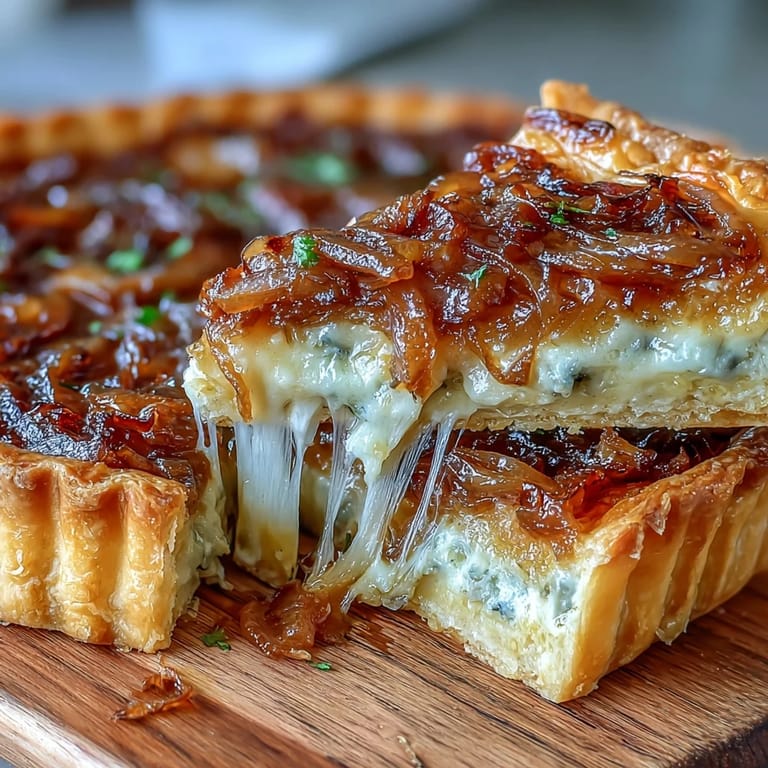
 There's a particular Wednesday evening that comes to mind whenever I think about this tart—not because anything dramatic happened, but because everything felt effortless in the kitchen for once. I'd been meaning to use up a block of Gruyere before it aged too much, and had a stack of onions that needed purpose. What emerged from that casual pairing was this stunning tart with its mahogany caramelized onions and custard-like filling that somehow felt both simple and impossibly elegant. It's become the recipe I return to when I want to impress without the stress, or when I simply want to make something that tastes like I've learned a few kitchen secrets along the way.
I made this for a dinner party where I'd somehow volunteered to bring the main course with about forty-eight hours notice. My friend Sarah arrived early and watched the onions bubble away in the pan, skeptical that they could possibly take thirty-five minutes. But when she tasted the finished tart, she got that quiet, satisfied look people get when food stops being fuel and becomes an experience. She immediately asked if I could teach her, and now it's become our tradition—she makes it whenever she wants to feel accomplished in her own kitchen.
Ingredients
- Puff pastry: A 9-inch round sheet, thawed if frozen, forms the crispy, buttery foundation—let it rest in the fridge while you prepare everything else so it doesn't shrink in the oven.
- Unsalted butter and olive oil: The combination of both creates the ideal medium for caramelizing onions without burning; butter alone can scorch, while oil alone doesn't carry the same richness.
- Yellow onions: Four large ones, sliced thin, will collapse into golden sweetness over time—don't skip the slicing step, as thicker pieces won't caramelize properly.
- Salt, pepper, and sugar: The sugar isn't about sweetness; it accelerates the caramelization process and deepens the savory notes.
- Fresh thyme: Added in the final minutes, it whispers herbaceous depth without overwhelming the dish.
- Eggs, heavy cream, and milk: The custard backbone that holds everything together—use whole milk, not skim, or the filling tastes thin.
- Ground nutmeg: Just a pinch, almost invisible until your palate catches the warmth it brings.
- Gruyere cheese: Grate it yourself if you can; pre-shredded versions contain anticaking agents that prevent the filling from setting smoothly.
- Dijon mustard: A thin brush of this on the pastry base prevents sogginess and adds a subtle tangy undertone.
Tired of Takeout? 🥡
Get 10 meals you can make faster than delivery arrives. Seriously.
One email. No spam. Unsubscribe anytime.
Instructions
- Preheat and prepare:
- Set your oven to 375°F and roll out that pastry into your tart pan, letting it settle naturally into the edges without stretching. Prick the base with a fork so it won't puff up unexpectedly, then slide it into the refrigerator to chill while you work on everything else.
- Begin the onion transformation:
- Combine butter and oil in a large skillet over medium-low heat, then add your sliced onions with the salt, pepper, and sugar. This is where patience becomes your greatest ingredient—stir them every few minutes, letting them slowly soften and turn golden, for about thirty to thirty-five minutes total.
- Finish the onions with grace:
- In the final five minutes of cooking, stir in the fresh thyme leaves and let them infuse the warm onions. The room will smell like you've been cooking all day, even though you've barely started.
- Build the custard:
- Whisk eggs with heavy cream, milk, nutmeg, salt, and pepper until the mixture is completely smooth and pale. This should taste rich but not heavy when you taste a tiny bit raw.
- Layer with intention:
- Remove your chilled pastry from the fridge and brush the base lightly with Dijon mustard, then spread the caramelized onions in an even layer. Sprinkle the grated Gruyere over the onions generously.
- Add the custard:
- Pour the egg mixture slowly and evenly over the onions and cheese, filling just to the edge of the pastry. The tart will look almost too full, but it will settle as it bakes.
- Bake until golden:
- Slide the tart into the preheated oven for thirty-five to forty minutes, until the filling is set but still slightly jiggly in the very center, and the top has turned a warm golden brown. If the edges of the pastry darken too quickly, loosely tent them with foil.
- Rest and serve:
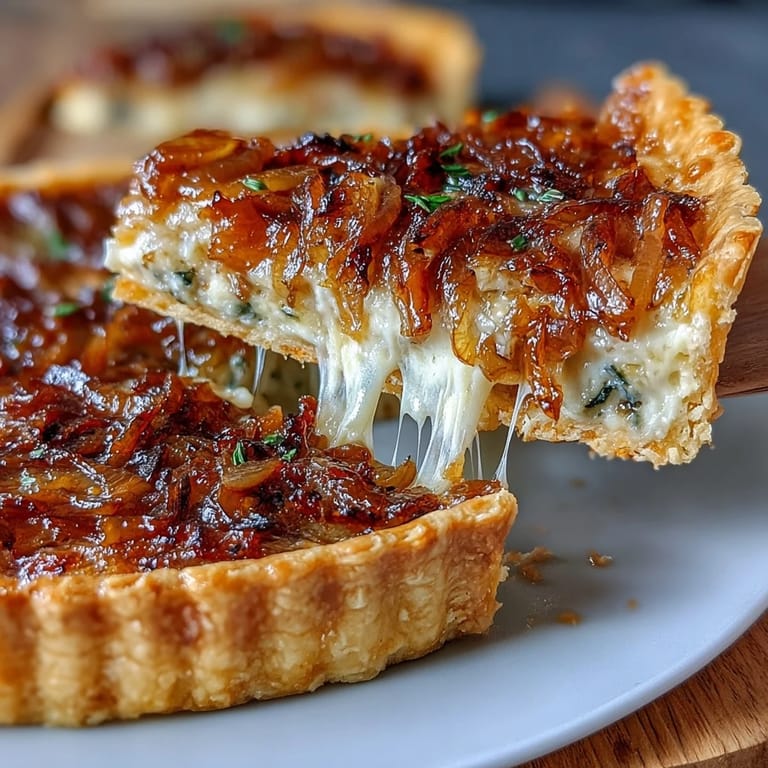
- Remove from the oven and let it cool for ten minutes—this allows the filling to firm up just enough to slice cleanly without falling apart. Serve while still warm, or at room temperature with a simple green salad.
 Save It
 There was a moment, maybe ten minutes into baking, when I opened the oven and caught the aroma of caramelized onions mixing with nutmeg and melting cheese. My teenage nephew wandered into the kitchen asking what smelled like fancy, and I realized that this tart represents something I've come to love about cooking—the way a combination of humble, ordinary ingredients becomes something that stops people in their tracks. It wasn't complicated, but somehow it tasted like I'd been thoughtful.
The Magic of Caramelization
Caramelizing onions is one of those kitchen skills that seems intimidating until you understand it's really just respect for time. The first ten minutes feel like nothing is happening, and you might wonder if you're doing it wrong. Then something shifts around minute fifteen—the onions start to collapse and turn translucent, and the bottom of the pan begins to show hints of deep color. By minute thirty, you're stirring golden, silky onions that smell almost sweet, and you understand why this step matters. The transformation can't be rushed, but it also can't be forgotten on the stove, so find yourself a kitchen task that keeps you nearby—chop your thyme, set your table, or simply stand there and watch the magic.
Choosing and Substituting Your Cheese
Gruyere brings a creamy, slightly nutty character that complements the sweet onions beautifully, but it's not the only option if you don't have it on hand. Emmental works wonderfully with its gentler flavor, while Swiss cheese adds a different kind of richness. I've even made this with a sharp white cheddar when I was caught without specialty cheese, and it was delicious—sharper, more assertive, but still delicious. The rule here is to use a cheese that melts smoothly and won't become grainy or separate when baked, so avoid anything overly sharp or crumbly.
Timing, Serving, and Final Touches
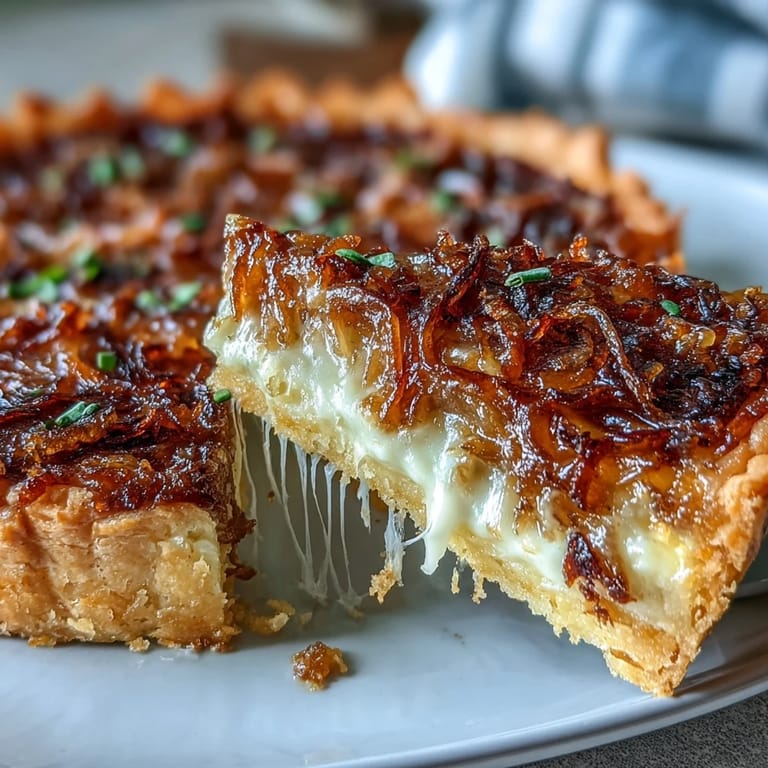
This tart is forgiving about timing in a way many dishes aren't—you can serve it warm from the oven, at room temperature later the same day, or even gently reheated the next morning. I've found that cutting it with a sharp, thin knife dipped in hot water prevents the filling from dragging and tearing. A simple green salad with a tangy vinaigrette cuts through the richness beautifully, and if you're feeling elegant, pour a crisp Sauvignon Blanc or a light Pinot Grigio alongside.
- Brush the pastry edges lightly with olive oil before baking if you prefer them darker and crispier.
- Make the caramelized onions up to a day ahead, then refrigerate them until you're ready to assemble and bake.
- If your tart fills your whole kitchen with the smell of nutmeg and it seems overwhelming, you've used just the right amount.
 Save It
 This tart has become the recipe I reach for when I want to remind myself why I love cooking—not because it's complicated, but because it's proof that simple things done with intention become remarkable. It's turned skeptics into believers and has given me an excuse to gather people around a table and feed them something that tastes like it took far more effort than it actually did.
Recipe FAQs
- → How do you caramelize the onions perfectly?
Cook sliced onions slowly over medium-low heat with butter, olive oil, salt, pepper, and a touch of sugar. Stir frequently until golden brown and sweet, about 30-35 minutes.
- → Can I substitute Gruyere cheese?
Yes, Emmental or Swiss cheese can be used as alternatives for a similar creamy texture and mild flavor.
- → What type of pastry is best for this tart?
Puff pastry works best for its buttery, flaky texture that complements the rich filling.
- → How can I add more depth to the onion flavor?
Adding a splash of white wine while caramelizing the onions enhances complexity and balance.
- → Is this dish suitable for vegetarians?
Yes, it contains no meat and features vegetarian-friendly ingredients such as eggs, milk, and cheese.