 Save It
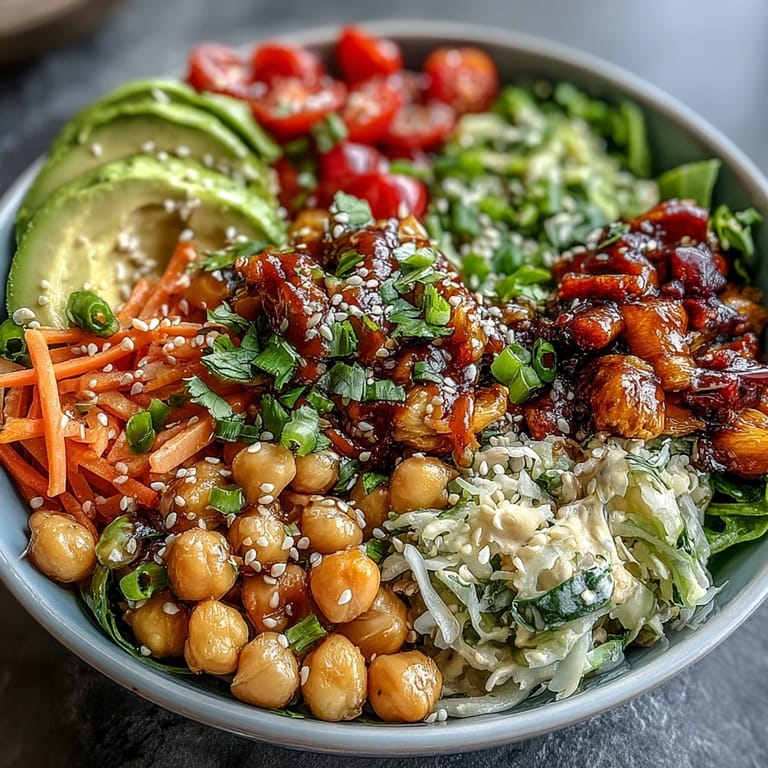
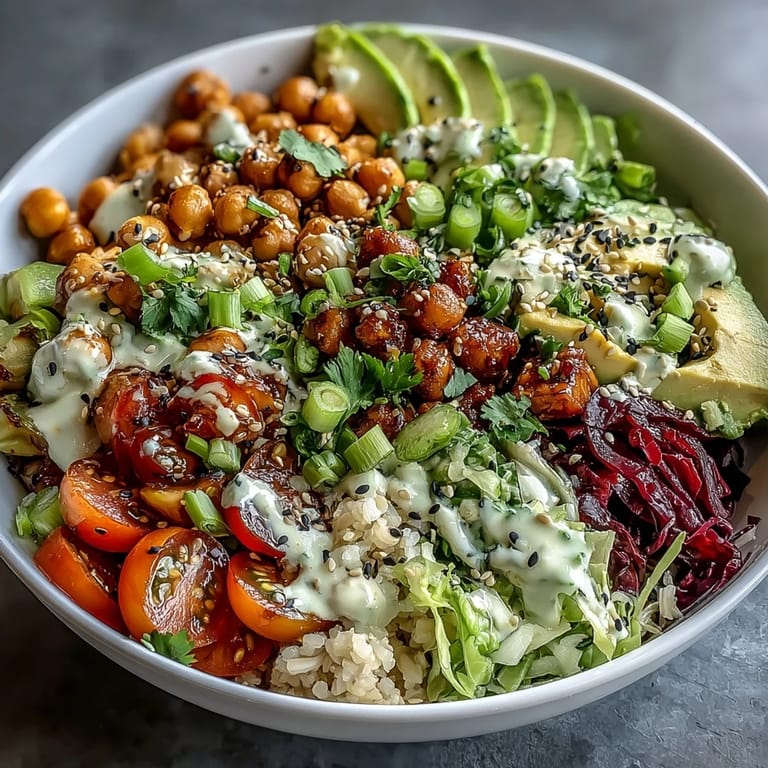
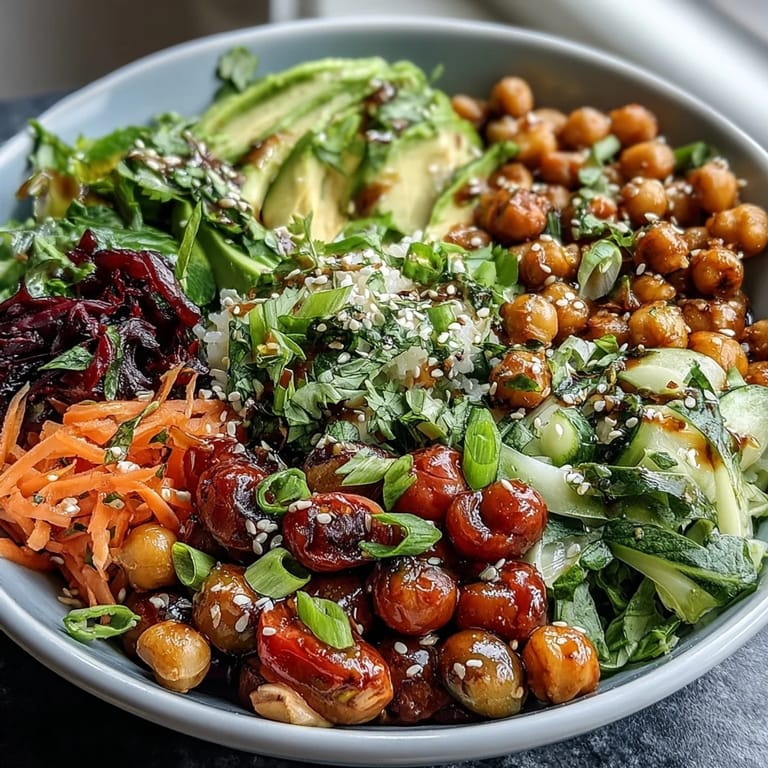
 My friend Sarah showed up at my door one afternoon with a container of the most beautiful bowl I'd ever seen—it looked like someone had painted it with vegetables. She explained it was her new lunch obsession, and when she drizzled that amber sesame ginger dressing over the top, the whole kitchen suddenly smelled incredible. I made one that very evening and haven't looked back since.
Last summer I packed these bowls for a picnic with my coworkers, and everyone kept asking for the dressing recipe instead of eating anything else they'd brought. There's something about serving food that's both stunning and satisfying that makes people pause and actually taste what's in front of them.
Ingredients
- Brown rice or quinoa: The grain is your canvas here, and both work beautifully—rice feels warmer and more forgiving if you're still learning to cook grains, while quinoa adds a slight nuttiness and extra protein.
- Cherry tomatoes: Halving them creates little flavor bombs that burst against your tongue, and they bring that essential sweetness to balance the savory dressing.
- Red cabbage: The thin shreds keep their satisfying crunch and add a visual pop that makes the bowl feel more alive than it actually is.
- Shredded carrots: Raw carrots stay sweet and crunchy, and their bright orange makes the whole arrangement feel more intentional and vibrant.
- Yellow bell pepper: Slice these thin so they soften slightly as the bowl sits, but thin enough to stay somewhat crisp—it's that textural contrast that keeps things interesting.
- Broccoli florets: Whether you steam them lightly or leave them raw depends on your mood, but I've learned that lightly steaming for just two minutes softens them enough to feel cooked without losing their structure.
- Avocado: Add this last or dress it separately if you're meal prepping, otherwise it'll turn sad and gray—slice it right before assembly.
- Cooked chickpeas: These are your protein anchor, and rinsing canned ones removes excess sodium so they actually taste like themselves.
- Sesame seeds: Toast these yourself if you have time—the difference between raw and toasted is absolutely worth the three minutes it takes.
- Fresh cilantro or parsley: Cilantro is traditional here and adds a brightness that feels almost essential, but parsley works beautifully if cilantro isn't your thing.
- Green onions: The white and light green parts add a gentle onion flavor, while the dark green tops bring color and a hint of sharpness.
- Toasted sesame oil: This is non-negotiable—regular sesame oil is pale and mild, but toasted sesame oil is dark, fragrant, and transforms the entire dressing with just three tablespoons.
- Tamari or soy sauce: Tamari is naturally gluten-free and tastes slightly more refined, but regular soy sauce works perfectly if that's what you have.
- Rice vinegar: The gentlest of vinegars, it adds brightness without the harsh bite that would overwhelm the delicate vegetables.
- Maple syrup or honey: A touch of sweetness rounds out the dressing and helps the flavors feel balanced rather than one-dimensional.
- Fresh ginger: Grate this yourself—it releases oils and freshness that ground ginger simply can't match, and you'll taste the difference immediately.
- Garlic and lime juice: These two are your wake-up call in the dressing, cutting through richness and bringing everything into focus.
Tired of Takeout? 🥡
Get 10 meals you can make faster than delivery arrives. Seriously.
One email. No spam. Unsubscribe anytime.
Instructions
- Rinse and simmer your grains:
- Running water over your rice or quinoa removes excess starch and helps them cook more evenly. Once the water boils, lower the heat so it's just barely simmering—a rolling boil can break everything apart.
- Prep vegetables while everything cooks:
- This is when I put on music or a podcast because chopping suddenly feels purposeful instead of tedious. Keep everything in separate piles so you can see your rainbow coming together.
- Whisk the dressing with intention:
- Don't just stir—whisking actually emulsifies the oils and vinegar so the dressing tastes cohesive rather than separate layers. You'll notice it become slightly thicker and glossier as you whisk.
- Steam broccoli if you'd like it softer:
- Two minutes of steam transforms raw broccoli into something tender that still maintains structure. This is entirely optional—some nights I like the crunch, other nights I want it gentler.
- Arrange your rainbow with intention:
- Dividing each vegetable into its own section isn't just pretty—it means each bite has flavor variety. You're not eating cabbage, then carrot, then tomato; you're eating all three together.
- Drizzle generously and garnish:
- Don't be shy with the dressing—it's what makes everything sing together. Those final sesame seeds and green onions aren't decoration, they're the textural finale that makes you want another bite.
 Save It
 There was this moment when my roommate came home and saw me eating one of these bowls while working, and he just stopped and watched me eat a forkful. When I offered him a taste, his eyes lit up in a way that made me realize food doesn't have to be complicated or fussy to feel like you're taking care of yourself and the people around you.
Why This Bowl Became My Weekday Weapon
I stopped ordering salads from restaurants once I realized how much control I had at home—I could decide exactly how much dressing, what temperature everything was, and whether I wanted soft or crunchy elements. These bowls gave me that restaurant-quality experience at a fraction of the cost, and honestly, they taste better because they're exactly how I want them.
The Magic of the Sesame Ginger Dressing
This dressing single-handedly transformed how I think about vegetables. I used to see salads as something I had to eat, but once I tasted what properly balanced flavors could do—the warmth of ginger, the nuttiness of sesame, the brightness of lime—suddenly I was excited about lunch instead of dreading it. I've made variations with different proteins and grains, but this dressing remains the constant.
Building Your Bowl Based on Your Mood
The beauty of this recipe is that it adapts to whatever you have, whatever you're craving, and whatever your week looks like. On nights when I've had a long day, I keep things simple and let the existing vegetables shine. On creative weekends, I'll add roasted tempeh, swap the rice for farro, or pile on extra greens just to see how they taste with that dressing.
- Grilled tofu or tempeh adds substance if you want extra protein beyond the chickpeas.
- Swap the brown rice for farro, millet, or even soba noodles for variety and different flavor profiles.
- Cucumber, snap peas, or shredded daikon add coolness and crunch if you want to experiment beyond what's listed.
 Save It
 This bowl has somehow become the thing I make when I want to feel grounded and nourished, but also when I want to impress people without making a fuss. It's proof that simple ingredients treated with care and attention taste better than anything complicated.
Recipe FAQs
- → Can I substitute the grains in this bowl?
Yes, brown rice or quinoa can be swapped for alternatives like cauliflower rice for a low-carb option or any grain you prefer.
- → Is it necessary to steam the broccoli?
Steaming broccoli is optional; leaving it raw adds extra crunch and freshness to the bowl.
- → What can I use instead of tamari sauce?
For gluten-free needs, tamari is recommended, but soy sauce works well if gluten is not a concern.
- → How do I make the sesame ginger dressing?
Whisk together toasted sesame oil, tamari or soy sauce, rice vinegar, maple syrup, freshly grated ginger, minced garlic, and lime juice until well combined.
- → Can I add other proteins to this bowl?
Yes, grilled tofu or tempeh can be added for extra protein to complement the chickpeas.