 Save It
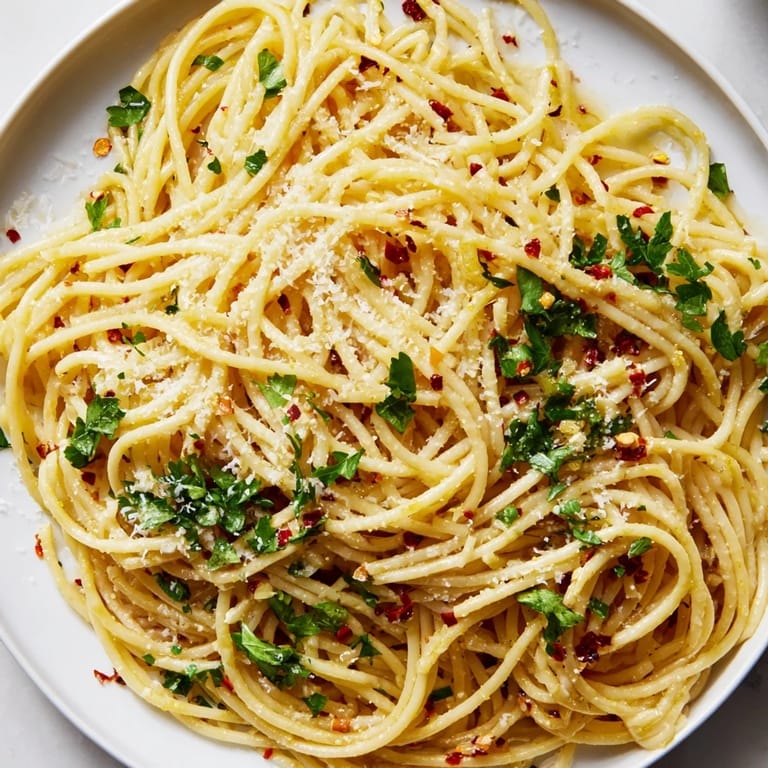
 There's something almost meditative about aglio e olio—the way the kitchen fills with that unmistakable aroma of garlic kissing hot oil, how the simplest ingredients transform into something that tastes like Italy itself. I discovered this dish during a late dinner scramble when my pantry was nearly bare, and I realized that sometimes the most elegant meals come from the least fussy ingredients. Ten minutes later, I was twirling spaghetti that had absorbed every drop of golden, garlicky richness, and I understood why Italians have been making this for generations.
I made this for a friend who was going through a rough patch, someone who needed comfort but also something that wouldn't feel heavy or complicated. Watching her twirl that first fork of pasta and close her eyes, then smile—that's when I realized this dish isn't just fast food, it's the kind of thing that reminds you why people gather around tables in the first place.
Ingredients
- Dried spaghetti, 200g: Use good quality pasta that'll hold onto the oil; cheaper versions sometimes feel slippery rather than silky.
- Extra-virgin olive oil, 4 tbsp: This is the star, so don't skimp—find one with a peppery finish if you can, it makes a real difference.
- Large garlic cloves, 4, thinly sliced: Slicing rather than mincing gives you tender pieces that don't disappear; they become little flavor pockets.
- Red chili flakes, 1 tsp: Start here and adjust upward—I've learned that heat preferences are deeply personal, and yours might surprise you.
- Fresh parsley, 2 tbsp chopped: Adds a bright, grassy note at the end that wakes everything up.
- Freshly ground black pepper, to taste: Grind it just before using; the aroma alone changes the whole dish.
- Sea salt, to taste: Better than table salt for finishing, if you have it.
- Parmesan cheese, 2 tbsp grated (optional): Adds a salty, umami note, but the dish is stunning without it too.
Tired of Takeout? 🥡
Get 10 meals you can make faster than delivery arrives. Seriously.
One email. No spam. Unsubscribe anytime.
Instructions
- Boil your pasta:
- Fill a large pot with salted water—it should taste like the sea—and bring it to a rolling boil. Add spaghetti and cook according to package directions, usually around 8 minutes, until you can bend a strand but it still has a little resistance when you bite it. Before draining, scoop out about half a cup of that starchy pasta water and set it aside; you'll use it to help build the sauce.
- Gently awaken the garlic:
- While pasta cooks, pour olive oil into a large skillet and set it over medium-low heat—this is important, too high and your garlic will burn before it has a chance to become golden. Add sliced garlic and stir it often, listening for a soft sizzle rather than an aggressive crackle, until it's fragrant and just blushing with color, maybe 1 to 2 minutes.
- Introduce the heat:
- Sprinkle chili flakes into the garlic oil and stir for just 10 seconds—you want them to bloom and release their oils into the mixture without scorching.
- Bring it all together:
- Drain your pasta and add it directly to the skillet, tossing it gently but thoroughly so every strand gets coated in that golden oil. If it feels dry or sticky, splash in a little of that reserved pasta water, a splash at a time, until everything moves together like silk.
- Season and finish:
- Taste as you go, adding salt and pepper until it feels right—remember, the pasta water and optional Parmesan both bring saltiness. Remove from heat, scatter parsley over the top, toss once more, and transfer to plates right away.
- The final touch:
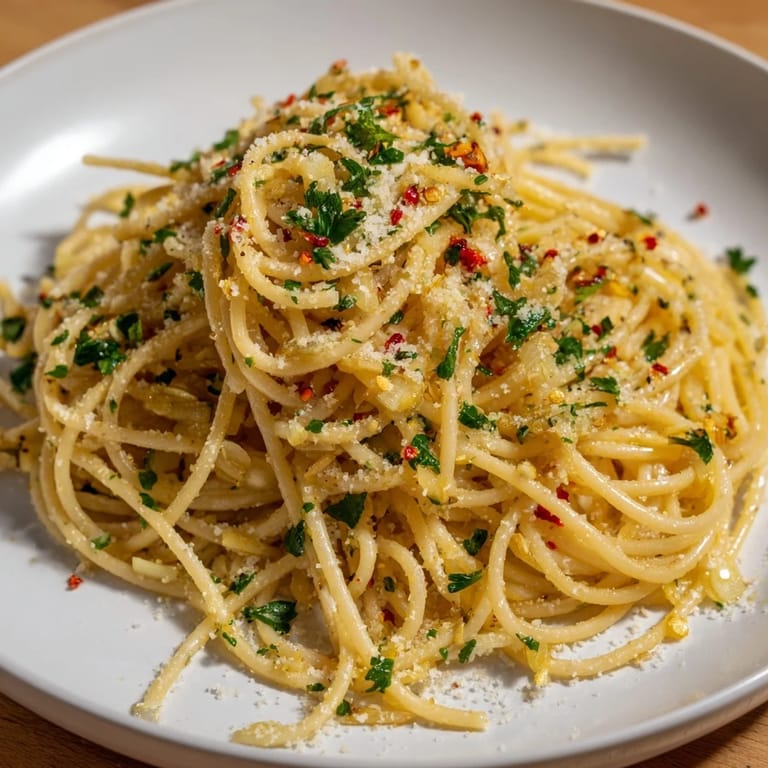
- If you're using Parmesan, grate it fresh over each plate just before serving so it doesn't melt into the warm pasta and clump.
 Save It
 One quiet evening, I made this for myself after a long day, ate it standing at the counter, and felt something shift—a reminder that taking five minutes to cook something with intention, even when alone, changes how you feel. That's the real magic of aglio e olio: it proves that restraint and simplicity aren't boring, they're honest.
The Sacred Balance of Heat and Time
The temperature of your oil matters more than you'd think—too hot and garlic becomes acrid, too cool and it steams rather than sautés. I learned this the hard way, burning more than one batch before I understood that medium-low isn't a suggestion, it's a commitment. The slow, gentle heat lets the garlic release its sweetness gradually, transforming it from raw and sharp to mellow and almost nutty. This is also why stirring often matters; it ensures every slice gets equal time against the warm oil.
Playing with Fire (and Flavor)
Red chili flakes are optional but they're the reason this dish has such character—they add a slow, rolling heat that builds as you eat rather than punching you immediately. I've served this to people who swore they couldn't handle spice, and a quarter teaspoon won them over; I've also made it for chili lovers who wanted a full teaspoon and found it just right. The beauty is that you control it completely. Some people add lemon juice right at the end, which brightens everything; others finish with a crack of black pepper and call it done. There's no wrong answer, only your answer.
Variations and Moments of Invention
I've made this dish in a dozen different ways over the years, and it never fails to deliver—that's the kind of recipe that builds confidence in the kitchen. Add anchovy paste to the oil if you want umami depth, or a squeeze of lemon juice if you want brightness, or fresh red chili if you prefer heat without the flake texture. For vegan dinners, simply skip the Parmesan or use a vegan alternative; for gluten-free tables, swap the pasta and everything else stays exactly the same. The foundation is so solid that it invites play rather than demanding perfection.
- Try it with fresh chili sliced thin instead of flakes for a different texture and flavor profile.
- A small splash of pasta water saved and stirred in at the last moment creates a silky, emulsified finish that feels luxurious.
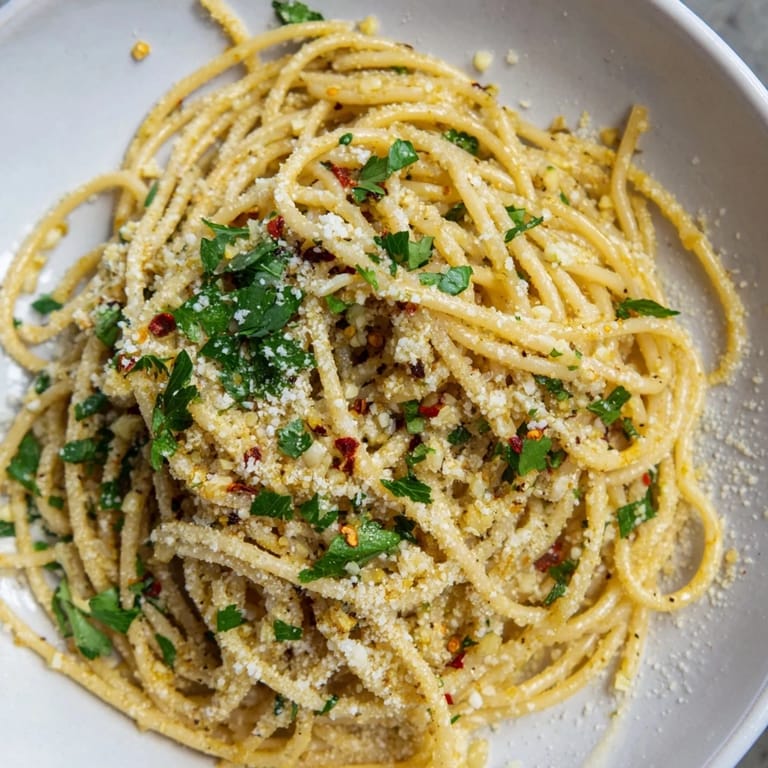
- Serve it immediately on warm plates so the pasta stays hot and the oil stays liquid and golden.
 Save It
 This is the kind of recipe that shows up in your life exactly when you need it—quick enough for a Tuesday night, good enough for guests who matter, and honest enough to remind you that sometimes the best things come from knowing when to stop adding and start enjoying. Make it, taste it, and let it become one of your instinctive dinners.
Recipe FAQs
- → How do I prevent garlic from burning?
Cook garlic slowly over medium-low heat and stir often until just golden to avoid any bitter burnt taste.
- → Can I adjust the spiciness level?
Yes, you can increase or reduce red chili flakes to match your preferred heat intensity.
- → What’s the purpose of reserved pasta water?
Adding reserved pasta water helps loosen the sauce and allows it to cling smoothly to the spaghetti.
- → Is Parmesan cheese necessary?
Parmesan is optional but adds a savory depth; it can be omitted or replaced with a vegan alternative if desired.
- → What pasta is best for this dish?
Traditional dried spaghetti works well, but gluten-free varieties can be used as needed.