 Save It
 There's something about tropical desserts that makes you feel like you're somewhere far from your kitchen, even when you're standing right there in your regular Tuesday night apron. I discovered this chia pudding version of mango sago while browsing through a half-organized recipe notebook, looking for something that didn't require an oven—it was humid outside, and the thought of heating up the kitchen felt genuinely offensive. What started as a simple substitution (chia instead of sago pearls) turned into this creamy, dreamy thing that tastes like a fancy restaurant dessert but comes together with barely any effort.
I made this for my partner one morning when we were both craving something sweet but also felt virtuous about eating chia seeds—that strange modern contradiction. They looked at the cups sitting in the fridge with obvious skepticism until the first spoonful, at which point the skepticism turned into quiet contentment and a request to start keeping the ingredients stocked. It's become our default when we want dessert that doesn't feel heavy, especially in warmer months.
Ingredients
- Chia seeds (1/2 cup): These tiny seeds absorb liquid and swell into a tapioca-like texture, which is exactly why they work so brilliantly here—they mimic that sago pudding feel without requiring actual cooking.
- Canned coconut milk, full-fat (2 cups): Shake the can well before opening, because the cream separating from the liquid is actually your advantage—you'll use that cream later for topping, and the thinner milk blends perfectly with the chia.
- Maple syrup or agave syrup (2 tbsp): Either works beautifully; I tend toward maple because it adds a subtle warmth that plays nicely against the bright mango.
- Pure vanilla extract (1 tsp): Don't skip this—it adds depth and keeps the pudding from tasting one-dimensional.
- Sea salt (pinch): This tiny amount awakens all the other flavors and prevents the whole thing from feeling cloying.
- Ripe mangoes (2 large ones, about 2 cups diced): Use mangoes that yield slightly to pressure and smell fragrant at the stem—underripe mangoes won't blend smoothly and taste disappointingly bland.
- Lime juice (1–2 tbsp): This brightens the mango layer and prevents it from tasting flat; taste as you go because lime juice intensity varies wildly.
- Coconut cream (1/2 cup from a chilled can): Let your coconut milk cans sit undisturbed in the fridge overnight if possible—the cream that rises to the top is liquid gold for topping.
- Toasted coconut flakes (1 tbsp): Toasting them yourself (just a quick minute in a dry pan) makes them so much more aromatic and interesting than the raw versions.
- Fresh mango for garnish (1 small one): This is your last-minute flourish, so choose something visually appealing—the color variation matters when you're presenting layered cups.
- Fresh mint leaves (optional): I don't always include these, but when I do, they add a whisper of freshness that feels luxurious.
Tired of Takeout? 🥡
Get 10 meals you can make faster than delivery arrives. Seriously.
One email. No spam. Unsubscribe anytime.
Instructions
- Start with the pudding base:
- Combine chia seeds, coconut milk, maple syrup, vanilla, and salt in a bowl and whisk everything together for about a minute until you feel resistance from the chia—this whisking is crucial because it prevents those stubborn clumps from forming later. Cover the bowl and let it sit in the fridge for at least 2 hours, though overnight is genuinely better; stir it once after 30 minutes to break up anything that's trying to clump.
- Blend the mango magic:
- While the pudding does its thing, peel and dice your mangoes, then blender or food processor them into a smooth purée with lime juice and optional maple syrup—you want it completely smooth and pourable, so blend longer than feels necessary. Taste it and adjust the lime or sweetness because this is your flavor foundation.
- Layer with intention:
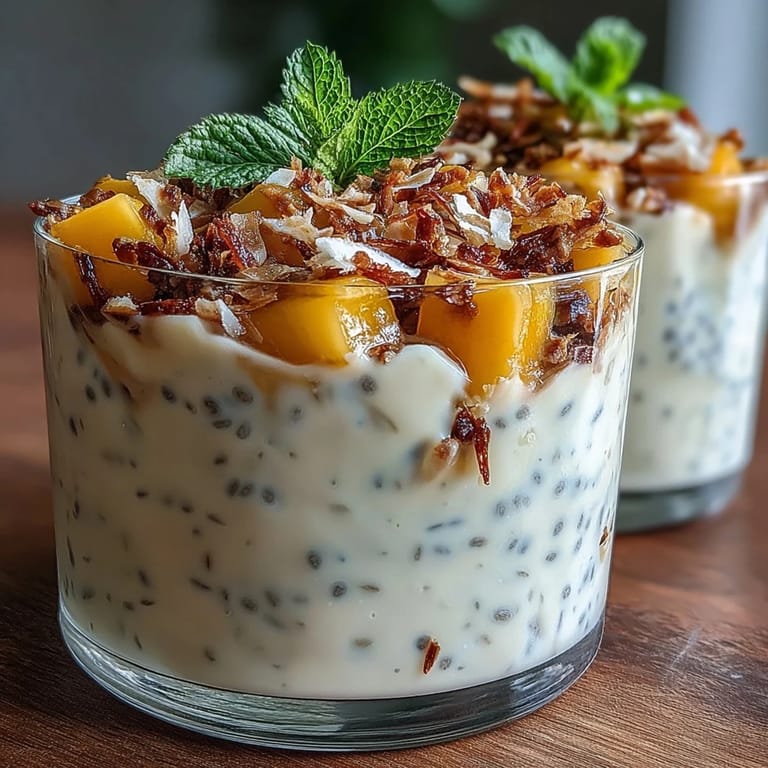
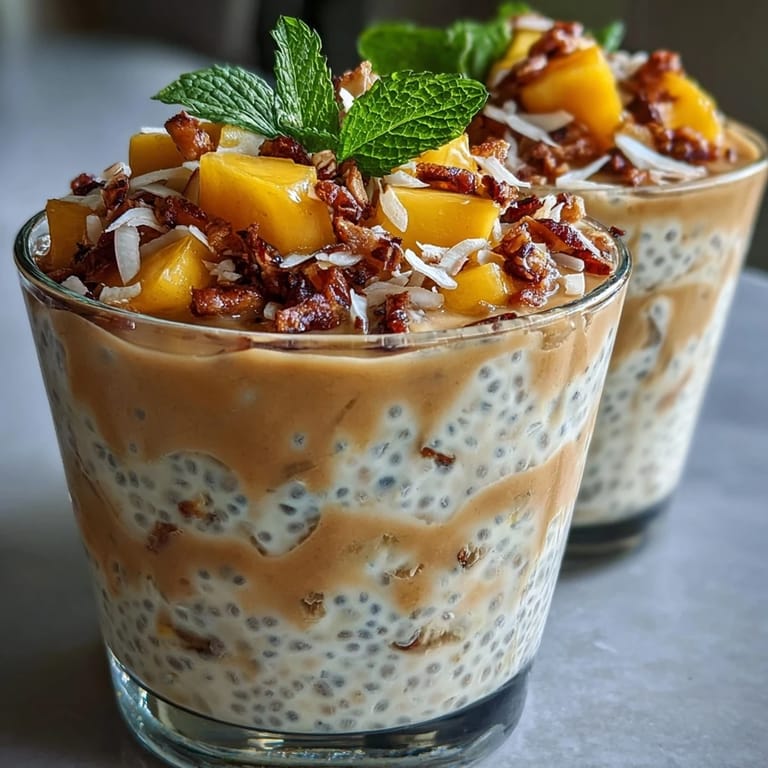
- Once the chia pudding is properly set and spoon-able, start building your cups: spoon a generous layer of pudding into the bottom of each serving glass, then top with a thick layer of mango purée, then repeat if you're feeling generous. The layering isn't just for show—it actually makes each spoonful more interesting because you get a different ratio of flavors and textures.
- Top and chill:
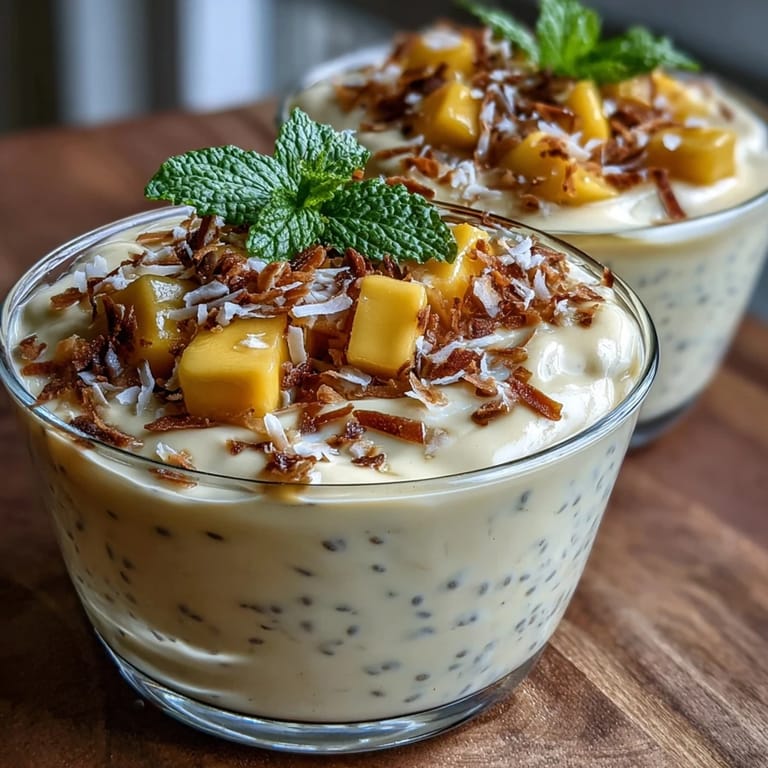
- Crown each cup with a dollop of that separated coconut cream from the top of your can, then scatter with toasted coconut flakes, fresh mango dice, and mint if you're using it. Return to the fridge until serving time, which can be anywhere from minutes to hours—these actually taste better when they've had time to chill together.
 Save It
 The first time someone described eating this as 'restaurant-quality dessert that I made myself,' something shifted in how I think about what belongs in a home kitchen. This pudding proved that you don't need technique or heat or multiple components to create something that feels genuinely special—sometimes you just need good ingredients, a little patience, and permission to enjoy something beautiful.
Texture Matters More Than You'd Think
The entire appeal of this dessert hinges on the contrast between the creamy-smooth chia pudding and the silky mango layer, with that rich coconut cream finish. If you rush and use a blender that doesn't fully smooth the mango, or if you under-whisk the chia pudding, the textures collapse into each other and it becomes just a bowl of vaguely fruity mush. I learned this the hard way by trying to save time, and those cups taught me that these small steps genuinely matter.
The Ripeness Equation
Mango ripeness is actually the secret variable that determines whether you need that optional maple syrup in the purée—fully ripe mangoes are naturally sweet enough to stand alone, while slightly underripe ones need that syrup as a backup plan. The best indicator is smell and gentle pressure at the stem end; if it smells fragrant and gives just slightly to your thumb, you're in the sweet spot. I've made this with unripe mangoes out of necessity, and while it's still edible, the brightness suffers noticeably.
Make-Ahead Logic and Storage
This dessert actually improves when assembled a few hours ahead because the layers have time to set and the flavors meld slightly, making it perfect for dinner parties or when you want something ready but impressive. The chia pudding base keeps for up to three days in the fridge, and you can blend the mango separately up to a day ahead—just layer everything fresh when you're ready to serve. Here's the timing strategy that works best in my kitchen:
- Make the chia pudding the night before and store covered in the fridge.
- Blend the mango and prepare toppings up to 4 hours before serving to keep everything fresh.
- Assemble the cups no more than 2 hours before serving unless you want them sitting in the fridge longer, which is honestly fine.
 Save It
 There's genuine joy in a dessert that tastes like you spent hours thinking about it when you actually spent minutes stirring a bowl and pushing fruit through a blender. This pudding has become my answer to 'I want dessert but I don't want stress,' and it never fails to deliver something that feels thoughtful and special.
Recipe FAQs
- → Can I use fresh coconut milk instead of canned?
Canned coconut milk provides the richest consistency and proper fat content for thickening the chia seeds. Fresh homemade coconut milk tends to be thinner and may result in a less creamy pudding. If you must use fresh, reduce the liquid slightly or add extra chia seeds to achieve the desired thickness.
- → How long do these cups keep in the refrigerator?
These layered cups store beautifully for 3-4 days when kept in airtight containers. The chia pudding continues to thicken over time, and the mango layer may release some liquid—simply stir before serving if this occurs. For best texture, add the fresh toppings like diced mango and toasted coconut just before serving.
- → Can I substitute another fruit for the mango?
While mango creates the classic sago flavor profile, you can easily swap in other tropical fruits. Pineapple, papaya, or passion fruit work wonderfully. Berries offer a tart contrast to the creamy coconut base. Blend any ripe fruit with a splash of lime juice to create your custom purée layer.
- → Is there a way to make this without chilling time?
Unfortunately, chia seeds require time to absorb liquid and gel properly—typically 2-4 hours minimum. For faster results, use warm coconut milk when mixing, which can reduce chilling time to about 1 hour. You can also prepare the components ahead and assemble just before serving for immediate enjoyment.
- → Can I add protein powder to boost nutrition?
Vanilla protein powder blends seamlessly into the chia mixture. Start with 1-2 scoops and slightly increase the coconut milk to compensate for the extra thickening. Plant-based proteins like pea or hemp work well, though they may add a slight earthiness that complements the tropical flavors.