 Save It
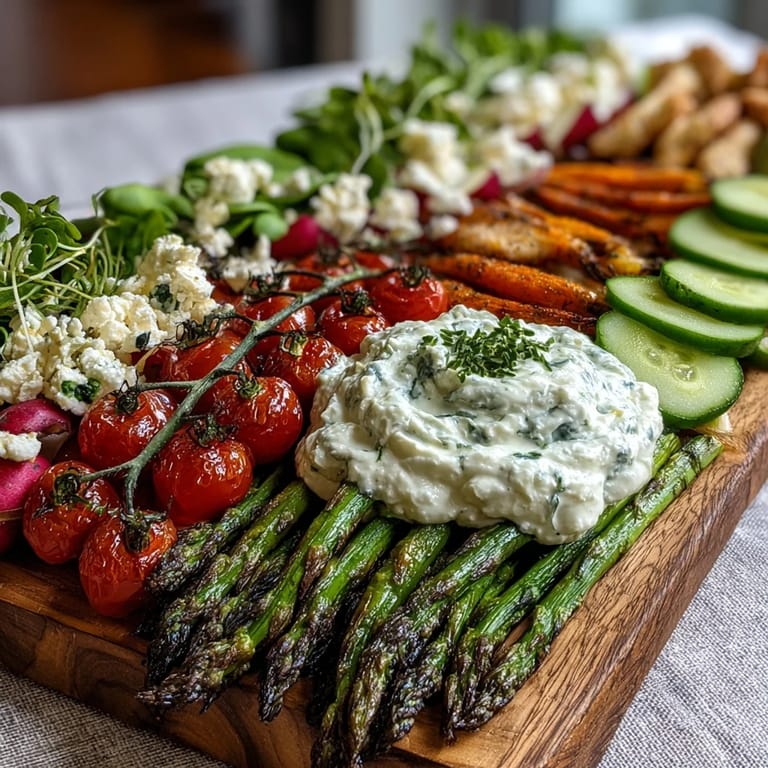
 Last spring, I was hosting a casual lunch and realized at the last minute I had nothing prepared. My garden was just starting to burst with fresh vegetables, so I grabbed whatever looked vibrant, arranged it on a board with a quick herb dip, and watched my guests light up the moment they saw it. That's when I learned that sometimes the most impressive dishes are the ones that feel completely effortless, like you've simply invited people to eat straight from the earth.
What I love most is how this board adapts to whatever I have on hand and whatever season is throwing vegetables at me. My neighbor once came over in early May when everything was just starting to come in, and we built this together while standing in her kitchen, laughing about how her sugar snaps were the sweetest things she'd ever grown. It became one of those moments where the food was secondary to the conversation, but the food made the conversation better.
Ingredients
- Breakfast radishes: These peppery little jewels are what make people reach first, and halving them means you get that beautiful cross-section that catches the light.
- Sugar snap peas: Keep them ice-cold in the fridge until the last moment, and they'll have that satisfying crunch that makes eating vegetables feel like a pleasure rather than a chore.
- Fresh or frozen peas: If using fresh, blanch them for just 90 seconds, then plunge them into ice water to lock in that bright green color and tender bite.
- Baby carrots: Choose the smallest ones you can find for a more delicate, sweeter flavor that feels intentional on a board.
- Cherry tomatoes: Halving them prevents them from rolling around and shows off their pretty interiors.
- Cucumber slices: Cut these just before serving so they stay crisp and don't weep water onto your board.
- Greek yogurt: This is your base, and the thicker it is, the better the dip will cling to the vegetables.
- Mayonnaise: A tablespoon is all it takes to add richness and help everything emulsify together.
- Fresh lemon juice: This is what makes people pause and ask what they're tasting—it brightens everything.
- Fresh chives, parsley, and dill: Chop these as close to mixing as possible so their oils and fragrance stay alive in the dip.
- Garlic clove: One small clove minced fine is enough to whisper rather than shout, which is exactly what you want here.
- Microgreens and feta: These are the finishing touches that transform a simple board into something that feels a little bit fancy.
Tired of Takeout? 🥡
Get 10 meals you can make faster than delivery arrives. Seriously.
One email. No spam. Unsubscribe anytime.
Instructions
- Wash and prepare your vegetables:
- Do this gently and with intention, because you're about to arrange them like you're painting a picture. Trim the radishes, snap the ends off the sugar snaps, peel the carrots, and slice the cucumber with just enough time left that it stays fresh and crisp.
- Arrange everything on your board:
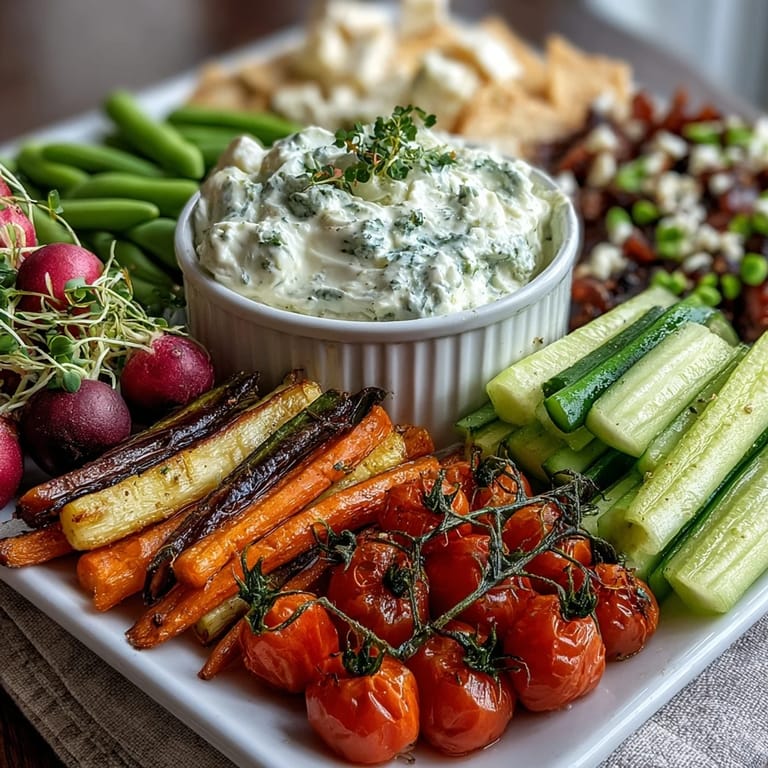
- There's no wrong way to do this, but I usually build in circles or scattered clusters, making sure there's enough white space around the vegetables so each one gets its moment. Let the colors talk to each other.
- Make the herb dip:
- In a bowl, stir together the yogurt and mayonnaise until smooth, then add the lemon juice, and finally fold in all the fresh herbs and minced garlic like you're being gentle with something precious. Taste it, adjust the salt and pepper, and if it feels too thick, thin it with another squeeze of lemon juice.
- Settle the dip on the board:
- Pour it into a small bowl and nestle it into the center or off to one side, depending on your composition. The dip should feel like it belongs there, not like an afterthought.
- Add the final touches:
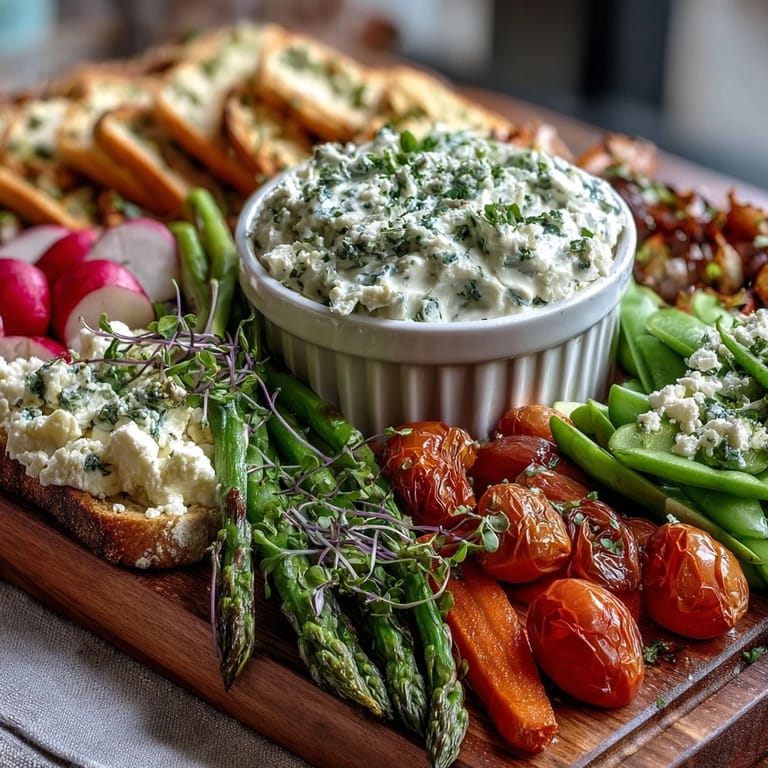
- Scatter microgreens and crumbled feta across the board if you're using them, and keep crackers or bread nearby for anyone who wants them. Serve right away while everything is at its crispest and coldest.
 Save It
 There was a moment during a spring dinner party when someone reached for a radish with herb dip, took a bite, and just closed their eyes for a second. That's when I understood that sometimes food isn't about being complicated or impressive—it's about being present and allowing people to taste the actual flavors of things growing. Everything on that board felt like spring itself.
How to Build a Board That Feels Intentional
Boards aren't about following rules, but there are a few quiet principles that make them feel like someone cared. Start by thinking about color balance: the pinks of the radishes, the bright greens of the peas, the orange of the carrots, the reds of the tomatoes. Then think about texture: crunchy next to tender, soft dip next to crisp vegetables. Leave gaps and breathing room instead of cramming everything in, because white space is what makes your eye move and makes people feel like they're being invited to explore rather than just grab.
When Spring Vegetables Are Still Making Up Their Mind
Some years spring arrives slowly, and the vegetables at the market aren't quite what you hoped for. In those moments, I've learned to get creative with what's available: blanched asparagus tips, thinly sliced bell peppers, small fennel wedges, or even tender snap beans all work beautifully. The key is that whatever you choose should be crunchy or snappy, because that's what makes people feel like they're eating something alive and fresh.
Making This Board Work for Any Moment
I've made this board for everything from a casual Friday with friends to a more formal spring gathering, and it works for all of it. The formula is simple enough that you can adapt it to what's in your garden or at your farmers market, but there's something about the combination of spring vegetables and a creamy herb dip that always feels celebratory. It says we're eating seasonally, we're being a little bit thoughtful, and we're not taking ourselves too seriously.
- If you're serving this earlier in the day, cover the board loosely with plastic wrap and refrigerate it until guests arrive.
- Make a double batch of the dip if you're feeding more people, because it disappears faster than you'd expect.
- Don't stress about perfect presentation—a board that looks a little organic and scattered is always more inviting than one that feels too arranged.
 Save It
 This board is proof that sometimes the most memorable meals come together with the gentlest touch and the simplest ingredients. Make it, share it, and watch how people slow down when they're eating something this fresh.
Recipe FAQs
- → How should the vegetables be prepared for the board?
Wash, trim, and cut vegetables as directed, arranging them attractively on a large platter.
- → What ingredients are used in the herb dip?
Greek yogurt, mayonnaise, fresh lemon juice, chopped chives, parsley, dill, garlic, salt, and pepper.
- → Can the dip be made in advance?
Yes, the herb dip can be prepared ahead and refrigerated for up to two days without losing freshness.
- → Are there any suggested garnishes for the board?
Optional garnishes include microgreens and crumbled feta cheese, which add color and flavor.
- → What are good serving accompaniments with this board?
Assorted crackers or sliced baguette pair well to provide texture alongside the fresh vegetables and dip.