 Save It
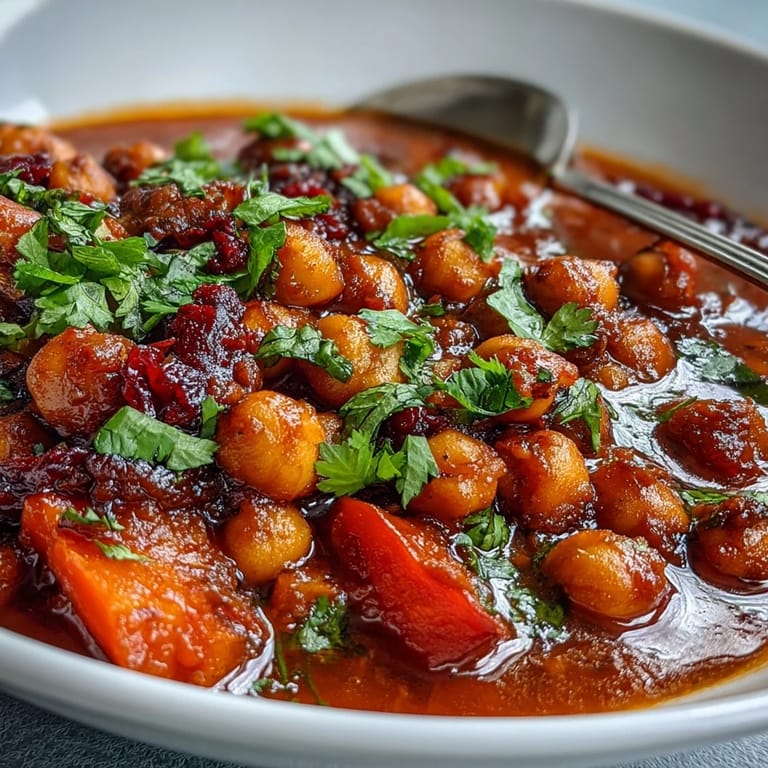
 One foggy evening, I stood in my kitchen with a craving for something warm that didn't require much fuss, and spotted a pair of chickpea cans in the pantry. That simple moment led me to layer spices I hadn't used together before—cumin meeting cinnamon in a way that felt both unexpected and somehow inevitable. The aroma that rose from the pot reminded me of a market I'd wandered through years ago, all those exotic spice stalls blending into one golden haze. What emerged was this stew: a humble, deeply satisfying dish that proved comfort food doesn't need to be complicated.
I made this for a dinner party last winter when everyone showed up slightly damp and tired from the weather, and watching people light up as they tasted it was oddly touching. There's something about serving a stew that feels generous and grounding at the same time, especially when you can honestly say it's vegan and gluten-free without making it sound like a sacrifice.
Ingredients
- Chickpeas (2 cans, drained and rinsed): The backbone of this stew—they're already cooked, so you're just letting them soak up all those spices and flavors as the stew simmers.
- Onion (1 large, finely chopped): This is your flavor foundation, and taking time to let it soften properly makes everything that follows taste richer.
- Garlic (2 cloves, minced): Fresh garlic here is non-negotiable; it wakes up all those warming spices and ties the whole dish together.
- Carrots (2, diced) and red bell pepper (1, diced): These vegetables soften beautifully and add both sweetness and texture that balances the earthiness of the chickpeas.
- Canned diced tomatoes (1 can, 14 oz): The acidity here is crucial—it brightens everything and prevents the stew from feeling too heavy.
- Vegetable broth (2 cups): Use something flavorful; it's a quiet player but makes the difference between good stew and memorable stew.
- Tomato paste (2 tablespoons): A small amount concentrates the tomato flavor and adds depth that you can't replicate otherwise.
- Olive oil (2 tablespoons): Good quality matters here since it's one of the first flavors you're building with.
- Ground cumin (1 teaspoon): This spice anchors the whole stew—earthy and warm without overwhelming.
- Smoked paprika (1 teaspoon): Adds a subtle smokiness that makes people ask what that mysterious something is.
- Ground coriander (1/2 teaspoon), turmeric (1/2 teaspoon), and cinnamon (1/2 teaspoon): These three work together to create a warmth that feels almost nostalgic even if you've never eaten this exact stew before.
- Chili flakes (1/2 teaspoon, adjust to taste): Start with the amount given, taste as you go, and add more if you want heat—you can't take it back once it's in.
- Bay leaf (1): It quietly supports everything else and you remove it at the end, but the stew knows it was there.
- Salt and freshly ground black pepper, to taste: Always taste before you season; canned chickpeas vary in saltiness.
- Lemon juice (from 1/2 lemon) and fresh cilantro or parsley (2 tablespoons, chopped): These finish the stew with brightness and a hint of freshness that makes it feel complete.
Tired of Takeout? 🥡
Get 10 meals you can make faster than delivery arrives. Seriously.
One email. No spam. Unsubscribe anytime.
Instructions
- Get your base going:
- Heat the olive oil in a large pot over medium heat and add the chopped onion. Let it cook for 4 to 5 minutes, stirring occasionally, until it turns translucent and soft—this is where your flavor foundation starts building.
- Build the flavor layers:
- Add the minced garlic, diced carrots, and diced red bell pepper to the pot and sauté for another 3 to 4 minutes. You'll start to smell something beautiful happening, and the vegetables will begin to soften at the edges.
- Toast the spices:
- Stir in the cumin, smoked paprika, coriander, turmeric, chili flakes, and cinnamon, then cook for just 1 minute, stirring constantly. The kitchen will fill with this warm, complex aroma—that's when you know the spices are waking up.
- Bring it together:
- Add the tomato paste and stir it in thoroughly, then pour in the diced tomatoes, drained chickpeas, vegetable broth, and bay leaf. Bring the whole pot to a boil, watching as everything mingles together.
- Let it simmer:
- Reduce the heat, cover the pot, and let it simmer gently for 25 minutes, stirring occasionally. The stew will deepen in color and the flavors will meld together beautifully.
- Thicken and season:
- Remove the lid and simmer uncovered for another 5 minutes to let some liquid evaporate and thicken the stew slightly. Taste it, then add salt and freshly ground black pepper until it tastes right to you.
- Finish with brightness:
- Remove the bay leaf, stir in the lemon juice and fresh cilantro or parsley, then taste one more time to make sure everything is balanced. Serve hot, ideally with crusty bread for soaking up the broth or over rice if you'd like something more substantial.
 Save It
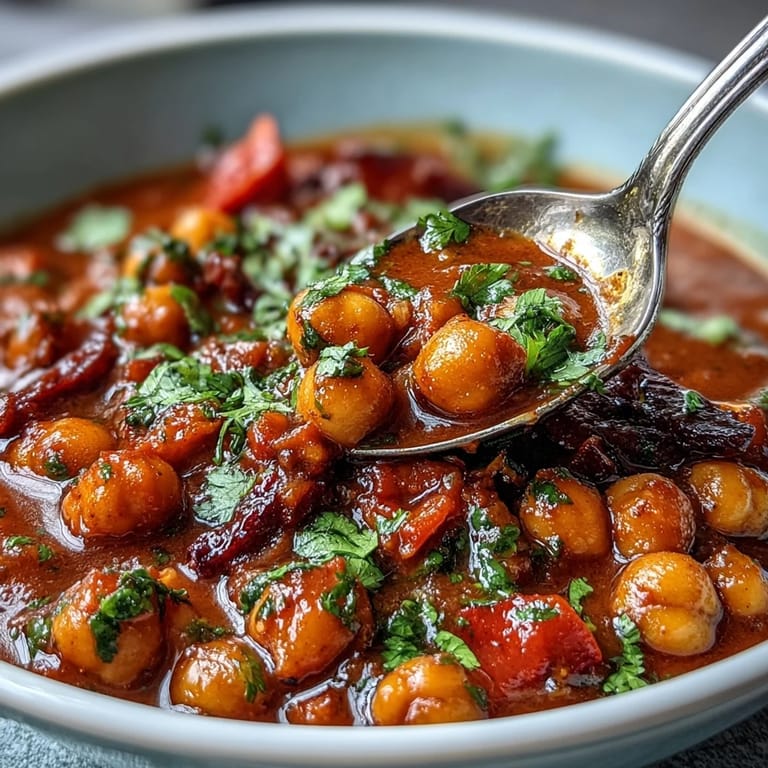
 Years ago, someone told me that the best meals are the ones you eat without checking your phone, and this stew has a way of making that happen naturally. There's something grounding about spooning into a bowl of this, especially on a day when the world feels too loud.
Why the Spice Blend Works
I spent a good hour one afternoon researching spice combinations for chickpea-based dishes from different cultures, and what struck me was how often cumin, cinnamon, and coriander appeared together. The cumin grounds you, the cinnamon adds warmth and sweetness, and the coriander brings a subtle citrusy brightness that you can't quite identify but absolutely need. The smoked paprika was my own addition, inspired by a kitchen experiment that went sideways but somehow led somewhere better. Together, these spices create something that feels both comforting and slightly exotic, familiar yet surprising.
The Next-Day Magic
If you have leftovers, store them in the fridge and reheat gently the next day—and I promise you, the stew will taste even more developed, as if all those spices spent the night getting to know each other better. I've learned to always make extra for this reason alone. The flavors deepen overnight in a way that makes you wonder if you could somehow bottle that quality and use it from the start.
Simple Ways to Make It Your Own
This recipe is flexible in ways that matter—you can adjust the heat level by adding fresh jalapeño or scaling back the chili flakes, and you can swap cilantro for parsley without losing anything essential. I've also experimented with adding a splash of coconut milk toward the end for richness, or a handful of spinach in the final minutes for something green and nutritious. The foundation is solid enough that these variations feel like personalizing rather than changing the recipe.
- For extra heat, dice a fresh jalapeño and add it with the other vegetables.
- A squeeze of lime works just as well as lemon if that's what you have on hand.
- If you want it thicker, simmer uncovered a bit longer; if you prefer it brothier, add more vegetable broth before serving.
 Save It
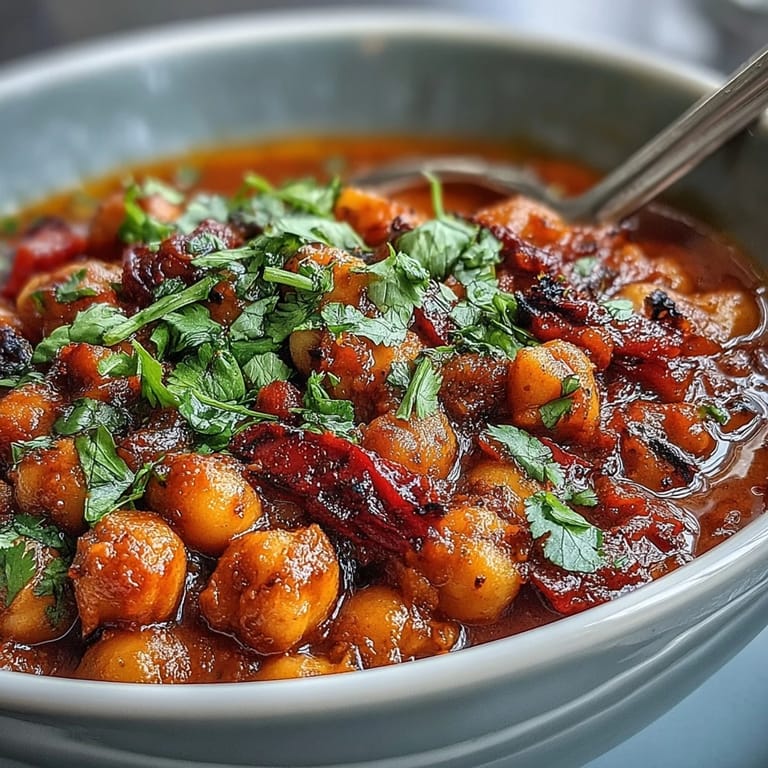
 This stew taught me that sometimes the best meals come from a simple idea executed with care—no fuss, no unnecessary steps, just good ingredients and a little patience. Make it whenever you need something warm and real.
Recipe FAQs
- → How spicy is this stew?
The heat level is moderate and adjustable. The chili flakes provide a gentle warmth, while the cinnamon and smoked paprika add depth rather than intense heat. For more spice, add extra chili flakes or a diced jalapeño with the vegetables.
- → Can I use dried chickpeas instead of canned?
Absolutely. Soak 1 cup dried chickpeas overnight, then cook them for 60-90 minutes until tender before adding to the stew. You may need to simmer the stew slightly longer to allow the flavors to meld.
- → How long does this stew keep?
This stew stores beautifully in the refrigerator for 4-5 days and actually tastes better the next day as the spices deepen. It also freezes well for up to 3 months—just cool completely before transferring to freezer-safe containers.
- → What can I serve with this stew?
Crusty bread is perfect for soaking up the flavorful broth. You can also serve over rice, quinoa, or couscous for a more substantial meal. A crisp white wine like Sauvignon Blanc complements the spices nicely.
- → Can I make this in a slow cooker?
Yes. Sauté the vegetables and spices on the stovetop first, then transfer everything to your slow cooker. Cook on low for 6-8 hours or high for 3-4 hours. Stir in the lemon juice and fresh herbs just before serving.