 Save It
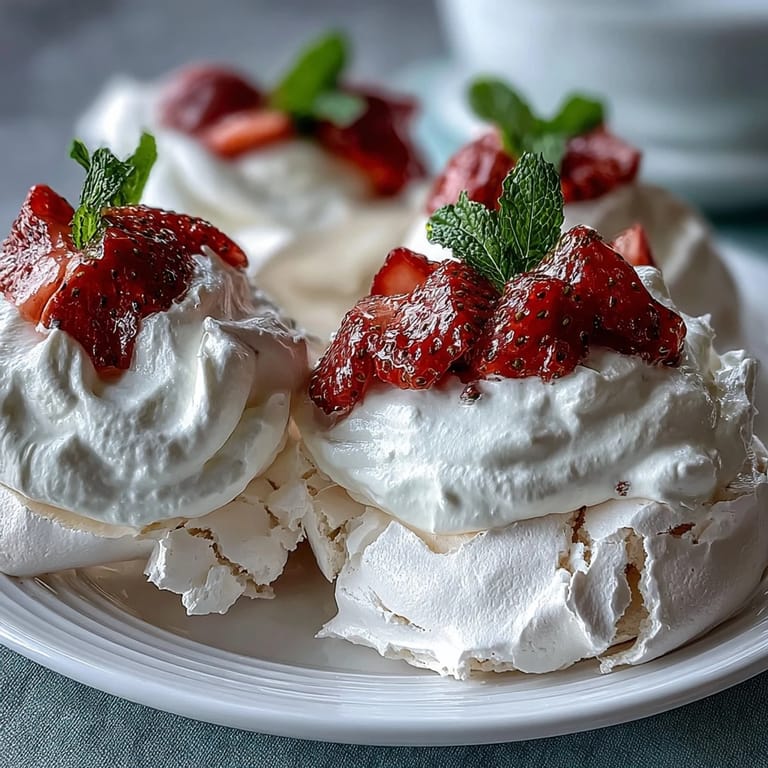
 My neighbor brought over a box of mini pavlovas last summer, and I watched her assemble them right there on my kitchen counter with the kind of casual confidence that made it look effortless. The meringue nests were impossibly crisp, the cream billowed like clouds, and the strawberries glistened with their own juice. She caught me staring and laughed, saying they're actually easier than they look, especially if you respect the meringue enough to let it dry out properly. That afternoon changed how I thought about elegant desserts, proving that sometimes the most impressive treats come from just a handful of ingredients and patience.
I made these for my daughter's graduation brunch, and I remember the nervous energy in my kitchen at 6 a.m., egg whites at room temperature, the mixer humming steadily while morning light crept across the counter. When those first peaks started forming, I felt this quiet relief, like the meringue and I had finally made peace. Thirty minutes later, watching guests pick up those little nests with real delight, I realized how much joy comes from offering something both beautiful and delicious.
Ingredients
- Egg whites: Room temperature is non-negotiable here because cold eggs won't whip to full volume, and you need every bit of that lift to create an airy meringue.
- Superfine sugar: This dissolves into the egg whites more completely than granulated sugar, giving you that signature glossy, smooth finish.
- Cornstarch: This small addition stabilizes the meringue and prevents it from weeping while it bakes, keeping the texture crisp.
- White vinegar: A little acid helps break down the egg proteins and adds structural support without affecting flavor.
- Vanilla extract: Use real vanilla if you can, as it adds depth to what might otherwise taste one-dimensional.
- Heavy whipping cream: Cold cream whips up faster and holds its shape better than room temperature cream.
- Powdered sugar: Use this for the cream rather than granulated sugar, which won't dissolve smoothly.
- Fresh strawberries: Look for ones that are fragrant and deep red, and let them macerate with a bit of lemon juice to concentrate their flavor.
Tired of Takeout? 🥡
Get 10 meals you can make faster than delivery arrives. Seriously.
One email. No spam. Unsubscribe anytime.
Instructions
- Get your mise en place ready:
- Preheat your oven to 250°F and line a baking sheet with parchment paper. Make sure your mixing bowl is absolutely clean and dry, because any moisture or grease will sabotage the egg whites. Having everything prepared before you start beating eggs saves you from the panic of scrambling while whites are sitting.
- Whip the egg whites into soft peaks:
- Beat the room-temperature egg whites on medium speed until they hold a shape but still look slightly wet and voluminous. This usually takes 3 to 4 minutes, and you'll hear the texture change in the mixer's rhythm.
- Add sugar gradually and build to stiff peaks:
- Add superfine sugar one tablespoon at a time, letting each addition fully incorporate before adding the next. This patience makes the difference between meringue that holds and meringue that deflates midway through baking.
- Fold in the stabilizers and flavorings:
- Gently fold the cornstarch, vinegar, and vanilla into the whipped meringue using a rubber spatula and a light hand. Think of it as folding rather than stirring, which keeps all that trapped air from escaping.
- Shape into nests:
- Spoon or pipe the meringue into 6 portions on your prepared baking sheet, creating a slight well or indentation in the center of each one. This indentation is where your cream and berries will settle, so make it generous but not so deep that you break through to the baking sheet.
- Bake slowly and let cool completely:
- Bake for a full hour at the low temperature, which allows the meringue to dry out and set without browning. When the hour is up, turn off the oven, crack the door open slightly, and let everything cool inside for at least 30 minutes so the meringue adjusts to room temperature gradually.
- Prepare the strawberries while waiting:
- Toss sliced strawberries with a tablespoon of sugar and a teaspoon of lemon juice, then let them sit for 15 minutes. The sugar draws out their juice and the lemon brightens their flavor.
- Whip the cream:
- When the meringues are completely cool, whip cold heavy cream with powdered sugar and vanilla until soft peaks form. You want it pillowy and light, not stiff enough to look grainy.
- Assemble and serve:
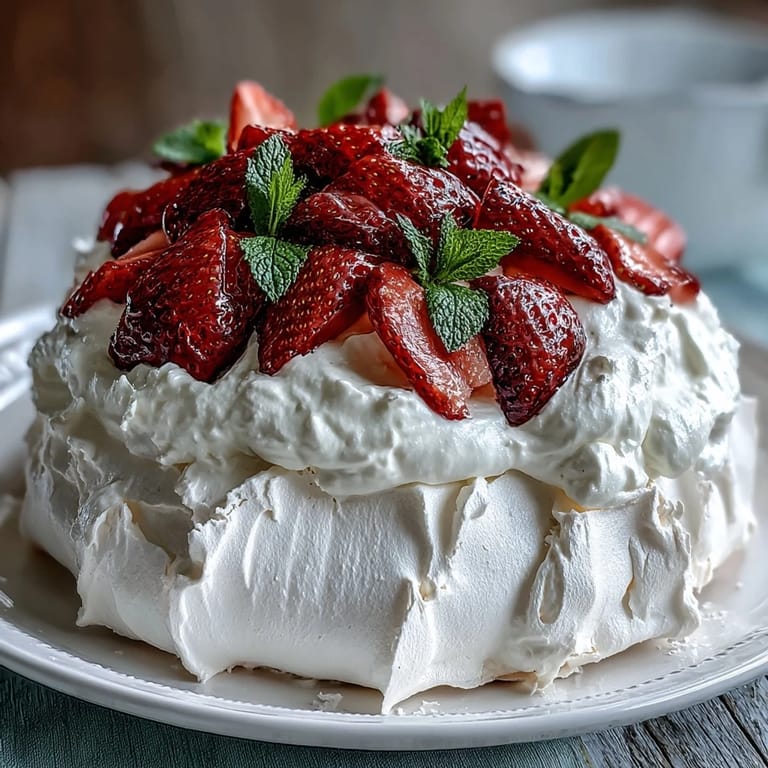
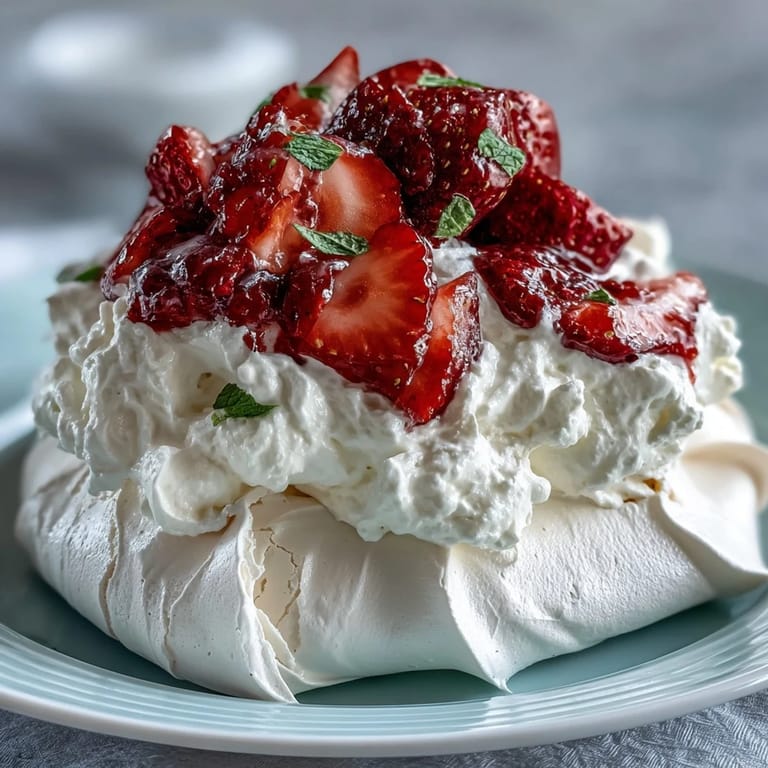
- Place each meringue on a plate, fill the center generously with whipped cream, and top with the macerated strawberries and a drizzle of their juices. Serve right away so the contrast between crisp meringue and soft cream stays perfect.
 Save It
 There's something almost magical about that moment when your guests first bite into one of these pavlovas, when the meringue cracks gently under their fork and the cream gives way. I think that's when food becomes memory, when the simple act of eating becomes a small celebration.
Making Meringue Without Worry
The biggest barrier to making meringue is the fear that something will go wrong, but the truth is that meringue is remarkably forgiving if you follow a few rules. Room-temperature egg whites, a scrupulously clean bowl, and a steady hand while adding sugar are genuinely all you need. Once you've made one batch successfully, you'll wonder why you ever hesitated.
Flavor Variations Worth Trying
While strawberries and cream is classic for good reason, these nests are a canvas for whatever's fresh and exciting to you. Raspberries with a whisper of almond extract in the cream, mixed berries with a passion fruit drizzle, or even fresh peaches with a hint of cardamom can all work beautifully. The meringue is neutral enough to play well with any flavor you choose.
Storage and Serving Strategy
The secret to having these look effortless is understanding what can be made ahead and what must be done at the last moment. Your meringue nests will keep in an airtight container for up to two days, and the cream can be whipped an hour or two before serving if kept cold. Macerate the strawberries no more than an hour before you're ready to serve, so they stay plump and don't weep too much liquid. Here's what you should remember:
- Assemble everything within 15 minutes of serving to keep that contrast between crisp meringue and soft textures.
- If you're making these for a group, prep the meringues and berries ahead, whip the cream right before guests arrive, and assemble as people gather.
- These are best eaten the same day you assemble them, so don't try to make them hours ahead.
 Save It
 These little pavlovas have become my go-to when I want to impress without stress. They're the kind of dessert that reminds you why cooking for people you care about matters so much.
Recipe FAQs
- → What makes pavlova meringue crispy?
Baking the meringue at a low temperature for an extended time dries it out, creating a crisp shell with a soft interior.
- → How can I keep the whipped cream stable?
Use cold heavy cream and whip it just until soft peaks form, adding powdered sugar and vanilla for sweetness and stability.
- → Can I substitute strawberries with other fruits?
Yes, fresh berries such as raspberries or blueberries work well, and can be macerated similarly with sugar and lemon juice.
- → What is the purpose of cornstarch in the meringue?
Cornstarch helps to stabilize the meringue and maintain a tender interior while preventing it from becoming too hard.
- → How should mini pavlovas be stored before serving?
Store baked meringue nests in an airtight container once completely cool, and assemble with cream and fruit just before serving.