 Save It
 There's something about the sizzle of a pork chop hitting a hot skillet that just makes you pause and breathe in. Years ago, I was convinced pork had to be boring—until my sister casually threw Dijon mustard into a cream sauce and suddenly I understood why people actually looked forward to weeknight dinners. This dish arrived at my table during a time when I was learning to cook without grains, and it became the meal I'd make when I needed to prove to myself that eating this way didn't mean sacrificing flavor.
I made this for a friend who'd just started keto and was convinced she'd be eating plain chicken forever. When she tasted that sauce and then crunched into a roasted Brussels sprout, her face changed—like she'd just discovered something she thought was gone. We sat at my kitchen counter eating straight from the skillet, and she kept saying "this is actually good" like she still couldn't quite believe it.
Ingredients
- Boneless pork chops (about 1-inch thick): The thickness matters because it gives you time to build a golden crust without overcooking the inside; thinner chops will dry out before the sauce even gets started.
- Sea salt and freshly ground black pepper: Don't skip the freshly ground part—it tastes alive compared to the pre-ground stuff sitting in your cabinet.
- Olive oil and unsalted butter: The combination gives you the high heat tolerance of oil with the flavor depth of butter; this is how you actually get a proper sear.
- Heavy cream: Full fat is non-negotiable here because the sauce needs body and richness, not something watery pretending to be sauce.
- Dijon mustard and whole grain mustard: Dijon gives you sophistication and sharpness; whole grain adds texture and a bit of playfulness if you're feeling it.
- Garlic and fresh thyme: These two are where the sauce stops being just cream and mustard and becomes something with actual personality.
- Chicken broth: Low sodium is smart because you're already seasoning aggressively with salt and mustard, and you don't want the broth to boss you around.
- Fresh parsley: This is the final touch that makes people think you actually know what you're doing, even though it takes five seconds.
- Brussels sprouts: Cut them in half and don't crowd the pan, because they need room to brown properly; crowded vegetables just steam and become sad.
Tired of Takeout? 🥡
Get 10 meals you can make faster than delivery arrives. Seriously.
One email. No spam. Unsubscribe anytime.
Instructions
- Get your oven ready and prep the Brussels sprouts:
- Turn your oven to 425°F before you do anything else—ovens are slow to heat and you don't want to wait around later. Toss your halved Brussels sprouts with olive oil, salt, and pepper, then spread them cut-side down on a baking sheet like you're giving each one its own space to get crispy.
- Start roasting while you prep the pork:
- Get those Brussels sprouts in the oven for 25-30 minutes and pop your pork chops out to dry them off with paper towels—moisture is the enemy of a good sear. Season them generously with salt and pepper right before they hit the pan, not earlier, because salt draws out moisture and you need that meat as dry as possible.
- Build the crust on your pork chops:
- Heat olive oil and butter together in a large skillet over medium-high heat until it's almost smoking and smells nutty; this is the sound of caramelization about to happen. Sear your chops for 3-4 minutes per side until they're golden brown and the internal temperature hits 145°F—don't move them around or you'll break that crust you're working so hard to build.
- Create the sauce foundation:
- Move the pork to a plate and tent it loosely with foil to keep it warm. Turn the heat down to medium, add your minced garlic and fresh thyme to the same skillet, and let it sauté for about 30 seconds until your kitchen smells like you know what you're doing.
- Build the sauce with intention:
- Pour in the chicken broth and scrape up all those brown bits stuck to the bottom of the skillet because that's where the flavor lives. Let it simmer for 2 minutes, then stir in the heavy cream and both mustards, whisking until everything's smooth and slightly thickened, which takes about 2-3 minutes.
- Bring it all home:
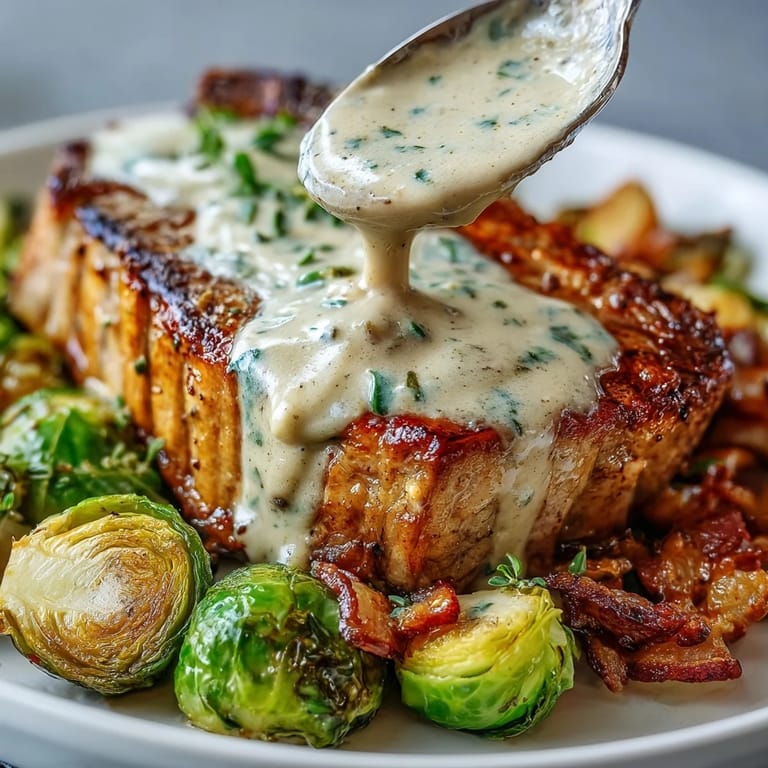
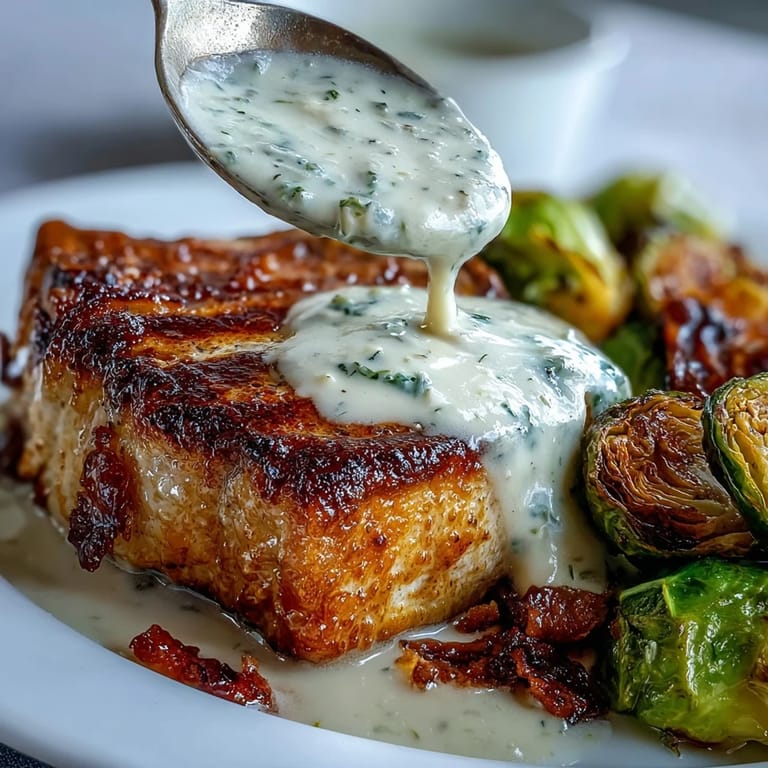
- Return the pork chops and any juices that pooled on the plate back into the skillet, spoon that creamy Dijon sauce right over the top, and simmer everything together for 2 minutes so the pork gets a final kiss of those flavors. Finish with a sprinkle of fresh parsley right before serving because color matters, especially when you're eating this way.
 Save It
 There's a moment near the end of cooking this that feels almost ceremonial—when you're standing at the stove looking at the golden pork, the caramelized Brussels sprouts coming out of the oven, and that creamy mustard sauce doing its thing, and you realize you've made something that tastes like it took hours but didn't. That's the feeling that keeps me coming back to this dish on nights when I want to feel good about what I'm eating.
The Secret to Not Drying Out Your Pork
Pork chops have gotten a terrible reputation over the years because people cook them too long, and I've been there—standing in front of a plate of what might as well have been rubber. The trick is that 145°F internal temperature is genuinely enough; a meat thermometer is the best kitchen investment you can make because it removes the guesswork and you stop playing it safe by cooking everything to 160°F. Pat your meat dry before it hits the pan, don't wander away and forget about it, and remember that carryover cooking means the temperature rises a few degrees after you take it off heat.
Brussels Sprouts Are Better When You Stop Being Afraid of Them
I spent years thinking I hated Brussels sprouts because I'd only ever had the steamed kind from my childhood that tasted like sadness. Then someone roasted them with aggressive seasoning and high heat, and they became crispy, nutty little golden treasures that actually tasted like food. The cut-side-down placement is crucial because that flat surface makes direct contact with the hot pan and gets properly caramelized, and shaking the pan halfway through keeps them from sticking while ensuring they brown evenly on all sides.
Make It Your Own and Trust Yourself
This recipe is a foundation, not a prison—I've added a splash of dry white wine after cooking the garlic more times than I haven't, and it adds this subtle complexity that makes people ask what's different. A squeeze of fresh lemon at the very end brightens everything up if you're feeling like the sauce needs a wake-up call, and honestly sometimes that's exactly what it needs. The beauty of a Dijon sauce is that it's forgiving and flexible, so taste as you go and adjust the mustard level to your own preference because your palate is the only one that matters in your own kitchen.
- Add white wine if you have it open, right after the garlic hits the pan, and let it reduce by half before you add the broth.
- A tiny pinch of cayenne pepper in the cream sauce adds a whisper of heat that nobody can quite identify but everyone notices.
- Make sure your Brussels sprouts are actually dried off after washing because water is the enemy of crispiness.
 Save It
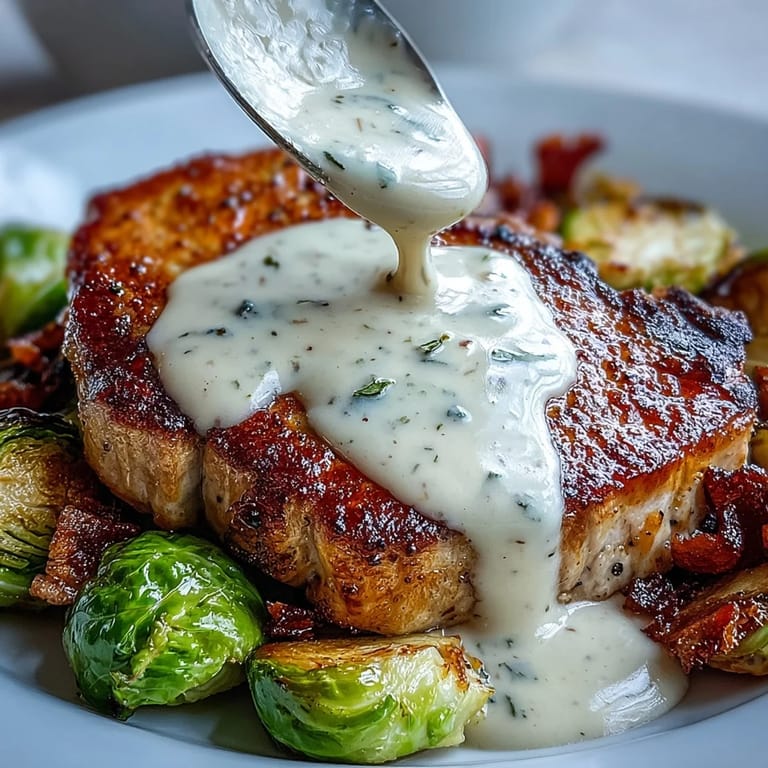
 This meal has become my go-to proof that eating keto doesn't mean eating boring food, and it genuinely tastes like you're taking care of yourself and the people eating with you. Make it once and it'll find its way into your regular rotation.
Recipe FAQs
- → What cut of pork works best?
Boneless chops about 1-inch thick are ideal—they sear beautifully and stay juicy. Thinner cuts may overcook before developing proper color, while thicker ones take longer to reach temperature.
- → Can I make the sauce ahead?
The sauce reheats well over gentle heat. Make it up to a day ahead and store refrigerated. Thin with a splash of broth or cream when reheating, as it will thicken when chilled.
- → What vegetables can substitute Brussels sprouts?
Cauliflower florets, broccoli, or green beans roast beautifully at the same temperature. Adjust cooking time slightly—cauliflower and broccoli need about 20 minutes, while green beans typically finish in 15-18 minutes.
- → How do I know when pork is done?
Use an instant-read thermometer inserted into the thickest part. You're looking for 145°F internal temperature. The pork should feel firm but springy to the touch, with clear juices running when pierced.
- → Can I use milk instead of heavy cream?
Heavy cream provides essential richness and proper sauce consistency. Milk won't reduce properly or achieve the same velvety texture. For dairy-free options, full-fat coconut cream creates a similar thickness with subtle coconut flavor.
- → What if I don't have whole grain mustard?
Simply increase the Dijon to 3 tablespoons total. The whole grain mustard mainly adds texture and visual interest—the flavor profile remains essentially the same with just Dijon.