 Save It
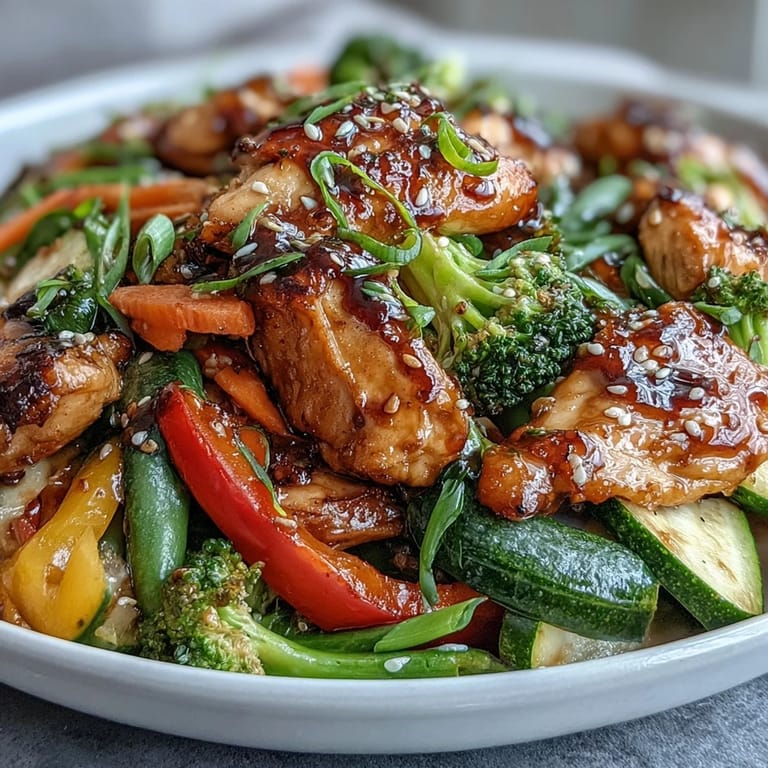
 There's a Tuesday evening burned into my memory when my roommate burst through the kitchen door asking what smelled so good, and I realized I'd been so focused on getting dinner ready fast that I hadn't noticed the wok filling the whole apartment with this incredible savory aroma. That night, stir-fry stopped being just weeknight fuel and became something I actually looked forward to making. The chicken stays tender, the vegetables keep their snap, and somehow it all comes together in less time than it takes to order takeout.
I made this for my sister after she complained about meal prep being boring, and watching her go back for seconds while telling me it actually tasted like real food, not diet food, made me realize this wasn't just a recipe I liked, it was something that could stick around. Now whenever she texts me about trying something new, this is the first thing she asks for.
Ingredients
- Chicken breast, 500 g thinly sliced: Slice it thin enough that it cooks through in minutes without drying out, and yes, the knife needs to be genuinely sharp or you'll spend ten minutes wrestling with it.
- Red and yellow bell peppers, sliced: The color isn't just pretty, it means you're getting different nutrient profiles in one pan.
- Zucchini, sliced: It wilts fast, so add it later or you'll end up with mushy vegetables.
- Snap peas, 100 g trimmed: These stay crisp if you don't overcook them, which is exactly the point of stir-frying.
- Carrot, julienned: Thin cuts mean they cook evenly and add a subtle sweetness that balances the savory sauce.
- Broccoli florets, 100 g: Cut them small so they cook through and don't stick around like little trees in your pan.
- Spring onions, sliced: Save these for the end so they stay fresh and bright instead of turning into wilted strands.
- Low-sodium soy sauce or tamari, 2 tbsp: The low-sodium part matters because you're building flavor with everything else too, not just salt.
- Oyster sauce, 2 tbsp optional: This is the secret handshake that makes it taste like a restaurant made it, but honest to god it's optional.
- Rice vinegar, 1 tbsp: A tiny bit of acid wakes up all the other flavors and keeps it from tasting one-dimensional.
- Sesame oil, 1 tbsp: This stuff is aromatic, so a little goes further than you'd think, and pouring it in at the end means the smell stays instead of cooking away.
- Fresh ginger, 1 tbsp grated: The fresh kind, not the powder, because there's a whole different brightness to it.
- Garlic cloves, 2 minced: Mince it fine so it spreads through the whole dish instead of leaving chunks.
- Chili flakes, 1 tsp optional: Only add this if you actually like heat, and remember you can always add more but you can't take it back.
- Cornstarch slurry, 1 tsp cornstarch mixed with 2 tbsp water: This is what makes the sauce coat everything instead of pooling at the bottom, and mixing it with cold water first keeps lumps from forming.
- Vegetable oil, 2 tsp for cooking: Something neutral that can handle the heat without smoking out your kitchen.
Tired of Takeout? 🥡
Get 10 meals you can make faster than delivery arrives. Seriously.
One email. No spam. Unsubscribe anytime.
Instructions
- Make the sauce first:
- Whisk together the soy sauce, oyster sauce if you're using it, rice vinegar, sesame oil, ginger, garlic, chili flakes, and your cornstarch slurry in a small bowl and just let it sit there waiting. This is the kind of task that takes two minutes but makes the rest of the cooking feel controlled and easy.
- Heat your pan and cook the chicken:
- Get your skillet or wok smoking hot over medium-high heat with one teaspoon of oil, then add the chicken and don't move it around for the first minute so it gets a little color instead of just steaming. Once it's golden and cooked through, around four to five minutes, scoop it onto a plate and breathe for a second because the hardest part is done.
- Build your vegetable layers:
- Add the last bit of oil and start with the hardest vegetables first, the broccoli and carrot and snap peas, giving them two minutes to start softening. Then throw in the peppers and zucchini and keep the whole thing moving for another two to three minutes until everything is tender but still has some resistance when you bite it.
- Bring it all together:
- Return the chicken to the pan, pour in that sauce you made at the beginning, and toss everything together for two to three minutes while it bubbles and thickens. You'll see it go from loose to glossy, from separate ingredients to one unified thing, and that's when you know it's ready.
- Finish and serve:
- Scatter the spring onions over the top and get it to the table while it's still hot, because stir-fry is one of those dishes that tastes best when it's actually warm.
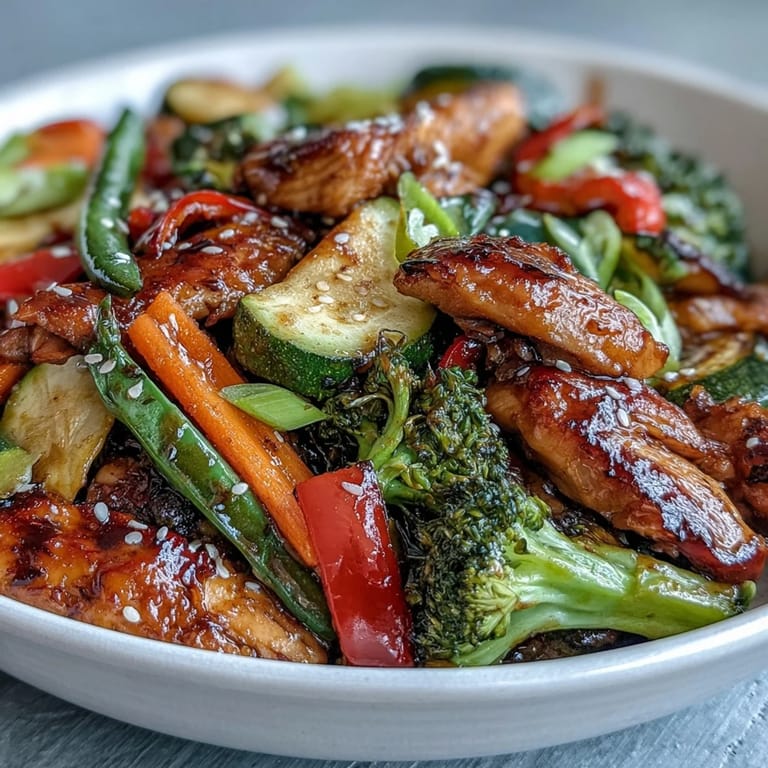 Save It
 There was this moment at a dinner party where someone asked if I'd made everything from scratch, and when I said yes, they looked genuinely shocked because they'd assumed I'd ordered it, and that's when I understood why this recipe matters. It's the kind of dish that feels effortless to eat but proves you actually spent time in the kitchen, which is a rare and lovely thing.
The Real Talk About Slice Thickness
Getting the chicken to cook evenly is all about how thin you slice it, and I learned this the hard way by eating some pieces that were done and some that were still kind of rubbery. Once I started paying attention to thickness, making sure everything was roughly a quarter inch, the whole recipe clicked into place and stopped being a game of chance.
Why the Sauce Makes All the Difference
The first time I made this without a proper sauce, just kind of throwing soy sauce and oil in at the end, it tasted fine but flat, like I'd missed something important. Once I started mixing the sauce components together first, letting them marry, then adding that cornstarch slurry to thicken everything into a gloss, the whole dish transformed from serviceable to something I actually craved.
Serving Styles and Side Dish Wisdom
You can eat this straight up and be completely satisfied, but over the last year I've learned that pairing it with something mild makes the dish shine even brighter. Cauliflower rice keeps the carbs low and lets the stir-fry flavor be the star, while brown rice adds texture and substance if you want something more traditional. Sometimes I even serve it over nothing at all, just piled in a bowl like a salad, and it works beautifully that way too.
- Toast some sesame seeds in a dry pan until golden and shower them over everything right before eating for crunch and nutty flavor.
- If your household likes things spicy, add sriracha or increase the chili flakes, but do it gradually because heat builds as you eat.
- Swap the chicken for extra firm tofu or shrimp if you want variety, just adjust cooking time since both cook faster than chicken.
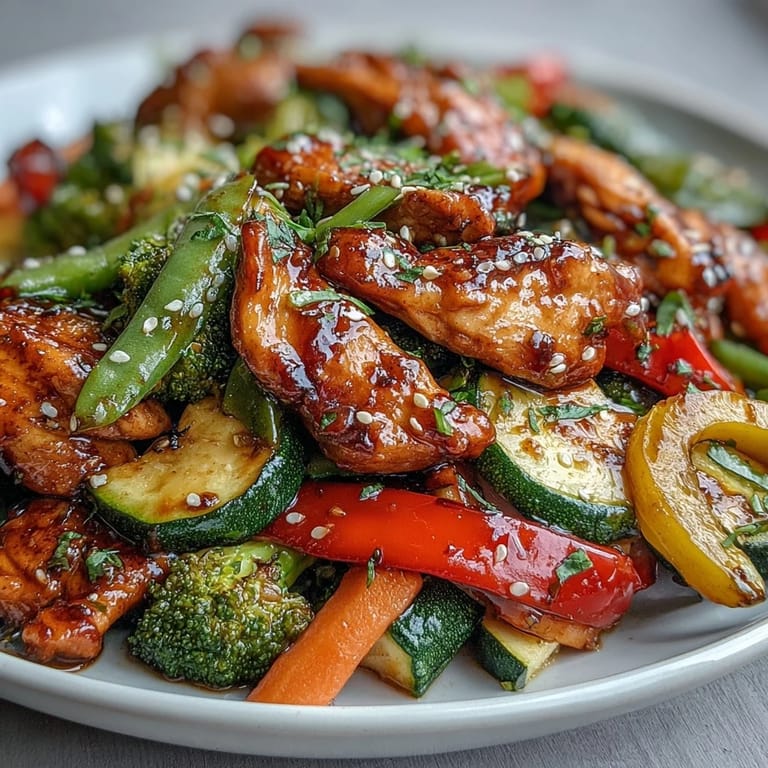 Save It
 This stir-fry has become my go-to answer when someone asks what I'm making for dinner and I want to cook something real without spending the whole evening in the kitchen. Make it once and you'll understand why it keeps coming back to my table.
Recipe FAQs
- → How long does this stir-fry take to prepare?
The total time is 30 minutes, including 15 minutes of preparation and 15 minutes of cooking. The chicken cooks quickly in 4-5 minutes, while vegetables require 4-6 minutes to reach crisp-tender perfection.
- → Can I make this dish gluten-free?
Yes, simply substitute regular soy sauce with tamari and ensure all condiments are certified gluten-free. The remaining ingredients naturally contain no gluten.
- → What protein alternatives work in this stir-fry?
Firm tofu cubes or medium shrimp work beautifully as substitutes. Cook tofu for 5-6 minutes until golden, or shrimp for 2-3 minutes until pink and opaque.
- → How can I adjust the spice level?
Increase chili flakes to taste or add sriracha directly to the sauce. For milder flavor, omit chili flakes entirely or reduce to ½ teaspoon.
- → What should I serve with this dish?
Cauliflower rice keeps it low-carb, while steamed brown rice adds fiber. Noodles work well too. Garnish with toasted sesame seeds for extra crunch and healthy fats.
- → Can I meal prep this stir-fry?
Absolutely. Portion into containers and refrigerate for up to 4 days. Reheat gently in a skillet or microwave, adding a splash of water if the sauce thickens too much.