 Save It
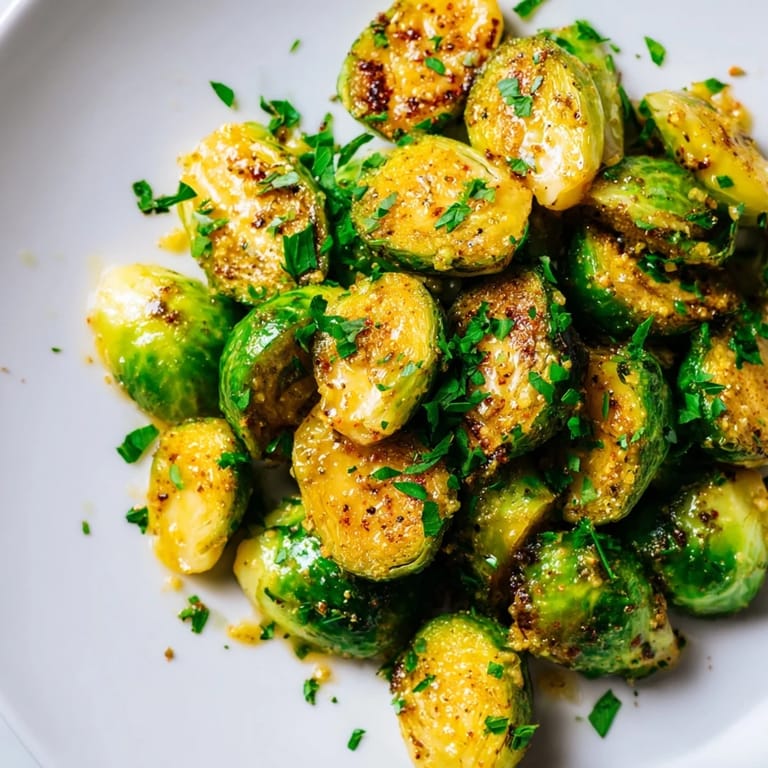
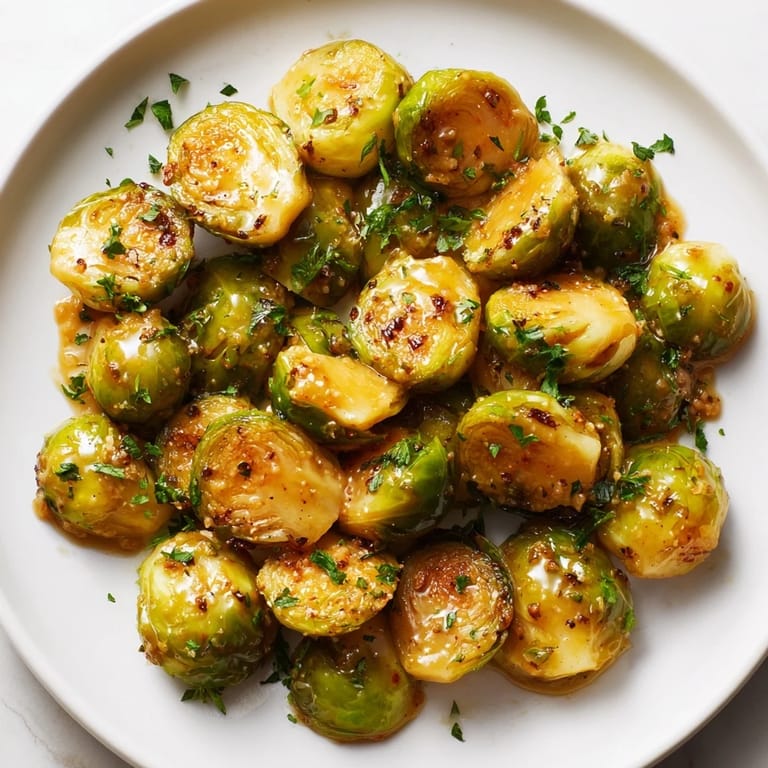
 There's a moment in every kitchen when you realize a vegetable you've been cooking the same way for years can become something entirely different. I had that moment with Brussels sprouts during a Wednesday night dinner when I was scrambling to make something more interesting than the usual roasted version. My hand reached for honey and mustard almost by accident, and when those sprouts came out of the oven caramelized and glossy, my partner asked for the recipe before I'd even plated them.
I made this for my sister's potluck once, nervous it wasn't fancy enough for the spread she'd assembled. Someone ate five Brussels sprouts in a row and asked if I'd use butter or some special technique. The secret was just letting them sit cut-side down on that hot pan, which I explained while pretending I'd planned it that way all along.
Ingredients
- Brussels sprouts: A pound halved lengthwise gives you flat surfaces that caramelize beautifully, and smaller sprouts finish more evenly than one massive pile.
- Olive oil: Two tablespoons carries the glaze and helps with browning, but don't skimp on quality here since it's doing real work.
- Honey: The sweetness balances the mustard's bite, and it's what gives the glaze that glossy, stick-to-your-fingers finish.
- Dijon and whole-grain mustard: Together they create layers of flavor—Dijon is smooth and sharp, whole-grain adds texture and earthiness.
- Apple cider vinegar: One tablespoon cuts through richness and makes everything taste brighter than you'd expect.
- Garlic powder: A half-teaspoon adds a savory note that ties the whole thing together.
- Salt and pepper: These aren't optional; they're what make every other flavor sing.
- Fresh parsley: Optional but worthwhile, it adds a fresh green moment that cuts the richness.
Tired of Takeout? 🥡
Get 10 meals you can make faster than delivery arrives. Seriously.
One email. No spam. Unsubscribe anytime.
Instructions
- Heat your oven and prep:
- Get the oven to 425°F and line your baking sheet with parchment paper so nothing sticks and cleanup is easy. This high heat is what creates that caramelized crust you're after.
- Whisk your glaze:
- In a large bowl, whisk the olive oil, honey, both mustards, garlic powder, apple cider vinegar, salt, and pepper until it comes together smooth and a little glossy. You'll know it's right when it looks emulsified and there are no streaks of oil.
- Coat the sprouts:
- Toss your halved Brussels sprouts with the glaze until every piece is coated, working the glaze into the nooks and crannies. This is where flavor lives.
- Arrange cut-side down:
- Spread them on the baking sheet with the flat side down so that side touches the heat and browns deeply. Don't crowd the pan; they should be in one layer with a little breathing room.
- Roast and flip:
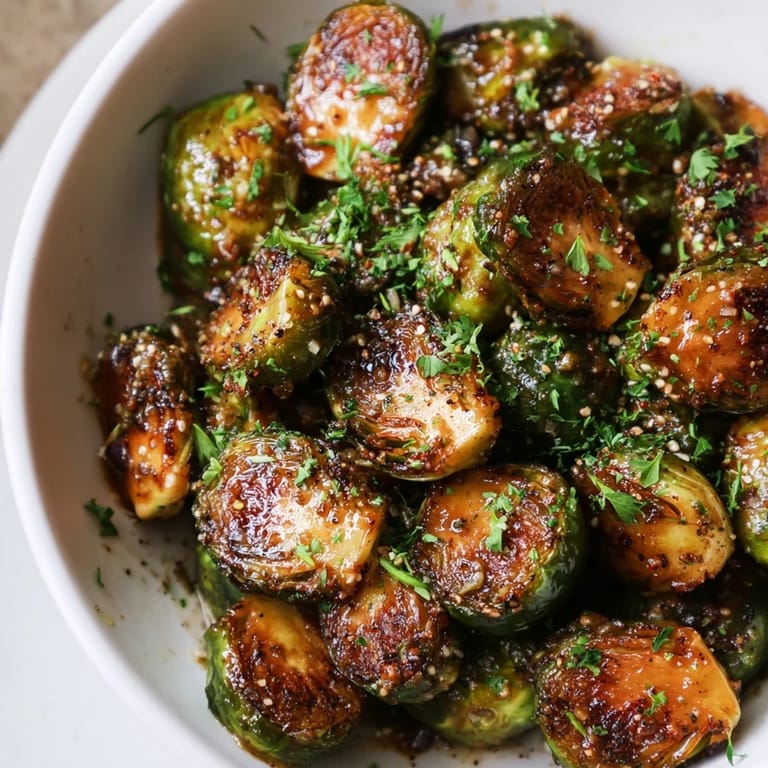
- Roast for 20 to 25 minutes, flipping halfway through so both sides caramelize. You're looking for deep golden-brown leaves and tender centers that give when you poke them.
- Finish and serve:
- Transfer to a serving dish, scatter fresh parsley over top if you have it, and serve while they're still warm and the glaze is tacky.
 Save It
 I learned the real power of this dish when someone who'd claimed to hate Brussels sprouts came back for seconds. There's something about honey and mustard together that feels less like health food and more like something you actually want to eat.
Why the Cut-Side-Down Matters
Every time I skip this step, thinking it doesn't matter, I get softer, less interesting results. The flat side pressed against the hot pan is where the magic happens—that's where the Maillard reaction turns the Brussels sprout's natural sugars into something caramelized and almost sweet. It's the difference between good and the kind of side dish people remember.
Playing with the Flavor
The mustard-honey balance is forgiving enough to play with. Some nights I add a pinch of chili flakes if I'm feeling something spicy, and the whole-grain mustard is what keeps it from tasting one-note. Maple syrup instead of honey gives it a different kind of sweetness that works beautifully and keeps everything vegan if that matters at your table.
Making It Your Own
These are good as they come straight from the oven, but they become something special with a few additions. Toasted pecans or walnuts add a crunch that plays against the soft sprout inside, and a shower of fresh parsley at the end makes the whole plate feel more intentional.
- Toss in toasted chopped nuts in the last minute for texture that contrasts with the tender sprouts.
- A squeeze of fresh lemon juice over the finished dish brightens everything without making it taste sour.
- Keep them warm in a low oven if you're making other dishes, but don't let them sit longer than 20 minutes or they'll lose their edge.
 Save It
 These Brussels sprouts have become my secret weapon for turning a simple dinner into something that feels like you tried. They're proof that the best recipes aren't always complicated, just thoughtfully put together.
Recipe FAQs
- → How do I achieve caramelized Brussels sprouts?
Roasting the sprouts cut side down at high temperature allows the natural sugars to caramelize, creating a crisp, golden exterior.
- → Can I make this glaze vegan?
Yes, substituting maple syrup for honey keeps the sweet and tangy balance while fitting a vegan diet.
- → What mustards are used in the glaze?
The glaze combines Dijon and whole-grain mustards for depth and texture in flavor.
- → How can I add spice to this dish?
Adding a pinch of chili flakes to the glaze introduces mild heat and complements the sweetness.
- → Are there any suggested garnishes?
Fresh parsley adds a bright, herbal note while toasted pecans or walnuts offer extra crunch.