 Save It
 My cooking rhythm shifted the day I stopped being afraid of salmon. There's this moment when you're searing it in a hot pan and the skin starts to crackle, and suddenly you realize it's not delicate at all—it's forgiving, actually. This honey soy glaze came from a weeknight when I wanted something that tasted like I'd spent hours on it but didn't require anything close. The sweet-savory combination hits that perfect note between restaurant-quality and genuinely doable.
I made this for my sister when she announced she was going pescatarian, and I was genuinely nervous—cooking someone's new dietary choice feels weighty. But watching her take that first bite and just close her eyes made me understand that good food doesn't need to announce itself. She's asked for the recipe every time she visits now, which feels like winning.
Ingredients
- Salmon fillets (4, about 150 g each): Pat them completely dry before cooking, whether skin-on or off—moisture is the enemy of a good sear and a crispy exterior.
- Salt and freshly ground black pepper: Don't skip the freshly ground part; it makes a difference you'll actually notice on your palate.
- Olive oil (2 tablespoons): Use something you trust for medium-high heat, not your fancy finishing oil.
- Soy sauce (3 tablespoons, low sodium): Low sodium gives you control over the saltiness and lets the glaze's other flavors breathe.
- Honey (2 tablespoons): This balances the savory notes and creates that burnished, sticky coating as it cooks.
- Rice vinegar (1 tablespoon): The acid cuts through richness and adds brightness without harshness.
- Sesame oil (1 teaspoon for glaze, 1 tablespoon for broccoli): The toasted kind is non-negotiable here; it smells like what umami sounds like.
- Garlic and ginger (2 cloves minced, 1 teaspoon grated): These create the backbone flavor that makes people ask what your secret ingredient is.
- Broccoli (400 g, cut into florets): Aim for uniform sizes so everything cooks at the same pace.
- Toasted sesame seeds (1 tablespoon): Toast your own if you have time; store-bought works fine but homemade ones have a warmth that lingers.
- Spring onions and lime wedges: These aren't optional despite the label—they add that final brightness that makes the whole dish sing.
Tired of Takeout? 🥡
Get 10 meals you can make faster than delivery arrives. Seriously.
One email. No spam. Unsubscribe anytime.
Instructions
- Get your oven and pan ready:
- Preheat to 200°C and line a baking sheet with parchment while you gather everything else. This mental prep work means you won't be scrambling once the pan gets hot.
- Prep the salmon:
- Pat those fillets really dry with paper towels and season generously on both sides. The drier they are, the better the sear will be, and good seasoning at this stage means better-flavored fish throughout.
- Mix your glaze:
- Whisk soy sauce, honey, rice vinegar, sesame oil, garlic, and ginger together in a small bowl. It should smell almost aggressively good—ginger-forward and slightly thick.
- Sear the salmon:
- Heat olive oil in an oven-safe skillet over medium-high heat until it shimmers, then place salmon skin-side down for 2 to 3 minutes. You want that skin to turn golden and stick slightly to the pan, which sounds bad but tastes incredible.
- Glaze and finish:
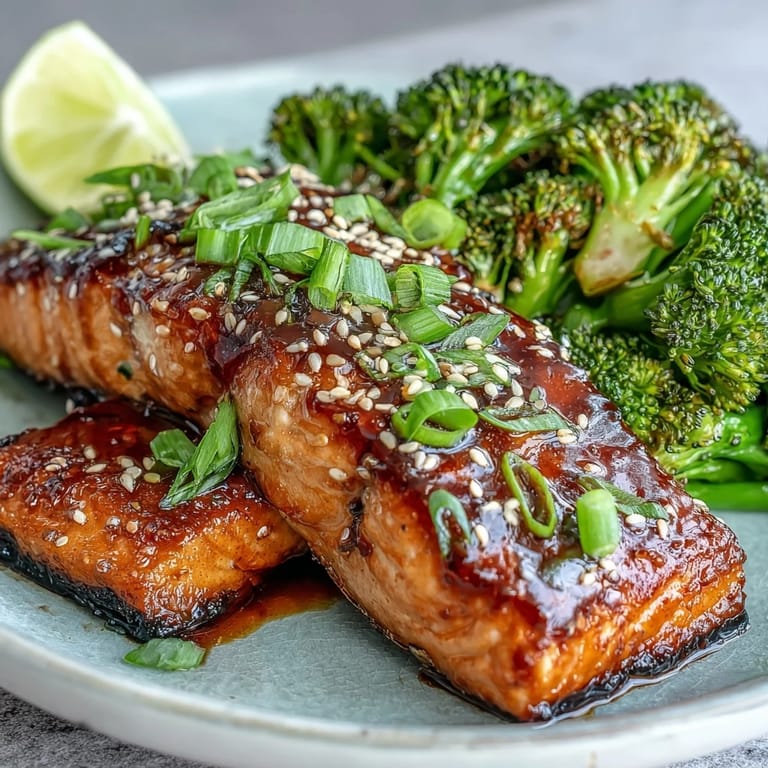
- Flip the fillets, pour the glaze over them, and transfer to the oven for 7 to 9 minutes until the fish flakes easily. The glaze will reduce slightly and coat everything in a glossy layer.
- Cook the broccoli:
- While salmon roasts, boil salted water and blanch broccoli for exactly 2 minutes, then ice bath it to stop cooking. This keeps it green and crisp rather than dull and mushy.
- Toast and toss:
- Heat sesame oil in a large pan, add broccoli, sauté for 2 to 3 minutes, then shower with sesame seeds and salt. The broccoli should still have a slight resistance when you bite it.
- Bring it together:
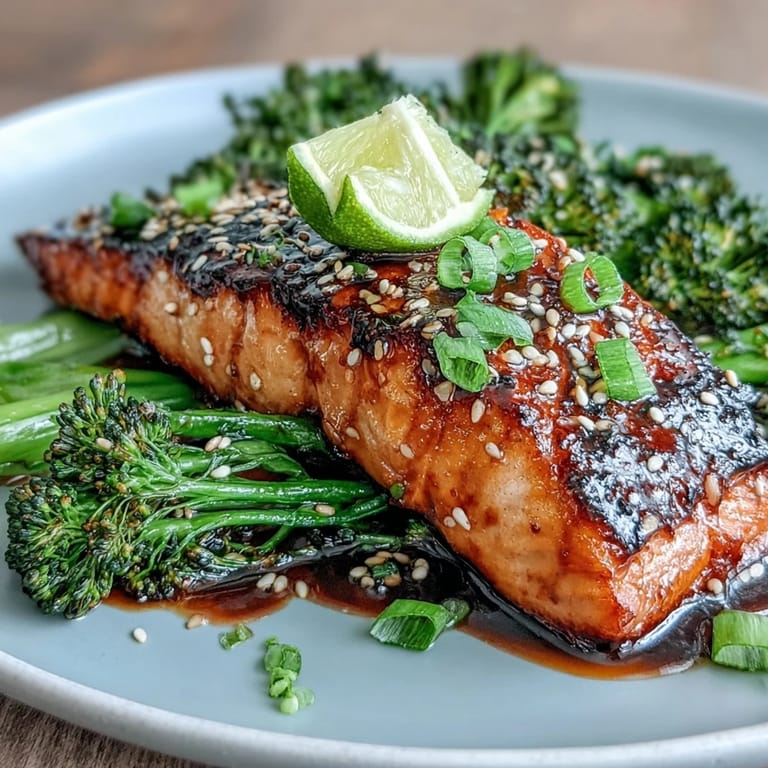
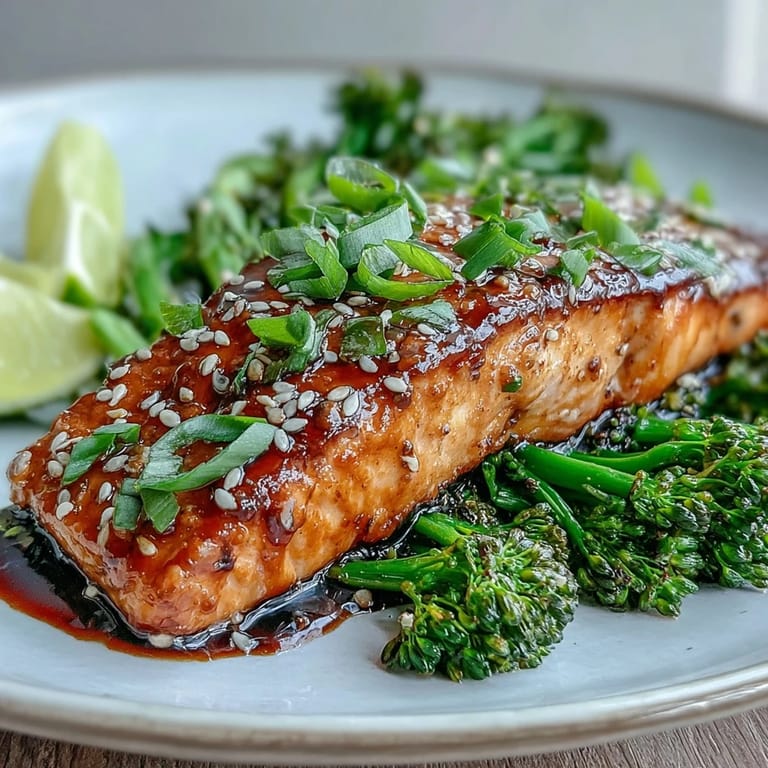
- Plate the sesame broccoli, top with glazed salmon, then scatter spring onions and serve with lime wedges. Squeezing lime juice over everything at the table is part of the experience.
 Save It
 There's something that happens when you sit down to a meal that looked complicated but tasted like home. My partner asked for seconds without even trying the rice, which for him is basically a marriage proposal. That's when I knew this recipe had moved from just dinner to something I'd be making for years.
The Magic Behind the Glaze
The glaze works because of balance, something I learned after making it too sweet once and my mouth feeling sticky for hours. The soy sauce brings saltiness and depth, honey adds sweetness and caramelization, rice vinegar cuts through everything with acid, and sesame oil carries a toasted nuttiness that holds the whole thing together. Garlic and ginger aren't just flavor—they're texture, aromatics, and that thing that makes people lean in close while you're cooking.
Why Sesame Broccoli Changes Everything
I used to think broccoli was just something you cooked to say you ate vegetables, until I stopped drowning it in vinegar and started respecting its own flavor. The blanch-then-sauté method means you're not fighting with raw broccoli that won't cook, and you're not dealing with mushy florets either. Toast the sesame seeds yourself if possible—they go from pale and quiet to deeply nutty in about two minutes under a hot pan, and that warmth carries through the whole dish.
Timing and Temperature Tricks
The 30-minute total time feels almost impossible until you realize that oven roasting salmon is genuinely faster than cooking it entirely on the stovetop, and blanching broccoli means you're mostly just getting it tender, not soft. Everything happens in the background while you're multitasking, which is the entire point of weeknight cooking. The salmon continues cooking slightly after you pull it from the oven too, so better to undershoot by 30 seconds than to overshoot by a minute.
- Use a meat thermometer if you're nervous—salmon is done at 63°C internal temperature, which feels low but is exactly right for buttery texture.
- Your oven temperature matters here, so if you know yours runs hot or cold, adjust timing accordingly rather than fighting it.
- The glaze will taste salty while raw but mellows as it reduces, so trust the process instead of tasting and adjusting midway.
 Save It
 This dish is the kind that makes you feel like you've got it all figured out when really it's just good ingredients and respect for them. Make it once and you'll make it again, probably more often than you expected.
Recipe FAQs
- → How can I prevent the salmon from sticking while cooking?
Ensure the pan and oil are properly heated before adding salmon. Pat the fillets dry and use a non-stick or well-seasoned skillet for easier searing.
- → Can I substitute broccoli with other vegetables?
Yes, broccolini or green beans work well when prepared similarly with sesame oil and seeds.
- → What’s the best way to get a balanced honey soy glaze?
Whisk together low sodium soy sauce, honey, rice vinegar, sesame oil, garlic, and fresh ginger for a sweet-savory blend.
- → Is it important to blanch the broccoli?
Blanching helps keep the broccoli crisp-tender and bright green before sautéing with sesame oil.
- → Can I prepare this dish ahead of time?
Prepare the glaze and broccoli in advance, but sear and roast the salmon fresh for best texture and flavor.