 Save It
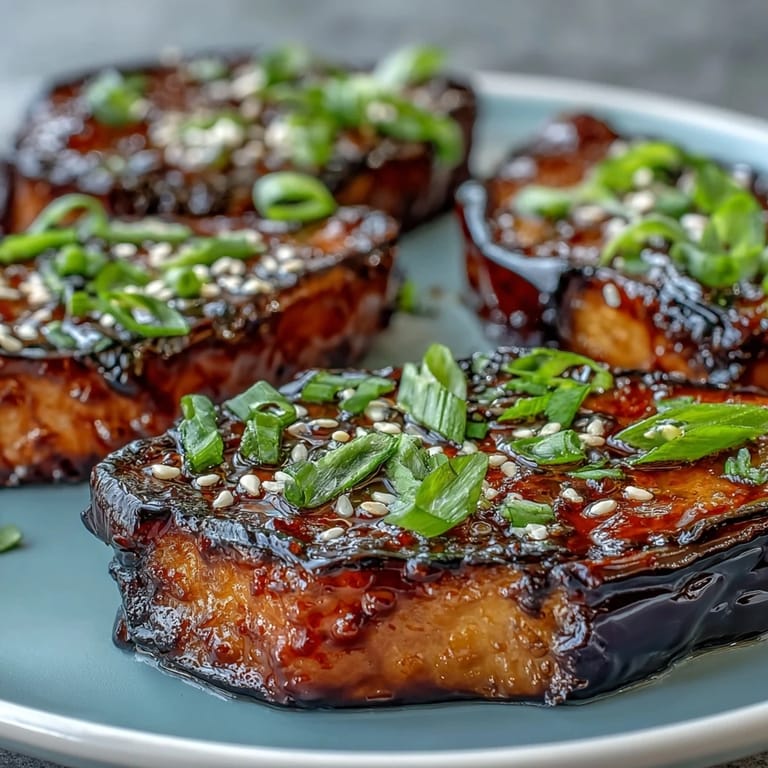
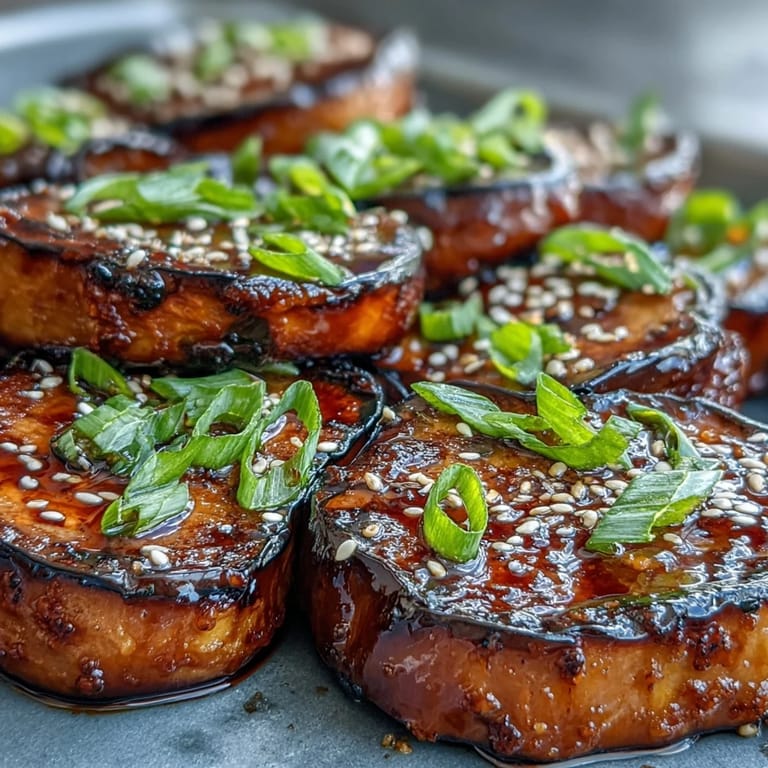
 My friend Marcus handed me a thick slice of eggplant at a rooftop dinner party, dripping with this glossy miso glaze that caught the evening light. I was skeptical, honestly—eggplant had always felt like a supporting actor to me—but one bite and I understood why he'd been raving about it all summer. The outside was caramelized and crispy, the inside silky, and underneath it all was this deep umami sweetness that made me close my eyes. I went home that night and made it three times that week, each time tweaking the glaze until I found my rhythm.
There was this moment when I made this for my parents, and my dad—who eats meat with almost every meal—cleaned his plate and asked for the recipe. That's when I realized this dish isn't about replacing anything; it's complete on its own. My mom asked if it was hard to make, and I loved being able to say no, just smart technique and good ingredients working together.
Ingredients
- Eggplant: Choose large, firm eggplants with smooth skin—they'll have fewer seeds and less bitterness. Cutting them into thick 1-inch rounds keeps them from shrinking into nothing during roasting.
- White miso paste: This is gentler and slightly sweeter than red miso, which makes it perfect for a glaze; it won't overpower the delicate eggplant.
- Mirin: This sweet rice wine adds depth and helps the glaze caramelize beautifully; if you can't find it, dry sherry works in a pinch but use just slightly less.
- Soy sauce: Use tamari if you're cooking for someone avoiding gluten—the flavor is nearly identical and nobody will notice the swap.
- Sesame oil: A little goes a long way; it's earthy and toasty, and it's what gives the whole dish that Japanese-inspired warmth.
- Fresh ginger and garlic: These two create the backbone of the glaze; freshly grated ginger makes a real difference in the brightness it brings.
- Green onions and sesame seeds: The garnish isn't an afterthought—it adds texture, color, and a final hit of freshness that ties everything together.
Tired of Takeout? 🥡
Get 10 meals you can make faster than delivery arrives. Seriously.
One email. No spam. Unsubscribe anytime.
Instructions
- Get your oven ready and prep the eggplant:
- Preheat to 400°F and line your baking sheet with parchment paper. Slice your eggplants into thick rounds—thinner than an inch and they'll dry out, thicker and the inside won't cook through.
- Season and start roasting:
- Arrange the slices on the sheet, brush with a light hand of sesame oil, and sprinkle salt. They'll release some moisture early on, which is exactly what you want; roast for 20 minutes, flipping halfway, until they're soft inside and the edges are starting to turn golden.
- Make the glaze while they cook:
- Whisk together the miso paste, mirin, soy sauce, maple syrup, sesame oil, rice vinegar, minced garlic, and ginger in a small bowl. The mixture should be smooth and pourable; if the miso is being stubborn, warm the bowl gently or whisk more vigorously.
- Glaze and caramelize:
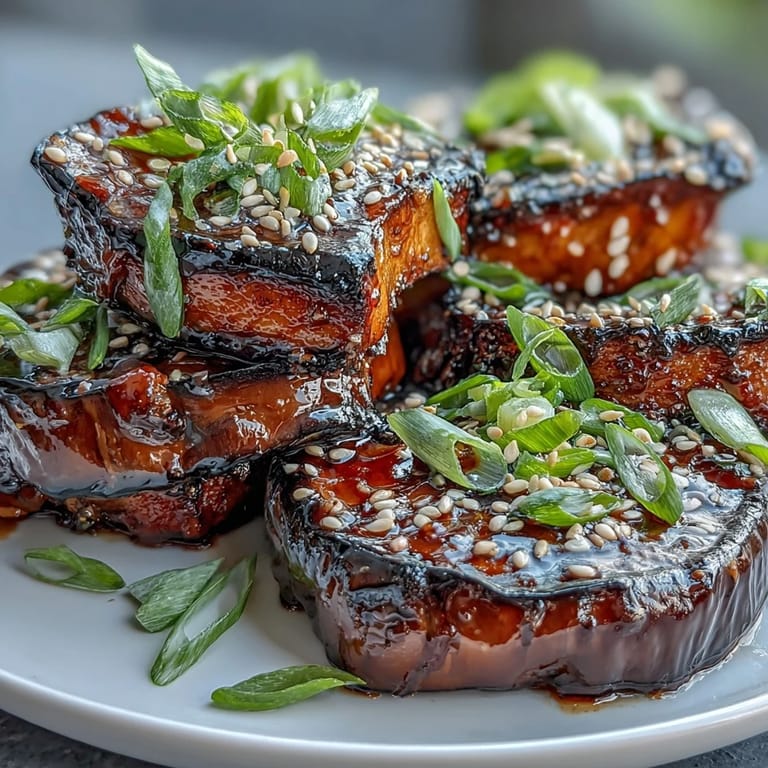
- Pull the eggplant out, brush each slice generously with the glaze—don't be shy, this is where the magic happens. Return to the oven for 8 to 10 minutes until the glaze is bubbling at the edges and the surface looks glossy and dark.
- Finish and serve:
- Transfer the steaks to plates while they're still warm, scatter with green onions, sesame seeds, and cilantro if you have it. The heat will keep everything soft while the glaze stays slightly sticky.
 Save It
 I made this one weeknight when I was tired and wanted something that tasted like restaurant food but didn't require leaving my kitchen. My partner came home to the smell of caramelizing miso and just stood there for a moment, and that's the kind of cooking moment that stays with you.
The Secret to Perfect Eggplant Texture
The key is understanding that eggplant is mostly water, and roasting at a high enough temperature helps it release that moisture so what's left behind is creamy and dense. If your oven runs cool, bump the temperature up 25 degrees; if you're dealing with smaller eggplants, start checking at 15 minutes instead of 20. The flesh should feel like butter when you poke it with a fork.
Why This Glaze Works
The miso brings umami and a subtle funk that makes people wonder what they're tasting. The mirin and maple syrup add sweetness that caramelizes at high heat, creating this glossy shell that's both savory and a little bit sweet. The ginger and garlic cut through any richness, and the rice vinegar adds a whisper of acid that keeps the whole thing from feeling heavy.
Serving and Variations
This is stunning with steamed jasmine rice or a bowl of quinoa, but I also love it alongside a crisp cucumber salad or over greens. If you want to get fancy, a drizzle of sriracha mayo on the side never hurt anyone. For extra char and smokiness, broil the glazed eggplant for 1 to 2 minutes right at the end—watch it carefully though, because miso can go from caramelized to burnt in seconds.
- Add chili flakes to the glaze if you want heat, or sprinkle them on top just before serving.
- Swap the maple syrup for agave nectar to keep it vegan, or use honey if you're not worried about that.
- Make extra glaze—you'll want it for rice, leftovers, or just for dipping bread in when nobody's looking.
 Save It
 This dish taught me that vegetarian cooking doesn't need to apologize for itself; it just needs to taste good. Make it once and you'll understand why.
Recipe FAQs
- → How do I know when the eggplant is fully cooked?
The eggplant steaks are done when they feel tender when pressed with a fork and the glaze is bubbling and caramelized. The flesh should be creamy and soft throughout, not spongy or resistant.
- → Can I make this dish gluten-free?
Yes! Use tamari instead of regular soy sauce, and verify that your miso paste is certified gluten-free. Most white miso varieties are naturally gluten-free, but always check the label to be certain.
- → What's the best way to slice the eggplant?
Cut the eggplant crosswise into rounds about 1-inch thick. Thinner slices may dry out during roasting, while thicker ones take longer to cook through. A sharp knife helps create clean, even slices that cook uniformly.
- → Can I prepare the miso glaze ahead of time?
Absolutely! Mix the glaze ingredients up to 3 days in advance and store in an airtight container in the refrigerator. The flavors may even develop and meld together during this time. Bring to room temperature before brushing onto the eggplant.
- → What can I serve with miso-glazed eggplant?
Steamed white or brown rice absorbs the extra glaze beautifully. Quinoa, noodles, or a fresh cucumber salad with sesame dressing also complement the rich flavors. For a lighter meal, serve over mixed greens with extra cilantro and a squeeze of lime.
- → How can I add more heat to this dish?
Sprinkle red pepper flakes or sriracha into the glaze before brushing, or garnish with sliced fresh chili peppers. A drizzle of chili oil just before serving also adds a spicy kick that balances the sweet miso glaze.