 Save It
 My aunt's kitchen always smelled like bourbon and cinnamon around the holidays, and years later I realized that scent was coming from her candied yams. She'd make them every Thanksgiving without fail, those burnished rounds glistening under the kitchen light, and I spent one afternoon finally asking for her method. Turns out she'd been improvising the whole time, swapping maple syrup for corn syrup depending on what she had, adding bourbon because her husband insisted it made everything better. Now when I make these, I'm recreating that kitchen comfort, that moment when someone hands you a wooden spoon and says, just taste this.
I brought this dish to a potluck once thinking it was safe, familiar territory, and watched a skeptical neighbor who'd grown up eating candied yams from a can take one bite and close her eyes like she'd just remembered something important. She came back for seconds and asked for the recipe, and I realized that moment wasn't about impressing anyone, it was about giving her permission to love something she thought she'd outgrown.
Ingredients
- Yams (4 large, about 2½ lbs), peeled and cut into 1-inch rounds: The foundation of everything, and cutting them uniform ensures they cook evenly without any raw centers or overcooked edges.
- Unsalted butter (½ cup): This carries the glaze and adds richness, so don't skimp or substitute with oil—the emulsion matters.
- Light brown sugar, packed (¾ cup): Packed firmly means you're actually measuring what you think you are, and light brown has molasses that plays beautifully with the spices.
- Pure maple syrup (¼ cup): The real stuff, not pancake syrup, because that corn-forward sweetness would flatten everything else.
- Bourbon (¼ cup): The alcohol cooks off but leaves behind a subtle warmth and depth that makes people ask what your secret ingredient is.
- Ground cinnamon (1 tsp): Ground fresh is ideal—cinnamon loses its punch after six months, so check yours before you start.
- Ground nutmeg (½ tsp), ground ginger (¼ tsp), and salt (¼ tsp): These three work together to keep the sweetness from feeling one-dimensional.
- Pure vanilla extract (1 tsp): One more thing that makes people pause and wonder why their yams never tasted quite like this.
- Chopped pecans (¼ cup), optional: They add texture and a subtle nuttiness, plus they look beautiful scattered on top right before serving.
Tired of Takeout? 🥡
Get 10 meals you can make faster than delivery arrives. Seriously.
One email. No spam. Unsubscribe anytime.
Instructions
- Set up your workspace:
- Preheat your oven to 375°F and lightly grease a 9x13-inch baking dish—this is the moment to get your workspace organized because once the glaze is made, you'll want to move quickly.
- Arrange the yams:
- Lay your yam rounds in an even layer across the baking dish, and don't overlap them too much or some will steam instead of caramelize.
- Build the glaze:
- In a medium saucepan over medium heat, melt the butter and add brown sugar, maple syrup, bourbon, cinnamon, nutmeg, ginger, and salt, stirring until the sugar completely dissolves—this takes about three minutes and you'll see the mixture shift from grainy to glossy. Remove from heat and stir in vanilla extract.
- Coat the yams:
- Pour the warm glaze evenly over the yam rounds and toss them gently with a spatula to make sure each piece gets coated, trying not to break them.
- First bake with cover:
- Cover everything with foil and slide it into the oven for 25 minutes, which gives the yams time to soften without the glaze reducing too quickly.
- Finish uncovered:
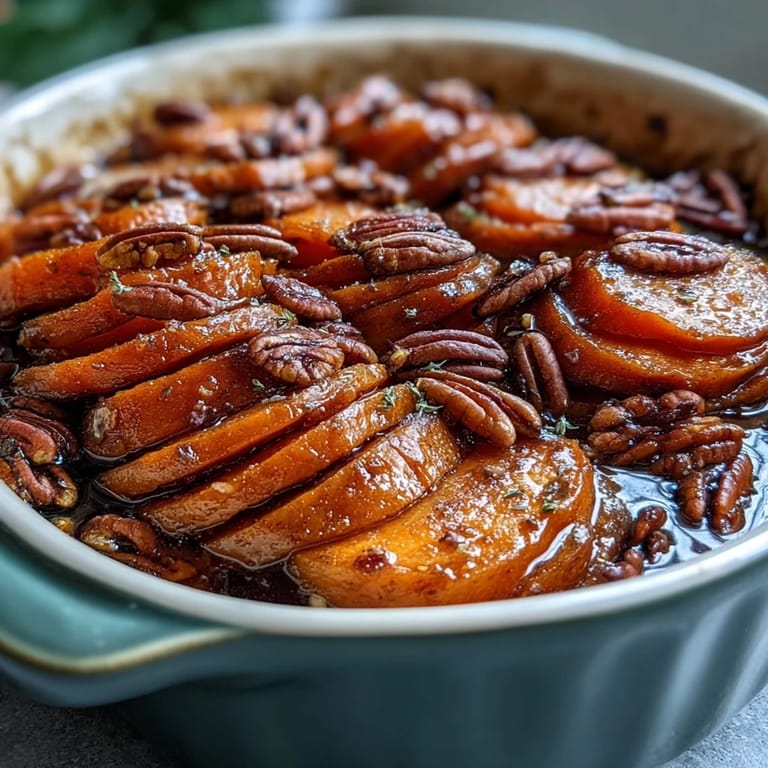
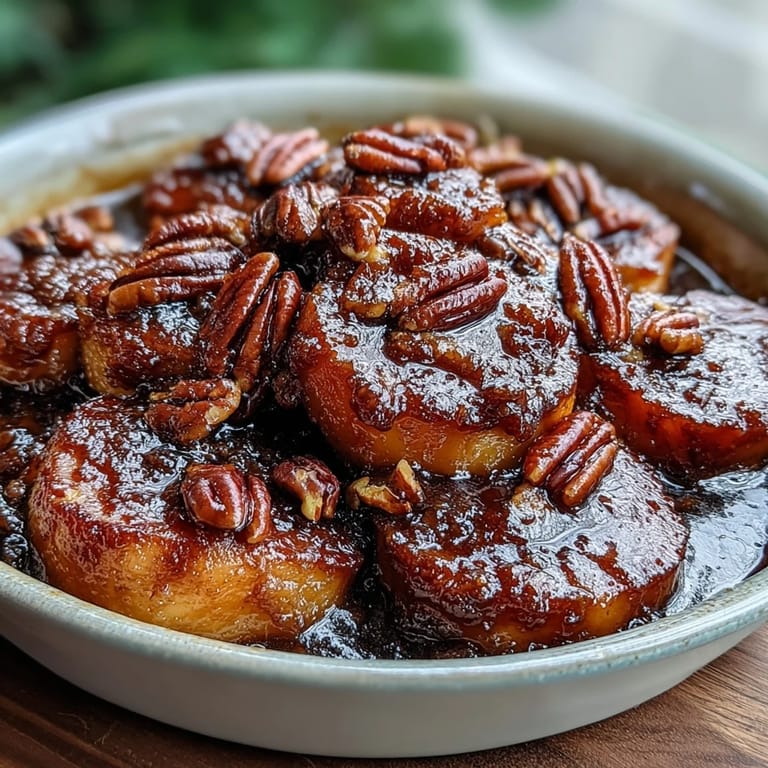
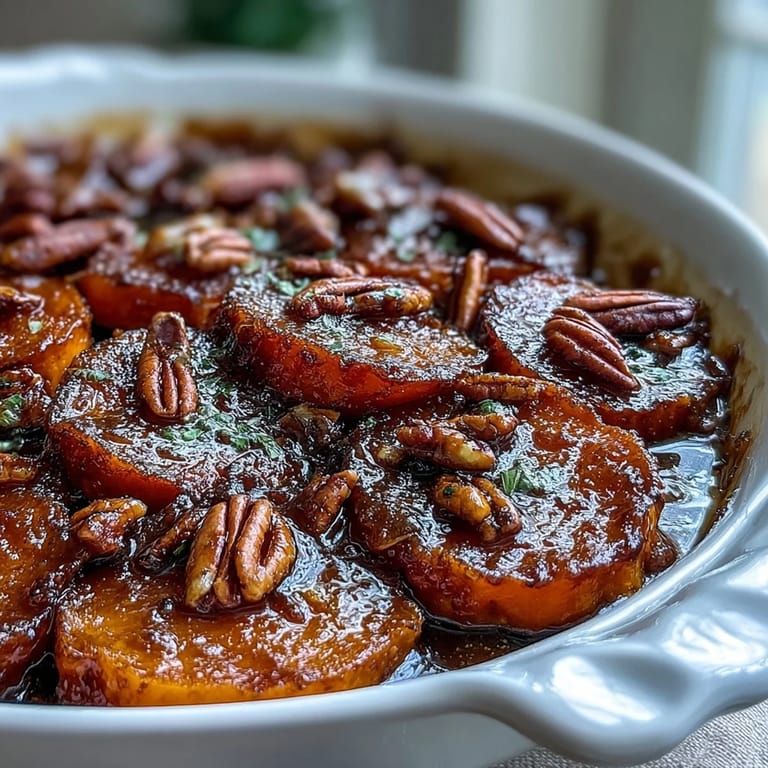
- Remove the foil, use a basting brush or spoon to coat the yams with the glaze pooling in the bottom, and bake uncovered for another 20 minutes until the edges are tender and the glaze has turned a deep amber brown.
- Garnish and serve:
- If you're using pecans, scatter them over the top right before serving so they stay crispy instead of getting soggy from sitting in the glaze.
 Save It
 There was an evening when my partner came home just as these finished cooking, stood in the doorway for a second, and said nothing except, this is what Sunday smells like. Sometimes food becomes the thing you didn't know you were missing, the comfort that doesn't need explaining.
Making It Your Own
The beauty of this dish is that it tolerates flexibility better than most. I've swapped maple syrup for honey when that's what I had, reduced the butter when I wanted something lighter, and used dark brown sugar when I felt like a deeper molasses note. The core is strong enough to handle these small adjustments, and sometimes those little changes lead you somewhere unexpected and delicious.
Timing and Serving
You can assemble this completely the morning of and cover it in the refrigerator, then add thirty minutes to the baking time since it's starting cold—this is how I manage Thanksgiving when oven space is precious. It also reheats beautifully, just cover it loosely with foil and warm at 325°F for about fifteen minutes, and honestly, the flavors deepen as it sits overnight.
Wine Pairing and Beyond
A dry Riesling cuts through the richness without competing with the spice, and if you're serving this with turkey or ham, that pairing becomes something greater than the sum of its parts. I've also found it works as a bridge between the savory and sweet courses, almost a side dish that feels like dessert in the best way. Some people even eat the leftovers cold the next morning with yogurt, and I don't judge them for it.
- Make extra glaze if you like extra sauce pooling on the plate, because there's no such thing as too much caramelized bourbon and brown sugar.
- If your yams are particularly large, cutting them slightly thinner than an inch helps them finish cooking at the same time as smaller ones.
- Let them rest for five minutes after pulling them from the oven so the glaze sets slightly and won't slide around on the plate.
 Save It
 This is the kind of dish that reminds us why people gather around tables, why food matters beyond just filling hungry bellies. Make it, serve it, watch what happens.