 Save It
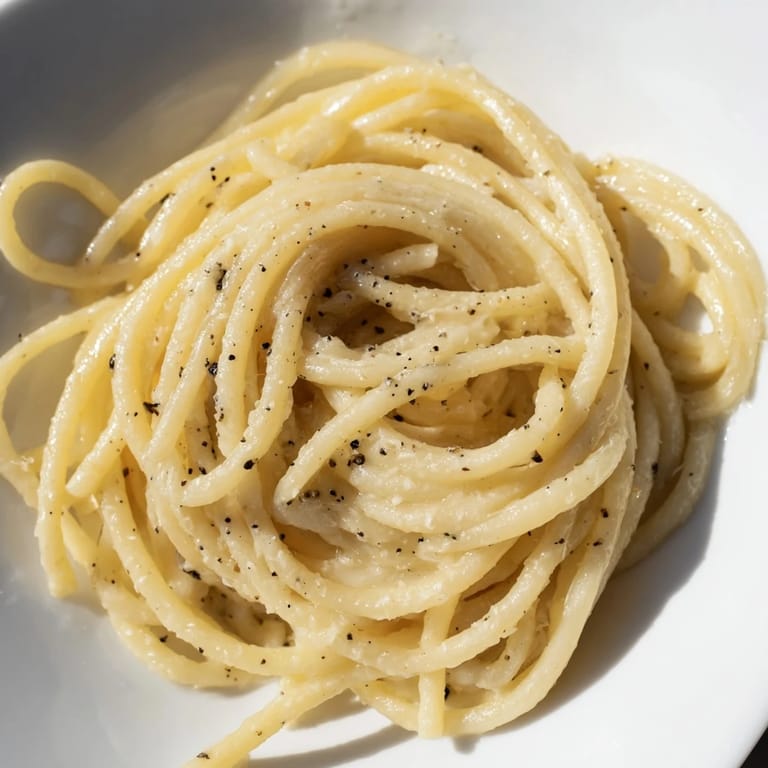
 The steam rising from the pot fogged up my kitchen window one cold evening when I realized I had almost nothing in the fridge. Just cheese, pepper, and a box of spaghetti. I thought I'd failed at meal planning, but what I ended up making felt like discovering a secret handshake with Rome itself. That night, I learned that sometimes the best meals aren't about abundance, they're about knowing exactly what to do with very little.
I made this for my neighbor after she helped me carry groceries up four flights of stairs. She stood in my doorway, skeptical that something so simple could be worth staying for. After the first bite, she sat down without asking and we ended up talking until the wine ran out. She still asks for the recipe every few months, even though I've written it down for her twice.
Ingredients
- Spaghetti or tonnarelli (400 g): Tonnarelli is traditional and grips the sauce beautifully with its square shape, but spaghetti is what I always have on hand and it works perfectly.
- Pecorino Romano cheese (120 g, finely grated): This is the soul of the dish, salty and sharp and absolutely not replaceable with Parmesan. Grate it yourself right before cooking or it will clump and break your heart.
- Whole black peppercorns (2 tsp, freshly cracked): Toasting them in the pan releases oils you never knew existed. Pre-ground pepper tastes like dust in comparison.
- Kosher salt (1 tsp): For the pasta water, which becomes half the sauce, so don't skip salting it properly.
- Unsalted butter (1 tbsp, optional): Purists will scoff, but I add it when I want the sauce to feel a little more forgiving and silky.
Tired of Takeout? 🥡
Get 10 meals you can make faster than delivery arrives. Seriously.
One email. No spam. Unsubscribe anytime.
Instructions
- Boil the pasta with intention:
- Bring a large pot of water to a rolling boil, salt it like the sea, and cook your spaghetti until it still has a slight bite, about one minute less than the box says. Before you drain it, scoop out at least one and a half cups of that starchy, cloudy water. It's liquid gold for your sauce.
- Wake up the pepper:
- While the pasta bubbles away, toss your cracked peppercorns into a dry skillet over medium heat. Let them toast for about a minute until your kitchen smells like a Roman trattoria and the pepper starts to snap.
- Build the base:
- Pour one cup of that reserved pasta water into the skillet with the toasted pepper. Lower the heat and let everything get cozy together.
- Marry the pasta and pepper water:
- Add your drained pasta to the skillet and toss it around, letting it soak up the peppery liquid. This step is where the pasta starts to become the sauce instead of just sitting in it.
- Create the creamy magic:
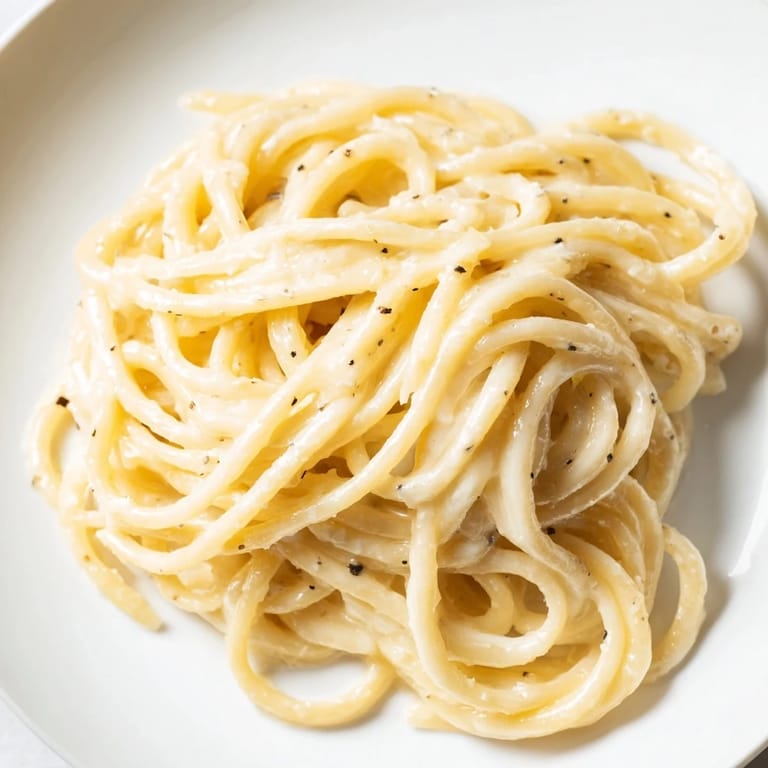
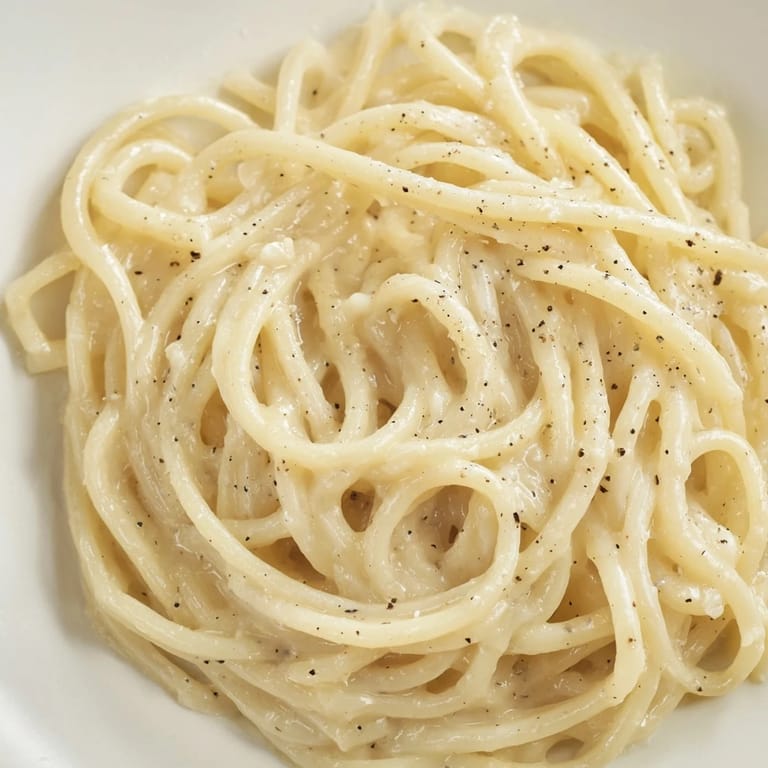
- Pull the skillet off the heat. Sprinkle in the grated Pecorino a little at a time, tossing constantly and vigorously like your life depends on it. Add splashes of reserved pasta water whenever it looks tight or clumpy until you have a glossy, creamy coating.
- Finish with butter if you like:
- If you're using butter, toss it in now and stir until it melts into the sauce. This isn't traditional, but it makes everything a little more luscious.
- Serve without hesitation:
- Plate it immediately, shower it with more cheese and pepper, and eat it while it's hot. Cacio e pepe waits for no one.
 Save It
 There was a night I made this after a long, frustrating day when nothing had gone right. I stood at the stove, tossing pasta with more aggression than technique, and somehow it turned out perfect. My partner walked in, took one bite, and said it tasted like I'd forgiven the world. I hadn't, but the pasta had done its job anyway.
Choosing Your Pasta
Tonnarelli is the Roman choice, thick and square and sturdy enough to hold onto every bit of sauce. I've only found it a handful of times outside of Italy, so I always use spaghetti and nobody has ever complained. The key is cooking it just shy of done so it can finish in the pan, soaking up flavor and starch as it goes. Whatever shape you choose, make sure it's good quality. This dish has nowhere to hide.
The Pasta Water Secret
I used to dump out pasta water without thinking, until a chef friend grabbed my arm mid-drain and told me I was throwing away the best part. That cloudy, starchy water is what binds the cheese and pepper into a sauce instead of a gritty pile. I started saving it religiously, and it changed everything. Now I keep a mug by the stove and scoop out more than I think I'll need, because running out halfway through is a tragedy.
Storing and Reheating
Cacio e pepe doesn't love the fridge. The sauce can break and turn oily, and reheating it rarely brings back the magic. If you do have leftovers, store them in an airtight container and reheat gently in a skillet with a splash of water or milk, tossing constantly. It won't be quite the same as when it was fresh, but it's still better than most things you could order.
- Eat this dish the moment it's ready for the best texture and flavor.
- If reheating, add liquid slowly and keep the heat low to coax the sauce back together.
- Leftovers are best eaten within one day.
 Save It
 This dish has become my measure of whether I really know how to cook. It's deceptively simple, unforgiving of shortcuts, and generous when you get it right. I hope it becomes one of those recipes you make without thinking, the kind you turn to when you want to feel capable and fed.
Recipe FAQs
- → Why is my sauce breaking or becoming grainy?
Grainy sauce typically results from overheating or adding cheese too quickly. Keep heat low, remove the skillet from heat before adding cheese, and sprinkle it in gradually while stirring constantly. The pasta water's starch is crucial for emulsification, so ensure you've reserved enough hot water to adjust consistency as needed.
- → Can I use Parmesan instead of Pecorino Romano?
While Parmesan is a quality cheese, Pecorino Romano is essential for authentic cacio e pepe. It has a sharper, more peppery flavor that complements the black pepper perfectly. Parmesan will produce a milder taste and different texture, so substituting changes the dish significantly.
- → What type of pasta works best?
Tonnarelli is the traditional choice due to its square cross-section and ability to hold sauce well. Spaghetti is an excellent alternative. Avoid thick or ridged pastas like penne or rigatoni, as they don't capture the delicate sauce as effectively.
- → Why should I crack peppercorns fresh rather than using pre-ground pepper?
Freshly cracked peppercorns release volatile oils when broken, providing a vibrant, complex peppery flavor that pre-ground pepper cannot match. Grinding moments before cooking captures maximum aroma and heat, which are essential to this minimal-ingredient dish.
- → Is butter traditionally used in cacio e pepe?
No, traditionalists omit butter entirely. The emulsified cheese and pasta water create sufficient creaminess. However, adding a tablespoon of butter is a modern adaptation that some prefer for extra richness. Choose based on your taste preference.
- → How do I prevent the pasta from becoming clumpy?
Toss the hot pasta immediately with the peppery water before adding cheese. Work quickly and continuously stir while gradually incorporating cheese to ensure even distribution. Adding pasta water in small increments helps maintain a silky, flowing consistency.