 Save It
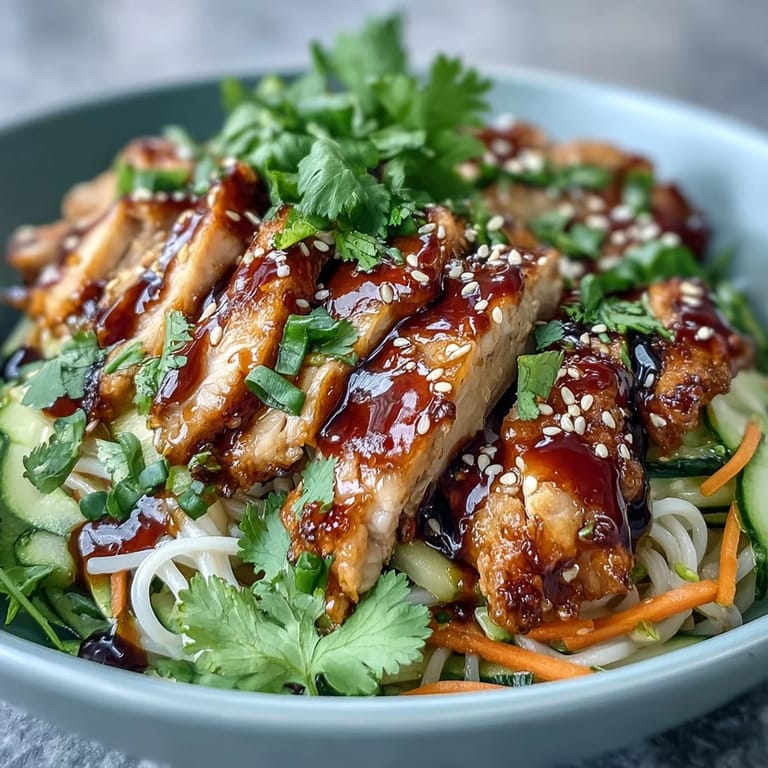
 My neighbor brought over a bowl of this exact noodle dish on a Tuesday evening when I was too tired to cook, and I became absolutely hooked. The smell of sesame oil hitting the hot pan, the way those rice noodles caught the sauce—it felt like something I needed to master immediately. There's something about a well-balanced Asian noodle bowl that makes you feel like you've stumbled onto a secret, even though it takes barely forty minutes from start to finish.
I made this for a small dinner party last summer and watched my friend go back for seconds before everyone else had finished their first bowl. That moment when someone gets genuinely excited about food you've made is worth every knife stroke on those vegetables. What stuck with me most wasn't the compliment itself, but how simple it was to pull off something that impressed.
Ingredients
- Boneless, skinless chicken breast or thighs: Thighs stay more forgiving if you're cooking over heat, but breast works beautifully if sliced thin—I learned this by accidentally overcooking breast once and never again.
- Tamari or low-sodium soy sauce: Tamari is naturally gluten-free and tastes slightly rounder than regular soy, but honestly either works; it's your base flavor.
- Fish sauce: I know it smells aggressive in the bottle, but trust it—this is what makes everything taste mysteriously delicious instead of just salty.
- Rice vinegar: The gentle acidity that keeps the sauce from being flat; regular vinegar works but tastes sharper.
- Honey: A touch of sweetness that balances the salty and sour; don't skip it thinking it'll make things cloying.
- Toasted sesame oil: Use the toasted version, not the light kind—this carries all the nutty, complex flavor.
- Neutral oil: This helps the sesame oil spread its flavor throughout instead of sitting in puddles.
- Fresh garlic and ginger: Ginger is optional but transforms the whole bowl when you use it; even just the garlic creates an incredible backbone.
- Rice noodles: They're delicate and cook fast, soaking up sauce beautifully; if you can't find them, wheat noodles work in a pinch.
- Fresh vegetables: The crunch and brightness here are non-negotiable—this is where the bowl goes from good to memorable.
- Cilantro and sesame seeds: These finish the dish and honestly make it feel complete; don't treat them as optional.
Tired of Takeout? 🥡
Get 10 meals you can make faster than delivery arrives. Seriously.
One email. No spam. Unsubscribe anytime.
Instructions
- Mix your magic sauce:
- Whisk tamari, fish sauce, rice vinegar, honey, sesame oil, neutral oil, garlic, and ginger in a bowl until it looks smooth and glossy. Split it in half right away—one portion marinates the chicken, the other stays clean for drizzling at the end.
- Marinate the chicken:
- Toss your sliced chicken with half the sauce and let it sit for 15 minutes while you prep everything else. This is the perfect moment to julienne your carrot or slice vegetables, because you're not standing there waiting.
- Cook the noodles:
- Boil water, add noodles, follow package timing, then drain and rinse with cold water until they're cool and separate. Set them aside in a bowl or on a plate so they don't stick together.
- Sear the chicken:
- Heat your skillet or wok over medium-high until it's hot enough that a drop of water sizzles instantly. Add the marinated chicken and let it sit for a moment before stirring—this creates light browning that tastes incredible, taking about 5 to 7 minutes total.
- Assemble your bowls:
- Divide noodles among four bowls, then arrange chicken and all your raw vegetables on top in a way that makes you happy. There's no wrong way here—make it look the way you want to eat it.
- Finish and serve:
- Drizzle the reserved sauce over each bowl, scatter cilantro and sesame seeds on top, squeeze lime juice over everything, and eat it while it's still warm and the vegetables are still crisp. Serve extra chili flakes on the side for anyone who wants to push the heat.
 Save It
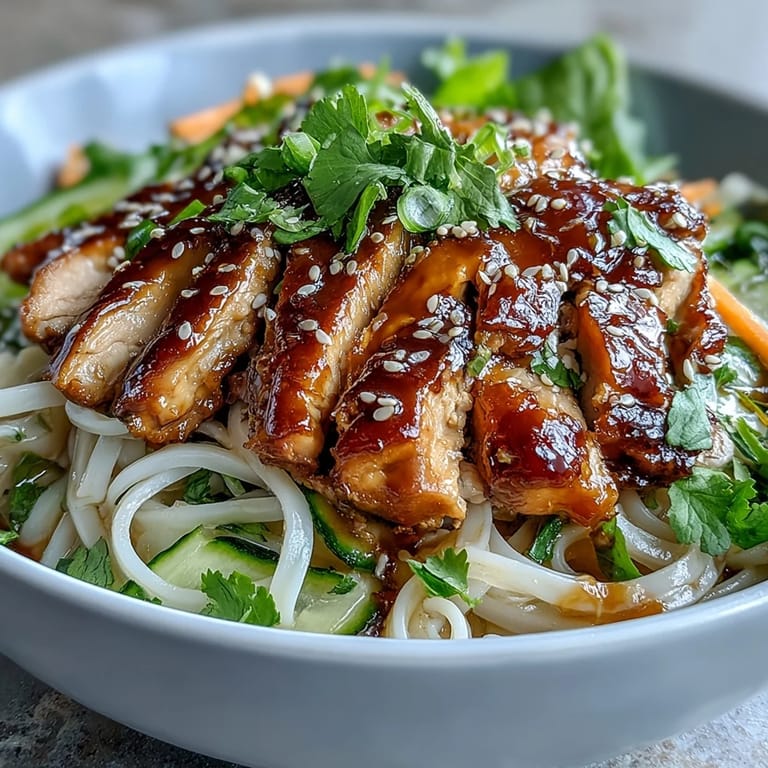
 There's something grounding about arranging those vegetables on top of the noodles, about taking two minutes to make it beautiful before eating. It turned what could have been a rushed weeknight dinner into something I actually sit down for, and somehow that small shift made the whole experience feel different.
Why This Sauce Works
The genius of this sauce is how it layers flavor—fish sauce adds umami depth, soy sauce brings salt and body, vinegar and honey create brightness and balance, and sesame oil adds this warm, toasted richness that ties everything together. I used to think Asian sauces were just salty, but this one taught me that balance is everything. When you taste all five elements working together instead of tasting one strong note, that's when you know you've got something special.
Customizing Your Bowl
This recipe is genuinely flexible, which is part of why I love it so much. You can swap the chicken for tofu, add edamame or snap peas, throw in shredded cabbage if you want extra crunch, or even use different noodles if rice noodles aren't available. The sauce works with almost any combination you throw at it, so treat this as a template rather than a rule book. I've made it with whatever vegetables were in my fridge and it's never disappointed.
Make It Your Own
One thing I've learned is that the vegetables are where you inject personality into this dish. Some nights I go heavy on cucumber for coolness, other times I add more bell pepper for sweetness. The bean sprouts add a specific crunch that I wouldn't skip, but beyond that, let your preferences guide you. If you like heat, don't hold back on the chili flakes or Sriracha—this sauce can handle it. If you prefer milder flavors, you can dial that back entirely and it's still absolutely delicious.
- Prep all your vegetables before you touch the chicken so assembly feels smooth and stress-free.
- Taste the sauce before you serve it and adjust salt or lime if it needs a little something; your palate is the real guide here.
- Remember that cold noodles will warm up slightly when you pour warm sauce over them, so embrace that textural contrast.
 Save It
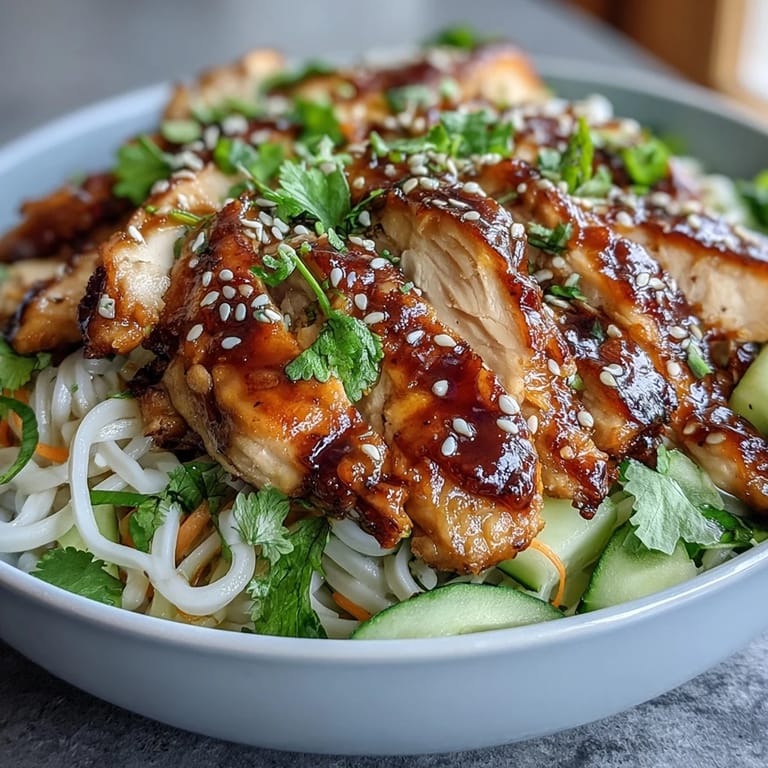
 This bowl has become my go-to when I want something that tastes like I've spent hours in the kitchen but actually took me forty minutes. It's the kind of dish that reminds me why I love cooking in the first place.
Recipe FAQs
- → What noodles work best?
Rice noodles are traditional, but wheat noodles, soba, or even spaghetti make excellent substitutes based on what you have available.
- → Can I make this vegetarian?
Yes, replace chicken with firm tofu and omit fish sauce or use a vegetarian alternative. The marinade and sauce work beautifully with plant-based proteins.
- → How spicy is this dish?
The base version is mild. Add chili flakes or Sriracha to the marinade or serve alongside for adjustable heat levels.
- → Can I prep this ahead?
Prepare vegetables, sauce, and marinated chicken up to 24 hours in advance. Cook noodles and assemble just before serving for best texture.
- → What vegetables can I add?
Snap peas, edamame, shredded cabbage, or bok choy make great additions. Use whatever crisp vegetables you enjoy or have on hand.
- → Is this gluten-free?
Use certified gluten-free tamari instead of soy sauce and verify your rice noodles are gluten-free. The dish is naturally dairy-free.