 Save It
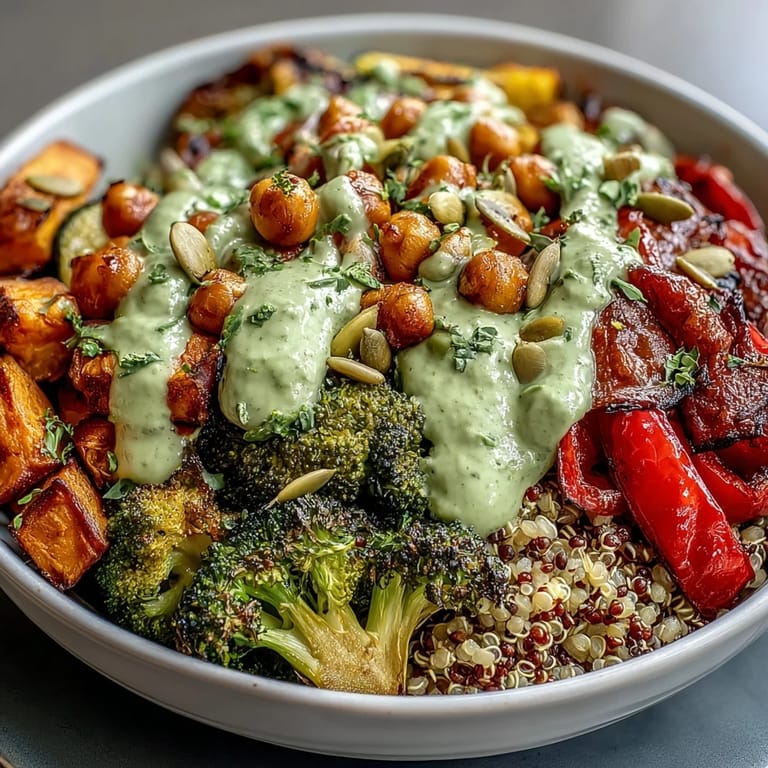
 Last summer, I was standing in my kitchen feeling completely uninspired by another sad desk lunch when my friend texted a photo of this glowing bowl she'd made. The colors alone made me stop scrolling—emerald greens, golden roasted edges, vibrant reds. I decided right then to stop eating the same things on repeat and actually cook something that made me want to sit down and savor it. This bowl became my answer to that moment of wanting food that felt alive.
I made this for a friend who'd just gone vegan and was worried everything would taste dull. When she tasted that dressing and then bit into the crispy-edged sweet potato, her whole expression changed. She asked for the recipe before she'd even finished the bowl, and now it's what she brings to potlucks. That's when I knew this wasn't just lunch—it was the kind of food that shifts how people think about plant-based eating.
Ingredients
- Sweet potato: Diced and roasted until the edges caramelize, it brings natural sweetness and that satisfying starchy comfort you crave.
- Broccoli florets: They get crispy and almost nutty when roasted hot and fast, nothing soggy or sad about them.
- Red bell pepper: The color stays vibrant and the flesh turns tender and slightly sweet under heat.
- Zucchini: Sliced thin enough to crisp at the edges but thick enough to stay substantial, it soaks up all those spices.
- Smoked paprika and cumin: This combination is the backbone of the whole bowl, giving everything a warm, slightly earthy depth.
- Quinoa: Use it rinsed to avoid any bitterness, and it becomes fluffy and slightly nutty as your grains base.
- Chickpeas: Warm them gently to wake up their flavor, and they add the protein and heartiness that makes this a real meal.
- Avocado: For the dressing, choose one that's ripe but still firm enough to blend smoothly without turning gluey.
- Fresh herbs (parsley, cilantro, basil): Don't use dried here—the brightness of fresh is what makes this dressing taste alive and green and special.
- Lemon juice: It keeps the avocado from oxidizing and adds a sharp note that cuts through the richness perfectly.
- Pumpkin seeds: Toasting them first brings out their depth, and they add a satisfying crunch and subtle nuttiness.
- Red cabbage: Shredded fine, it adds peppery crunch and a color pop that makes the whole bowl more interesting to eat.
Tired of Takeout? 🥡
Get 10 meals you can make faster than delivery arrives. Seriously.
One email. No spam. Unsubscribe anytime.
Instructions
- Heat your oven and prep your sheet:
- Get your oven to 425°F and line a large baking sheet with parchment paper so nothing sticks and cleanup stays easy. This high heat is what gives you those caramelized edges without drying anything out.
- Toss the vegetables with intention:
- In a large bowl, combine all your chopped vegetables with olive oil, smoked paprika, cumin, salt, and pepper, making sure every piece gets coated. The spices should look evenly distributed and the vegetables should glisten with oil.
- Roast until edges turn golden:
- Spread everything on your baking sheet in a single layer and slide it into the oven. After about 15 minutes, stir and flip everything so it roasts evenly on all sides, then let it go another 10–15 minutes until the edges are caramelized and crispy.
- Cook your quinoa simultaneously:
- While vegetables roast, rinse your quinoa under cold water, then combine it with water or vegetable broth in a saucepan. Bring to a boil, cover, reduce heat to low, and let it simmer undisturbed for 15 minutes until the liquid absorbs and the grains turn fluffy and slightly translucent at the edges.
- Blend the Green Goddess magic:
- In a blender or food processor, add your ripe avocado, all the fresh herbs, lemon juice, garlic clove, olive oil, 2 tablespoons of water, salt, and pepper. Blend until completely smooth and creamy, pulsing in more water if needed until you reach a pourable consistency that still clings to a spoon.
- Warm your chickpeas gently:
- If you want them warm rather than room temperature, heat them in a skillet over medium heat for just 2–3 minutes, stirring occasionally so they warm through without drying out.
- Assemble with care and intention:
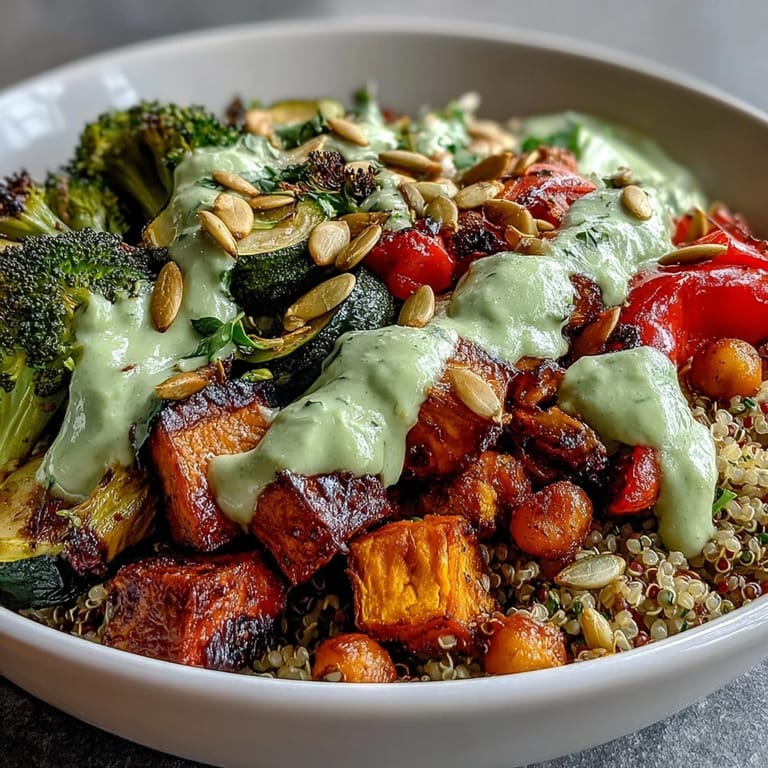
- Divide your fluffy quinoa among four bowls, then arrange the warm roasted vegetables on top, scatter the chickpeas, add shredded red cabbage for crunch and color, and sprinkle toasted pumpkin seeds generously. Drizzle each bowl with that Green Goddess dressing so it pools slightly and soaks into the grains, then add a wedge of lemon for last-minute brightness.
 Save It
 There's a quiet power in a bowl like this—how it transforms lunch from obligation into something you actually look forward to. It's the kind of food that made me realize plant-based cooking isn't about restriction, but about color and texture and flavor coming together in a way that feels generous.
Roasting Vegetables Right
The secret to vegetables that taste roasted and not steamed is heat, space, and patience. Spread them out so they're not crowded—they need room to caramelize rather than steam each other into submission. The 425°F temperature is hot enough to create crispy edges while keeping the insides tender, and flipping halfway through ensures even browning. Don't skimp on the oil either; it's what creates that golden exterior and carries the spices into every piece.
Building the Perfect Bowl
A good bowl isn't just ingredients thrown together—it's about contrast and balance. The fluffy grains anchor everything, the roasted vegetables add warmth and substance, the raw cabbage brings crunch and sharpness, and that dressing ties it all together with herbaceous richness. Warm components against cool or room-temperature ones, soft textures against crispy ones, and bold herb flavors against earthy vegetables—this is what makes each bite interesting.
Make It Your Own
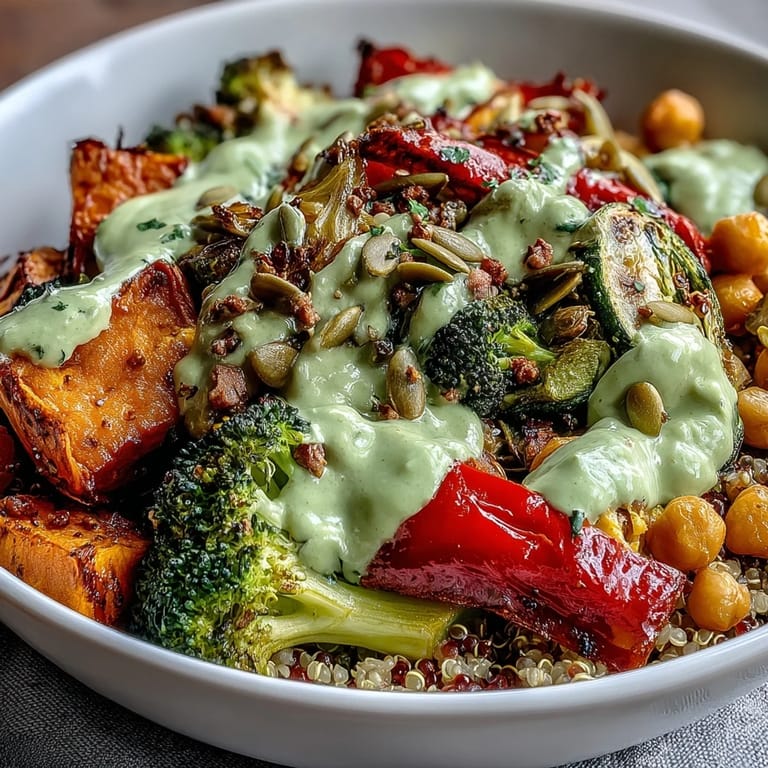
This bowl is more flexible than it looks, and that's exactly why it became a staple in my rotation. Swap the quinoa for brown rice or farro if that's what you have, or use whatever seasonal vegetables look best at your market—cauliflower, carrots, Brussels sprouts, parsnips, even mushrooms all work beautifully roasted. The framework stays the same: grains, roasted vegetables, protein from legumes, fresh toppings, and that incredible dressing.
- Add sliced fresh avocado or a handful of microgreens on top for extra creaminess and delicate freshness.
- For more protein, top with baked tofu or marinated tempeh instead of or alongside the chickpeas.
- Keep any leftover dressing in the fridge for up to two days and spoon it over grain bowls, salads, or roasted vegetables throughout the week.
 Save It
 This bowl fed me through a busy season and reminded me that eating well doesn't have to mean spending hours cooking or settling for things that don't excite you. It's the kind of meal that asks for nothing complicated, just good ingredients treated with a little care.
Recipe FAQs
- → Can I make the roasted vegetables ahead of time?
Yes, roast the vegetables up to 3 days in advance and store them in an airtight container in the refrigerator. Reheat in the oven at 350°F for 10-15 minutes or enjoy them cold in your bowl.
- → What other grains work well in this bowl?
Brown rice, farro, bulgur, or even cauliflower rice make excellent substitutions for quinoa. Adjust cooking time according to your chosen grain package directions.
- → How long does the green goddess dressing last?
The avocado dressing stays fresh for 3-4 days when stored in an airtight container in the refrigerator. The lemon juice helps prevent oxidation, though some slight browning may occur.
- → Can I add more protein to this bowl?
Absolutely. Baked tofu, tempeh, edamame, or even a poached egg would complement the flavors beautifully while boosting protein content.
- → What vegetables can I use for roasting?
Cauliflower, carrots, Brussels sprouts, butternut squash, eggplant, and mushrooms all roast beautifully. Use whatever seasonal vegetables you have available.
- → Is this bowl freezer-friendly?
The roasted vegetables, cooked quinoa, and chickpeas freeze well separately. The avocado dressing is best enjoyed fresh but can be frozen for up to 1 month, though the texture may change slightly.