 Save It
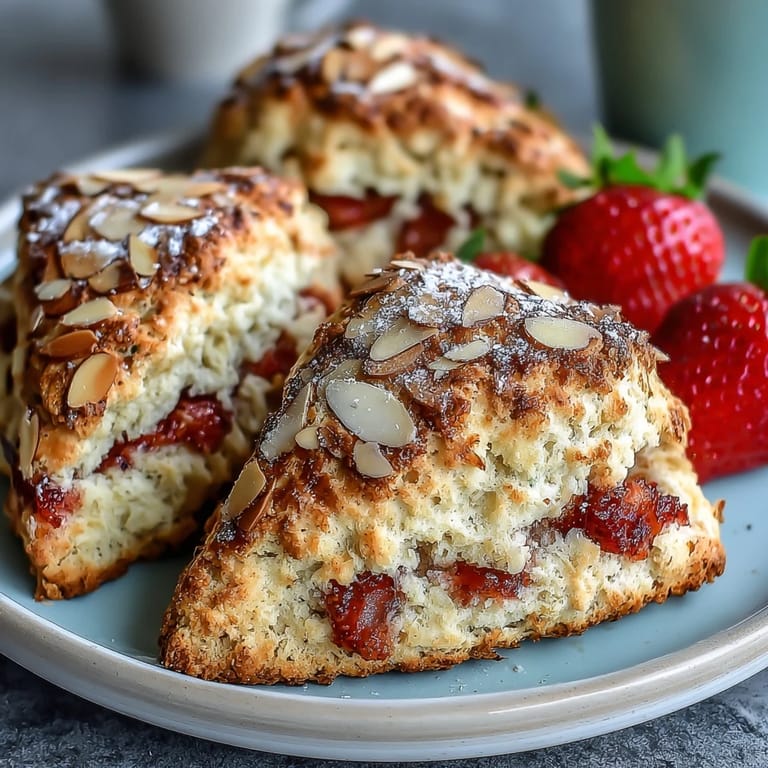
 There's something about the smell of brown butter hitting the air that makes my kitchen feel like a proper bakery, even on an ordinary Tuesday morning. My neighbor stopped by unannounced once while I was making these scones, and the nutty aroma drifting from my oven convinced her I'd been up since dawn doing serious culinary work. The truth was simpler: tender, buttery scones studded with bright strawberries and crowned with toasted almonds, the kind that taste like you've mastered something fancy but honestly require just a gentle touch and cold hands.
I made these for a small gathering once, setting them on the table still warm with steam rising from the almond-studded tops, and watched people's faces shift from polite hunger to genuine delight. Nobody expected something this refined to come from my regular oven, and I didn't mention how the whole process takes less than an hour. That moment of quiet surprise, before anyone digs in, is half the pleasure of scone baking.
Ingredients
- Unsalted butter: Browning it yourself is non-negotiable; that caramelized, toasty quality transforms ordinary scones into something worth remembering.
- All-purpose flour: The foundation, and cold handling throughout keeps everything tender rather than tough.
- Granulated sugar: Just enough sweetness to balance the slight saltiness and let the fruit shine.
- Baking powder and baking soda: Work together to lift the scones into tender, fluffy triangles that split easily.
- Fine sea salt: A small amount that amplifies the brown butter's nutty depth.
- Cold heavy cream: Keep it chilled until the last moment; warm cream ruins the delicate crumb structure you're building.
- Large egg: Binds everything together while the brown butter provides richness.
- Pure vanilla extract: A quiet vanilla note that doesn't overpower but rounds out the flavor.
- Fresh strawberries: Hulled and diced small so they distribute evenly and don't weigh down the dough.
- Sliced almonds: Both folded into the dough and scattered on top for textural contrast and toasted flavor.
Tired of Takeout? 🥡
Get 10 meals you can make faster than delivery arrives. Seriously.
One email. No spam. Unsubscribe anytime.
Instructions
- Brown the butter first:
- Place butter in a small saucepan over medium heat and swirl occasionally until it turns golden and smells unmistakably nutty, about 5 to 7 minutes. Transfer to a bowl and let it chill until just firm but still soft, roughly 15 minutes, so it behaves like cold butter when you work it into the flour.
- Combine your dry ingredients:
- Whisk flour, sugar, baking powder, baking soda, and salt together in a large bowl, making sure everything is evenly distributed. This prevents pockets of baking soda that can create off flavors.
- Cut in the brown butter:
- Add the chilled brown butter to the dry mixture and use a pastry cutter, two knives, or your fingertips to rub it in until the mixture looks like coarse breadcrumbs. Work quickly and stay cool; warm hands will melt the butter and toughen the scones.
- Mix the wet ingredients separately:
- In another bowl, whisk together cold heavy cream, egg, and vanilla until combined. This keeps your scone dough cold longer.
- Bring it together gently:
- Pour the cream mixture over the flour mixture and fold with a spatula or wooden spoon, stopping as soon as everything barely comes together. Overworking here is the enemy of tender scones.
- Fold in the fruit and almonds:
- Gently fold in the diced strawberries and sliced almonds with just a few folds, leaving some visible pieces rather than crushing them into the dough. This is not the time for precision; trust your gentle touch.
- Shape the dough:
- Turn the dough onto a lightly floured surface and gently pat it into a flat disk about 1 inch thick, then cut it into 8 wedges like you're slicing a pie. Handle it as little as possible.
- Prepare for baking:
- Place wedges on a parchment-lined baking sheet, brush the tops lightly with cold cream, then sprinkle with the remaining sliced almonds and optional coarse sugar. The coarse sugar adds a subtle crunch.
- Bake until golden:
- Bake at 200°C (400°F) for 18 to 22 minutes, watching until the tops turn light golden brown and a skewer inserted into the center comes out clean. Let them cool for a few minutes before serving so the insides set slightly.
 Save It
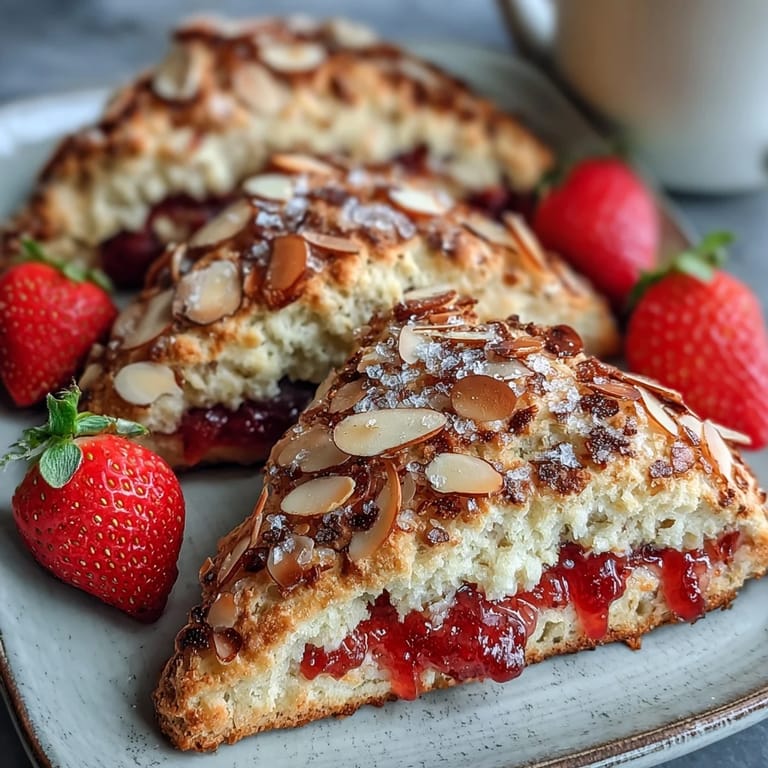
 My daughter once declared these "fancy enough for a real tea party," and we spent an afternoon arranging them on vintage plates with dollops of clotted cream and tiny spoons, taking ourselves completely seriously. Those silly, ceremonial moments with people you love matter just as much as the baking itself.
The Magic of Brown Butter
Brown butter isn't just a technique; it's a flavor transformation that happens right before your eyes. The milk solids sink to the bottom and toast, turning the whole thing golden and fragrant, and that's what elevates these scones from good to unforgettable. Once you've smelled and tasted it, you'll start sneaking brown butter into everything.
Keeping Your Scones Tender
The one day I got impatient and used warm cream instead of cold, my scones came out dense and almost biscuit-like, and I learned that lesson viscerally. Temperature matters because cold fat creates steam pockets as the scones bake, and those tiny air gaps are what make them fluffy. Warm fat melts too quickly and doesn't create that delicate structure, no matter how gently you treat the dough otherwise.
Serving and Storage
Serve these warm from the oven with clotted cream, a drizzle of honey, or even a spoonful of jam, and they'll disappear faster than you'd expect. They're also lovely the next day warmed gently in a low oven, though fresh is always better.
- Store leftover scones in an airtight container for up to two days at room temperature.
- You can freeze unbaked scones on a baking sheet, then bake straight from frozen, adding a minute or two to the baking time.
- If substituting berries, use what's fresh and in season, and pat them dry so excess moisture doesn't make the dough soggy.
 Save It
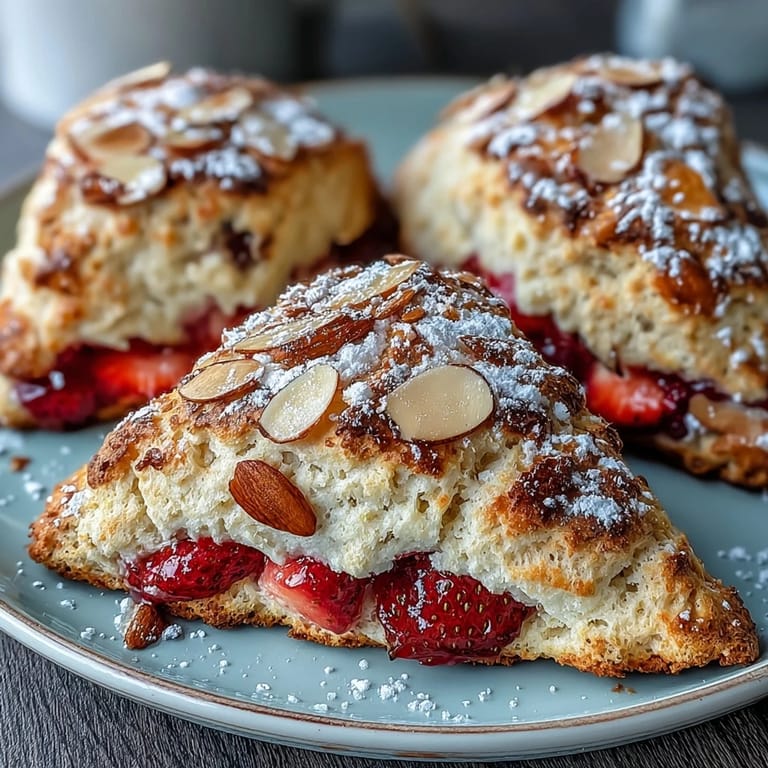
 These scones remind me that the best food moments come from small, thoughtful choices rather than complicated techniques. Serve them warm, watch someone's face light up, and you'll understand why brown butter and strawberries belong together.
Recipe FAQs
- → How does browning butter enhance flavor?
Heating butter until golden creates nutty, caramel-like notes that deepen the overall taste, enriching the scones' flavor.
- → Why add cold cream to the dough?
Cold cream helps keep the dough tender and moist, contributing to a soft, flaky texture in the finished scones.
- → Can almonds be substituted?
Yes, alternatives like pecans or walnuts offer similar crunch and complement the nutty flavor if almonds aren't preferred.
- → What’s the best way to handle the dough?
Gently folding and minimal mixing help maintain a tender crumb, preventing toughness from overworking the dough.
- → What pairs well with these scones?
Light teas or sparkling wines balance the richness, while clotted cream or honey accentuate their sweetness.