 Save It
 My neighbor showed up one April morning with an armload of rhubarb stalks, more pink than green, asking if I knew what to do with them. I'd been intimidating myself out of tart-making for years, convinced pastry required some kind of magic I didn't possess. But the combination of white chocolate, elderflower, and that sharp rhubarb sounded too good to pass up. I rolled out dough on my counter, patched the cracks with my thumbs, and discovered that tarts forgive more than we think they do.
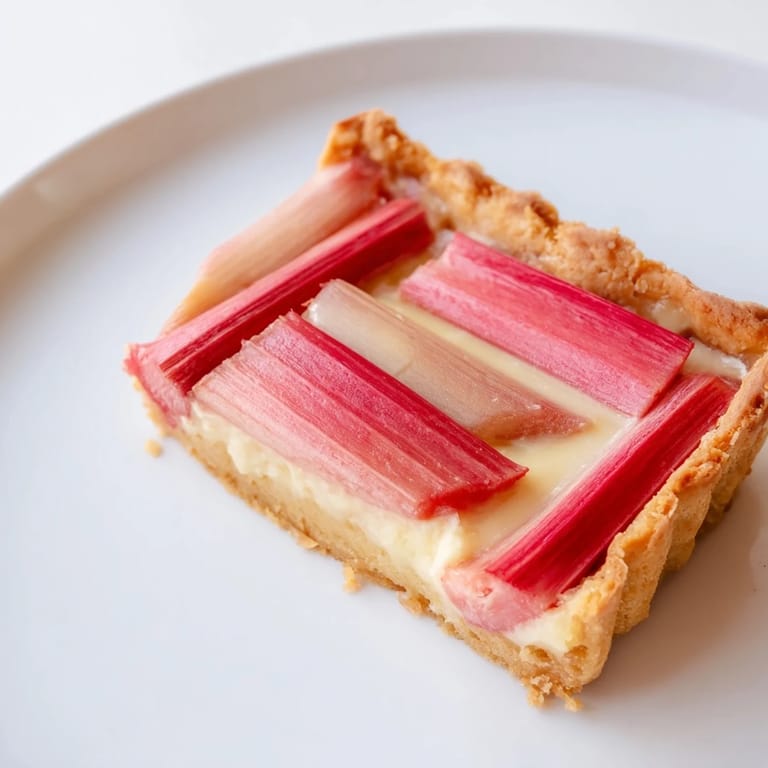
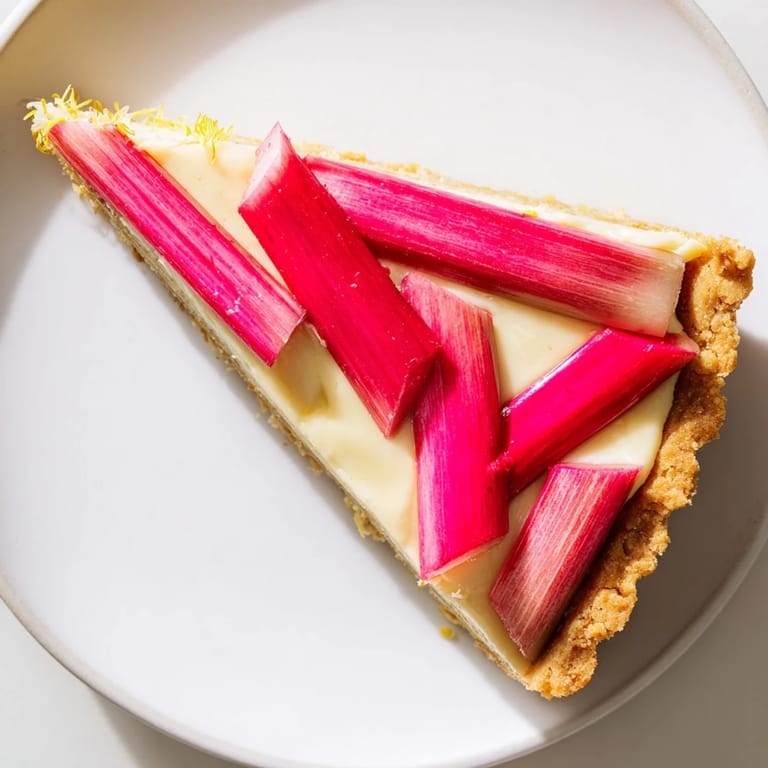
I brought this tart to a spring lunch where everyone was supposed to bring something seasonal. When I set it on the table, the pale custard dotted with those rosy rhubarb batons caught the light through the window. One friend asked if I'd bought it. Another told me she'd never liked rhubarb until that afternoon. I realized then that a dessert doesn't have to be complicated to feel special, it just has to taste like you cared enough to make it from scratch.
Ingredients
- All-purpose flour: Forms the structure of the crust; using cold butter and minimal water keeps it crisp rather than tough.
- Cold unsalted butter, cubed: The key to flaky pastry is keeping the butter cold so it creates steam pockets as it bakes.
- Powdered sugar: Dissolves more evenly into the dough than granulated and gives a tender, melt-in-your-mouth texture.
- Egg yolk: Enriches the dough and helps it hold together without making it heavy.
- White chocolate, finely chopped: Choose a good-quality brand with cocoa butter listed first; it melts smoother and tastes less waxy.
- Heavy cream: Provides the richness that balances the tartness of rhubarb and carries the elderflower flavor.
- Whole milk: Thins the custard just enough so it pours easily into the shell and sets with a soft firmness.
- Elderflower cordial: This is what makes the tart unforgettable; look for it near the drink mixers or order it online.
- Egg yolks: Thicken the custard as it heats and give it that pale yellow glow.
- Granulated sugar: Sweetens both the custard and the rhubarb without adding any flavor that would compete with elderflower.
- Vanilla extract: A background note that deepens the white chocolate without drawing attention to itself.
- Rhubarb, trimmed and cut into 5 cm batons: Choose stalks that are firm and brightly colored; limp rhubarb will turn mushy in the oven.
- Lemon zest: Brightens the roasted rhubarb and keeps the sweetness from feeling flat.
Tired of Takeout? 🥡
Get 10 meals you can make faster than delivery arrives. Seriously.
One email. No spam. Unsubscribe anytime.
Instructions
- Prepare the Tart Crust:
- Pulse the flour, cold butter, powdered sugar, and salt in a food processor until the mixture looks like coarse sand with a few pea-sized lumps. Add the egg yolk and a tablespoon of cold water, pulsing just until the dough starts clumping together; if it still feels dry, add another splash of water but don't overdo it or the crust will be tough.
- Chill and Roll the Dough:
- Shape the dough into a flat disk, wrap it tightly in plastic, and refrigerate for 30 minutes so the gluten can relax. Roll it out on a floured surface until it's large enough to drape over your 23 cm tart tin, then press it gently into the corners and trim the overhang with a knife.
- Blind Bake the Crust:
- Chill the lined tin for 15 minutes, then preheat your oven to 180 degrees Celsius. Line the crust with parchment paper, fill it with baking beans or dried rice, and bake for 15 minutes; remove the beans and parchment, then bake another 5 to 7 minutes until the bottom is golden and no longer doughy.
- Make the Custard Base:
- Heat the cream and milk in a saucepan over medium heat until steam rises but it doesn't boil. In a separate bowl, whisk the egg yolks, sugar, and vanilla until the mixture turns pale and slightly thick, which means the sugar is starting to dissolve.
- Temper and Thicken the Custard:
- Slowly pour the hot cream into the yolk mixture, whisking constantly so the eggs don't scramble. Return everything to the saucepan and cook over low heat, stirring continuously, until the custard coats the back of a spoon and leaves a clear line when you drag your finger through it.
- Finish the Custard with Chocolate and Elderflower:
- Remove the pan from the heat and stir in the chopped white chocolate and elderflower cordial until the chocolate melts completely and the custard turns smooth and glossy. Pour the custard into the cooled tart shell and refrigerate for at least an hour until it sets firm.
- Roast the Rhubarb:
- Preheat your oven to 190 degrees Celsius and arrange the rhubarb batons in a single layer in a baking dish. Sprinkle them with sugar and lemon zest, drizzle with elderflower cordial, cover with foil, and roast for 15 minutes; uncover and roast another 5 to 8 minutes until the rhubarb is tender but still holds its shape.
- Assemble and Chill:
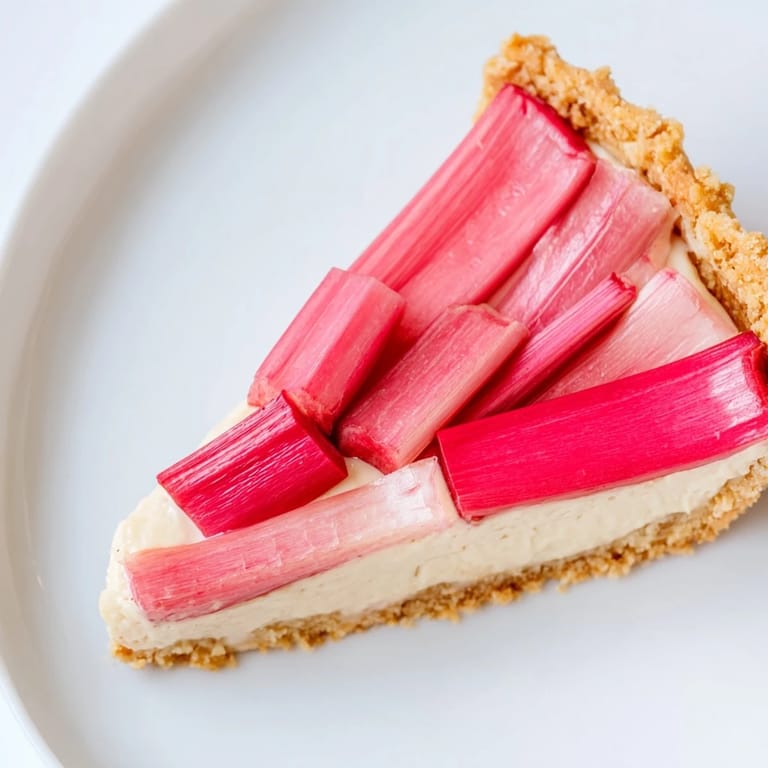
- Let the rhubarb cool completely, then arrange the batons over the set custard in whatever pattern makes you happy. Brush with a little extra elderflower cordial if you want a glossy finish, then chill until you're ready to serve.
 Save It
 The first time I sliced into this tart, the custard held its shape and the rhubarb sat perfectly on top, sticky and jewel-bright. My husband took one bite and said it tasted like spring smelled. I've made it a dozen times since, tweaking nothing, because some recipes are perfect exactly as they are. It's become the dessert I make when I want people to remember the meal, when I want them to leave with the taste of something beautiful still on their tongues.
How to Know When the Custard Is Ready
The custard should thicken just enough to coat the back of a wooden spoon in a thin, even layer. If you drag your finger across the coated spoon, the line should stay clean and not fill back in. It won't look thick like pudding at this stage, but it will set firm once the white chocolate melts in and the whole thing chills. Pull it off the heat the moment you see that coating form, because custard can go from perfect to scrambled in seconds.
Make-Ahead and Storage Tips
You can bake the tart shell up to two days ahead and keep it covered at room temperature. The custard can be made and poured into the shell a day early, then covered loosely with plastic wrap and refrigerated. Roast the rhubarb the morning of serving so it stays vibrant and doesn't weep into the custard. Once assembled, the tart keeps in the fridge for up to two days, though the crust will gradually lose some of its crispness.
Serving Suggestions and Variations
This tart is rich enough to stand on its own, but a small dollop of unsweetened whipped cream or crème fraîche cuts through the sweetness beautifully. I've sprinkled toasted pistachios over the top for crunch, and once I swapped the rhubarb for roasted strawberries when I couldn't find good rhubarb at the market. If you can't get elderflower cordial, try a tablespoon of orange blossom water or a splash of limoncello, though the flavor will shift in a different direction.
- Serve with a chilled glass of Moscato or a homemade elderflower spritz for a perfect pairing.
- Dust the edges of the tart with a little powdered sugar just before serving for a bakery finish.
- Garnish with fresh mint leaves or edible flowers if you're feeling fancy.
 Save It
 This tart has taught me that some of the best desserts come from unlikely combinations, things you wouldn't think to put together until someone hands you a bunch of rhubarb and you take a chance. Make it once and you'll want to make it every spring.
Recipe FAQs
- → Can I prepare this tart in advance?
Yes, this is an excellent make-ahead dessert. Prepare the tart shell and custard filling up to one day ahead. Add the roasted rhubarb topping just before serving to maintain its texture and vibrant appearance.
- → What's the best way to achieve a crisp tart shell?
Blind bake the crust with parchment and baking beans for 15 minutes, then remove them and bake for an additional 5-7 minutes until golden. This prevents the shell from becoming soggy when filled with the custard.
- → Can I substitute the elderflower cordial?
Absolutely. If elderflower isn't available, try vanilla extract, orange liqueur, or even a floral alternative like rose water. Each will give a different but equally delicious flavor profile.
- → How do I know when the custard is properly cooked?
The custard should coat the back of a spoon when ready—run your finger across the spoon and it should leave a clear trail. This indicates it has reached the proper consistency without overcooking.
- → What's the ideal serving temperature?
Serve chilled directly from the refrigerator for the best flavor and texture. The cool custard contrasts beautifully with the tangy roasted rhubarb topping, while the tart shell maintains its crispness.
- → Can I use frozen rhubarb instead of fresh?
Fresh rhubarb is recommended for the best texture, but thawed frozen rhubarb works in a pinch. Pat it dry before roasting to prevent excess moisture from making the tart soggy.