 Save It
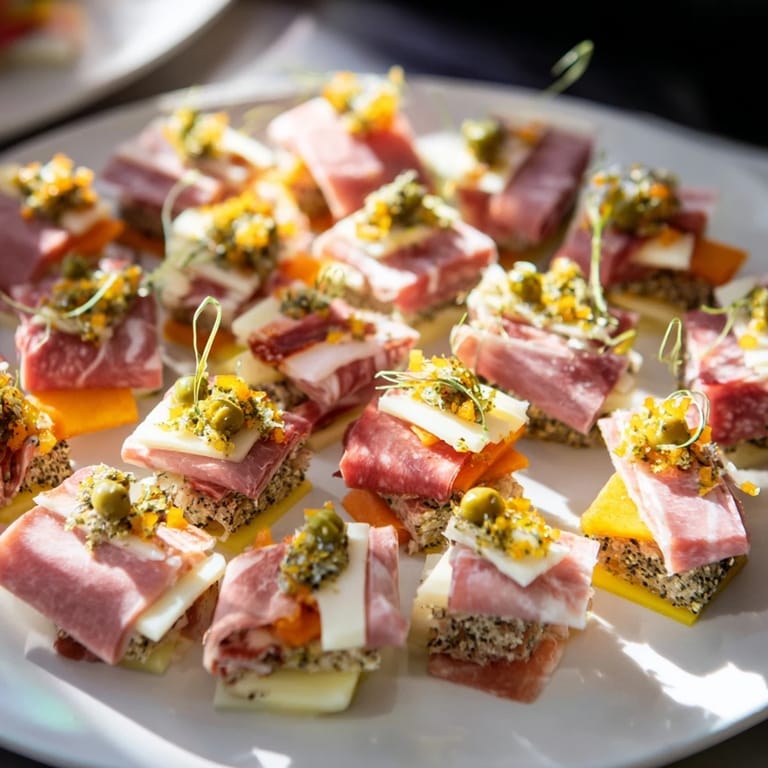
 I discovered this dish by accident at a crowded wine tasting where someone had hastily arranged leftover cured meats and cheeses on a board, then grabbed a mustard bottle and started drawing lines across it. Everyone stopped talking and just stared, then reached for toothpicks. The funny thing was, nobody cared that it wasn't fancy—they cared that it looked like someone had thought hard about making it beautiful.
The first time I made this for a potluck, I spent forty minutes cutting everything into perfect squares because I was convinced precision mattered. Turns out my slightly wonky pieces were the ones people remembered—they looked handmade, which meant someone cared. Now I cut faster and with less anxiety, and it always looks better for it.
Ingredients
- Smoked turkey breast (100 g, sliced): This is your lightest meat, almost delicate compared to the salami, so it balances the board visually and keeps things from getting too heavy.
- Salami (100 g, sliced): The star player for color and richness; look for a variety that holds its shape when cut into squares.
- Ham (100 g, sliced): The bridge between turkey and salami, adding familiarity while keeping the flavor profile varied.
- Swiss cheese (100 g, sliced): Those holes are your secret weapon for visual appeal and a mild, approachable taste.
- Sharp cheddar (100 g, sliced): This brings actual flavor punch and a warm golden color that catches light beautifully.
- Provolone (100 g, sliced): Creamy and slightly tangy, it bridges the gap between the Swiss and cheddar without fighting them.
- Whole grain mustard (2 tbsp): The texture of those seed specks makes the mustard lines look intentional and homemade rather than piped from a tube.
- Dijon mustard (2 tbsp): Smoother and sharper than whole grain, alternating between the two creates visual rhythm and flavor variation.
- Fresh parsley or chives (optional): A whisper of green turns this from colorful to actually thoughtful looking; don't skip it if you have fresh herbs on hand.
Tired of Takeout? 🥡
Get 10 meals you can make faster than delivery arrives. Seriously.
One email. No spam. Unsubscribe anytime.
Instructions
- Cut everything into uniform squares:
- Use a sharp knife on a cutting board to cut all your meats and cheeses into 2-inch squares, working meat and cheese separately so your knife stays clean. Don't stress about perfection—slight variation actually looks more authentic.
- Build your quilt pattern:
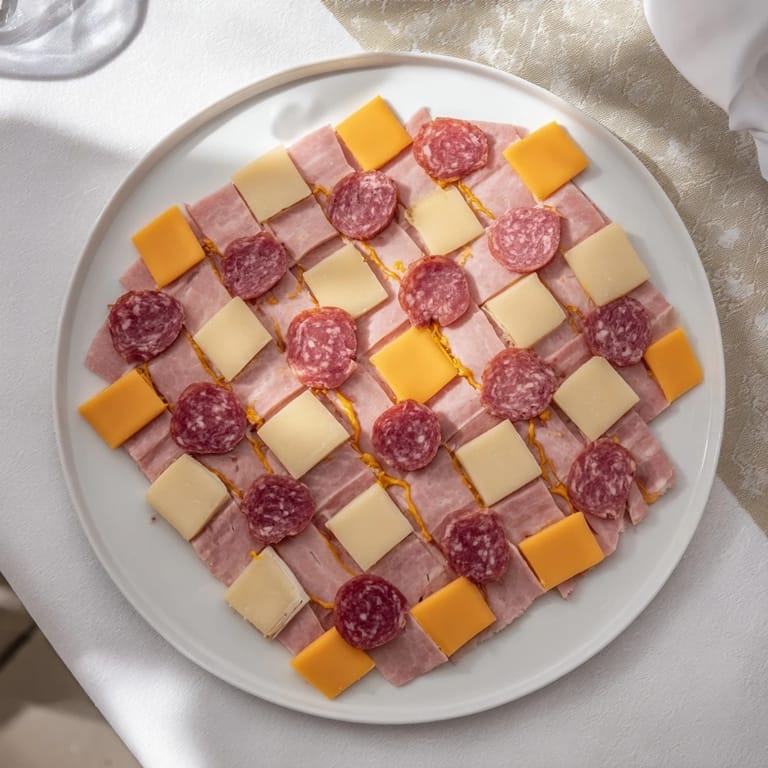
- On your best serving board, start laying out squares in a checkerboard or patchwork arrangement, alternating meats and cheeses as you go. Step back every few rows to see if the color distribution feels balanced.
- Stitch it together with mustard:
- Fill a squeeze bottle or piping bag with whole grain mustard and draw lines between the squares like you're sewing a quilt, then switch to Dijon for the next lines. This is where the visual magic happens—don't hold back.
- Add the final flourish:
- If using fresh herbs, sprinkle them sparingly over the board for a pop of green that says someone actually cared about this. Serve immediately with toothpicks or small forks so people can grab pieces without disrupting your masterpiece.
 Save It
 I remember my neighbor seeing this on my counter and asking if it was too fancy to eat, which told me everything I needed to know about whether it was worth making. Watching people hesitate before their first piece—that moment of 'is this really for me?'—never gets old.
Playing With Color and Contrast
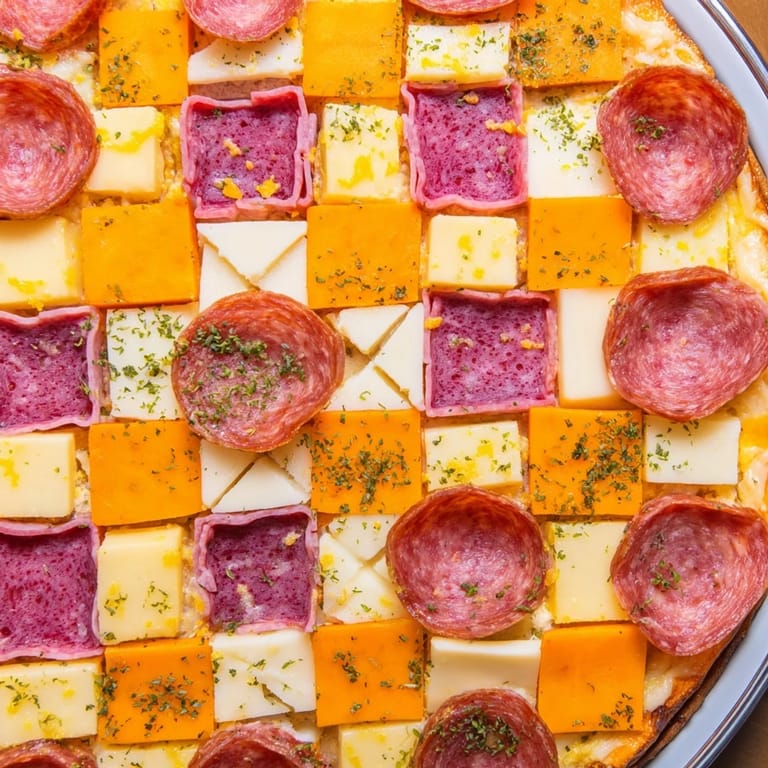
The real joy of this dish is in the visual balance. I've learned that Swiss cheese's pale color needs the deeper tones of salami to shine, and sharp cheddar's golden warmth makes ham look more elegant than it has any right to. If your cheeses are coming out looking dull, add a thin layer of roasted red pepper squares or sun-dried tomato for dramatic contrast. The board should look like someone spent hours planning the palette, even though you spent twenty minutes cutting.
The Mustard Technique That Changes Everything
The mustard lines are not decoration—they're the frame that makes the whole thing intentional. I used to think I needed a professional piping bag, but a simple squeeze bottle from the grocery store works perfectly and actually gives you better control. The alternating pattern between whole grain and Dijon creates a visual rhythm that makes people lean closer to look. Don't be shy with the mustard; the tanginess is what makes you want another piece.
Making It Memorable
This appetizer lives or dies by the little details that show someone thought about it beyond just throwing things on a board. I've tested every possible combination and learned what actually matters to people eating this. They remember the care more than they remember the flavors, which is exactly the kind of magic an appetizer should have.
- Arrange your squares the night before and cover the board with plastic wrap, adding mustard lines and herbs just before guests arrive.
- If you want it gluten-free, verify your mustards are certified, as some brands sneak wheat into their base.
- Serve with a crisp white wine or light beer and watch how quickly the board empties.
 Save It
 The Patchwork Quilt isn't about being a perfectionist in the kitchen—it's about showing up with intention. Make this when you want people to feel like they matter enough to deserve something beautiful.
Recipe FAQs
- → How should the meats and cheeses be cut?
Cut all meats and cheeses into uniform 2-inch squares to create an even patchwork effect that is easy to serve and eat.
- → What types of mustard are used for the stitching lines?
Alternating lines of whole grain and Dijon mustard are used for a balanced tang and attractive appearance.
- → Can I add garnishes to enhance the presentation?
Fresh parsley or chopped chives can be sprinkled on top for added color and a subtle herbal note.
- → Is any cooking required for this appetizer?
No cooking is needed; it’s assembled with pre-sliced meats and cheeses for quick preparation.
- → What are good serving suggestions for this dish?
Serve with toothpicks, small forks, or alongside sliced baguette or crackers for easy tasting and sharing.