 Save It
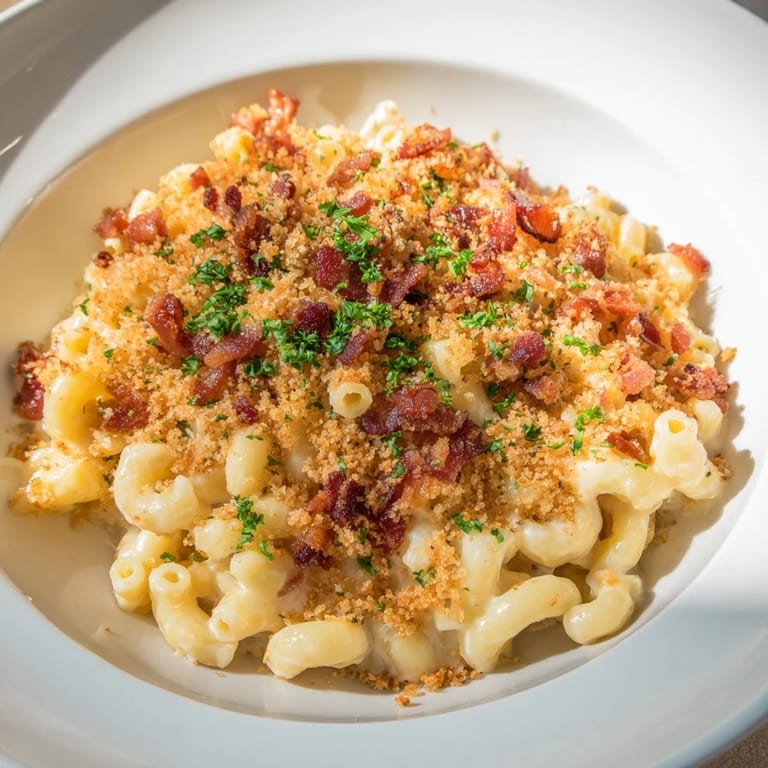
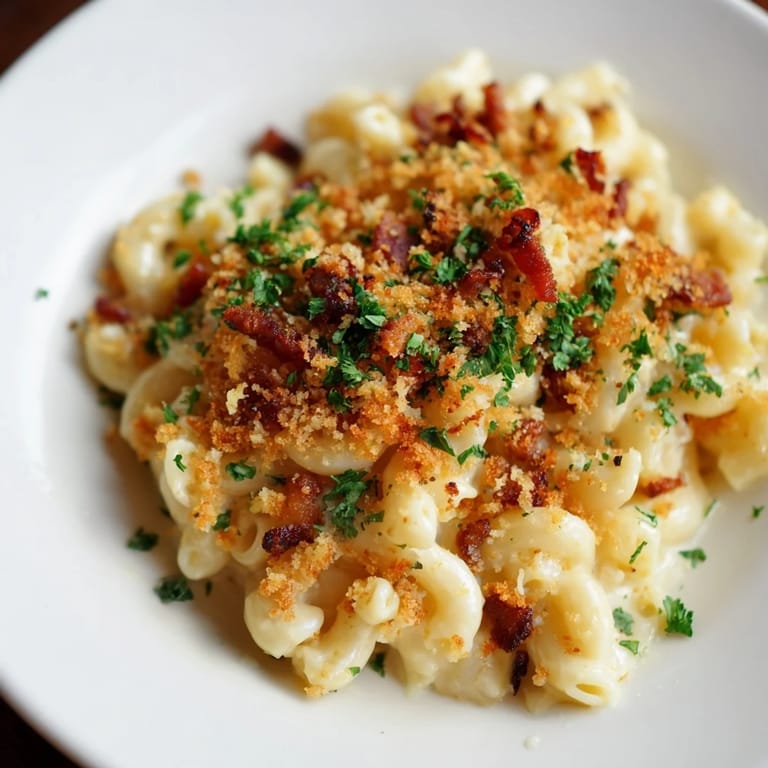
 I discovered this version of mac and cheese at a late-night kitchen experiment after watching too many food videos, and something about the crispy bacon layered through creamy cheese sauce just clicked. There's something almost theatrical about it—the way the bacon shatters between your teeth while the cheese pulls in those long, satisfying strands. My friends kept asking what made it different, and honestly, it's all about that contrast and the confidence of layering the good stuff in the middle rather than just tossing it on top. This became the dish I make when I want to feel like I'm cooking something a little more special than Tuesday dinner.
I made this for a group of friends who were skeptical about mac and cheese being anything more than a side dish, and watching their faces when they realized this was the main event was worth every minute. One person went back for thirds and just said, "This is what confidence tastes like," and I've never forgotten that. It's become the dish I reach for when I want to show up for people, not just feed them.
Ingredients
- Elbow macaroni (400 g): The shape matters—those curves trap sauce perfectly, so don't swap for something fancier unless you want a totally different texture experience.
- Unsalted butter (60 g): This is your roux base, so don't go light on it or skip to margarine; the flavor difference is real.
- All-purpose flour (40 g): The thickener that makes everything silky; too little and your sauce breaks, too much and it turns to paste.
- Whole milk and heavy cream (720 ml milk, 120 ml cream): The milk carries flavor, but that cream is what makes it feel indulgent without being heavy.
- Sharp cheddar (200 g), mozzarella (100 g), and Gruyère (50 g): This trio is non-negotiable—cheddar for bite, mozzarella for stretch, Gruyère for sophistication.
- Garlic powder, onion powder, smoked paprika, salt, pepper: These quiet the sharpness and add warmth so the cheese sings instead of screams.
- Thick-cut bacon (8 slices): Thick-cut holds its texture through baking; thin stuff turns to ash.
- Panko breadcrumbs (60 g): The topper that stays crispy; regular breadcrumbs get soggy faster than you'd think.
Tired of Takeout? 🥡
Get 10 meals you can make faster than delivery arrives. Seriously.
One email. No spam. Unsubscribe anytime.
Instructions
- Set the stage:
- Get your oven warming to 200°C and grease that baking dish generously so nothing sticks when it bubbles. This is the moment to read ahead and gather your cheeses shredded so you're not fishing around when everything's hot.
- Cook the pasta:
- Boil your macaroni until it's just barely done—al dente means it still has a tiny bit of firmness because it'll soften more in the oven. Drain and set it aside without rinsing so the starch helps the sauce cling.
- Crisp the bacon:
- While the pasta cooks, arrange bacon on a lined sheet, season it, and bake it until it's dark and crackles when you touch it—this takes about 15 to 18 minutes. The smell will fill your kitchen and make you hungry; that's the signal it's working. Once it cools enough to handle, crumble it into whatever-sized pieces feel right to you.
- Build the sauce:
- Melt butter over medium heat, whisk in flour until it's foamy and smells toasted but not burnt, then slowly pour in the milk and cream while whisking constantly to avoid lumps. Keep stirring until it thickens to something that coats the back of a spoon, about 3 to 5 minutes of gentle simmering.
- Add the cheese:
- Pull the pan off heat and stir in your cheeses, letting them melt into something smooth and glossy, then season it with garlic powder, onion powder, smoked paprika, salt, and pepper. Taste it—it should make you stop and say yes.
- Combine everything:
- Fold the drained pasta into the sauce until every piece is coated, then spread half of it into your baking dish. Scatter half the bacon over it, add the remaining mac and cheese, and top with the rest of the bacon so you get it throughout.
- Top and finish:
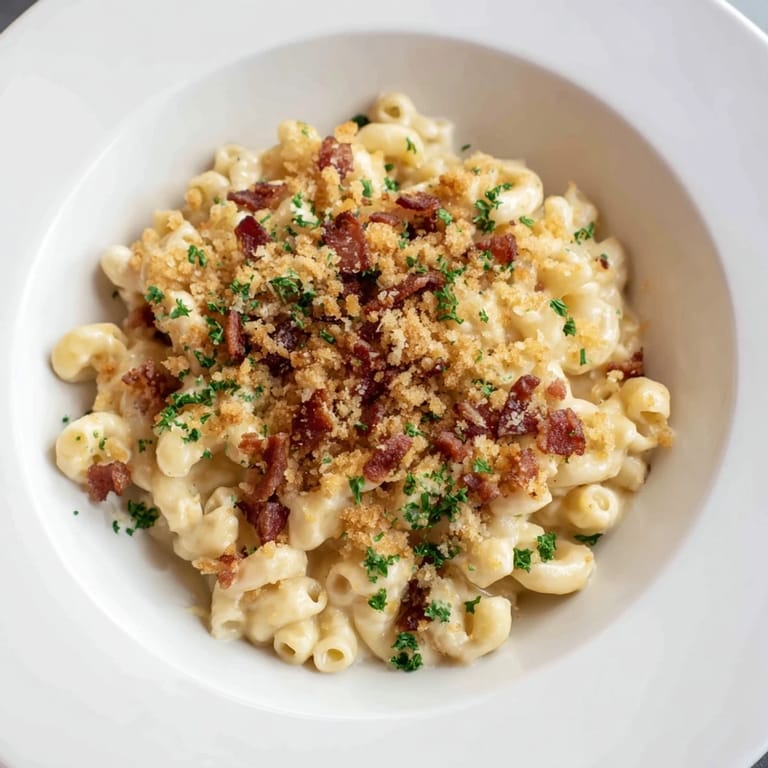
- Mix melted butter, panko, and Parmesan together until it's all moistened and crumbly, then scatter it over the top. Bake for 15 to 18 minutes until it's golden and bubbling at the edges, let it rest for 5 minutes so it sets slightly, then garnish with fresh parsley and serve while it's still warm.
 Save It
 There was a moment when a friend tasted this and said, "You made me feel like someone cares," which sounds dramatic for pasta and cheese, but that's when I realized this dish is about more than texture and flavor. It's about showing up with effort.
Why This Works
Mac and cheese lives or dies on balance—too thick and it's heavy, too thin and it's sad, too one-note with cheese and it overpowers. This version uses three different cheeses so each one contributes something different: the cheddar's sharp bite, the mozzarella's stretch, and the Gruyère's subtle nuttiness add up to something that feels complex without being fussy. The bacon isn't just a topping; it's baked into the layers so you get that textural surprise in every spoonful, and the panko topping adds one more dimension of crunch that keeps it interesting even on the second helping.
The Layering Secret
Most people put everything in the dish and hope for the best, but this recipe builds flavor intentionally. You're basically making two layers of mac and cheese with bacon in between, which means the bacon doesn't just sit on top where it gets soggy—it's nestled in where the heat and steam actually crisps it from multiple angles. The panko topping bakes into a golden shell that gives way to creamy sauce underneath, and that contrast is exactly what makes people ask for the recipe.
Make It Your Own
The foundation here is solid, but this dish welcomes tweaks. Some people love a pinch of chipotle powder in the cheese sauce for smokiness, others swap Monterey Jack for the Gruyère if that's what they have, and plenty of cooks have told me they add a fresh herb like thyme to the breadcrumb topping for brightness. The bacon is the star, but if you're cooking for vegetarians, roasted mushrooms or cauliflower chunks give you that same textural contrast and make the dish feel substantial.
- A crisp green salad alongside cuts through the richness and makes the whole meal feel lighter.
- If you have time, let the finished dish rest in a warm place for 5 minutes before serving so it sets just enough to scoop cleanly.
- Leftovers actually reheat beautifully covered in foil at 160°C—it won't have that fresh-from-the-oven crispness on top, but the inside stays creamy.
 Save It
 This is the mac and cheese I reach for when I want to cook something that feels generous and intentional. It's the kind of dish that turns a regular evening into something people remember.
Recipe FAQs
- → How can I achieve a crispy bacon topping?
Arrange bacon slices on parchment paper, sprinkle with black pepper and garlic powder, then bake at 200°C (400°F) for 15-18 minutes until deeply golden and crispy. Let cool before crumbling over the dish.
- → What cheese blend works best for a smooth sauce?
A combination of sharp cheddar, mozzarella, and Gruyère creates a rich and creamy texture with balanced sharpness and meltability.
- → Can I substitute the Gruyère cheese?
Yes, Monterey Jack or additional sharp cheddar can be used if Gruyère is unavailable or to adjust flavor.
- → How do I prevent lumps in the cheese sauce?
After melting butter, whisk in flour and cook briefly before gradually adding milk and cream while stirring constantly to avoid lumps.
- → What can I serve alongside this dish?
Pair with a crisp green salad or a citrusy white wine to balance the richness of the cheesy, bacon-topped pasta.
- → Is there a way to add smokiness to the sauce?
Adding a pinch of chipotle powder to the cheese sauce imparts a subtle smoky heat without overpowering.