 Save It
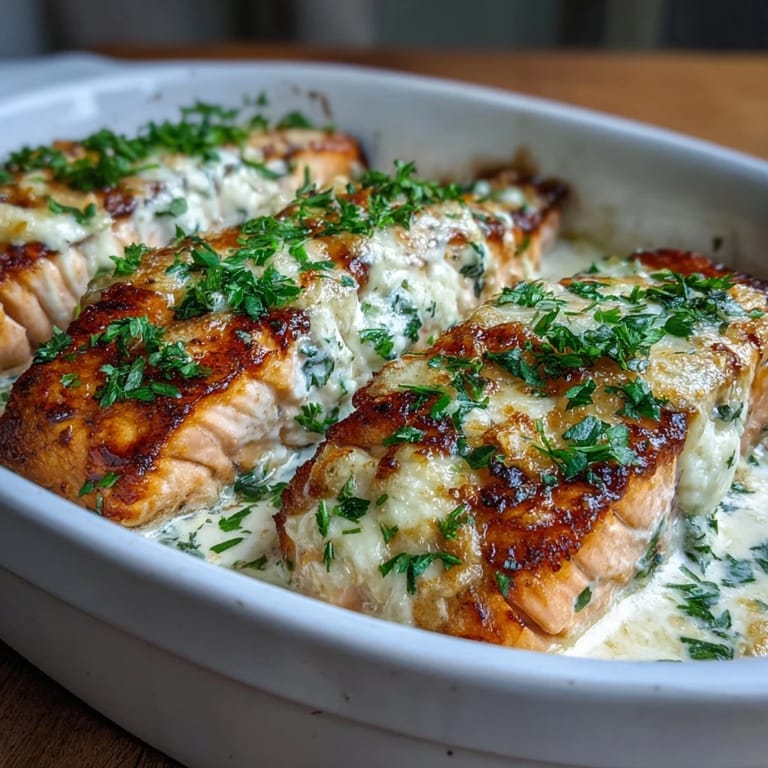
 A weeknight dinner saved itself the moment I stopped overthinking salmon. Years of restaurant meals had convinced me that anything worth eating required hours of fussing, until a friend casually mentioned she'd thrown salmon in a baking dish with butter, lemon, and cream cheese—no cream, no stress. That single sentence shifted something in my kitchen approach. The result was so silky and bright that I abandoned my old complicated methods entirely, and now this is what I make when I want to feel like I've accomplished something elegant without any of the performance.
My partner came home early one evening to find the kitchen smelling like butter and citrus, and suddenly we were eating dinner at the kitchen counter instead of in front of screens—no special occasion, just something that tasted too good to rush through. That's when I realized this dish had quietly become our version of a celebratory meal, the one we make when we want to mark an ordinary day as worth remembering.
Ingredients
- Salmon fillets (6 oz each): Look for fillets with consistent thickness so they cook evenly; skin-on or skinless both work beautifully, though skin-on gives you a little insurance against drying out.
- Unsalted butter (4 tablespoons): The foundation of everything that makes this work—use real butter, not margarine, or the sauce loses its silky quality.
- Fresh garlic (3 cloves, minced): Mince it right before cooking so the oils are bright and the flavor hasn't gone flat.
- Lemon juice and zest (2 tablespoons juice, 1 teaspoon zest): Fresh lemons only here; bottled juice will taste thin and metallic against the richness of the cream cheese.
- Cream cheese (2 oz, softened): The secret weapon that creates creaminess without actually being heavy cream; soften it for just 10 seconds in the microwave so it blends seamlessly.
- Parmesan cheese (1/4 cup, grated): Freshly grated tastes sharper and more alive than pre-shredded; it also melts more smoothly into the sauce.
- Fresh parsley (2 tablespoons, chopped): Added at the end for a bright herbaceous note that cuts through the richness.
Tired of Takeout? 🥡
Get 10 meals you can make faster than delivery arrives. Seriously.
One email. No spam. Unsubscribe anytime.
Instructions
- Set the stage:
- Preheat your oven to 375°F and lightly butter or spray a baking dish—you want enough room for the salmon to sit without crowding.
- Prepare the salmon:
- Pat your fillets completely dry with paper towels; this small step is everything because moisture prevents the sauce from adhering and makes the fish steam instead of bake. Season gently with salt and pepper, then arrange skin-side down in the dish.
- Build the sauce base:
- Melt the butter over medium heat or in a microwave, then add your minced garlic and stir immediately to release the fragrance without letting it turn golden and bitter. You'll smell when it's ready—it should be toasty but not browned.
- Make it creamy:
- Whisk in the lemon juice, zest, softened cream cheese, and Parmesan until smooth and completely incorporated. Taste it and adjust the salt and pepper; this sauce should taste bold enough to make you happy on its own.
- Coat the fish:
- Spoon the sauce generously over each fillet, making sure it pools around the sides where the heat will bubble it into something golden and slightly caramelized.
- Bake with intention:
- Slide the dish into the oven uncovered for 15 to 18 minutes—the salmon is done when it's opaque throughout and flakes with gentle pressure, and the sauce is bubbling at the edges. Resist the urge to check constantly; the residual heat is part of what keeps the fish tender.
- Optional golden finish:
- If you want the top to be more golden, broil for 1 to 2 minutes at the end, but stand right there and watch it because this step moves fast.
- Finish and serve:
- Scatter fresh parsley over the top and serve with lemon wedges on the side for anyone who wants extra brightness.
 Save It
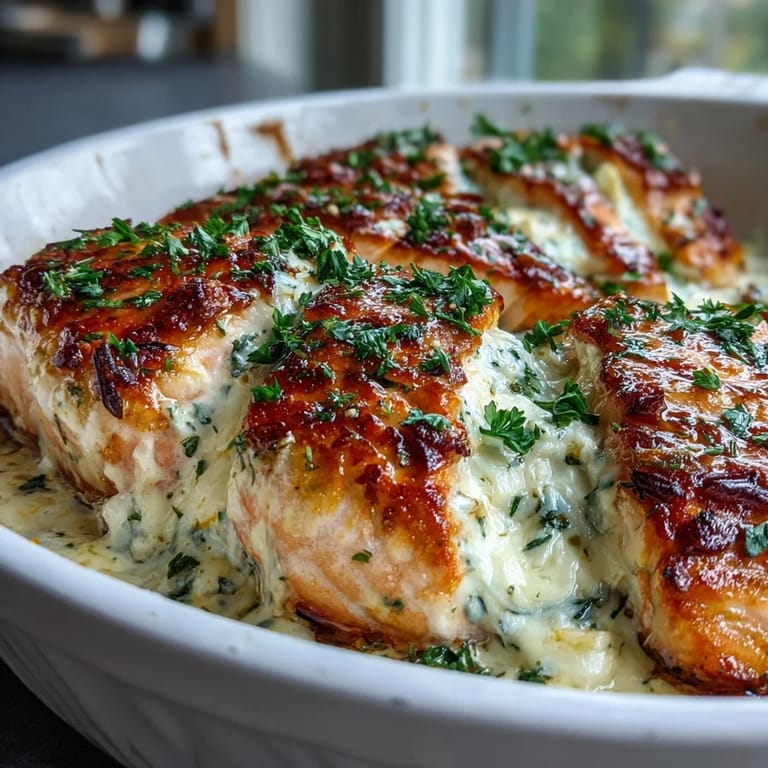
 There's a moment about halfway through the baking when the sauce starts to bubble at the edges and the kitchen fills with this specific smell—lemony, buttery, garlicky, creamy all at once—and that's when I know exactly why this dish keeps reappearing on our table. It's the moment that reminds me that elegant doesn't have to mean complicated.
Why This Sauce Changes Everything
The genius of this sauce is that it skips the traditional heavy cream entirely and relies instead on cream cheese to create silkiness, which means the final dish tastes rich without feeling heavy or cloying. Parmesan adds a savory depth that keeps the lemon from being too sharp or one-dimensional. Together they create something that tastes like it belongs in a restaurant kitchen, except it lives in yours and takes less time than ordering takeout.
Timing Is Everything with Salmon
Salmon's biggest enemy is overcooking, and the difference between perfectly cooked and dry is genuinely just two or three minutes, which is why I've learned to treat baking times as guides rather than gospel. Every oven runs slightly hot or cool, so pay attention to what your salmon looks like—the flesh should be opaque and moist, not pale and flakey. If you're new to cooking salmon, I learned the hard way to use a fork to gently test the flake rather than cutting into it, which releases the precious juices.
Making It Your Own
This recipe is forgiving enough to adapt to what you have on hand or what you're in the mood for. I've made it with dill instead of parsley, added a pinch of red pepper flakes for heat, or finished it with panko and broiled it for a slight crust. The core ratio of acid, fat, and creaminess stays the same, which is why the dish holds together even when you're playing around with it.
- Swap the parsley for dill, thyme, or tarragon depending on what calls to you.
- A quarter teaspoon of red pepper flakes whisked into the sauce adds subtle warmth without heat.
- If you don't have Parmesan, aged white cheddar or even gruyère will work beautifully in a pinch.
 Save It
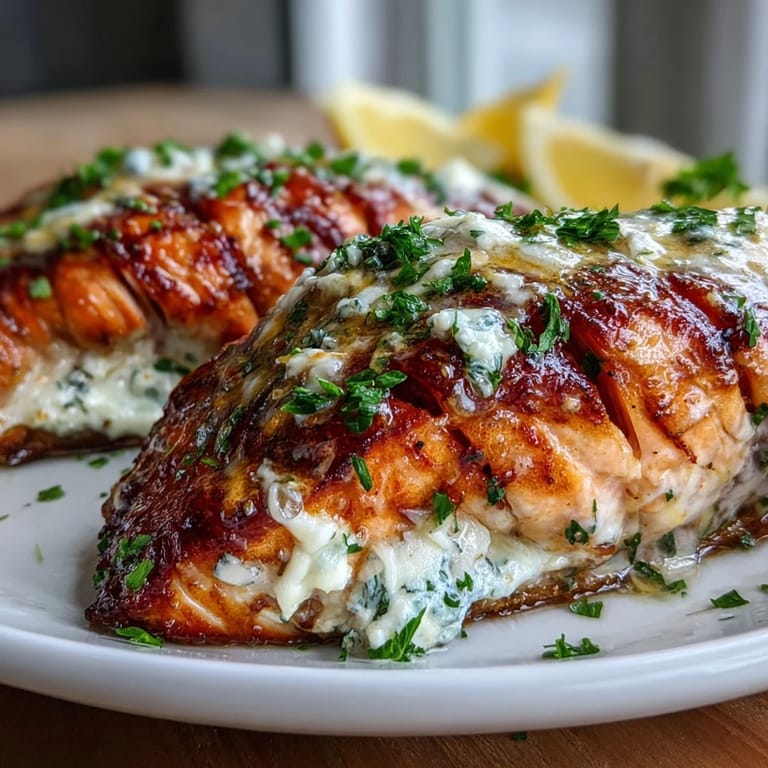
 This dish proved to me that restaurant-quality food doesn't require restaurant-level complexity, just intention and the right few ingredients. Make it this week and see what ordinary Tuesday evening becomes.
Recipe FAQs
- → Can I use frozen salmon fillets?
Yes, thaw frozen salmon completely in the refrigerator overnight before baking. Pat the fillets thoroughly dry with paper towels to remove excess moisture, which helps the sauce adhere properly and prevents watery results.
- → What temperature should salmon be cooked to?
Salmon is perfectly cooked when it reaches an internal temperature of 145°F (63°C). The flesh should be opaque and flake easily with a fork. Avoid overcooking, as the salmon will become dry and lose its silky texture.
- → Can I make this dairy-free?
Substitute the butter with olive oil and use a dairy-free cream cheese alternative or omit it entirely. The sauce will be lighter but still flavorful from the lemon, garlic, and Parmesan substitute or nutritional yeast.
- → What sides pair well with this salmon?
Steamed asparagus, roasted broccoli, or green beans complement the rich sauce. For starches, try roasted potatoes, wild rice, or crusty bread to soak up extra sauce. A simple arugula salad with vinaigrette balances the creamy elements.
- → Can I prepare the sauce ahead of time?
Yes, whisk the sauce components together up to 24 hours in advance and refrigerate. Bring to room temperature before spooning over the salmon. The sauce may thicken when cold—thin with a teaspoon of warm water or extra lemon juice if needed.
- → Why did my sauce separate?
Sauce separation typically occurs if the cream cheese is too cold when mixed or if the baking temperature is too high. Ensure cream cheese is fully softened and whisk thoroughly to combine. Baking at 375°F (190°C) maintains sauce consistency.