 Save It
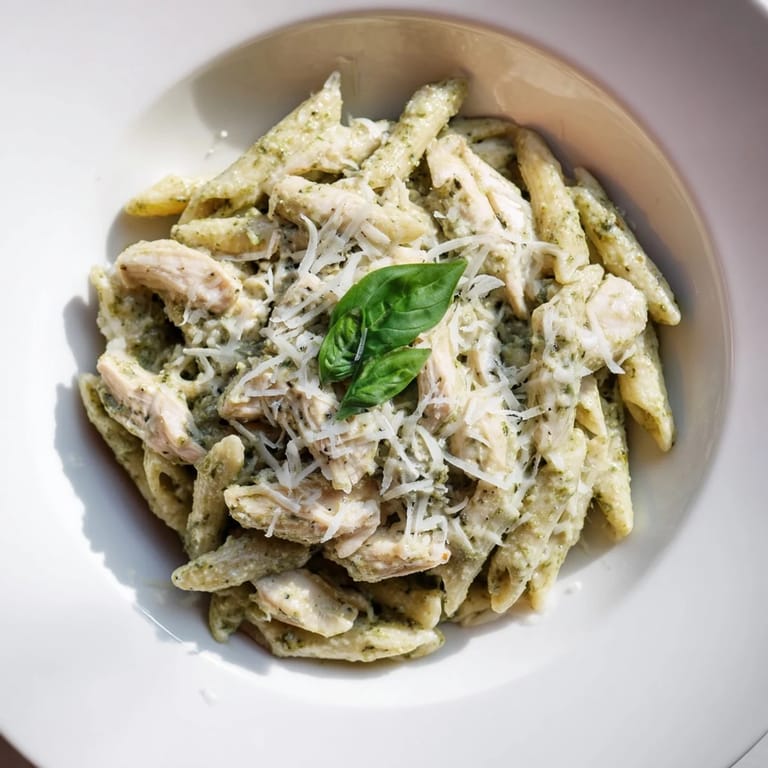
 There's something magical about those evenings when you've got ten minutes and absolutely nothing planned for dinner. I was standing in my kitchen on a Tuesday, staring at a rotisserie chicken from the grocery store and a jar of pesto, when it hit me that this could be the easiest, most delicious pasta I'd made in weeks. No complicated sauces, no lengthy prep—just the smell of garlic and basil coming together with something warm and real.
I made this for my neighbor one Friday when she was stressed about feeding her kids something decent before soccer practice. She thought I'd been cooking all afternoon—the look on her face when I told her it was ten minutes was worth everything. Now she texts me for the recipe whenever she needs a win in the kitchen.
Ingredients
- Dried short pasta (penne, fusilli, or farfalle): 340 g or 12 oz—the shape matters because it catches the pesto in all those little crevices, so skip the spaghetti.
- Salt: for the pasta water—don't skimp, it's your only seasoning base.
- Rotisserie chicken: 2 cups shredded or chopped—this is the secret weapon that makes dinner feel hearty without any real work.
- High-quality store-bought pesto: 120 g or 1/2 cup—splurge a little here because pesto is doing the real work in this dish.
- Extra-virgin olive oil: 2 tbsp—it brings everything together and adds a silky finish.
- Grated Parmesan cheese: 40 g or 1/4 cup plus more for serving—it melts into the sauce and deepens everything.
- Freshly ground black pepper: to taste—finish with this and you'll taste the difference.
- Fresh basil leaves: 1/2 cup torn, optional but recommended—it brightens everything up at the last second.
- Lemon zest: from 1 lemon, optional—a tiny bit adds surprising complexity without tasting like lemon.
Tired of Takeout? 🥡
Get 10 meals you can make faster than delivery arrives. Seriously.
One email. No spam. Unsubscribe anytime.
Instructions
- Get the water boiling:
- Fill a large pot with water, salt it generously—it should taste like the sea—and get it to a rolling boil. This takes about 3 minutes.
- Cook the pasta:
- Add your pasta and set a timer according to the package, but start tasting a minute before the time's up so you catch it at al dente. Reserve 1/2 cup of that starchy pasta water before you drain—this is liquid gold for your sauce.
- Prep the chicken while you wait:
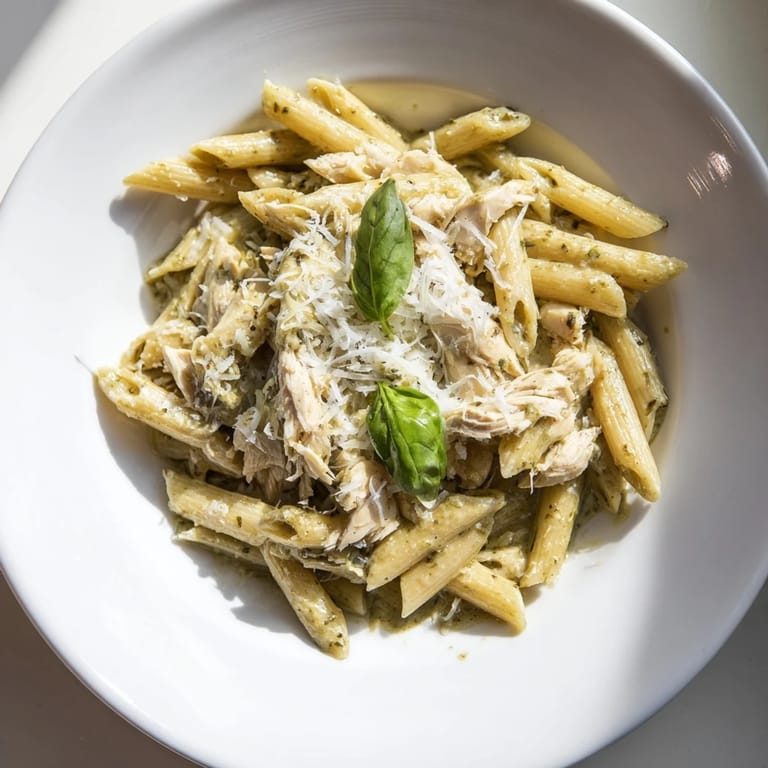
- Shred or chop your rotisserie chicken into bite-sized pieces. The size doesn't matter much, but consistent pieces look nicer when everything's tossed together.
- Build the sauce:
- Return the drained pasta to your empty pot over low heat and add the olive oil, pesto, and a splash of that reserved pasta water. Stir everything together gently, letting the warmth wake up the pesto and loosen it into a silky coat.
- Bring it all together:
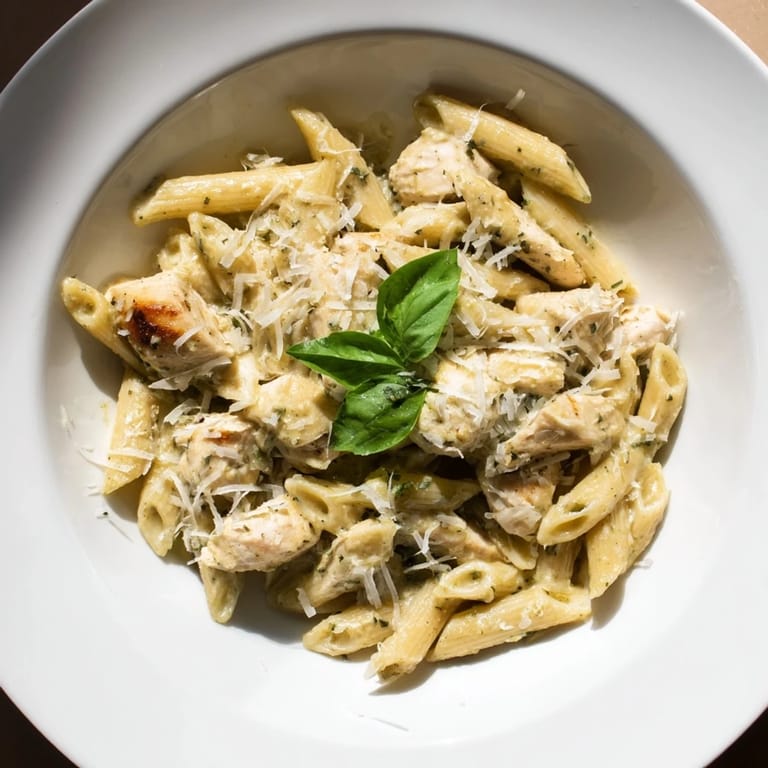
- Add the chicken and Parmesan, tossing constantly until the chicken is heated through and the pasta looks creamy and coated. If it feels too thick, add a little more pasta water a tablespoon at a time.
- Taste and finish:
- Season with black pepper, stir in the basil and lemon zest if you're using them, and taste one more time before plating. Everything should feel balanced and bright.
 Save It
 There was a moment, watching my young daughter eat this without complaining about the basil or trying to pick things out, when I realized this recipe had somehow become our thing. Now she asks for it by name.
Why Store-Bought Pesto Works Here
I used to feel like cheating when I reached for a jar, but homemade pesto often gets dark and bitter when heated, while store-bought has been engineered to stay bright and vibrant no matter what you do to it. The quality matters though—taste it straight from the jar before you commit. If it tastes thin or off, your whole dish will feel flat.
The Rotisserie Chicken Shortcut
This is where the whole thing works. You're not cooking chicken; you're just warming it up and letting the pesto cling to it. The moisture from the pot keeps it tender instead of turning it into something dry and sad. It's one of those moments where laziness actually creates something better.
Variations That Actually Work
The best part about this recipe is how it bends without breaking. I've added everything from torn zucchini to halved cherry tomatoes right at the end, and each version feels intentional instead of improvised. Even without chicken, it's satisfying—just make sure whatever you add brings some moisture so the pesto stays creamy.
- Sun-dried tomato pesto swaps in seamlessly and tastes like you planned something totally different.
- Toasted pine nuts or walnuts stirred in at the end add texture and make it feel more luxurious.
- If you go vegetarian, let any vegetables cook gently with the pasta so they soften but don't fall apart.
 Save It
 Ten minutes between you and dinner is an underrated kind of freedom. This pasta reminds me that simple cooking, done with attention and fresh ingredients, tastes just as good as anything that takes all afternoon.
Recipe FAQs
- → Can I use other types of pasta with this dish?
Yes, short pasta shapes like penne, fusilli, or farfalle work best to hold the pesto sauce evenly.
- → How can I make this meal vegetarian?
Omit the chicken and add sautéed vegetables such as zucchini or cherry tomatoes for a fresh twist.
- → Is it necessary to reserve pasta water?
Yes, a small amount of reserved pasta water helps create a smooth, creamy sauce when mixed with pesto and olive oil.
- → What if I don’t have rotisserie chicken?
Cooked shredded chicken from leftovers or grilled chicken can be used as alternatives.
- → Can I substitute pesto with another sauce?
Sun-dried tomato pesto or a nut-free pesto can be used to vary flavors while keeping the dish vibrant.