 Save It
 I stumbled onto this idea while reorganizing my kitchen one quiet afternoon, staring at a half-empty board and thinking about all the small, beautiful things that deserved to be seen. There's something meditative about arranging food with intention rather than just piling it onto a plate—it slows you down, makes you notice the colors and textures you'd normally rush past. My partner watched me move cucumber slices around like I was composing a painting, raised an eyebrow, then quietly sat down to help. That's when I knew this wasn't just about food anymore.
We served this to friends who'd been stressed all week, and instead of diving in immediately, everyone paused. There was this collective moment of just looking, breathing, before anyone touched anything. Nobody checked their phone. That's when I realized presentation isn't vanity—it's an invitation to slow down.
Ingredients
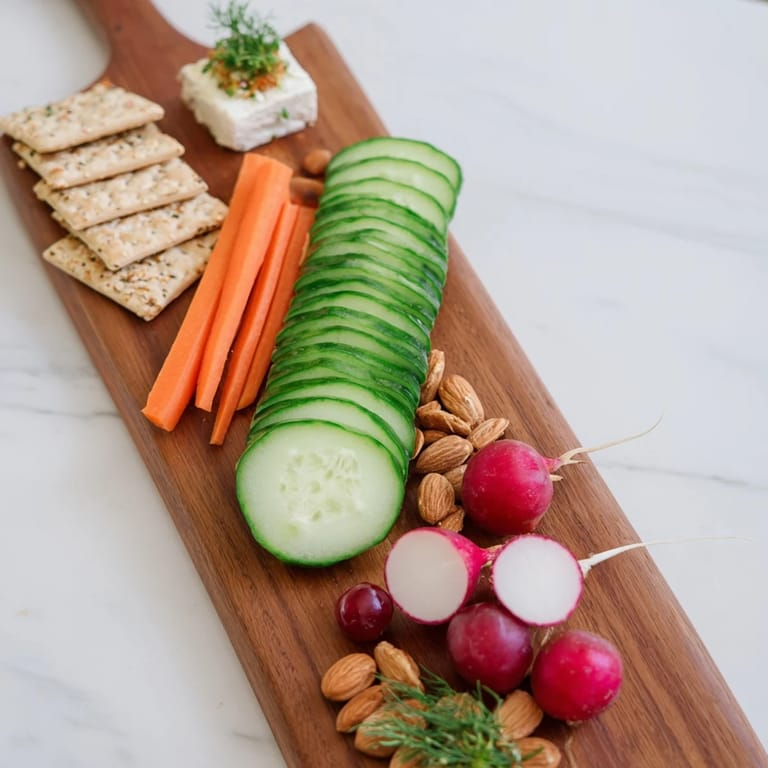
- Fresh cucumber: Eight thin, crisp slices that catch the light and feel cool and refreshing—pick ones that are firm and unblemished.
- Baby carrots: Eight whole ones that bring sweetness and a gentle orange brightness to balance the other flavors.
- Radishes, halved: Eight pieces that add a peppery snap and that jewel-like red color that makes the board come alive.
- Goat cheese: Sixty grams shaped into small rounds, creamy and tangy, the anchor that ties everything together.
- Gluten-free crackers: Eight of them, your choice of texture, the foundation that holds everything else.
- Roasted almonds: Thirty grams scattered throughout, adding crunch and earthiness in every bite.
- Seedless red grapes: Eight pieces, sweet and glossy, like tiny jewels between the savory elements.
- Fresh herbs: Chives or dill, a small handful, for color and that final whisper of garden freshness.
Tired of Takeout? 🥡
Get 10 meals you can make faster than delivery arrives. Seriously.
One email. No spam. Unsubscribe anytime.
Instructions
- Find your board:
- Choose a long wooden or slate board at least 60 centimeters in length—something that feels substantial and clean. This is your canvas, so pick one that speaks to you.
- Build one side:
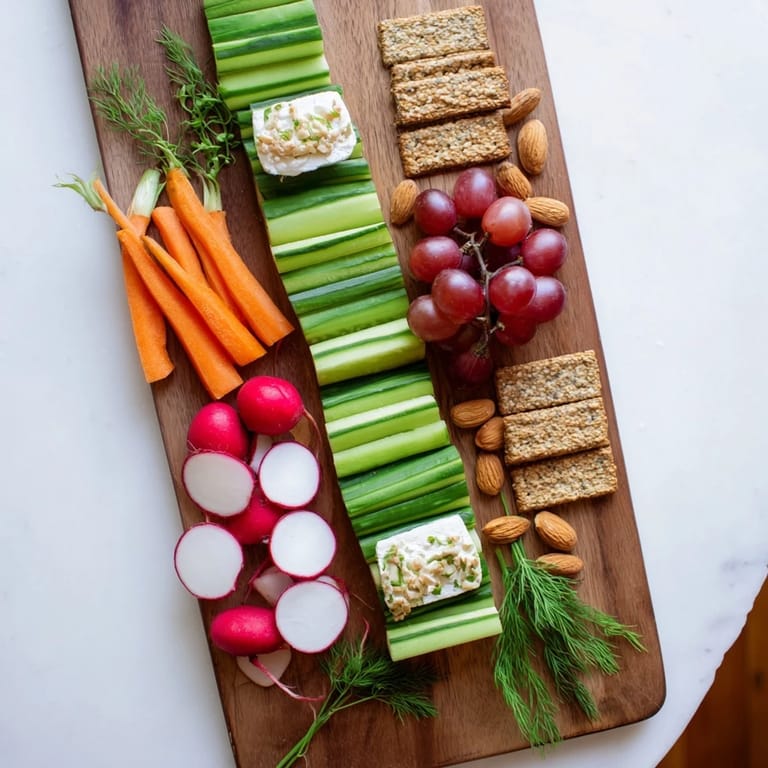
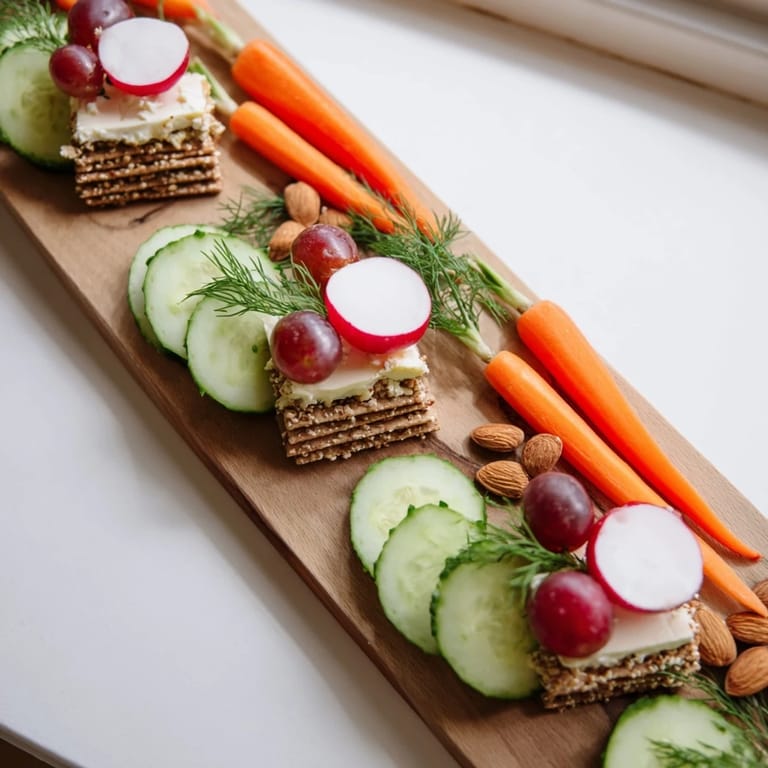
- At one end, create a neat, composed pile using half of everything: lay down a few cucumber slices and crackers as your base, then layer in carrots, radishes, grapes, goat cheese rounds, and half the almonds. Think of it like stacking, but deliberately, with small gaps that let the colors show.
- Mirror the other side:
- Move to the opposite end and repeat exactly, using the remaining ingredients to create a perfectly matching arrangement. This isn't just decoration—it's the whole point, the visual balance that changes how food tastes.
- Add the garnish:
- Scatter a few sprigs of fresh herbs over each pile, letting them fall naturally so they look alive rather than placed.
- Respect the empty space:
- Leave the center of the board completely bare—this emptiness is just as important as what you've arranged. It's what makes someone pause and actually look.
- Serve with intention:
- Place the board down and let the moment breathe before anyone eats. This dish asks people to notice before they taste.
 Save It
 I watched someone serve this to their family for the first time and their quiet ten-year-old, who usually picks at everything, suddenly became curious about every single ingredient. Sometimes food isn't just about flavor—it's about making people feel like they're part of something thoughtful.
The Psychology of Presentation
There's real science behind why this works. When you arrange food with care, your brain registers it differently—it becomes an experience rather than a snack. The symmetry triggers something in us that feels calming, like we've stumbled onto order in a chaotic day. I've noticed people eat slower, taste more deliberately, and actually compliment each ingredient instead of just saying the platter was nice. The board becomes a meditation tool wrapped in flavor.
Choosing Your Vegetables Wisely
The vegetables you choose will make or break this dish because there's nowhere to hide on an empty board. Every slice, every half is visible, so pick produce that's at its peak—no soft spots, no discoloration. Visit a farmers market if you can and hold things up to the light. You want cucumbers so crisp they snap, carrots so bright they almost glow, radishes that feel like small weights in your hand. Seasonal vegetables work better too; there's something about eating what's actually in season that makes everything taste truer.
Making It Your Own
This template is just a starting point. I've seen beautiful versions with seasonal greens, roasted beets, pomegranate seeds, different cheeses, or even candied nuts for sweetness. Once you understand the principle—balance, symmetry, intentional space—you can play with it. A friend made a vegan version with cashew cream instead of goat cheese and it was absolutely stunning. The magic isn't in these exact ingredients; it's in the mindfulness of arrangement and the respect you show the food.
- Try roasted beets or heirloom tomatoes when they're in season for deeper colors.
- Swap the goat cheese for ricotta, burrata, or cashew cream depending on what you love.
- Add nuts like pistachios or candied walnuts for a different texture and flavor profile.
 Save It
 This isn't a recipe that fills you up; it's a recipe that wakes something up. It's about remembering that we eat with our eyes first, and that slowing down is its own kind of nourishment.
Recipe FAQs
- → What ingredients are used for this platter?
Fresh cucumber slices, baby carrots, halved radishes, seedless red grapes, small rounds of goat cheese, gluten-free crackers, roasted almonds, and fresh herbs for garnish.
- → How should the ingredients be arranged?
Arrange half of each ingredient at one end of a long board in a neat pile, then mirror the arrangement exactly at the opposite end, leaving the middle section empty for balance.
- → Can this platter accommodate dietary restrictions?
Yes, it is gluten-free when using certified crackers and vegetarian. For vegan needs, substitute goat cheese with a plant-based alternative.
- → What serving tools are recommended?
A large wooden or slate serving board (minimum 60 cm), a small paring knife, and a cheese knife are ideal for preparation and presentation.
- → How does this platter encourage mindful eating?
By highlighting visual harmony and balance, the arrangement invites diners to savor the flavors slowly, appreciating both presentation and taste.