 Save It
 There's something about the winter solstice that makes me want to create something that tells a story on a board. One December evening, I found myself staring at my kitchen counter, thinking about how the darkest day of the year deserves food that captures both shadows and light. I divided a board down the middle—one half rich and mysterious with dark olives and figs, the other bright and creamy with Brie and honeyed pears. It became a meditation on balance, and guests couldn't stop talking about the visual alone.
I made this board for my sister's book club on the actual solstice, and what started as an appetizer became the whole conversation. Women were picking at it for hours, discovering new flavor combinations with each handful, and I realized that sometimes the best entertaining isn't about cooking all day—it's about knowing how to compose something that feels intentional and generous.
Ingredients
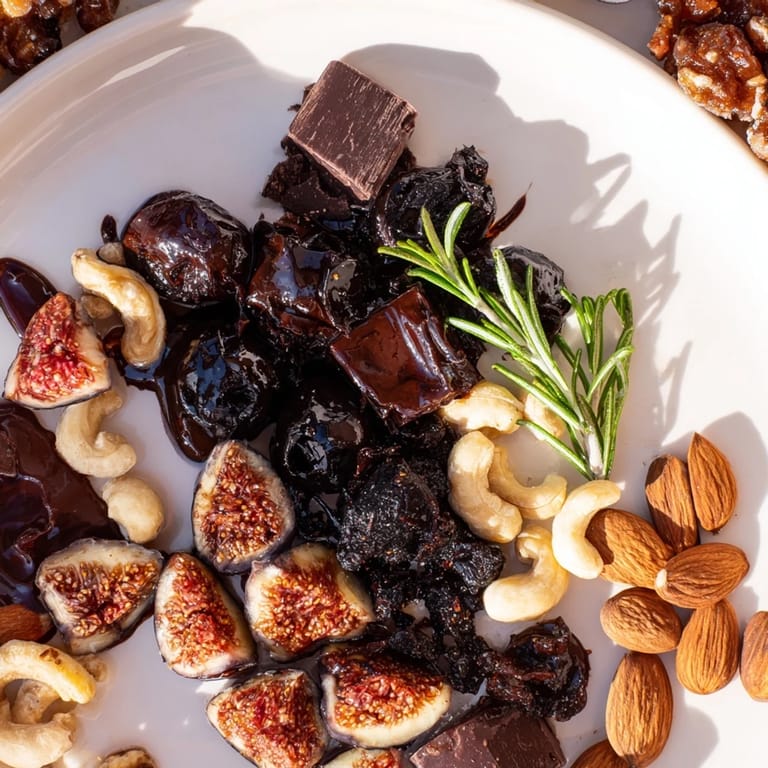
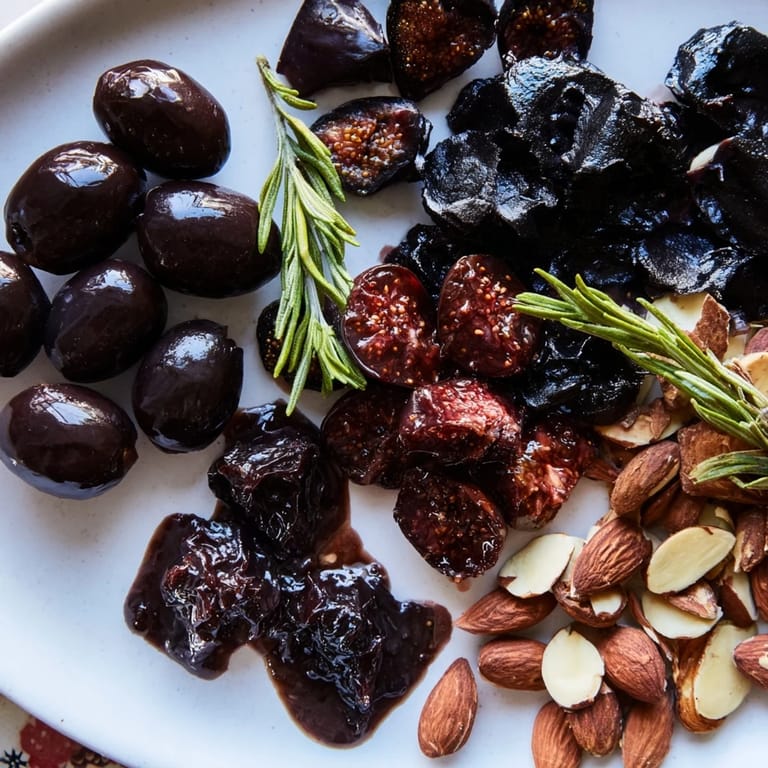
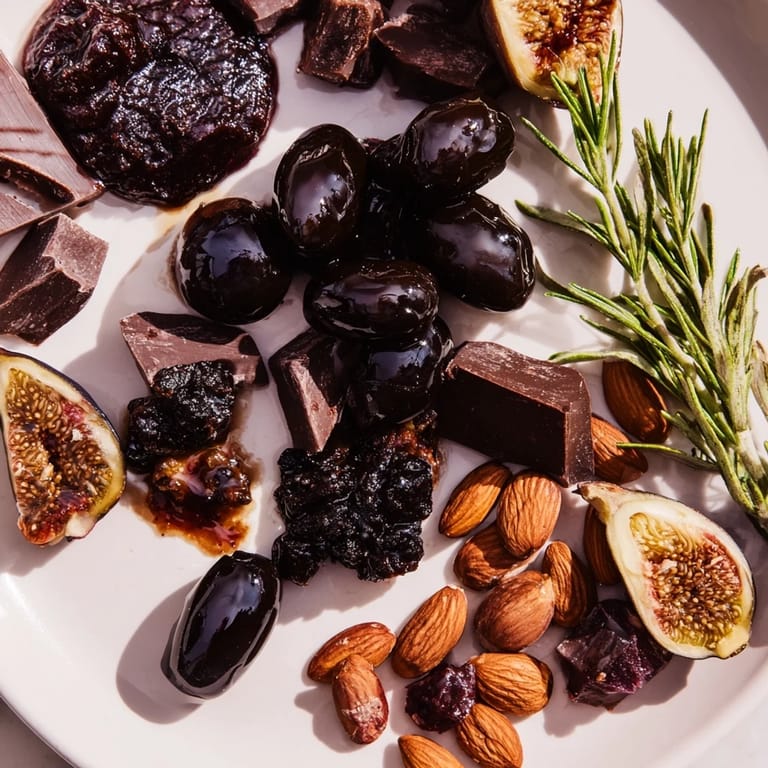
- Kalamata olives: These are the dark heart of your board, briny and meaty, and I always buy them already pitted to save sanity.
- Oil-cured black olives: Wrinkled, intense, and they add a different texture than the Kalamatas—use both for complexity.
- Dried mission figs: Halve them just before assembling so they look deliberate and don't dry out sitting on the board too long.
- Fig jam: A dollop of this in the corner creates a small pool of richness that draws people in.
- Dark chocolate: Break it by hand into irregular pieces so it looks honest and inviting, not fussy.
- Roasted almonds: Their crunch against soft fruit is the textural moment everyone needs.
- Fresh rosemary: One sprig becomes both garnish and a subtle scent that says you've thought about atmosphere.
- Ripe Brie: Choose one that yields slightly when you press it—overly firm Brie tastes like nothing.
- Pears: Slice them last, right before serving, so they don't brown and lose that crisp freshness.
- Honeycomb: If you can find it, use it instead of honey for the luxury of texture, but honey works beautifully too.
- Toasted walnuts: Toast them yourself if you have time—the smell alone is worth it.
- Seedless green grapes: These are the bright pop that catches light on your board.
- Fresh thyme: Delicate and herbaceous, it complements the Brie in a way that feels almost inevitable.
- Baguette and crackers: Have both—some guests want the bread's softness, others want the cracker's structure.
Tired of Takeout? 🥡
Get 10 meals you can make faster than delivery arrives. Seriously.
One email. No spam. Unsubscribe anytime.
Instructions
- Draw your line:
- Lay a single long sprig of rosemary down the center of your board, or if you prefer symmetry, create a line with crackers standing upright. This isn't just practical—it's the visual promise of what's to come.
- Build the dark side:
- Scatter the olives in loose clusters, leaving space between them so each one is visible. Arrange the fig halves cut-side up, place a small spoon of fig jam in one corner, and distribute dark chocolate pieces so they catch the light.
- Anchor with almonds:
- Sprinkle the roasted almonds across the dark side, clustering some near the chocolate and others near the olives. Let the rosemary sprig sit naturally on top once you're done.
- Create the light side:
- Position the Brie wheel in a place of honor—maybe slightly off-center so it feels intentional. Arrange pear slices in a fan or scattered pattern, whatever feels right in the moment.
- Add brightness:
- Drizzle honeycomb around the Brie or add a spoon of honey nearby, scatter the walnuts, and tuck the grapes into gaps. Top with a few sprigs of thyme so the whole side smells green and fresh.
- Frame with bread:
- Line the center with baguette slices and arrange crackers in whatever pattern feels natural. Step back and look—this is your moment to adjust until it feels balanced.
 Save It
 I remember one guest asking if the board was too beautiful to eat, and someone else just laughed and grabbed a piece of Brie with pear anyway. That's when I knew this arrangement had become something beyond food—it was permission to slow down, to taste deliberately, to notice how flavor changes when you combine things with intention.
The Philosophy of the Solstice Board
This board isn't random; every element exists because it teaches something. The darkness isn't just about color—it's about depth, salt, earth, and the umami that only develops over time in fermented olives and dried fruit. The light side is immediate: bright, creamy, fresh. Together on one board, they're a conversation about how seasons contain opposite truths simultaneously. Winter isn't just cold darkness; it's also the promise of return, and this board tastes like both.
Pairing and Serving
I discovered by accident that a dry sparkling wine cuts through the richness perfectly, and a light-bodied red—something without too much tannin—complements both the earthy olives and the creamy Brie. The beauty of this board is that it works equally well at a formal dinner or a casual afternoon gathering. Set it out and let people graze, discovering combinations as they go. The bread and crackers are there for structure, but honestly, most people end up building their own bites—a walnut with Brie, chocolate with a sip of wine, a fig with a grasp of almonds.
Adapting the Board to Your Pantry
The skeleton of this board is flexible; the structure is what matters. If you don't have mission figs, dried apricots bring their own brightness to the dark side. If Brie isn't available, Camembert has a similar creaminess, and Roquefort adds a blue note that's equally compelling. Swap pears for apples, or use both. The point is honoring the architecture—the visual balance, the sensory contrast, the sense that someone cared enough to think about proportion. If you're feeding vegetarians, the board as written is perfect. For others, a few slices of prosciutto draped on the dark side adds a salty depth without overpowering anything.
- Always taste a pear slice before arranging—it should be ripe but firm, with a clean sweetness that doesn't overpower the Brie.
- Bring the Brie to room temperature thirty minutes before serving so it softens into its best self.
- If you're assembling more than an hour ahead, cover the pear slices with a damp paper towel until the last moment.
 Save It
 This board asks nothing of you but attention and generosity. Make it when you want people to feel truly welcomed, when the dark days feel too long, when you want to remind everyone at your table that light and dark are always in conversation.
Recipe FAQs
- → What is the best way to divide the board evenly?
Use a sprig of rosemary or a neat row of crackers to create a clear line dividing the board into savory and fresh sides.
- → Can I substitute the Brie cheese with another type?
Yes, creamy cheeses like Camembert or Roquefort can be used as alternatives for a slightly different flavor.
- → How can I enhance the contrast between the two halves?
Adding prosciutto slices to either side adds savory depth, complementing the sweet and fresh elements.
- → What types of nuts work best on this board?
Roasted almonds and toasted walnuts provide texture and rich flavors that balance both sides well.
- → Which drinks pair nicely with this board?
Dry sparkling wines or light-bodied reds perfectly complement the rich and fresh flavors without overpowering them.
- → Can dried apricots replace figs in this selection?
Yes, dried apricots offer a sweet, slightly tart alternative to figs that pairs well with the creamy cheeses.