 Save It
 My grandmother used to make this soup on the coldest afternoons, and the kitchen would fill with this deep, savory warmth that seemed to chase the chill right out through the walls. She'd soak the beans the night before, almost ceremonial about it, and I'd watch her pull that ham hock from the back of her freezer like she was retrieving something precious. There's something about the way the smoke and the beans find each other in the pot that feels less like cooking and more like alchemy—by the time you're ready to eat, you've created something that tastes like it took twice as long as it actually did.
I made this for my dad during his first winter back home after moving away, and he sat at the kitchen table with a bowl that was somehow both steaming and getting emptied at an impressive speed. Between spoonfuls he kept saying things like "this is it" and "I forgot how much I missed this," which meant more to me than any compliment ever has. That's when I realized this soup isn't really about the ingredients—it's about what it makes people feel when they're eating it.
Ingredients
- Smoked ham hock (1 large, about 1–1.5 lb / 450–700 g): This is your flavor anchor, delivering that signature smokiness and a subtle saltiness that seasons the entire pot.
- Dried great northern or cannellini beans (1 lb / 450 g, soaked overnight): The overnight soak isn't just tradition—it cuts cooking time in half and makes the beans creamy where they matter most, right at the edges where they touch the broth.
- Yellow onion (1 large, diced): Don't skip the size here; you want enough to break down and sweeten the broth as it simmers.
- Carrots (2 medium, peeled and diced): They'll soften into the soup and add a natural sweetness that balances the smoke.
- Celery (2 stalks, diced): This is the quiet backbone of the flavor; it rounds out the vegetable trinity in a way that feels right.
- Garlic (3 cloves, minced): Add it to the pot raw—it'll mellow and integrate as everything cooks together.
- Bay leaves (2): These steep in the background and must be removed before serving, so don't lose track of them.
- Dried thyme (1 tsp): Use dried here rather than fresh; it holds up better to the long simmer.
- Freshly ground black pepper (1/2 tsp): Grind it yourself if you can—the flavor is deeper and more vibrant than pre-ground.
- Smoked paprika (1/2 tsp, optional): This is your secret amplifier if you want to deepen the smokiness without overpowering.
- Low-sodium chicken broth (8 cups / 2 L): Go low-sodium so you can taste and season as you go; the ham hock brings plenty of salt to the table.
- Fresh parsley (2 tbsp chopped, for garnish): Save this for the very end—it adds a fresh brightness right when the bowl needs it most.
Tired of Takeout? 🥡
Get 10 meals you can make faster than delivery arrives. Seriously.
One email. No spam. Unsubscribe anytime.
Instructions
- Build your foundation:
- Combine your drained soaked beans, ham hock, and all the diced vegetables and garlic in your Dutch oven or soup pot. This is when the kitchen starts to smell alive—let yourself breathe it in.
- Add the broth and seasonings:
- Pour in the chicken broth, scatter in your bay leaves, thyme, pepper, and paprika, then give everything a good stir so nothing settles on the bottom.
- Bring to a boil, then ease down to a simmer:
- Crank the heat to high until you see a rolling boil, then drop it all the way down to low and cover the pot. This transition is important—the initial heat breaks the beans open just enough to absorb flavor, but the gentle simmer keeps them from turning to mush.
- Let time do the work:
- Simmer covered for 2 hours, stirring now and then so nothing sticks to the bottom. You'll notice the beans softening and the broth darkening; this is exactly what you want.
- Shred the ham hock:
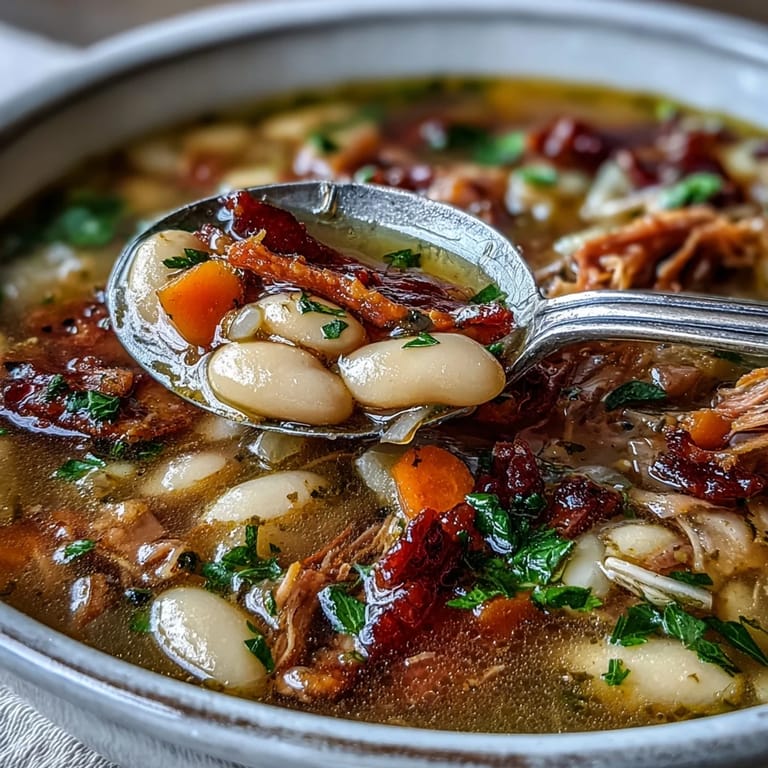
- After 2 hours, carefully fish out the ham hock and set it aside to cool just enough to handle. Pull the meat away from the bone and skin—it should shred easily—then return it to the pot and discard the solids.
- Finish simmering without the lid:
- Uncover the pot and simmer for another 30 minutes so the broth can reduce slightly and the soup takes on a thicker, more cohesive texture. Taste as you go and add more broth if it's getting too thick for your liking.
- Season and serve:
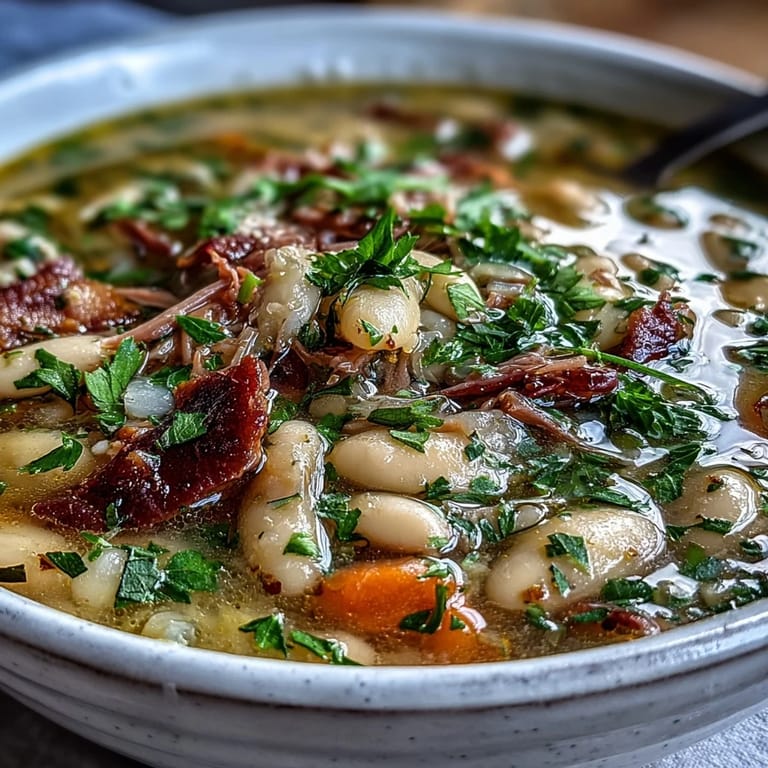
- Remove your bay leaves, taste for salt, and adjust carefully—the ham hock has already seasoned things significantly. Ladle into bowls and crown each one with a small handful of fresh parsley.
 Save It
 There was a moment midway through a dinner party where someone asked for the recipe and three other people put their spoons down and said, "Not yet, I'm not done," which made me laugh so hard I nearly dropped the ladle. That's the sign of a soup that's doing exactly what it's supposed to do.
When to Make This
This is the kind of soup that announces autumn or winter's arrival in the best way possible—when the weather turns that corner where jacket-required suddenly feels like the new normal. It's also perfect when you want something substantial on the table but don't want to stand over the stove; the long simmer means you can fold laundry, read, or just sit with a cup of coffee while everything transforms itself.
The Art of Getting the Texture Right
Some people like their soup brothier, so it's almost more of a broth with beans; others want it thick and hearty enough to coat the spoon. The beauty here is that you control that by adjusting the simmer time at the end and by deciding whether to mash some of the beans against the pot's side for extra creaminess. I've learned that the soup's personality really emerges in those final minutes of cooking, so don't rush this part and don't assume it's done until it tastes the way you want it to.
Pairing and Storage Wisdom
Serve this with cornbread warm from the skillet or thick slices of crusty bread that you can dip and soak up every last drop. The leftovers are genuinely better the next day—everything melds together and gets even more flavorful—and the soup freezes beautifully for up to three months, which means you can make it once and eat it for weeks if you portion it wisely.
- If you want extra heat, save a small bottle of hot sauce at the table and let people add their own fire to their bowl.
- The soup thickens as it cools, so it might seem thicker when you reheat it; add a splash of broth to bring it back to the consistency you love.
- Make a double batch—this soup is too good and too freezer-friendly not to have backups waiting in the wings.
 Save It
 This soup has a way of becoming less of a recipe and more of a ritual once you've made it a few times—you know what it needs before it tells you, and that's when cooking becomes less about following instructions and more about something you just know in your bones. Make it for someone you love.
Recipe FAQs
- → Can I use other types of beans?
Great northern or cannellini beans are preferred for their creaminess, but other white beans can work with similar soaking and cooking times.
- → Is it possible to cook this in a slow cooker?
Yes, after combining ingredients, cook on low for about 6-8 hours until beans are tender and flavors meld.
- → How do I enhance the smoky flavor?
In addition to the ham hock, smoked paprika adds depth. Slightly charring vegetables before simmering can also boost smokiness.
- → Can I make it thicker or creamier?
For a creamier texture, mash some of the cooked beans against the pot’s side before serving.
- → What sides complement this dish well?
Cornbread or crusty bread are great accompaniments, perfect for soaking up the flavorful broth.
- → How should leftovers be stored?
Store in an airtight container in the refrigerator for up to 4 days or freeze for up to 3 months.