 Save It
 I discovered this salad on a late spring afternoon when my farmer's market haul was overflowing with golden fruits I couldn't resist. Standing in my kitchen with mango, pineapple, and peaches piled on the counter, I suddenly imagined them arranged like a sun breaking through green forest—and this dish was born. The visual came first, honestly, but the flavors caught up beautifully. It's become my go-to when I want something that feels both simple and a little bit special.
I made this for a potluck last summer and watched people's faces light up before they even tasted it. One friend said the colors reminded her of a painting, and suddenly everyone was taking photos instead of immediately eating. There's something about food that's this beautiful—it stops people in their tracks, and then the flavor rewards that moment of pause.
Ingredients
- Ripe mango, diced (1 cup): Choose one that yields slightly to pressure and smells sweet at the stem—that's your sign it's perfect and won't taste mealy.
- Pineapple, diced (1 cup): Fresh is always better than canned here, and the acidity brightens everything around it.
- Golden apple, diced (1): Honeycrisp or Gala work beautifully and add a subtle tartness that keeps the salad from tasting too sweet.
- Yellow peach, sliced (1): This is your secret weapon for a delicate floral note—use it even if you have to hunt for a good one.
- Kale, stems removed and finely shredded (4 cups): The massage step transforms it, so don't skip it or you'll have tough, bitter greens.
- Baby spinach leaves (1 cup): These add tenderness and mild sweetness that balances the sturdy kale.
- Fresh parsley, chopped (½ cup): It's not just a garnish—the herbal brightness is essential to the flavor story.
- Fresh mint leaves, torn (¼ cup): Tear by hand instead of chopping so the oils stay intact and the flavor punches through.
- Fresh basil leaves, torn (¼ cup): This brings an unexpected warmth that makes people wonder what they're tasting.
- Extra-virgin olive oil (3 tablespoons): Use something you actually like to taste, because it matters in a simple dressing like this.
- Fresh lemon juice (2 tablespoons): Squeeze your own—bottled tastes flat by comparison and won't have the same brightness.
- Maple syrup (1 tablespoon): Just a touch to amplify the fruit's natural sweetness and round out the dressing.
- Dijon mustard (1 teaspoon): This tiny amount creates emulsion and adds a subtle sophistication that no one can quite identify.
- Sea salt and freshly ground black pepper: Season as you taste rather than measuring exactly, because fruit ripeness varies.
- Toasted pumpkin seeds (2 tablespoons, optional): They add crunch and a subtle earthiness that grounds all the brightness.
- Lemon zest: A final whisper of citrus that makes the whole thing feel finished and intentional.
Tired of Takeout? 🥡
Get 10 meals you can make faster than delivery arrives. Seriously.
One email. No spam. Unsubscribe anytime.
Instructions
- Build your dressing:
- Whisk olive oil, lemon juice, maple syrup, mustard, salt, and pepper together in a small bowl. You'll feel the dressing thicken slightly as you whisk—that's the mustard doing its work as an emulsifier. Taste it before moving on and adjust the balance of sweet and tart to your preference.
- Soften the kale with intention:
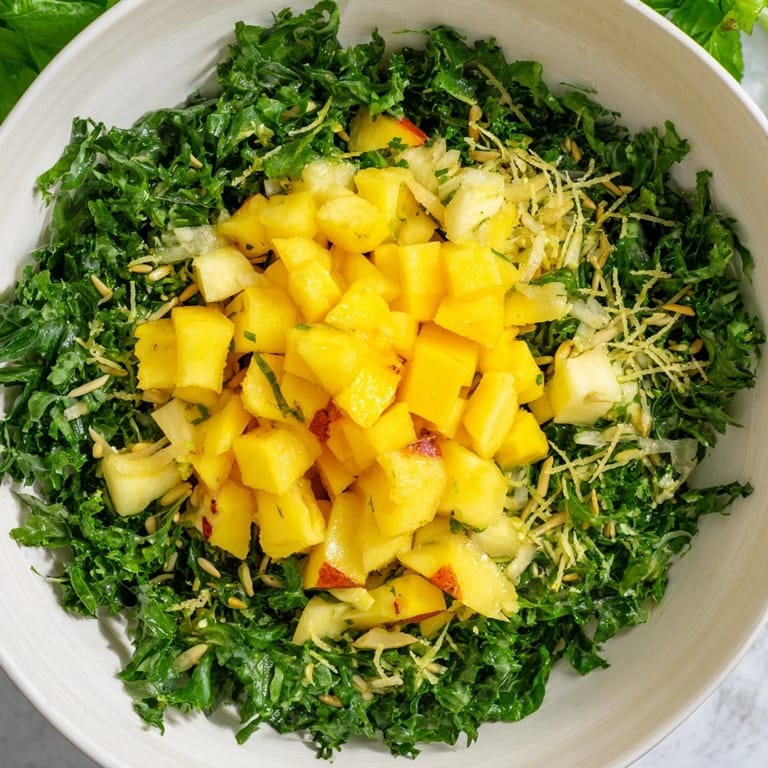
- Pour half the dressing over your shredded kale and massage it between your hands for a full minute or two. Watch it transform from tough and bitter to tender and almost sweet—this step is non-negotiable and honestly feels therapeutic.
- Layer in the green symphony:
- Add spinach, parsley, mint, and basil to the massaged kale and toss gently so nothing bruises. You want to keep the herbs bright and visible, not crushed into the background.
- Arrange your landscape:
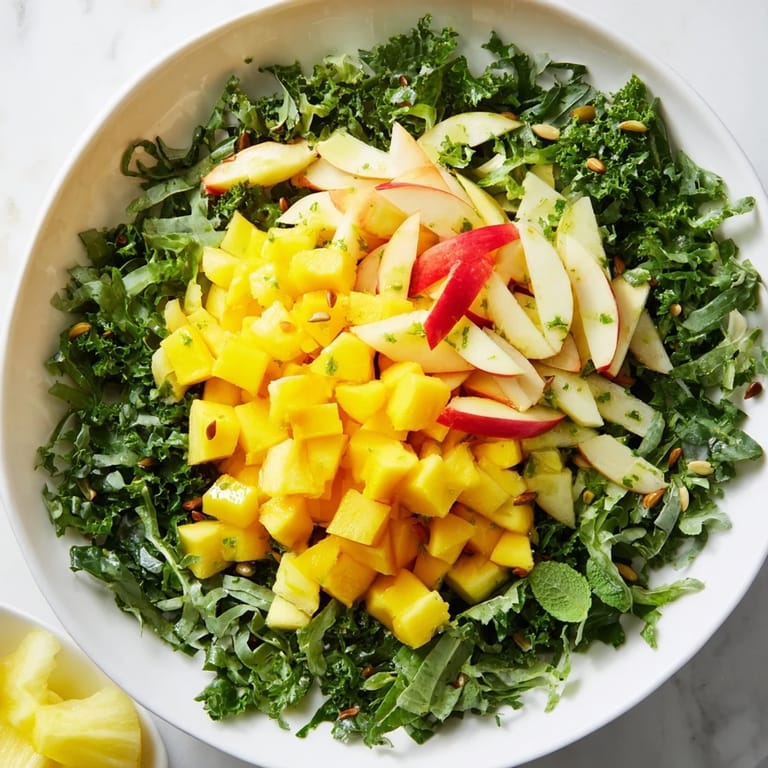
- Spread the dressed greens around the outer edge of a wide, shallow serving bowl, packing them slightly to create that forest effect. Leave the center open and waiting for the jewels you're about to add.
- Create the sunlit center:
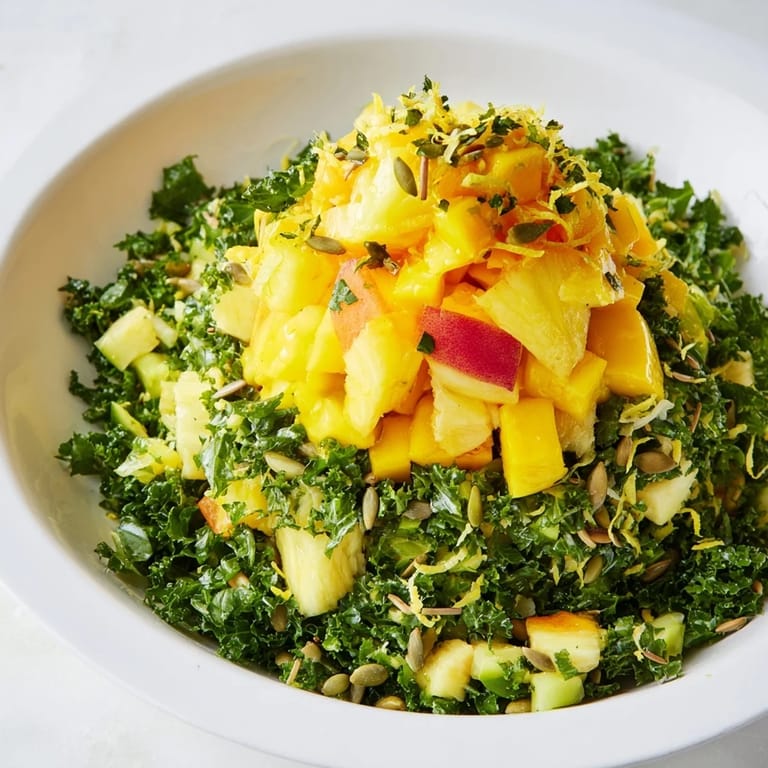
- Mound your diced mango, pineapple, apple, and sliced peach in the middle, letting the colors tumble over each other. This is where you can get a little artistic—the arrangement is half the pleasure of this salad.
- Final flourishes:
- Drizzle the remaining dressing over both the fruits and the greens so everything gets a final kiss of flavor. Scatter pumpkin seeds and lemon zest across the top if you're using them, then serve immediately while everything is still crisp and cool.
 Save It
 A friend who usually only eats salads because she feels she should came back for thirds when I made this, and she sat there for a minute analyzing it like she was trying to solve a puzzle. When she finally smiled and said, 'It tastes like summer,' I knew I'd landed something real. That's what happens when you put this much care into how something looks and tastes—it becomes a moment instead of just a meal.
Why This Salad Changed How I Think About Vegetables
Before I made this, I was the type who could eat a salad only if it was drowning in dressing or loaded with cheese. But watching someone see a plate and light up before tasting it taught me something: when your vegetables are treated with creativity and respect, you don't need to hide them. The kale here is actually tender and delicious because of the massage, not in spite of being kale. The herbs aren't decorative—they're essential. And the fruit doesn't feel like you're sneaking dessert into dinner; it feels like the most natural flavor combination in the world.
The Art of Arrangement
I used to think food photography and plating were shallow concerns, but this salad made me understand the real truth: when something is beautiful, people engage with it differently. They eat slower, taste more, share it more readily, and remember it longer. This salad's visual structure of golden center and green surround isn't just pretty—it's actually a guide to eating it, pulling your eye and your fork toward each element in turn. The arrangement tells a story before the first bite, and that story makes the meal feel intentional and worthy of attention.
Seasonal Variations and Substitutions
The beauty of building around a color concept is that you can follow the seasons without losing the soul of the dish. In early summer I use yellow cherries, later in summer those perfect peaches take over, and by August I'm reaching for yellow heirloom tomatoes if I can find them. You can substitute kiwi for mango, papaya for peach, or even add avocado slices if you want creaminess. The core concept stays intact: a jewel box of golden fruits against a bed of green vitality.
- Swap in yellow cherry tomatoes or golden beets if you're working with what your market has.
- Try arugula instead of spinach if you want an extra peppery bite to balance the fruit.
- Add toasted hazelnuts or sunflower seeds if you can't find pumpkin seeds or want a different texture.
 Save It
 This salad has taught me that sometimes the simplest meals can feel the most special, especially when you build them with both precision and joy. Make this when you want to remind yourself and the people you're feeding that vegetables aren't an obligation—they're a celebration waiting to happen.
Recipe FAQs
- → What fruits are used in this dish?
The dish features ripe mango, pineapple, golden apple, and yellow peach as its main yellow fruits.
- → Which greens and herbs complement the fruits?
Kale, baby spinach, fresh parsley, mint, and basil combine to create a vibrant green base and fresh herbal notes.
- → How is the dressing prepared?
The dressing is a mix of extra-virgin olive oil, fresh lemon juice, maple syrup, Dijon mustard, sea salt, and black pepper whisked until emulsified.
- → Can the yellow fruits be substituted?
Yes, options like yellow kiwi or papaya can replace any of the listed yellow fruits for variety.
- → Are there any suggested garnishes?
Toasted pumpkin seeds and fresh lemon zest add crunch and brightness when sprinkled on top before serving.
- → Is this dish suitable for special diets?
It meets vegan and gluten-free dietary preferences, featuring plant-based ingredients and no gluten sources.