 Save It
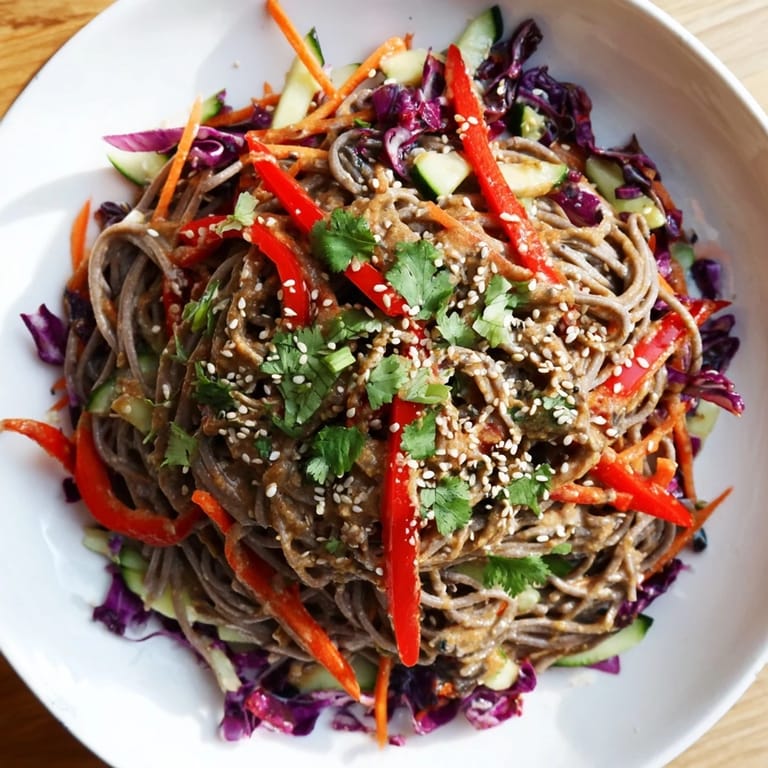
 There's something about the first time you taste a properly made soba noodle salad that shifts how you think about lunch altogether. I was sitting at a cramped wooden counter in a small Tokyo alley, watching steam rise from a bowl I'd never seen before, and the moment those cool, buckwheat noodles touched my tongue with that silky sesame-peanut dressing, I understood why people get quiet when they eat something that simple and right. The crunch of fresh vegetables, the whisper of cilantro, the way lime made everything sing—it felt like a secret someone had finally shared with me.
My brother showed up to a backyard gathering with this salad in a wide ceramic bowl, and within minutes people were asking for the recipe instead of eating the potato chips I'd spent an hour on. He just grinned and said he'd learned it from a friend who worked late-night shifts and needed something that would taste good cold at 2 AM, and suddenly everyone wanted that kind of wisdom in their kitchen.
Ingredients
- Soba noodles (250 g): These buckwheat beauties have a subtle earthiness that regular pasta can't touch, and rinsing them thoroughly under cold water keeps them from clumping into a sad, starchy mess.
- Carrot (1 medium, julienned): The sweetness cuts through the savory dressing like a gentle surprise, and julienning by hand gives you a meditation moment instead of reaching for the mandoline.
- Cucumber (1 small, thin strips): This is your freshness anchor, keeping everything from feeling heavy, and slicing it just before assembly means you avoid that watery puddle situation.
- Red bell pepper (1, thinly sliced): The color alone tells your brain this is going to be good, and the slight sweetness plays beautifully against the ginger heat in the dressing.
- Spring onions (2, finely sliced): Don't skip these—they add a gentle onion bite that makes the whole thing feel more intentional and less like just noodles with stuff on top.
- Red cabbage (1 cup, shredded): Beyond the gorgeous purple-red color, this gives you texture that stays crisp even after a day in the fridge, which is honestly miraculous.
- Peanut butter (3 tbsp): Use the smooth kind here, and if it's natural peanut butter, stir that separated oil back in first—it makes the dressing richer and more forgiving.
- Soy sauce (2 tbsp): This is the backbone of umami, and honestly, the good stuff tastes noticeably different, so use what you'd actually enjoy drinking a little of.
- Rice vinegar (1 tbsp): The mild acidity wakes everything up without the sharpness of regular vinegar, and it's worth having a bottle on hand for more than just this.
- Toasted sesame oil (1 tbsp): A little goes a long way here—this is the secret ingredient that makes people ask questions, so don't skip the toasting step when you buy it.
- Maple syrup or honey (1 tbsp): Just enough sweetness to balance the saltiness, and it disappears into the dressing so smoothly that people won't realize they're eating something good for them.
- Fresh ginger (1 tsp, grated): Grate this yourself if you can—the little burst of aromatic oils when you do is worth it, and it gives the dressing a warmth that feels almost medicinal in the best way.
- Garlic clove (1 small, minced): One clove is all you need; this isn't about garlic flavor, it's about garlic presence, a whisper instead of a shout.
- Water (1-2 tbsp): Add this slowly to get the dressing to a consistency that coats rather than pools, because texture matters in food more than we usually admit.
- Toasted sesame seeds (2 tbsp): These should crunch slightly between your teeth—if they're soft, they've been sitting around too long and it's time for fresh ones.
- Fresh cilantro (2 tbsp, chopped): Some people have a cilantro gene and some don't, and that's okay, but if you're in the gene pool, this is the finishing touch that makes it feel intentional.
- Red chili (1 small, sliced): Optional but recommended—just enough heat to make you pause and appreciate the sweetness of the noodles, like a little wake-up call.
- Lime wedges: Save these for serving and encourage people to squeeze them right before eating, because the brightness changes everything about the flavor profile.
Tired of Takeout? 🥡
Get 10 meals you can make faster than delivery arrives. Seriously.
One email. No spam. Unsubscribe anytime.
Instructions
- Bring water to a rolling boil and cook the noodles:
- Watch the soba noodles carefully—they cook fast, and overcooked noodles turn into mush with no redemption arc. The moment they're tender, drain them immediately and run them under cold water until they're completely cool, which stops the cooking and rinses away that starchy film that tries to glue everything together.
- Build your dressing in a quiet moment:
- Whisk the peanut butter, soy sauce, rice vinegar, sesame oil, maple syrup, ginger, and garlic in a large bowl, and watch as the mixture becomes this creamy, mahogany-colored magic. Add water one tablespoon at a time, tasting as you go, until it's smooth enough to coat the back of a spoon but still flows freely.
- Bring everything together with intention:
- Add the cooled noodles and all the vegetables to the dressing and toss everything thoroughly—and I mean thoroughly, like you're choreographing a dance where every noodle gets its moment with the sauce. This is the step where you taste and adjust, where you might add another pinch of ginger or a squeeze more soy sauce, making it yours.
- Plate and garnish like you're showing off a little:
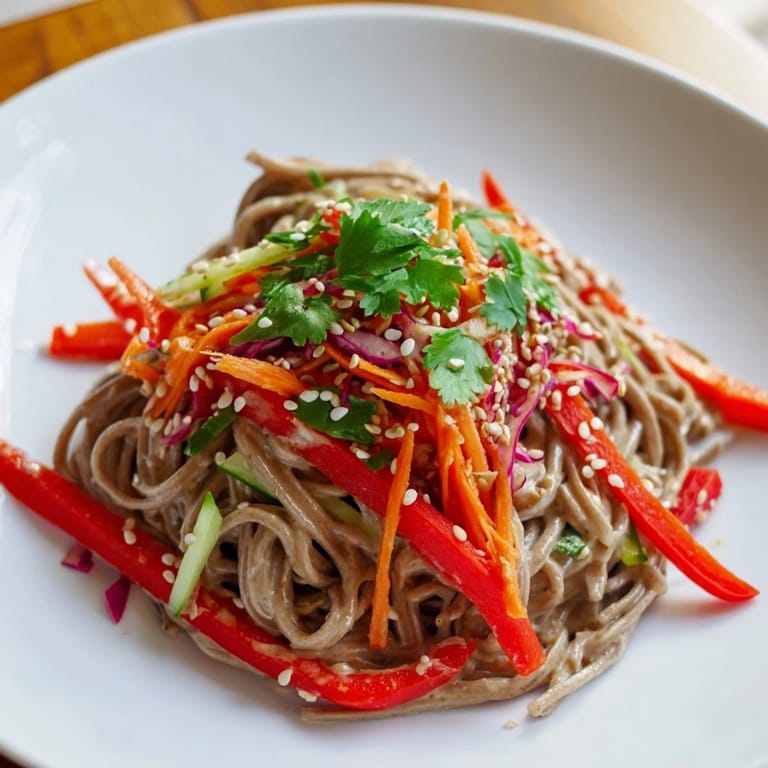
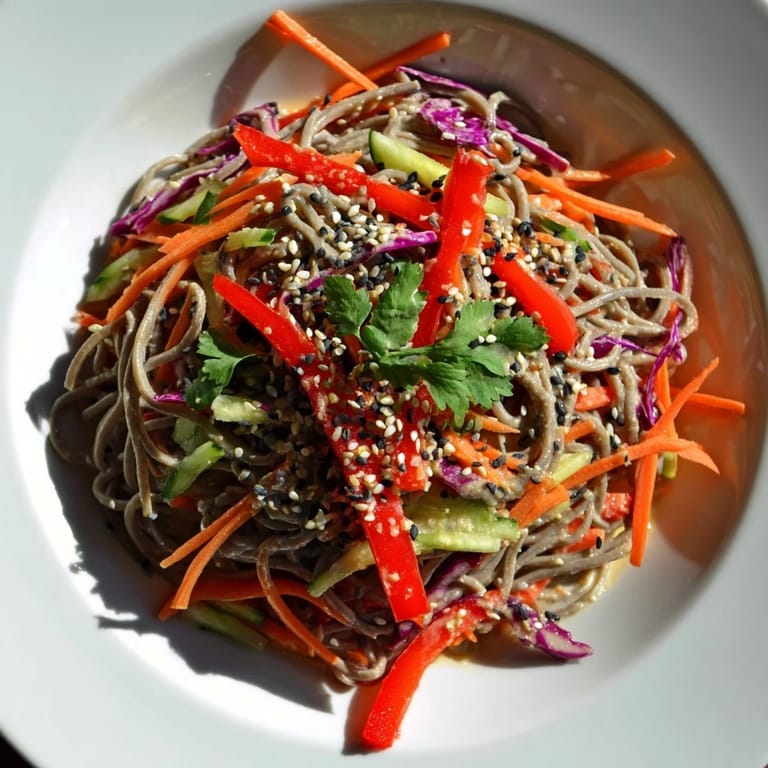
- Divide the salad among bowls, then scatter sesame seeds and cilantro across the top like you meant to be that intentional. Arrange a thin slice of red chili on top if you're feeling brave, and put a lime wedge on the side for people to squeeze at the last moment, which is the move that changes everything.
 Save It
 I learned the real lesson about this salad when I made it for my friend who was going through something difficult, and she sat on my kitchen counter and just ate quietly for a while. Halfway through the bowl, she looked up and said it tasted like someone was taking care of her, which is when I understood that sometimes food is just the vehicle for attention, and this salad delivers both flavor and a kind of gentleness that matters.
Variations Worth Exploring
This salad is endlessly hackable in the best way possible. Add grilled tofu or shredded rotisserie chicken if you want protein that feels substantial, or toss in some edamame for a pop of green and a nutritional boost that doesn't announce itself. I've added everything from shredded beets to sliced radishes, and the dressing just embraces whatever you throw at it, which is the sign of a truly good base.
Storage and Make-Ahead Magic
This salad genuinely improves overnight, which is backwards from how most things work and honestly kind of wonderful. Keep the noodles and vegetables together in the fridge for up to two days, but wait to add the sesame seeds and cilantro until you're ready to eat, so they don't get sad and soggy. A squeeze of fresh lime right before serving brings everything back to life, and it becomes almost new again, like you just made it.
For When You Need It to Be Different
If peanuts are a problem, use tahini and make it entirely sesame—the dressing becomes richer and more mysterious, and honestly, it might be even better. For gluten-free eating, check that your soba is 100 percent buckwheat and swap in tamari for the soy sauce, and you've got something that doesn't feel like a compromise at all.
- This salad is naturally vegan if you use maple syrup instead of honey, and it's so good that nobody has to feel left out.
- The dressing works on other grain-based salads too, so make double and keep it in the fridge for happy surprises later in the week.
- If you find yourself eating it straight from the container at midnight, that's not an accident—it's a feature, not a bug.
 Save It
 There's something quietly satisfying about a salad that feels like both lunch and self-care, and this one manages to be both without trying too hard. Make it once and it becomes the thing you make when you want to feel good about what you're eating.
Recipe FAQs
- → Can I make the dressing nut-free?
Yes, substitute peanut butter with tahini for a nut-free creamy sesame dressing without compromising flavor.
- → How should I cook the soba noodles to avoid stickiness?
Cook soba noodles according to package instructions, then rinse thoroughly under cold water to remove excess starch and cool them down.
- → What are good protein additions for this dish?
Edamame, grilled tofu, or shredded chicken can be added to increase protein content while complementing the flavors.
- → Is this salad suitable for a vegan diet?
Yes, use maple syrup instead of honey in the dressing to keep it fully vegan and plant-based.
- → How can I make this gluten-free?
Use 100% buckwheat soba noodles and replace soy sauce with tamari to avoid gluten ingredients.