 Save It
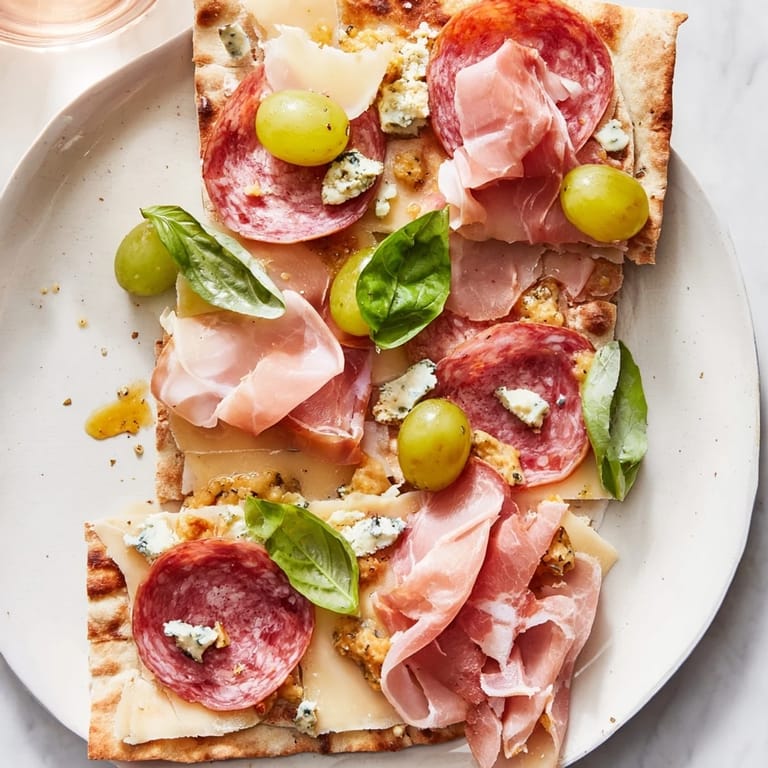
 I discovered the magic of these flatbread rafts at a dinner party where I watched guests actually socialize instead of hovering awkwardly near the appetizer table. Someone had arranged cured meats and cheeses across long strips of warm bread, and suddenly there was this beautiful edible landscape people wanted to gather around. It was less about the individual ingredients and more about how they transformed into something meant for sharing, something that invited conversation and broken-off bites rather than carefully portioned servings.
My friend brought these to a casual weekend gathering, and I watched a quiet group of people suddenly become animated, debating the merits of different cheese pairings and sneaking extra pieces of prosciutto. The flatbreads stayed warm just long enough to make everything taste intentional rather than just assembled, and somehow those small details made the whole spread feel like someone really cared about getting it right.
Ingredients
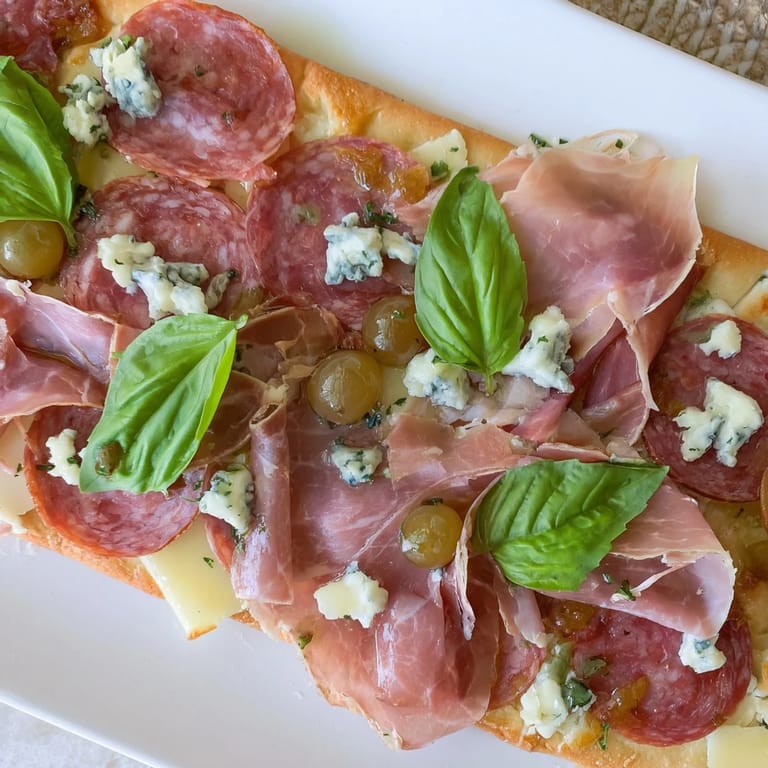
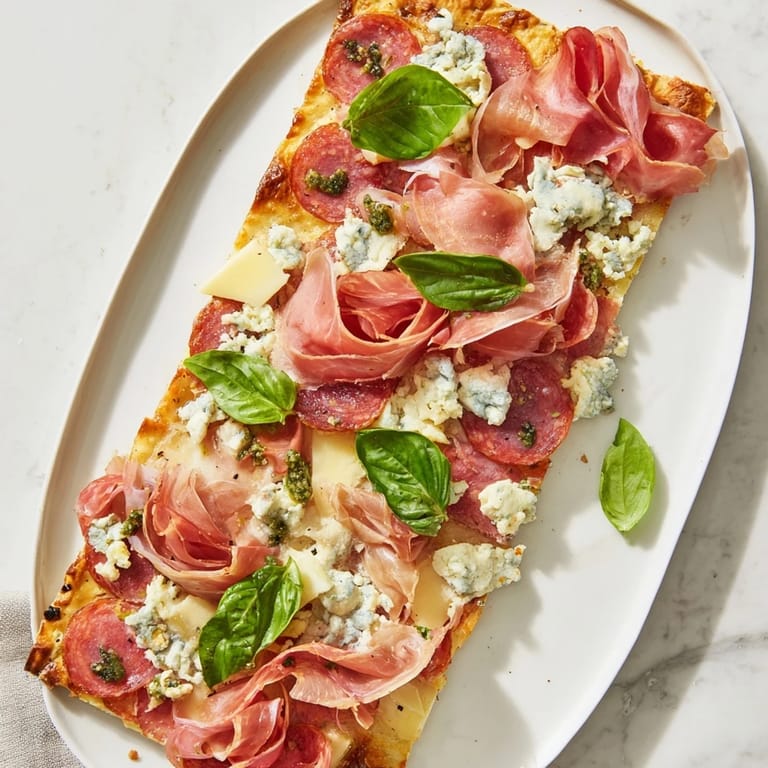
- Flatbreads (3 large rectangular): Lavash, naan, or ciabatta flatbread serve as your edible foundation—sturdy enough to hold generous toppings but still tender enough that guests can break off pieces without the whole raft collapsing.
- Olive oil and garlic: Just enough to brush and flavor the bread as it warms, creating that crispy exterior that makes the whole thing feel fresh rather than thrown together.
- Prosciutto (120 g): Delicate and slightly salty, it drapes beautifully and adds elegance without overpowering the other flavors.
- Salami and soppressata (240 g total): These bring rich, concentrated flavor and interesting texture variation that keeps people coming back for more.
- Smoked turkey breast (120 g): A lighter note that balances the heavier cured meats and gives you better coverage across the board.
- Brie, aged cheddar, and manchego (360 g total): Each cheese brings something different—creamy richness, sharp bite, and nutty depth—so every bite feels like a discovery.
- Blue cheese (100 g crumbled): A bold accent that some people absolutely crave and others gracefully avoid, which is exactly the point.
- Grapes, tomatoes, olives, and peppers: These provide bursts of color and freshness that cut through the richness of the meats and cheeses, keeping your palate interested.
- Fresh basil and honey or fig jam: Final touches that feel both intentional and slightly luxurious, making guests feel genuinely thought-of.
Tired of Takeout? 🥡
Get 10 meals you can make faster than delivery arrives. Seriously.
One email. No spam. Unsubscribe anytime.
Instructions
- Prep your oven and board:
- Heat your oven to 200°C (400°F) and mentally claim your best wooden board or serving platter—this becomes the stage for everything else.
- Warm the flatbreads with intention:
- Brush your flatbreads lightly with olive oil, sprinkle with minced garlic, and slide them into the oven for 5–7 minutes until they're just barely crisp and fragrant. You want them warm and slightly stiffened, not crunchy and brittle.
- Arrange your rafts like a landscape:
- Pull the flatbreads out, lay them on your board with a little space between each one, and take a second to appreciate that they're still warm—this matters for how everything sticks together.
- Layer with abundance and balance:
- Start with a base of meats across each flatbread, alternating types so you get visual variety and flavor diversity in every section. The pattern matters because it guides how people's eyes move across the board.
- Scatter the supporting players:
- Fill the spaces between your flatbread rafts with halved grapes, cherry tomatoes, olives, and red peppers, creating little pockets of color and brightness that guide people toward the cheese and meat.
- Finish with the flourishes:
- Top everything with fresh basil leaves torn just loosely enough to show they're fresh, and keep your honey or fig jam in a small dish nearby for people to drizzle or dip as they break off their pieces.
- Invite people to break bread literally:
- Encourage your guests to tear off pieces of flatbread with whatever toppings call to them—this informal approach is actually what makes the whole thing feel generous and fun.
 Save It
 There's a moment right when you set this down in front of people where you see their eyes take it all in, that split second where they realize they're not going to have to choose between things they want. That moment of abundance and permission to just take what looks good, together with everyone else doing the same—that's when appetizers stop being food and become an experience.
Building Your Flavor Narrative
Think of each flatbread as a short story rather than a random assembly. If you load one heavily with blue cheese, balance it with grape and honey. If another features smoky chorizo and sharp cheddar, pair it with roasted red peppers and basil. This isn't overthinking it—it's just making sure that wherever someone's hand lands, they get a complete thought rather than an incomplete sentence.
The Art of Strategic Spacing
The gap between your flatbread rafts isn't wasted space—it's where the supporting ingredients live, creating visual rhythm and giving people permission to mix and match. That negative space actually makes the board feel more curated and less crowded, even though you're using plenty of ingredients. The eye needs rest, and good spacing gives it exactly that.
Making It Your Own
The ingredient list I've given you is a framework, not a mandate. The only non-negotiable part is the warm flatbread base and the mix of salty and sweet, soft and crisp. Everything else bends to what you have and what your people actually eat.
- Swap any cured meat for what excites you—calabrese, guanciale, even quality deli turkey works if that's what you love.
- Add roasted almonds, candied walnuts, or even crushed pistachios for texture that nobody expected but somehow craves.
- Pickled vegetables like onions, peppers, or even peaches bring brightness and a slight tang that keeps the whole thing from feeling heavy.
 Save It
 These flatbread rafts remind us that some of the best entertaining isn't about complexity or showing off—it's about creating an invitation for people to gather and feed themselves generously. That's something worth serving again and again.
Recipe FAQs
- → What flatbreads work best for this dish?
Large rectangular flatbreads such as lavash, naan, or ciabatta-style flatbreads crisp well and hold toppings nicely.
- → Can I prepare toppings ahead of time?
Yes, meats and cheeses can be sliced earlier and stored cool; assemble just before serving for freshness.
- → What is the purpose of warming the flatbreads?
Warming with olive oil and garlic crisps the surface slightly and infuses subtle flavor, enhancing texture and aroma.
- → Are there suggested wine pairings?
A crisp white or light-bodied red wine complements the savory meats and creamy cheeses beautifully.
- → How can I customize the accompaniments?
Feel free to add nuts like Marcona almonds or pickled vegetables to introduce varied textures and flavors.