 Save It
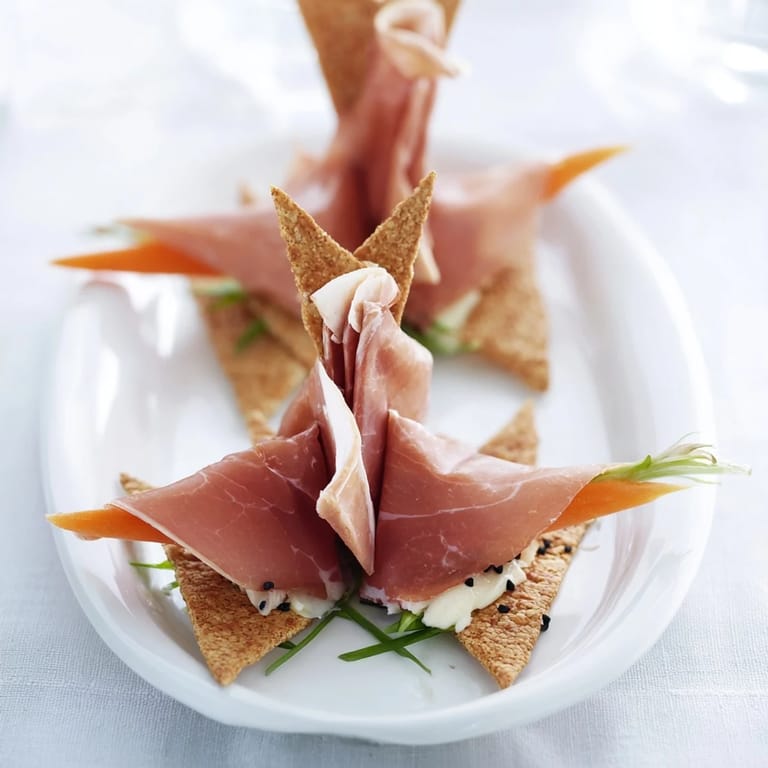
 The first time I folded a paper crane out of meat and crackers, I was skeptical. A friend had sent me a photo of one she'd made for a dinner party, and it looked impossibly elegant—something you'd expect from a professional caterer, not from someone's kitchen counter. But then I realized the magic: it wasn't about complicated techniques or rare ingredients, just patience and a willingness to play with your food. Now, whenever I need to turn simple cured meats into something that makes people pause before eating, this is what I reach for.
I made this for my sister's book club once, and someone actually took a photo before touching their plate. The whole table went quiet for a second, studying it, and then someone laughed and said it seemed too pretty to eat. But after that first bite—the snap of the cracker, the silky prosciutto, the brightness of the carrot—everyone stopped caring about the presentation and just enjoyed the moment together.
Ingredients
- Prosciutto: This is your soft, delicate base layer—slice it paper-thin and it'll fold without tearing, creating those graceful curved lines that make the crane come alive.
- Smoked turkey breast: Lighter and leaner than the prosciutto, it gives you contrast and helps build height in your folding without feeling heavy.
- Bresaola or pastrami: Use this for the wings—the firmer texture holds a fold beautifully and the deep color creates visual drama against the lighter meats.
- Triangular whole-grain crackers: These are structural, so pick ones sturdy enough to support the meat but with flavor that doesn't compete.
- Black sesame or poppy seed crackers: A few darker crackers scattered in add visual interest and break up the monotony of color.
- Chives: Fresh and grassy, they're perfect for sketching in fine details like tail feathers without overwhelming the delicate plate.
- Carrot, peeled: When you peel it with a vegetable peeler, you get those gossamer-thin ribbons that become the beak and legs—this is where the origami magic happens.
- Cream cheese: Just a touch acts like edible glue, holding your carrot strips exactly where you want them without any mess.
- Black sesame seeds: These tiny seeds become the eye, and when scattered across the wings, they catch the light and add unexpected texture.
Tired of Takeout? 🥡
Get 10 meals you can make faster than delivery arrives. Seriously.
One email. No spam. Unsubscribe anytime.
Instructions
- Peel your carrot into ribbons:
- Use steady, gentle strokes with the vegetable peeler to get those long, thin strips. Set a few aside for the beak and legs, and keep the rest on a damp paper towel so they stay flexible while you work.
- Build the crane's body:
- Take a slice of prosciutto and fold it into a triangle, then layer another on top—think origami, with each fold creating dimension. The layering is what makes it look three-dimensional and sculptural rather than flat.
- Shape the wings:
- Fold your bresaola or pastrami slices into triangles and arrange them in a fan, standing upward at an angle. They should look like they're catching wind, not lying flat against the body.
- Position your crackers:
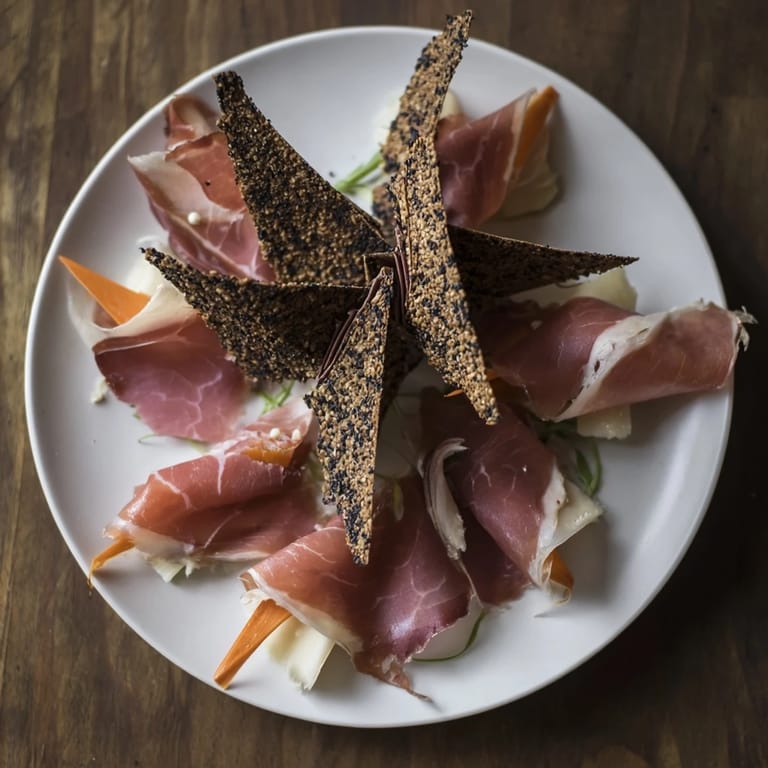
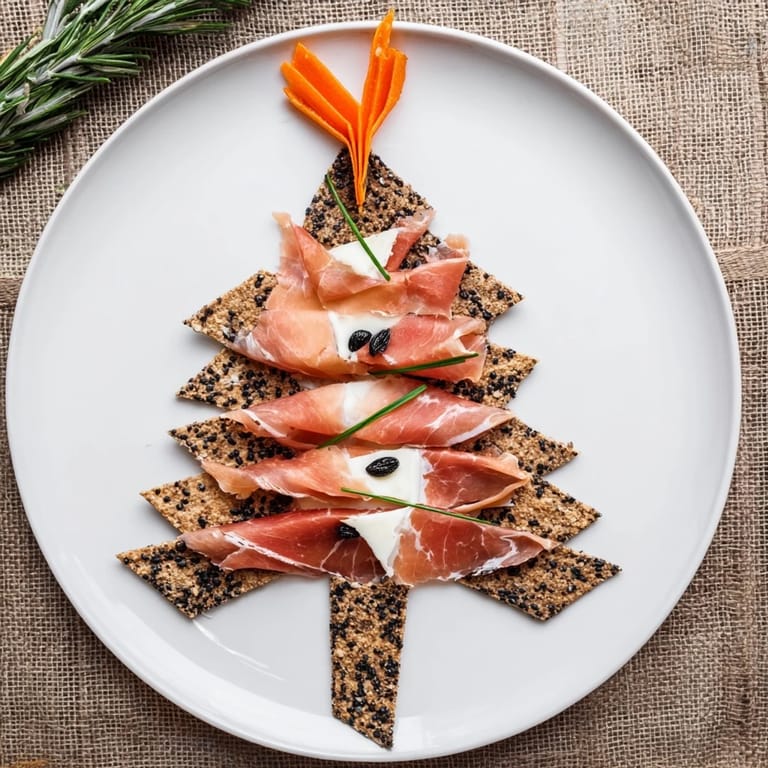
- Arrange the triangular crackers underneath and around the meat construction—they're both the foundation and the frame for your crane's silhouette. Step back and look at your shape from above; adjust until it reads as a bird.
- Attach the beak and legs:
- Dab a tiny bit of cream cheese where the head would be, then gently press a folded carrot strip into it for the beak. Create two thin legs with more carrot strips, securing them with another whisper of cream cheese.
- Add chives for detail:
- Lay a few chive strands along the wings or as tail feathers, anchoring them with a touch of cream cheese so they stay put. These fine lines give your crane personality and movement.
- Finish with seeds and serve:
- Sprinkle black sesame seeds where the eye would naturally be, and scatter a few more across the wing area for texture and visual interest. Serve right away, or refrigerate loosely covered for up to an hour.
 Save It
 There was one dinner where I assembled the crane, stepped back, and realized the whole thing was leaning slightly to one side—tilted like it was actually flying, catching some invisible wind. My guest noticed it too and said it looked more alive that way. I stopped worrying about perfection after that.
The Art of Folding
The folding itself is meditative once you find your rhythm. You're not trying to create origami-perfect geometry—you're coaxing flexible slices of meat into curves and points that suggest a bird in motion. Let your hands guide you, and remember that slight irregularities are what make it look handmade and genuine. Each crane will be different, and that's the whole point.
Variations and Substitutions
Swap the cured meats for smoked salmon if you're leaning toward seafood, or use thin slices of pressed tofu for a vegetarian version that's just as striking. The structure stays the same, but the flavors shift entirely. You can also play with crackers—everything from seeded to rosemary-infused changes the taste profile and visual story.
Plating and Pairing
The Paper Crane lives on a large, plain platter—white or slate works beautifully because it lets the colors of the meat and vegetables sing. Serve it alongside something crisp to drink: a Sauvignon Blanc, a sparkling rosé, or even sparkling water with fresh lemon. The crackers are sturdy enough to stand up as both structure and vehicle, so your guests can actually pick this up and eat it.
- Chill your platter before assembling if you have time; cold meat is easier to work with and holds its shape better.
- Assemble no more than an hour before serving so the carrot strips stay crisp and the cream cheese doesn't soften too much.
- If a piece of meat tears while folding, use it anyway—those imperfect folds often look the most graceful.
 Save It
 This dish is proof that sometimes the most impressive things on a table aren't complicated—they're just made with intention and a little bit of playfulness. Your guests will remember it.
Recipe FAQs
- → What types of cured meats work best?
Thinly sliced prosciutto, smoked turkey breast, and bresaola or pastrami provide the ideal textures and flavors for folding and presentation.
- → Can this be made vegetarian or pescatarian?
Yes, you can substitute smoked salmon for pescatarian or tofu slices for vegetarian variations while maintaining the delicate folds.
- → What crackers complement the cured meats?
Triangular whole-grain crackers and black sesame or poppy seed crackers add crispness and visual contrast to the meat shapes.
- → How do the garnishes enhance the dish?
Carrot strips mimic beak and legs, chives add delicate feather details, while cream cheese helps secure pieces and seeds add texture.
- → How long can this appetizer be prepared ahead?
It can be assembled and refrigerated for up to 1 hour before serving without losing visual appeal or freshness.