 Save It
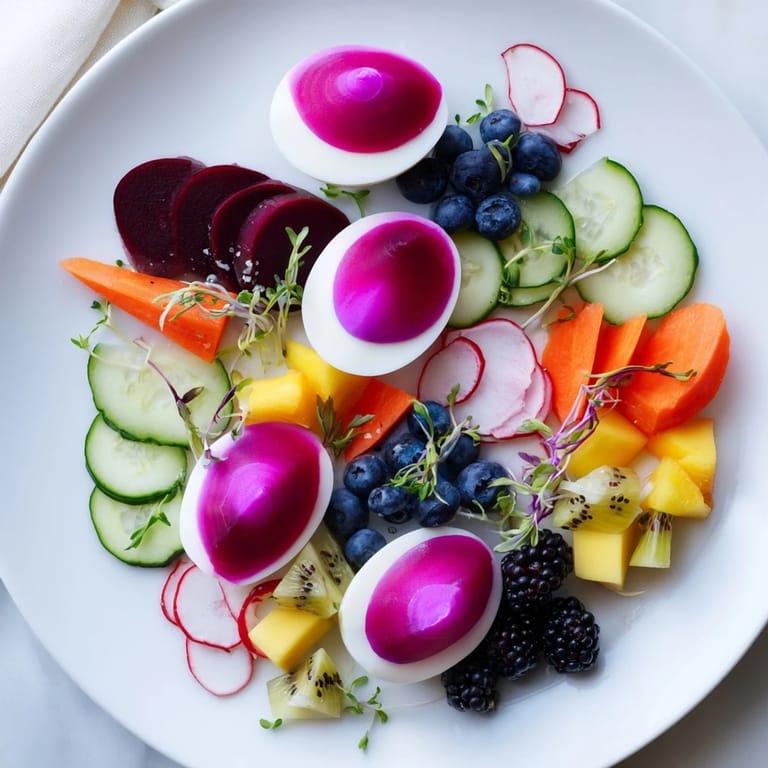
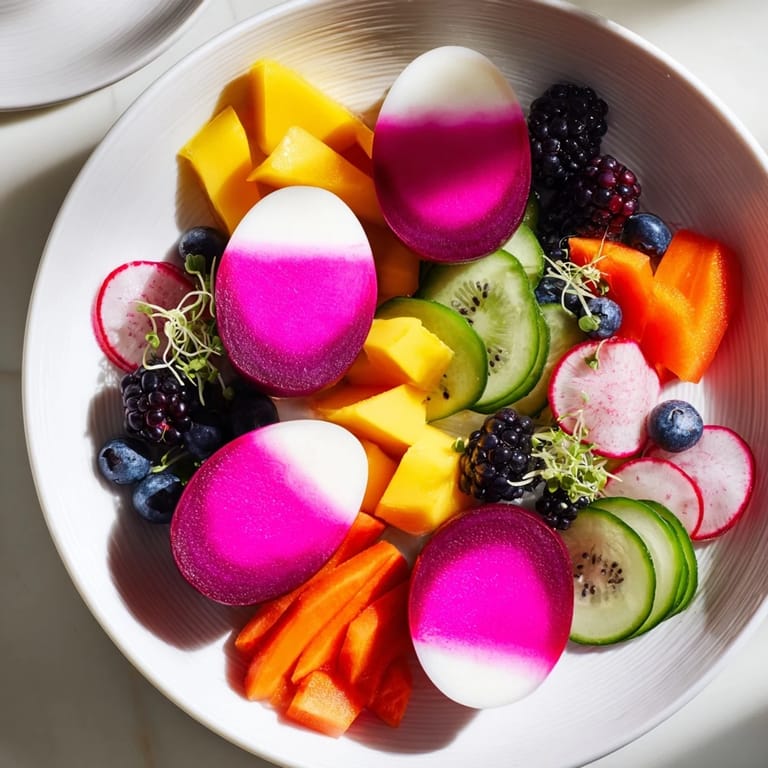
 I discovered the magic of this platter by accident, honestly. While prepping for a dinner party, I'd overcooked beets and thought I'd ruined my egg dye, but when those eggs emerged from the brine with their impossible deep pink-burgundy hue, I realized I'd stumbled onto something special. The moment guests arrived and saw this explosion of neon vegetables and jewel-toned eggs against that black board, their eyes lit up before anyone even tasted a thing. That's when I understood that food can be pure theatre, and the best dishes are often the ones that make people pause and just look.
My friend Maria watched me arrange this spread for the first time and asked if I was opening a restaurant. We laughed while snapping photos under the kitchen light, and that's become our tradition now—she brings the wine, I bring the neon night board, and somehow we've turned it into the thing people actually remember from our gatherings. There's something about feeding people food that feels like a celebration before they even take a bite.
Ingredients
- Mini cucumbers: These stay crisp and absorb the pickling brine without turning mushy like larger ones would.
- Rainbow carrots: Slicing on the bias makes them catch the light and adds elegance without extra effort.
- Radishes: They keep their peppery bite even after pickling, adding depth.
- Red onion: Thin slices soften just enough to lose their raw edge while staying vibrant.
- White vinegar: Clean and neutral, letting the vegetables' natural colors shine through.
- Sugar and salt: These balance each other and help vegetables stay crisp.
- Mustard seeds and peppercorns: They float in the brine like little flavor bombs, releasing hints of spice with each bite.
- Large eggs: Room temperature eggs peel more cleanly, and the larger surface area lets the beet dye develop those gorgeous gradients.
- Cooked beet: Use a fresh, earthy beet that's been cooked until tender—canned works in a pinch but the color isn't quite as deep.
- Apple cider vinegar: The sweetness complements the earthiness of beets better than white vinegar does.
- Fresh berries and tropical fruits: These are your color palette, so choose what looks best at the market that day.
- Microgreens or edible flowers: The final flourish that makes people believe you're a culinary genius.
- Flaky sea salt: It catches the light and adds that finishing touch of sophistication.
Tired of Takeout? 🥡
Get 10 meals you can make faster than delivery arrives. Seriously.
One email. No spam. Unsubscribe anytime.
Instructions
- Wake up your pickling liquid:
- Combine vinegar, water, sugar, salt, mustard seeds, and peppercorns in a saucepan and bring to a gentle simmer. You'll smell the mustard seeds start to release their sharp, tangy aroma—that's when you know the magic is starting.
- Submerge your vegetables:
- Place cucumbers, carrots, radishes, and red onion in a heatproof container and pour that hot pickling liquid over them. The sizzle is satisfying, and the vegetables will immediately start soaking up the flavors.
- Let time do the work:
- Let them cool completely, then slide into the refrigerator for at least 2 hours, though overnight is when they really develop character and crunch.
- Boil and shock the eggs:
- Place eggs in cold water, bring to a rolling boil, and cook for 8-9 minutes—set a timer because this is where precision actually matters. As soon as time's up, plunge them into ice water to stop the cooking and make peeling easier.
- Peel with patience:
- Start at the wider end where there's an air pocket, and peel under cool running water if the shells are stubborn—the water helps separate the membrane from the white.
- Create the beet dye bath:
- In a jar, combine sliced beet, apple cider vinegar, water, sugar, and salt. The beet releases its color into the liquid, creating this deep crimson pool that's as beautiful as stained glass.
- Let the eggs drink the color:
- Add peeled eggs to the beet mixture and refrigerate for at least 2 hours, but the longer they sit, the deeper and more marbled the pink becomes. I usually leave mine overnight and wake up excited to see how they've transformed.
- Arrange with intention:
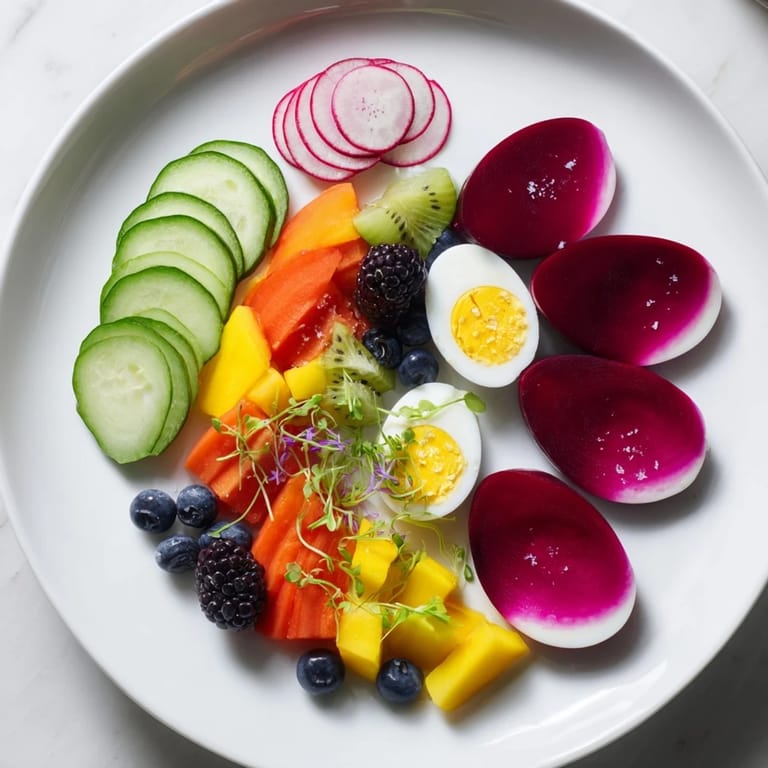
- On a black serving board, create sections for pickled vegetables, halved or sliced beet-dyed eggs, and mounds of fresh fruit. There's no wrong way, but think of it like painting—balance colors so no corner looks lonely.
- Finish like a pro:
- Scatter microgreens or edible flowers across the board and give everything a whisper of flaky sea salt. Step back and admire what you've created.
 Save It
 The real moment this dish became more than food was when my nephew, who's usually picky about anything unconventional, asked if he could take a photo before eating because it was "too pretty to disappear." That's when I realized that sometimes feeding people isn't about the taste first—it's about making them feel like they're part of something special.
The Art of Color Without Chemicals
I used to think vibrant food required food coloring or fancy techniques, but this board taught me otherwise. Every color here comes from nature—beets, berries, dragon fruit—and somehow that makes the platter feel less like performance and more like generosity. You're literally arranging what the earth provided, and there's something grounding about that approach to cooking.
Make-Ahead Magic
The best part about this platter is that it's one of the few showstopping dishes that actually rewards you for preparing ahead. The pickles taste better after sitting for hours, the eggs develop deeper color overnight, and the fresh fruit can be prepped and covered the morning of. When guests arrive, you're not stressed in the kitchen—you're actually there to enjoy them.
Variations That Keep It Fresh
Once you understand the principle of this board, you can play with whatever's in season or available. Purple cabbage creates a blue-tinted brine, turmeric makes a sunny yellow, and different fruits swap in easily depending on the market. I've made versions in spring with asparagus and strawberries, and winter versions with persimmons and pomegranate seeds—the formula stays the same but never feels repetitive.
- For a vegan spread, double the pickled vegetables and add marinated tofu cubes or chickpeas for protein.
- If someone has a shellfish allergy, this platter is naturally safe—just double-check that your vinegar and prepared ingredients don't have hidden allergens.
- Set this up on the board no more than 30 minutes before serving so the fruit stays crisp and the pickles don't weep into the fresh components.
 Save It
 This platter has become my go-to when I want to feel confident about feeding people something beautiful. It's simple enough that I can focus on being present instead of stressed in the kitchen, and special enough that it makes any gathering feel intentional.
Recipe FAQs
- → How do I achieve vibrant colors in the pickles?
Use fresh vegetables and a simple brine with vinegar and spices; natural pigments develop during marinating, enhancing color vibrancy.
- → What is the best way to dye eggs with beets?
Simmer peeled eggs in a mixture of beet slices, vinegar, water, sugar, and salt for at least two hours to soak in the natural red color.
- → Can I prepare the platter ahead of time?
Yes, pickles and beet-dyed eggs benefit from marinating for a few hours or overnight to intensify flavor and color.
- → How should I serve this platter?
Arrange chilled pickled vegetables, sliced beet-dyed eggs, and fresh fruits on a dark serving board; garnish with microgreens or edible flowers and a sprinkle of flaky sea salt.
- → Are there suitable substitutions for a vegan version?
Omit the eggs and add more pickled vegetables or additional fresh fruits to maintain variety and color vibrancy.
- → What are ideal accompaniments for this platter?
Crusty bread or crackers pair well, providing contrasting textures alongside the tangy pickles and fresh fruit.