 Save It
 I discovered this dessert on a golden afternoon when my neighbor brought over a jar of wildflower honey from her cousin's farm, and I became absolutely obsessed with finding a way to make it the star of something special. The idea of a cake you could dip into a pot of warm honey in the center felt both theatrical and intimate, like sharing something that demanded participation from everyone at the table. I spent an entire evening sketching out how the layers would work, imagining the moment someone would cut into it and find that golden reservoir waiting.
The first time I served this to friends, I'll admit I was nervous about that center hole—what if it collapsed, what if the honey pot looked awkward? But when my friend Sarah cut her first slice and dipped it in the warm honey, her eyes went wide, and suddenly everyone wanted to try it. That's when I knew this recipe had become something I'd make again and again.
Ingredients
- All-purpose flour: The foundation—whisk it with the leavening agents so your cake rises evenly and stays tender.
- Baking powder and baking soda: This combination gives you a gentle crumb that won't collapse when you carve out the center.
- Unsalted butter and sugar: Creaming them together for a few minutes creates air pockets that keep the cake light and delicate.
- Honey: Mixed into the batter, it adds moisture and a subtle floral note—use the same honey you'll serve in the center.
- Eggs and vanilla: These bind everything and add richness without overpowering the honey's complexity.
- Whole milk: Adds tenderness and helps the honey flavor come through clearly.
- Heavy cream and mascarpone: Whipped together with honey, they create a luxurious filling that tastes like sweetened clouds.
- High-quality liquid honey for serving: Wildflower or acacia honey will warm beautifully and taste incredible—this is worth splurging on.
- Toasted almonds and edible flowers: These add texture and visual elegance without stealing the honey's spotlight.
Tired of Takeout? 🥡
Get 10 meals you can make faster than delivery arrives. Seriously.
One email. No spam. Unsubscribe anytime.
Instructions
- Prepare your pans and preheat:
- Set your oven to 350°F and grease those 8-inch pans well, then line the bottoms with parchment. This ensures your cakes release cleanly and gives you room to slice them thin.
- Mix your dry ingredients:
- Whisk flour, baking powder, baking soda, and salt together in one bowl. This distributes the leavening evenly and prevents lumps.
- Cream butter and sugar:
- Beat them together for 2-3 minutes until the mixture is pale and fluffy. You're incorporating air that helps the cake rise.
- Add honey, eggs, and vanilla:
- Pour in the honey slowly while beating, then add eggs one at a time. This prevents the mixture from breaking and creates a smooth, rich base.
- Alternate your wet and dry:
- Start and end with flour, adding them in three additions with the milk in two. Mix gently—overworking develops gluten and makes the cake tough.
- Divide and bake:
- Split the batter evenly between pans and bake until a toothpick comes out clean, about 22-25 minutes. The cakes should be golden and smell incredible.
- Make your honey cream:
- Whip cold heavy cream to soft peaks, then gently fold in honey and mascarpone until stiff peaks form. Chill it while the cakes cool completely.
- Slice your cake layers:
- Once cool, carefully slice each cake horizontally to create four thin, even layers. A serrated knife and a gentle hand work best here.
- Stack and fill:
- Place the first layer on your serving platter, spread with honey cream, and repeat until all layers are stacked and chilled. This helps them hold together when you carve the center.
- Carve the center and insert the honey pot:
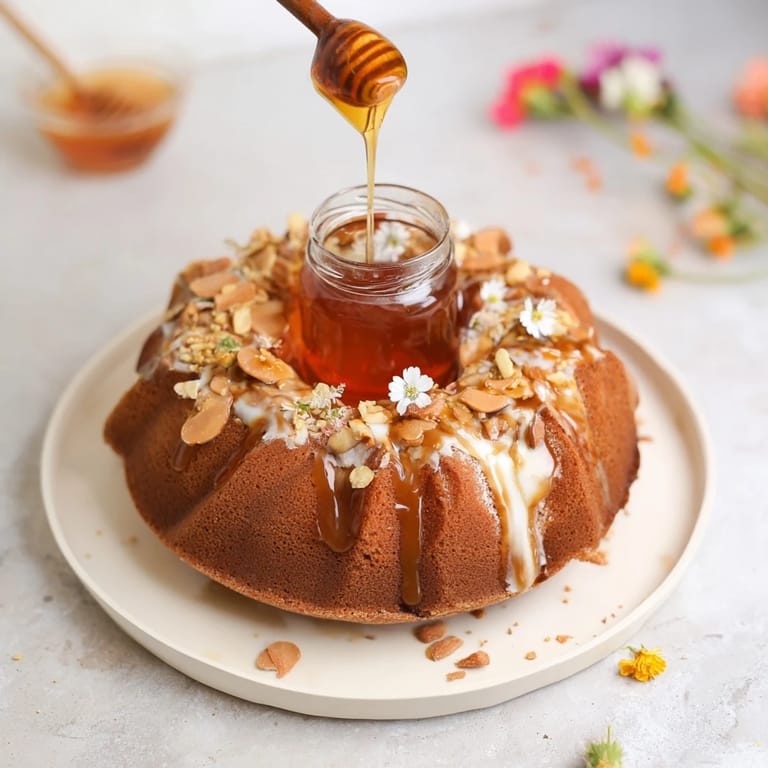
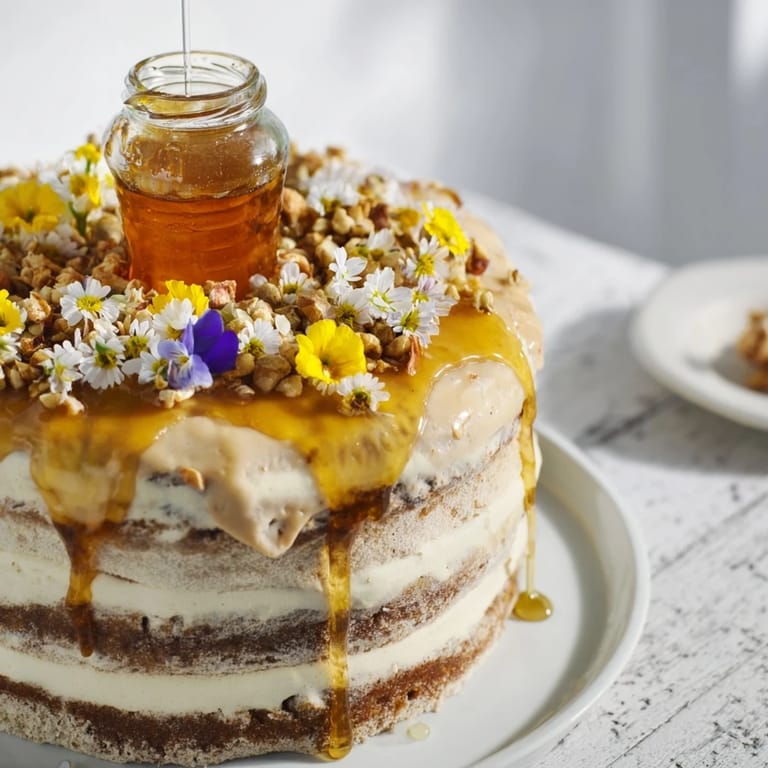
- Using a 3-inch round cutter, gently twist and remove a hole from the center of the stacked cake. Slide your small honey pot into the opening and fill it with liquid honey just before serving.
- Garnish and serve:
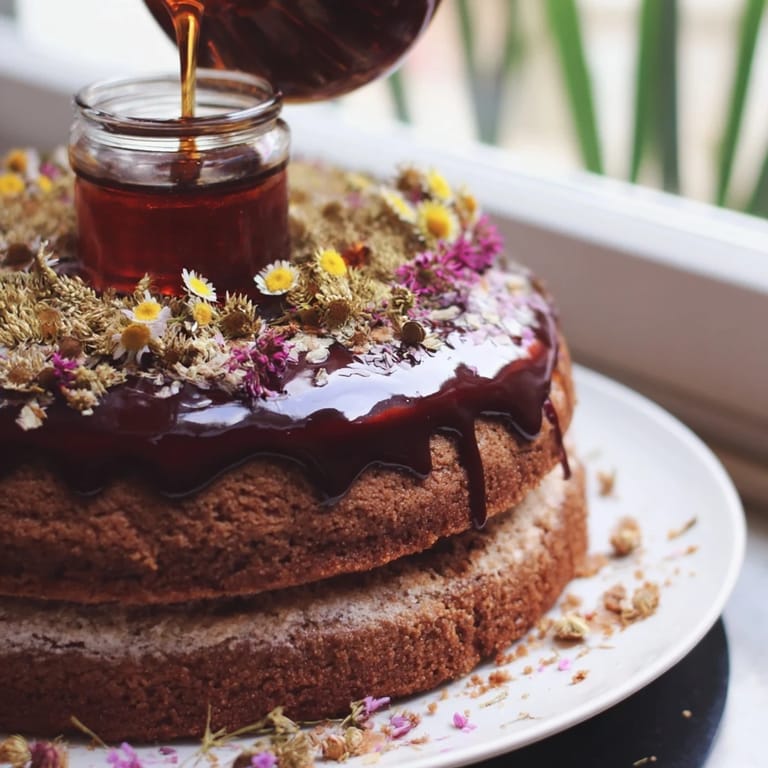
- Top with toasted almonds, edible flowers if you like, and a final drizzle of honey. Tell guests to slice cake and dip each bite into the warm honey at the center.
 Save It
 What moved me most about this dessert was realizing it's fundamentally about connection—every person at the table dips into the same golden pot, shares the same ritual of honey-soaked cake. It transformed from a recipe into a moment.
Choosing Your Honey
The honey you choose will completely shape this dessert's personality. Wildflower honey brings a complex, almost mysterious sweetness that changes slightly depending on the season and region. Acacia honey is lighter and more delicate, letting the cake's vanilla shine through. I've experimented with orange blossom and lavender honey, and each one tells a different story—the orange version feels like a celebration, while lavender whispers something more contemplative. The point is, don't just grab whatever honey is on sale; taste a few options and pick the one that makes you smile.
Slicing and Serving
The reveal of this cake matters more than you'd think. When you cut into it and that warm honey catches the light, everyone leans forward. A serrated knife dipped in hot water and wiped clean between cuts keeps your slices neat and impressive-looking. I've learned to serve this slightly warm rather than cold—the honey flows better, and there's something comforting about warm cake against cool honey cream.
Variations and Customizations
This cake is forgiving and loves to be adapted. For a nut-free version, skip the almonds and top with candied citrus peel or extra edible flowers instead. You can infuse the honey cream with a pinch of saffron or a tiny splash of bourbon for deeper complexity. Some guests prefer their honey pot filled with a honey-butter mixture warmed gently in a saucepan, which adds richness and prevents the honey from crystallizing too quickly.
- Try pairing it with Moscato or a late-harvest Riesling for an elegant finish.
- Make the cakes the day before and assemble just before serving if you're short on time.
- If edible flowers aren't available, a light dusting of powdered sugar works beautifully.
 Save It
 This dessert reminded me that the most memorable dishes are often the ones that invite participation and conversation. Every time you make it, you're not just serving cake—you're creating a ritual.
Recipe FAQs
- → What cake flour is best for this dessert?
All-purpose flour creates a sturdy yet tender texture ideal for supporting the layered structure and honey cream.
- → How should the honey cream be prepared?
Whip heavy cream to soft peaks before blending in honey and mascarpone, then whip to stiff peaks for a smooth, stable filling.
- → Can I use different types of honey?
Yes, floral honeys like orange blossom or lavender offer unique aromatic notes that enhance the overall flavor.
- → How do I create the central honey pot in the cake?
After stacking the cake layers with cream, use a 3-inch round cutter to remove a central hole, then place a small honey pot inside it before serving.
- → What garnishes complement the honey flavors?
Toasted almonds add crunch, while edible flowers introduce subtle color and aroma, both enhancing the honey’s sweetness.
- → Is this dessert suitable for nut allergies?
Yes, simply omit the toasted almonds to make it nut-free without sacrificing texture.