 Save It
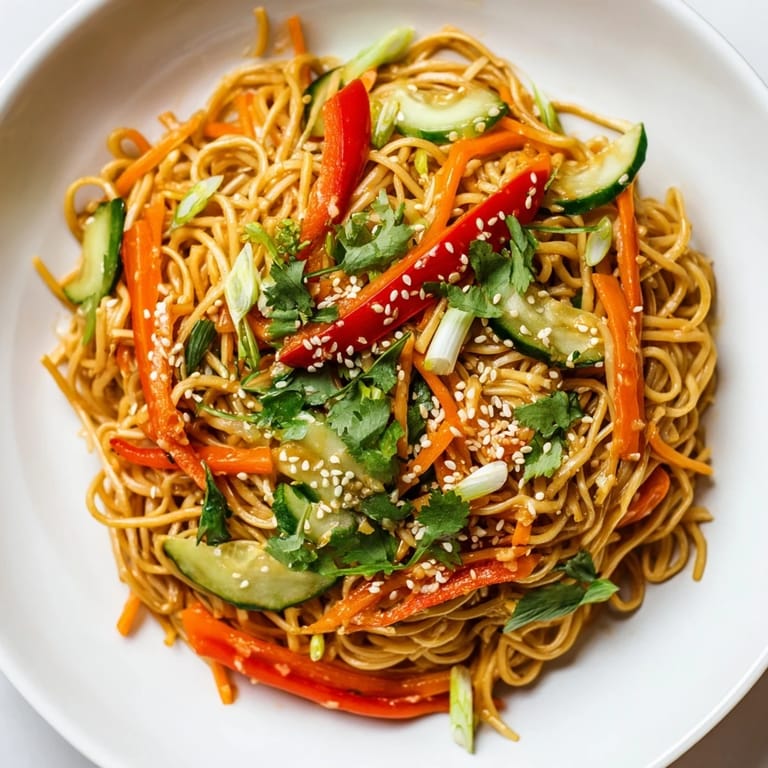
 My friend Sarah brought this garlic noodle salad to a summer potluck, and I watched it disappear faster than anything else on the table. When she finally shared the recipe, I realized the magic wasn't in exotic ingredients but in how the garlic oil coated every strand, creating this warm-savory base that the crisp vegetables played against perfectly. Now it's my go-to when I need something that feels effortless but tastes like I actually tried.
I made this for my coworkers during a particularly stressful week, and something about the bright colors and fresh cilantro seemed to lift everyone's mood. One person asked if I'd catered it, which probably shouldn't have made me as proud as it did. That's when I knew this recipe was a keeper.
Ingredients
- Dried wheat noodles (250 g): Lo mein, spaghetti, or soba all work beautifully, each bringing its own texture. I've learned that rinsing them under cold water is non-negotiable to stop the cooking process and keep them from clumping.
- Neutral oil (3 tbsp): Grapeseed or vegetable oil lets the garlic shine without adding its own flavor. Avoid olive oil here—it'll overpower the delicate balance.
- Garlic cloves (5 large): Finely minced garlic is the heart of this dish. Don't shortcut this by using jarred garlic; the difference in flavor is genuinely noticeable.
- Toasted sesame oil (1 tsp): This adds a subtle nuttiness that brings everything together. A little goes a long way, so resist the urge to add more.
- Carrot (1 cup, julienned): The natural sweetness balances the savory dressing. Julienning takes a bit of practice, but thin, even cuts mean faster eating and better texture.
- Red bell pepper (1 cup, thinly sliced): Choose a pepper that feels heavy for its size—it'll be juicier and sweeter. The red ones add a mild sweetness that yellow or orange peppers don't quite match.
- Cucumber (1 cup, deseeded and julienned): English cucumbers have fewer seeds, so you'll have less to scoop out. The juiciness they bring cools everything down beautifully.
- Spring onions (2, thinly sliced): Use both the white and green parts for different layers of onion flavor. The greens add a fresher taste that rounds out the garlic heat.
- Fresh cilantro (1/2 cup, roughly chopped): If you're one of those people for whom cilantro tastes like soap, swap it for fresh mint or basil instead. Don't skip the fresh herb element entirely—it's what makes this feel alive.
- Soy sauce (3 tbsp): Low sodium lets you control the saltiness, which matters when you're serving this to different people. I always taste and adjust before serving.
- Rice vinegar (1 tbsp): This is milder than white vinegar and adds brightness without harshness. If you can't find it, white wine vinegar works in a pinch.
- Honey or maple syrup (1 tsp): Just a touch of sweetness balances the salty and tangy elements. Maple syrup gives a slightly deeper note if you're in the mood for that.
- Chili flakes (1/2 tsp, optional): Start with less than you think you need—you can always add more but you can't take it back.
- Black pepper: Freshly ground makes all the difference here. The small effort of cracking it yourself changes the entire flavor profile.
- Toasted sesame seeds (2 tbsp): These add texture and a final whisper of nutty flavor. Toast them yourself if you have time; they taste brighter that way.
- Lime wedges: A squeeze of fresh lime at the table adds a final spark that some people love and others don't need. Offer them on the side.
Tired of Takeout? 🥡
Get 10 meals you can make faster than delivery arrives. Seriously.
One email. No spam. Unsubscribe anytime.
Instructions
- Cook and cool the noodles:
- Bring a large pot of salted water to a boil and cook your noodles according to package instructions until tender but still with a slight bite. The moment they're done, drain them and rinse under cold running water while gently stirring them apart with your fingers—you want them separated and completely cooled.
- Make the garlic oil:
- Heat your neutral oil in a small saucepan over medium-low heat until it shimmers. Add your minced garlic and listen for it to begin sizzling softly, then cook for about two to three minutes until the garlic turns golden and fragrant, swirling the pan occasionally. The moment it smells absolutely irresistible, remove it from the heat, stir in the sesame oil, and let it cool for a few minutes so you don't cook off those delicate sesame aromas.
- Combine the dressing:
- Whisk together the soy sauce, rice vinegar, honey, chili flakes if you're using them, and a few generous cracks of black pepper in a small bowl. This is the moment to taste and adjust—add more vinegar if it needs brightness, more soy if it needs saltiness, more honey if it feels too sharp.
- Bring it all together:
- Pour the cooled garlic oil and dressing over the cooled noodles and toss with two forks or tongs, working gently so you don't break the noodles. You want every strand coated with that glossy, garlicky mixture, which should take about a minute of good tossing.
- Add the vegetables:
- Fold in your carrots, bell pepper, cucumber, spring onions, and cilantro with a careful hand, tossing just enough to distribute them evenly. The vegetables should stay crisp and bright, not wilted, so don't overwork this step.
- Finish and serve:
- Transfer everything to a serving platter or divide into bowls, then sprinkle generously with toasted sesame seeds and set out lime wedges if you're using them. Taste one more time and add a pinch more salt or pepper if needed, then serve while the vegetables are still cool and crisp.
 Save It
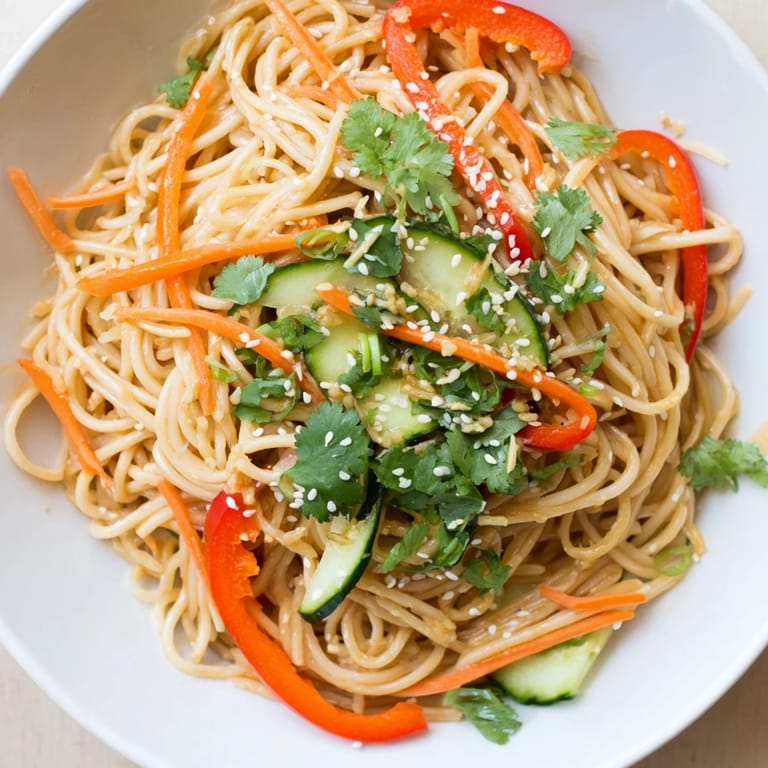
 There's something about assembling this salad that feels meditative—the rhythm of slicing vegetables, the smell of garlic infusing the oil, the way the colors stack up on the plate. My kids, who usually push vegetables to the side, eat every bit of this without complaint, which tells me everything about how well the flavors work together.
Flexibility and Customization
This recipe is forgiving in the best way. If you don't have sesame oil, a little more neutral oil works fine. If cucumbers aren't in season, snap peas or radishes add a different kind of crunch. I've made this with soba noodles for a nuttier flavor, with rice noodles when I wanted something more delicate, and even with leftover cooked chicken tossed in when I needed it to be more of a main course. The core—the garlic oil and dressing—is what makes it sing, so play with everything else.
Storage and Make-Ahead
You can prep all your vegetables the night before and keep them in separate containers, then assemble everything the day you want to eat it. The salad itself keeps well for up to two days in the fridge, though the vegetables do soften slightly as they sit. If you're making this ahead, store the noodles and dressing separately from the fresh vegetables, then toss everything together just before serving for the best texture.
Why This Works
The beauty of this salad is that it balances four fundamental tastes—salty from the soy sauce, tangy from the vinegar, sweet from the honey, and savory-rich from the garlic oil. The textures contrast beautifully too, with soft noodles against crisp vegetables. It feels fresh and light but substantial enough to be satisfying, which is why it works equally well as a light lunch or a potluck contribution.
- Make your garlic oil the day before if you want the flavors to deepen and meld.
- If you're serving this to a crowd, multiply the recipe by however many times you need and do all your prep in batches to avoid a knife-wielding frenzy.
- Taste everything as you go and trust your own preferences over the recipe—this is about feeding yourself and people you care about, not following rules.
 Save It
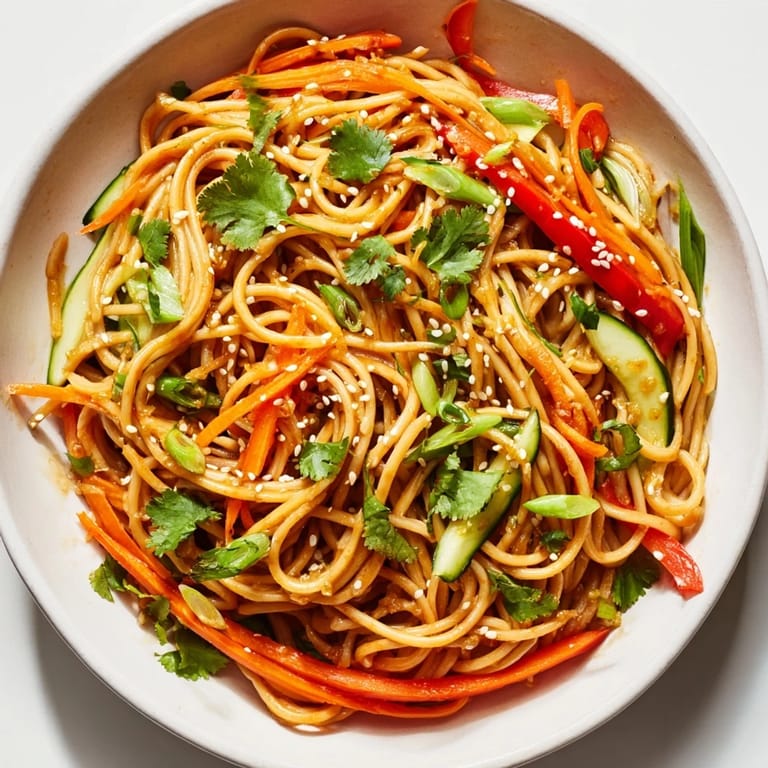
 This salad has become my secret weapon for potlucks and easy dinners—it's the kind of recipe that makes people think you put in way more effort than you actually did. Make it once and you'll understand why it keeps coming back to my table.
Recipe FAQs
- → What noodles work best for this salad?
Dried wheat noodles like lo mein, spaghetti, or soba work well. For gluten-free options, rice noodles are a good substitute.
- → How is the garlic oil prepared?
Garlic is gently sautéed in neutral oil until golden and fragrant, then combined with toasted sesame oil for a rich, aromatic base.
- → Can I add protein to this dish?
Yes, shredded cooked chicken, tofu, or edamame can be added to increase protein content and make it more filling.
- → How should the noodles be cooked and cooled?
Cook noodles according to package directions, then drain and rinse under cold water to stop cooking and cool them for tossing.
- → What vegetables are included in the salad?
Julienned carrots, thinly sliced red bell peppers, deseeded cucumber, spring onions, and fresh cilantro provide a crisp, colorful mix.
- → How can I adjust the heat level?
Chili flakes in the dressing add optional heat; adjust or omit to suit your preference.