 Save It
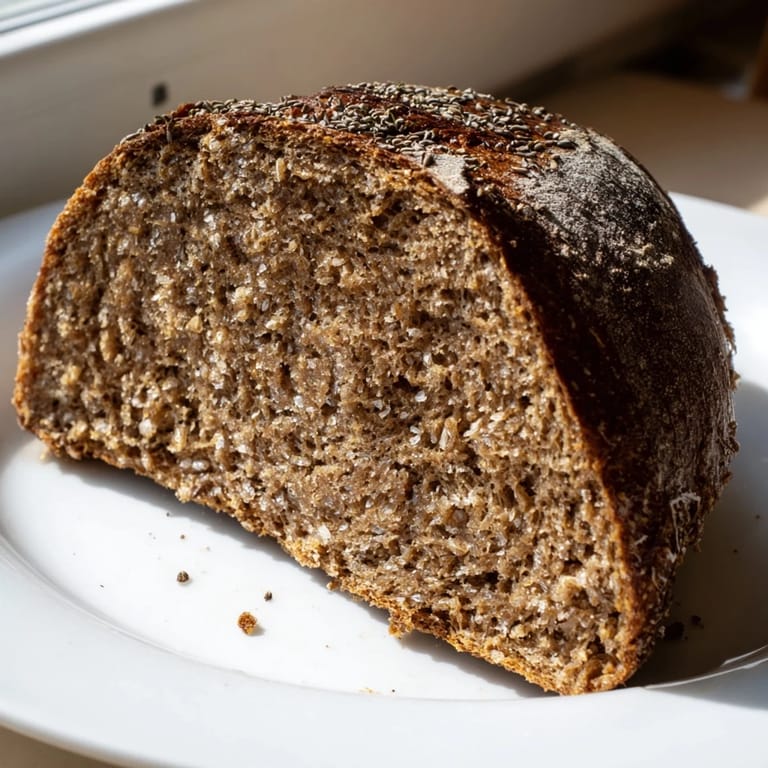
 My grandmother kept her sourdough starter in a ceramic crock on the kitchen windowsill, and I learned to bake Estonian leib by watching her hands work the dark rye dough without measuring anything except the weight of her intuition. One autumn morning, she let me take over the mixing bowl, and the moment that thick, sticky mass came together with the earthy smell of malt and caraway seeds, I understood why this bread had survived centuries in her family. It wasn't complicated, but it required patience—the kind of patience that transforms simple flour and water into something that tastes like home.
I made this bread for the first time on my own during a snowstorm, when my partner and I were snowed in together, and by the time the crust turned that dark mahogany brown, the whole house smelled like a Baltic bakery. We sliced into it while it was still slightly warm, spread butter across the crumb, and sat by the window watching the snow fall. That loaf became the memory I return to whenever I want to feel grounded.
Ingredients
- Active rye sourdough starter (100 g): This is your leavening agent and flavor backbone—it should be bubbly and alive, fed within the last 4–8 hours so it has strength to lift the heavy dough.
- Dark rye flour (400 g): The star of this bread; it's denser and nuttier than wheat flour, giving Estonian leib its distinctive color and slightly sweet undertone.
- Bread flour or wheat flour (100 g): A small amount of bread flour helps create structure without overwhelming the rye character; use bread flour if you want a taller loaf, all-purpose if you prefer something more compact.
- Lukewarm water (300 ml): Temperature matters here—too cold and your starter won't activate properly, too hot and you'll kill it, so aim for the warmth of bathwater.
- Dark rye malt or barley malt powder (50 g): This is where the deep, almost coffee-like sweetness comes from; you can find it at specialty baking shops or online, and it makes a profound difference in flavor.
- Molasses or dark honey (2 tbsp): Adds moisture, sweetness, and helps the crust develop that dark, glossy finish.
- Caraway seeds (1 tbsp, plus optional topping): Traditionally essential to Estonian bread; they bring a warm, slightly spicy note that some people crave and others discover they love only after tasting it in fresh bread.
- Fine sea salt (2 tsp): This isn't just seasoning—it controls fermentation speed and strengthens the gluten network in rye dough.
Tired of Takeout? 🥡
Get 10 meals you can make faster than delivery arrives. Seriously.
One email. No spam. Unsubscribe anytime.
Instructions
- Wake your starter and build the dough:
- Pour your active starter into a large bowl with the lukewarm water and molasses, stirring until the molasses dissolves into dark ribbons. You'll notice the starter releasing that familiar fermented tang into the water.
- Combine flours and aromatics:
- Add the rye flour, bread flour, malt powder, caraway seeds, and salt all at once, then mix with a wooden spoon until every dry pocket is gone and you have one cohesive, shaggy mass. The dough will be thick and slightly sticky—nothing like wheat bread dough.
- Let time do the heavy lifting:
- Cover the bowl with a damp cloth and let it sit at room temperature for 10–12 hours, or overnight. You're not looking for a dramatic rise here; instead, watch for the surface to become visibly bubbly and the dough to expand slightly, almost reluctantly. This long, cool fermentation is what builds the deep flavor.
- Shape and final rise:
- Line a loaf pan with parchment paper, then scrape the dough in (it won't be elastic or easy to handle, and that's exactly right). Wet your spatula and smooth the top gently, then sprinkle caraway seeds across the surface if you want them to catch the heat. Cover and let it rise for 2–4 hours until the dough reaches near the rim of the pan.
- Prepare your oven for steam:
- About 30 minutes before baking, preheat your oven to 220°C (430°F) and place a pan of hot water on the bottom rack. The steam will help the crust develop properly and keep it from crackling open too aggressively.
- Bake with temperature stages:
- Slide the loaf pan onto the middle rack and bake for 15 minutes at the higher temperature, which sets the crust quickly. Then lower the heat to 190°C (375°F) and bake for another 30 minutes until the loaf is deeply browned and sounds hollow when you tap the bottom with a knife handle.
- Cool completely before slicing:
- This is the hardest part—let the loaf rest on a wire rack until it reaches room temperature. Slicing warm bread collapses the crumb, so patience here matters more than it seems.
 Save It
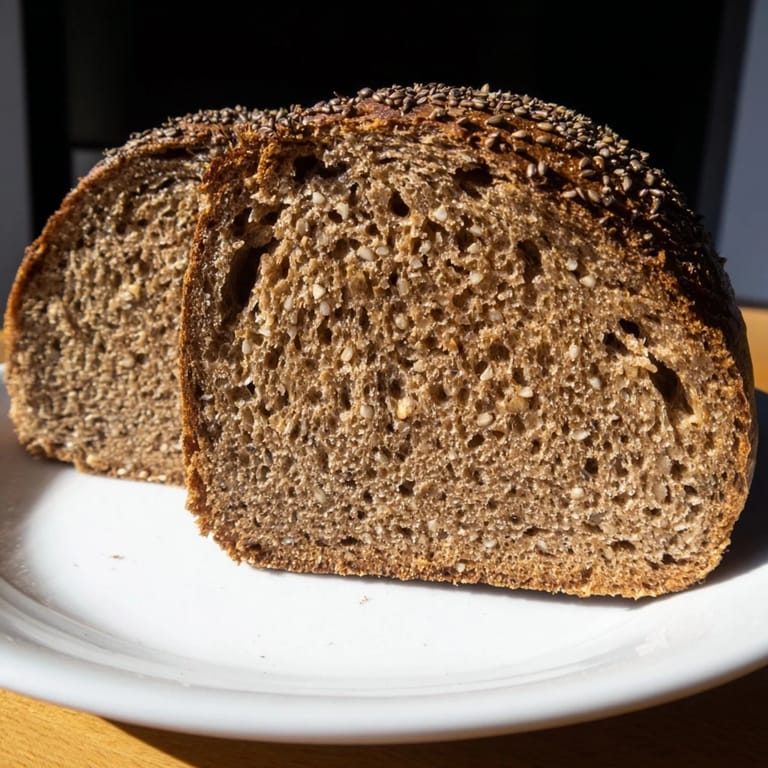
 There's a moment after you pull this bread from the oven when steam rises from the crust and the kitchen transforms into something almost sacred. That's when you know you've done it right—when the smell alone is proof that time and simple ingredients have created something worth making again and again.
The Science of Sour Rye
Rye ferments differently than wheat because it has less gluten and more pentosans—compounds that trap water and create a denser, slightly gummier crumb. This isn't a weakness; it's why Estonian leib keeps for a week without drying out, why it slices cleanly even when fresh, and why your sourdough starter thrives in the acidic environment of rye dough. The long, slow fermentation accelerates the breakdown of phytic acid, making the bread easier to digest and the nutrients more bioavailable.
Caraway: The Seed That Defines This Bread
Caraway appears in Estonian baking not as decoration but as identity. The seed's warm spice comes from limonene and carvone, compounds that taste different depending on when they're added—toasted caraway becomes more assertive and slightly bitter, while fresh seeds stay floral and green. I learned this when I accidentally toasted seeds for one batch and thought I'd ruined everything until my partner tasted it and said it reminded him of his grandfather's kitchen. The bread taught me that there's no wrong way, only different conversations with the same ingredient.
Making This Bread Your Own
Estonian leib is forgiving once you understand its slow rhythm. Some bakers add fennel for a sweeter note, others replace half the molasses with coffee for depth, and I've seen versions made with whole rye berries soaked overnight for texture. The structure stays the same because it's built on the relationship between your starter's strength, rye flour's absorption, and time.
- Toast your caraway seeds lightly in a dry pan for 2–3 minutes before adding them to deepen their flavor without making them harsh.
- If you find your loaf too dense, your starter might not have been active enough—feed it more frequently before baking, or let the dough rise an extra 2 hours.
- This bread slices better on the second day when the crumb has fully set, so don't judge it straight from the cooling rack.
 Save It
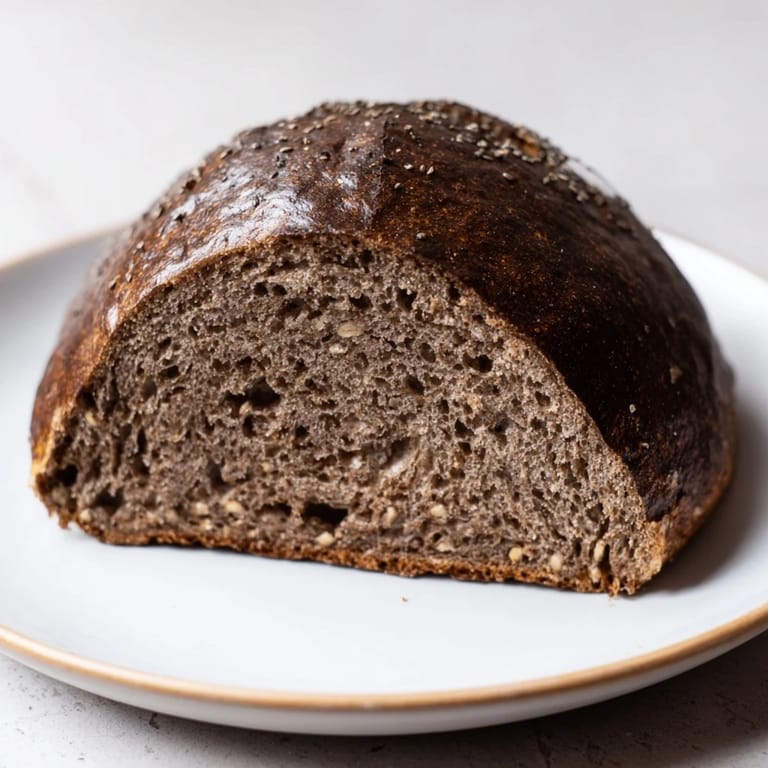
 Making Estonian leib isn't about speed or perfection; it's about understanding that some of the best bread in the world comes from patience, dark flours, and seeds that have flavored Baltic tables for centuries. Once you've made it, you'll understand why my grandmother never needed a recipe.
Recipe FAQs
- → What gives the bread its distinctive aroma?
The combination of malt powder and caraway seeds creates the bread's unique and aromatic character.
- → How long should the dough rise for best results?
Allow the dough to ferment overnight (10-12 hours) and then a second rise of 2-4 hours for optimal texture.
- → What role does molasses play in the loaf?
Molasses adds a subtle sweetness and deepens the color of the bread's crust.
- → Can I use barley malt instead of rye malt?
Yes, barley malt powder is an excellent substitute and contributes a similar maltiness.
- → Why is steam added during baking?
Placing hot water in the oven creates steam that helps develop a crisp, crackling crust.
- → How should the bread be stored to maintain freshness?
Wrap the cooled loaf in a towel and store at room temperature to keep it fresh for up to a week.