 Save It
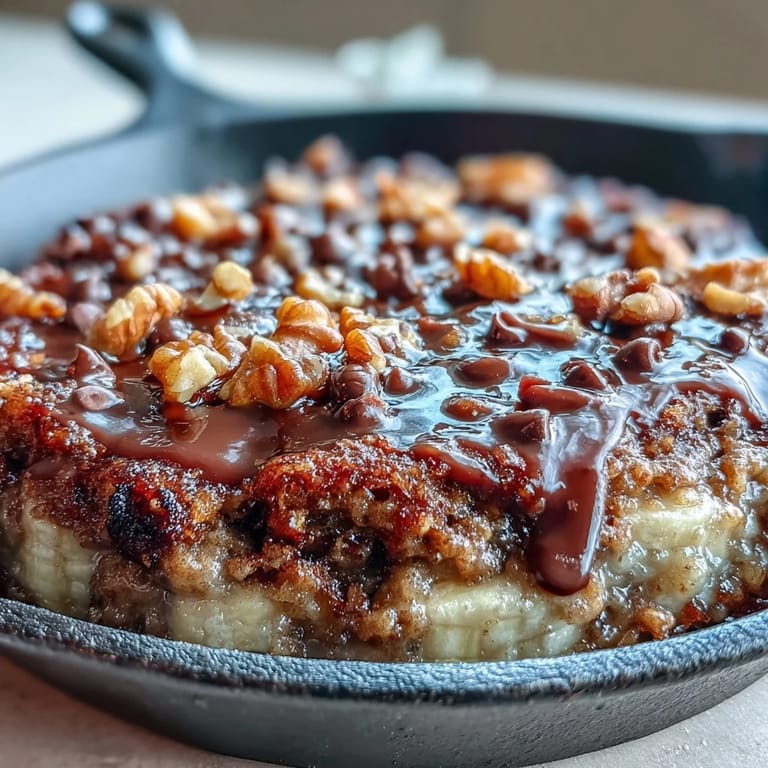
 My friend Sarah showed up at my door one afternoon with a craving she couldn't quite name—something between a cookie and a smoothie, warm and shareable. We had bananas going soft on the counter, a half-melted bar of chocolate, and that cast-iron skillet hanging above the stove that always makes me feel like I'm cooking something important. What started as improvisation became this chunky monkey skillet cookie, the kind of dessert that tastes like someone actually cared while making it.
I made this for a Sunday gathering once, and my roommate actually paused mid-conversation to ask what smelled so good—that buttery, caramelized brown sugar aroma filling the entire apartment. By the time it came out of the oven, three people were already hovering with plates. There's something about pulling a warm skillet cookie from the oven that makes everyone suddenly feel like they're part of something cozy.
Ingredients
- Old-fashioned rolled oats (1 1/2 cups): These create the chewy, textured base that makes each bite feel substantial—don't use instant oats or the cookie becomes mushy.
- All-purpose flour (1 cup): Provides structure while staying light enough that you won't feel like you're eating a dense brick.
- Unsalted butter (1/2 cup, melted): Let it cool slightly before mixing so it doesn't scramble the egg; this keeps everything tender.
- Light brown sugar (1/2 cup) and granulated sugar (1/4 cup): The combination of molasses depth and bright sweetness creates that perfect caramelization at the edges.
- Ripe bananas (2 medium, mashed): Use ones with brown spots—they're sweeter and more flavorful than pale yellow ones.
- Semisweet chocolate chips (1/2 cup): The semisweet variety balances the banana's sweetness without turning the whole thing into candy.
- Chopped walnuts (1/2 cup): Toast them lightly if you want extra crunch and deeper nutty flavor, though raw works beautifully too.
- Baking soda (1/2 teaspoon) and salt (1/2 teaspoon): These aren't optional—they activate the banana's natural tang and enhance all the flavors.
- Ground cinnamon (1/2 teaspoon): This bridges banana and chocolate in a way that feels almost magical.
- Vanilla extract (2 teaspoons): It sounds like a small amount, but it ties everything together with warmth.
- Egg (1 large): Acts as the binder and adds richness without requiring a lot of mixing.
- Unsweetened shredded coconut (1/4 cup, optional): If you use it, you get an extra layer of toasted nuttiness that plays well with the chocolate.
Tired of Takeout? 🥡
Get 10 meals you can make faster than delivery arrives. Seriously.
One email. No spam. Unsubscribe anytime.
Instructions
- Prep your skillet and oven:
- Heat your oven to 350°F and lightly grease your 10-inch cast-iron skillet—this matters because cast iron conducts heat differently than regular pans, creating those caramelized edges we're after. If your skillet is new or tends to stick, don't skip the greasing.
- Combine dry ingredients:
- Whisk together the oats, flour, baking soda, salt, and cinnamon in a large bowl, making sure everything is evenly distributed. This step prevents pockets of baking soda that might taste metallic later.
- Mix wet ingredients separately:
- In another bowl, whisk the melted butter with both sugars until it looks smooth and slightly glossy. Add the egg and vanilla, whisking well, then fold in the mashed bananas until you have a cohesive, slightly chunky wet mixture.
- Bring it together gently:
- Pour the wet mixture into the dry ingredients and mix until just combined—overmixing develops gluten and makes the cookie tough instead of tender. A few dry streaks are okay.
- Fold in the good stuff:
- Gently fold in the chocolate chips, walnuts, and coconut if you're using it, being careful not to crush everything into oblivion. You want visible pieces in every bite.
- Spread and bake:
- Spread the dough evenly into your prepared skillet and bake for 20 to 24 minutes, until the top is golden brown and the edges look set but the center still jiggles ever so slightly when you gently shake the pan. The residual heat will continue cooking it as it cools.
- Cool and serve:
- Let it rest for 10 minutes in the skillet—this gives it just enough time to set up while staying warm. Serve it directly from the pan with ice cream if you're feeling decadent.
 Save It
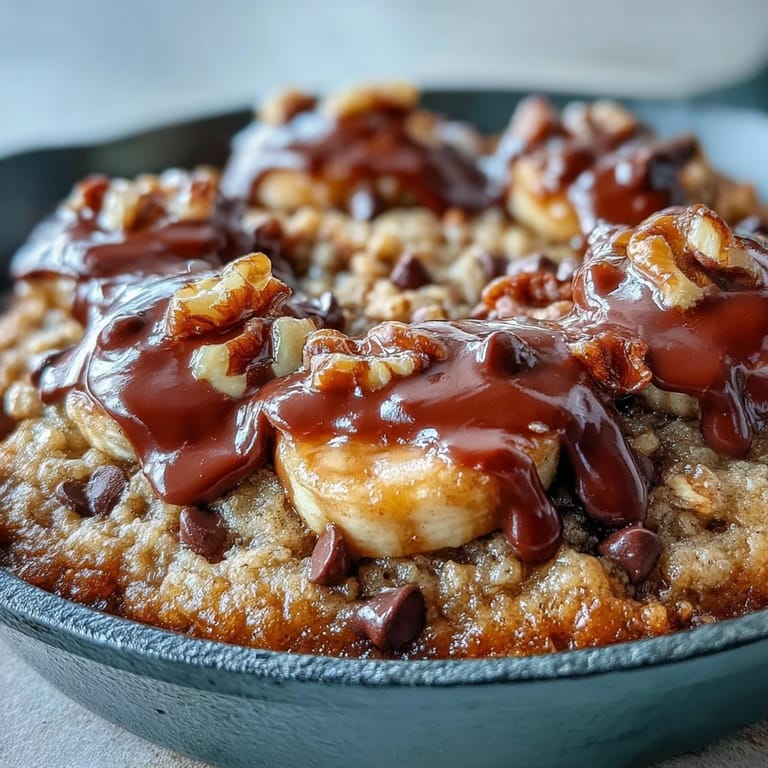
 My neighbor knocked on my door once because the smell of this baking had drifted through the hallway, and we ended up sharing it with ice cream while sitting on the kitchen counter talking about completely random things. That's when I realized this wasn't just a recipe—it was an excuse to do something warm and unhurried together.
Why Cast Iron Makes the Difference
A regular baking pan would make a fine cookie, but cast iron creates something special—the heat distributes so evenly that you get crispy, caramelized edges while the center stays soft and chewy. The skillet also doubles as your serving dish, which makes the whole thing feel more intentional and rustic. Plus, there's something deeply satisfying about sliding a spatula around the edges and cutting into a warm skillet cookie that's still in its vessel.
Playing with Variations
This recipe is flexible enough to live in your kitchen without strict rules. I've made it with peanut butter chips instead of chocolate and it's nearly as good, though different—more muted and sophisticated somehow. Some mornings I add an extra banana for even more moisture, and other times I skip the coconut and add a handful of raisins instead, which creates little bursts of chewiness that work beautifully with the oats.
Storage and Reheating Tips
Leftovers keep for up to three days covered loosely on the counter or in an airtight container—they won't stay warm, but they're still completely edible and honestly good cold too. To reheat, pop the whole skillet in a 300°F oven for about 8 to 10 minutes until it's warm again, or slice individual portions and warm them in a regular pan over low heat with a tiny bit of butter.
- Nut-free version works perfectly with sunflower seeds swapped in for walnuts—same crunch, different flavor profile.
- If you're making this for someone with nut allergies, make absolutely sure your chocolate chips aren't processed in a facility with tree nuts.
- This cookie is best eaten warm or at room temperature within a few hours of baking, when it still has that soft, yielding center.
 Save It
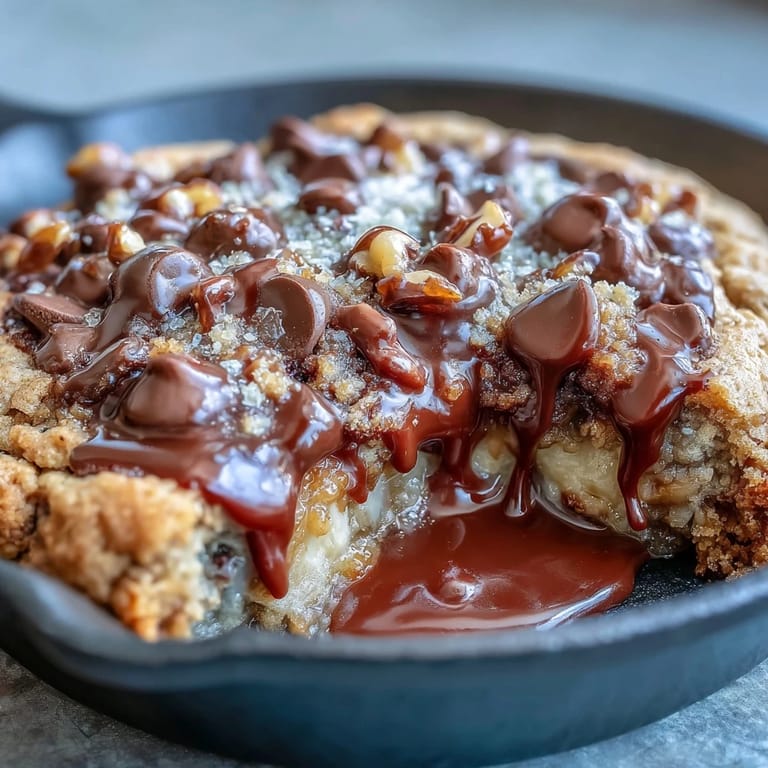
 This is the kind of recipe that gets better each time you make it, not because you're improving your technique but because you learn what makes it feel right to you. Warm skillet cookie, a person you like, maybe a little ice cream—that's all you really need.
Recipe FAQs
- → Can I substitute walnuts for another nut?
Yes, you can replace walnuts with sunflower seeds for a nut-free variation or use different nuts based on preference.
- → Is it necessary to use a cast-iron skillet?
A cast-iron skillet helps achieve even browning and a crisp edge, but an oven-safe skillet or baking pan can be used as an alternative.
- → How do I know when it's baked perfectly?
Look for a golden top and set edges while the center remains slightly soft to preserve moistness.
- → Can shredded coconut be omitted?
Yes, coconut is optional and can be left out or replaced with additional nuts or chips for varied texture.
- → What’s the best way to serve this warm dish?
Serve warm straight from the skillet, optionally topped with ice cream or a drizzle of honey for added richness.